
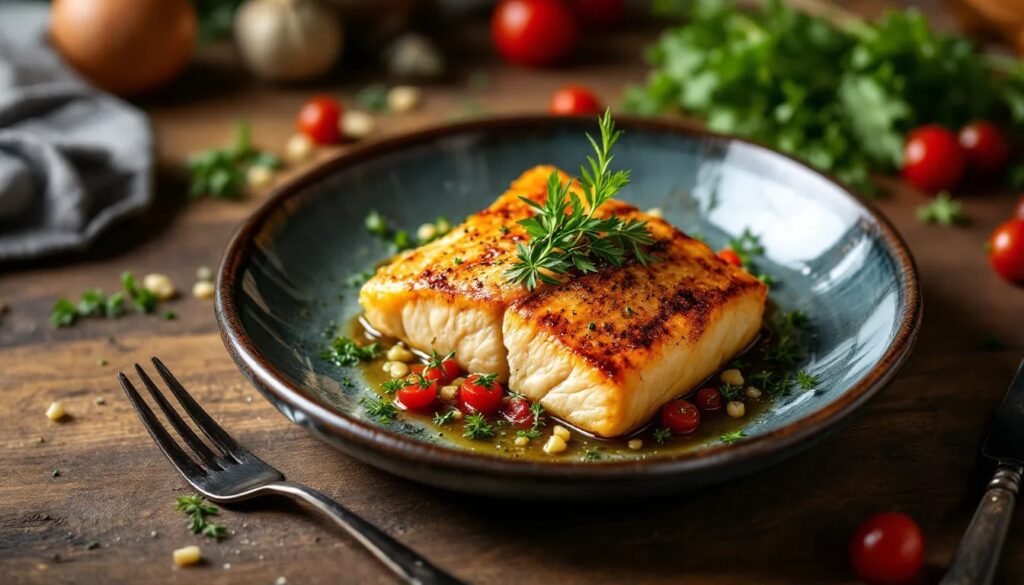
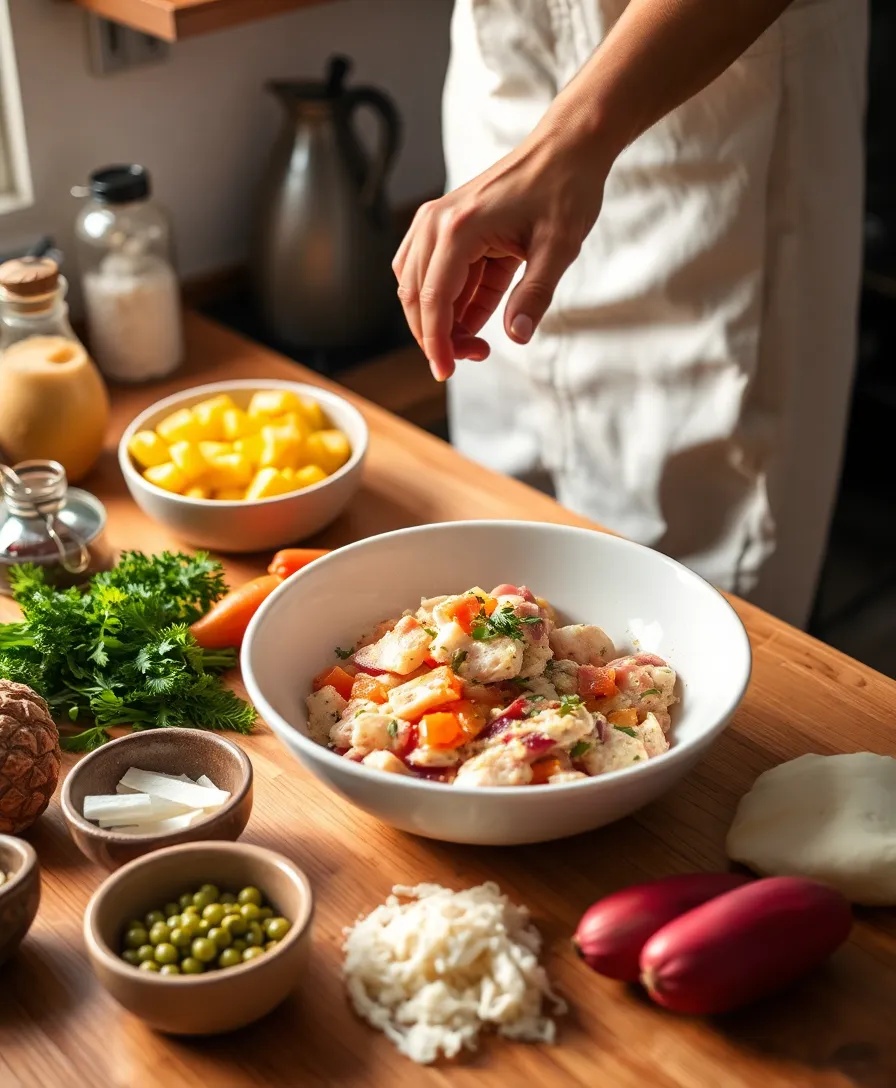
The “Terrine de Poisson” is more than just a dish; it is a delicious chapter in the grand epic of French gastronomy, a testament to culinary ingenuity that transforms humble ingredients into a masterpiece of texture and flavor. Its very name, derived from the Latin “terra” for earth, speaks to its origins: a dish cooked in an earthenware vessel, a foundational technique that has graced European tables for centuries. This fish terrine, far from being a mere appetizer, embodies a philosophy of meticulous preparation, thoughtful ingredient selection, and an appreciation for the subtle interplay of components.
Historically, the terrine, much like its cousin the pâté, emerged from a practical necessity: preservation. In an era before refrigeration, grinding meats, game, or fish, binding them with fat and eggs, and cooking them slowly in a sealed mold was an ingenious way to extend their shelf life. Over time, this rustic utility blossomed into an art form, especially within the opulent kitchens of French aristocracy, where chefs elevated simple forcemeats into exquisite creations. The “Terrine de Poisson” specifically highlights the bounty of the sea, offering a lighter, often more refined alternative to its meat-laden counterparts, making it a perfect dish for a sophisticated lunch or as an elegant starter.
The ingredients themselves tell a story of global migration and culinary exchange. The delicate white fish fillets are a nod to Europe’s rich coastal and riverine fishing traditions, staples in local diets. The presence of larding fat, typically pork fat, signals the deep-rooted charcuterie traditions of France, where fat is not merely a cooking medium but a crucial component for richness, moisture, and flavor. Then there are the pistachios – vibrant green jewels that add not only a delightful crunch and nutty counterpoint but also a splash of color that hints at their journey from the ancient lands of the Middle East and Central Asia, migrating across trade routes to enrich European cuisine. The “crème fraîche,” unmistakably French, adds a signature tangy richness and velvety texture, binding the elements together with a creamy elegance unique to French dairy.
Perhaps the most compelling traveler in this recipe is nutmeg. Originating from the Banda Islands, the fabled “Spice Islands” of Indonesia, this aromatic seed undertook an epic voyage across oceans and continents. Carried by Arab traders, then by ambitious European powers who waged wars for its monopoly, nutmeg found its way into European kitchens by the Middle Ages, forever altering the flavor profile of both savory and sweet dishes. Its warm, musky notes in this fish terrine provide an unexpected depth, a subtle whisper of distant lands in a quintessentially French preparation.
Crafting a “Terrine de Poisson” is a meditative process. The key lies in achieving the perfect texture – a delicate balance between firm yet yielding, smooth yet punctuated by the occasional crunch of a pistachio. The fish must be impeccably fresh, finely ground or pureed, then gently folded with the eggs and crème fraîche, seasoned thoughtfully with salt, pepper, and that evocative hint of nutmeg. Larding the mold with thin slices of fat ensures moisture and an easy release, while a gentle bain-marie in the oven ensures even, slow cooking, preventing dryness.
Served chilled, sliced with precision, a “Terrine de Poisson” is a feast for both the eyes and the palate. It speaks of tradition, of a culinary heritage that values both substance and style. It’s a dish that encourages lingering, savoring each bite, and perhaps, pondering the remarkable journey of its ingredients – a truly global narrative encapsulated within a single, elegant preparation. For the modern cook, it offers a rewarding challenge and an opportunity to connect with centuries of culinary artistry, transforming simple fish into an enduring symbol of gourmet refinement.
TERRINE DE POISSON (FISH TERRINE)
Evoking an era of refined culinary artistry, this exquisite Fish Terrine stands as a testament to timeless sophistication. A harmonious symphony of impeccably fresh, firm white fish, such as the esteemed John Dory or vibrant red snapper, is transformed into a silken purée, then lavishly enriched with fresh eggs and indulgent crème fraîche. A whisper of fragrant nutmeg and the subtle crunch of toasted pistachios punctuate its delicate profile, all cradled within a meticulously prepared larding fat lining that promises a succulent, luxurious texture and an undeniably grand presentation, gently coaxed to perfection in a soothing water bath. This centerpiece is destined to elevate any special occasion.
Ingredients
-
as needed
larding fat
thin slices, to line a 10 1/4 x 3 1/4 x 2 1/2 inch terrine or loaf pan -
1/3
cup
shelled pistachios -
2 2/3
pounds
white fish fillets
skinned, John Dory, red snapper, or other firm-fleshed white fish -
to taste
grated nutmeg -
to taste
salt -
to taste
pepper -
4
large eggs
beaten lightly -
2 1/2
cups
crème fraîche
added 1/4 cup at a time -
as needed
boiling water
for bain-marie
Instructions
-
Delicately line the entire interior, base and sides, of a terrine mold or standard loaf pan (approximately 10 1/4 x 3 1/4 x 2 1/2 inches) with translucent sheets of larding fat.
-
Submerge 1/3 cup of shelled pistachios in a heatproof vessel, covering them completely with freshly boiled water. Allow them to steep undisturbed for precisely one minute before draining thoroughly.
-
Transfer the blanched pistachios to a clean kitchen towel and gently rub them together to effortlessly shed their skins. Afterward, spread them in a single layer on a jellyroll pan and desiccate them in an oven preheated to 350°F (175°C) for five minutes.
-
In separate batches, process 2 2/3 pounds of impeccably skinned fillets of John Dory, red snapper, or another preferred firm-fleshed white fish within a food processor equipped with a steel blade, until a fine purée is achieved.
-
Pass the fish purée through the fine disk of a food mill, allowing it to collect in a generously sized metal bowl. Discard any remaining membranes or sinews captured by the mill.
-
Liberally season the refined purée with freshly grated nutmeg, sea salt, and freshly cracked black pepper. Transfer to refrigeration for thirty minutes to chill.
-
Nestle the bowl containing the chilled purée within a larger basin filled with crushed ice. Gradually incorporate four lightly beaten large eggs, adding them in small increments and thoroughly beating the mixture with a wooden spoon after each addition to ensure full integration.
-
In a similar fashion, gently fold in 2 1/2 cups of crème fraîche, adding it incrementally by 1/4 cup at a time, until the mixture is uniform and smooth.
-
Carefully fold the dried pistachios into the fish mixture until evenly distributed.
-
Spoon the prepared mixture into the lined terrine, filling it lightly. Firmly rap the terrine against a hard work surface several times to dislodge any trapped air bubbles.
-
Use a spatula to create a smooth, even surface on top of the terrine mixture.
-
Cover the terrine with a double layer of buttered aluminum foil.
-
Place the covered terrine into a larger baking pan.
-
Position the entire baking pan assembly in the central rack of an oven preheated to 325°F (160°C).
-
Pour enough freshly boiled water into the larger baking pan to reach approximately halfway up the sides of the terrine mold, creating a bain-marie.
-
Bake for a duration of 45 to 50 minutes, or until cooked through.
Recipe Notes
The inclusion of larding fat, traditionally sourced from pork, serves a dual purpose: it both enriches the terrine with succulent moisture and depth of flavor, and acts as a natural barrier to prevent sticking. If larding fat proves elusive, paper-thin slices of high-quality, unsmoked bacon or prosciutto can provide a comparable lining, or simply ensure the terrine mold is thoroughly buttered. Achieving the characteristic ultra-smooth texture of a classic terrine is best accomplished with a food mill; however, a fine-mesh sieve can serve as an effective alternative if a food mill is unavailable. Critical to the gentle cooking process, maintain a consistently hot temperature for the water in the bain-marie throughout the entire baking period.
Global Heritage Archive
Anthropological & Spice Migration Record
“A culinary culture renowned for its meticulous techniques, emphasis on fresh, high-quality ingredients, and a rich tradition of charcuterie and pâtisserie, celebrating both rustic flavors and refined presentation.”
🌿 Spice & Botanical Migration
Nutmeg, a key aromatic in this terrine, hails from the remote Banda Islands (part of the Moluccas or ‘Spice Islands’ in modern-day Indonesia). Its journey to European kitchens, where it became a staple in both savory and sweet dishes from the Middle Ages onwards, was arduous, facilitated by Arab traders and later monopolized by European powers like the Portuguese and Dutch. Black pepper, originating from India’s Malabar Coast, was even more fundamental, driving ancient trade routes across continents and cementing its status as the “King of Spices” long before nutmeg’s ascent.
🏺 Historical & Archaeological Record
The culinary technique of creating forcemeats—finely ground or chopped ingredients bound together and cooked in a mold—can be traced back to Roman antiquity, where similar preparations of comminuted meats or fish were seasoned and baked. The specific term “terrine” as a dish cooked in an earthenware pot gained prominence in French culinary texts from the late medieval to early modern periods, evolving from more general pâté recipes that might have been encased in pastry.
💡 Little Known Facts
- The word “terrine” originally referred to the earthenware cooking vessel itself, often oblong and deep, from the Latin “terra” meaning earth or clay.
- While often served cold, traditional terrines were historically a method of preserving meats, game, or fish by encasing them in fat or pastry, allowing them to last longer without refrigeration.
📸 Made This Heritage Recipe?
We would love to see how your dish turned out! Send a photo of your culinary creation to [email protected] to be featured in our community gallery.
Leave a review and rate this recipe below!
Curated Literature & Washington DC Downtown Calendar
The Culinary Alchemist: Modern Gastronomy & Flavor Pairing
By LDN Gastronomy Series
Artisanal technique, seasonal sourcing, and kitchen mastery.
Upcoming Downtown Happenings
Live acoustic sessions, gallery receptions, literary salons, and independent trade shows across Washington DC.
