
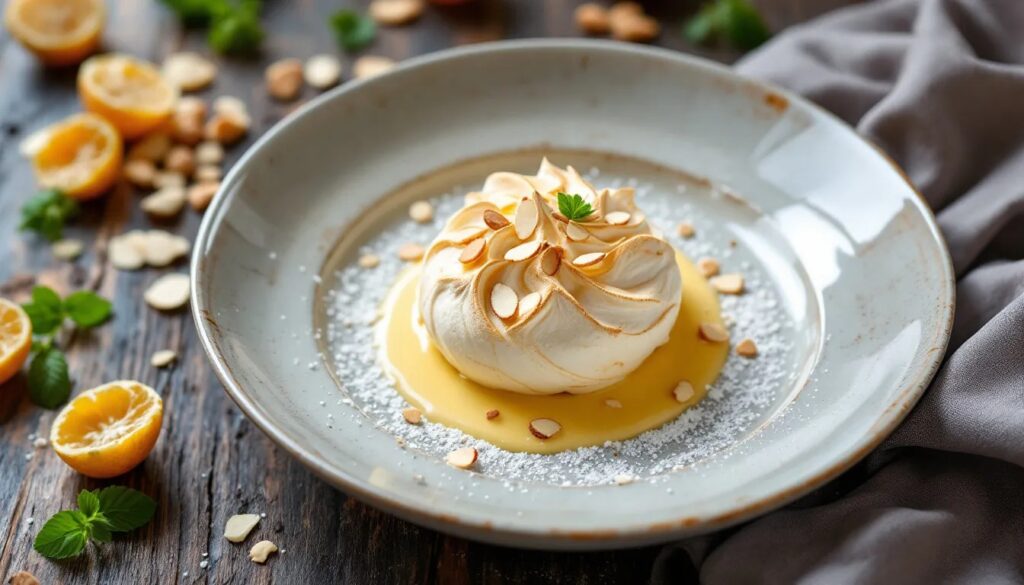
In the grand tapestry of culinary history, some dishes emerge not from a single thread, but from an exquisite interweaving of traditions, ingredients, and techniques that have journeyed across continents and through centuries. The ‘Steamed Almond Meringue Dessert with Brandy Custard Sauce’ is precisely such a creation—a testament to ingenuity, refinement, and the enduring human desire for both comfort and elegance at the table. It is an epicurean symphony, where the delicate whisper of meringue meets the robust embrace of a steamed pudding, all bathed in a warm, boozy glow.
At its heart, this dessert marries two distinct European culinary philosophies. Meringue, a cloud-like confection of beaten egg whites and sugar, is often associated with the sophisticated patisseries of France and Switzerland. Its origins are debated, but its impact on European desserts since the late 17th century is undeniable, elevating simple sweets into ethereal masterpieces. Yet, this recipe takes a fascinating detour, opting for steaming rather than baking. This method is a distinct nod to the British tradition of puddings—a hearty, soul-satisfying category of desserts that were once the cornerstone of many an English meal. From medieval pottages that evolved into dense, suet-laden sweet puddings, the steaming technique was perfected to create dishes with unique textures and profound depth of flavor. Here, it transforms the light meringue into a tender, moist, and almost soufflé-like cake, a sublime contrast to its typically crisp baked cousin.
Each ingredient in this dessert is a silent narrator of global migration. Almonds, integral to the meringue’s structure and flavor, are not native to Europe. Their journey began in the sun-drenched valleys of Central Asia and the Middle East, traveling westward along ancient trade routes to the Mediterranean. By Roman times, almonds were prized, eventually becoming a staple in European confectionery, particularly in Spain, Italy, and later across the continent. Sugar, too, is a child of migration. Originating in Southeast Asia, sugarcane cultivation spread through the Middle East by Arab traders before reaching Europe, fundamentally altering our relationship with sweetness and driving some of history’s most complex trade and colonial narratives. The oranges that give life to the marmalade, a delightful counterpoint to the sweetness, also trace their lineage back to Southeast Asia, arriving in the Mediterranean through Arab expansion and eventually finding their perfect partner in the British penchant for tangy preserves.
The final touch, the Brandy Custard Sauce, speaks volumes about European refinement. Brandy, derived from distilled wine, has graced European tables for centuries, its warming notes and complex aroma making it a natural companion for celebratory desserts. Whether French Cognac, Spanish Jerez, or Greek Metaxa, the spirit imbues the rich custard with an exquisite depth, transforming it from a simple accompaniment into an essential component of the dish’s character.
For the home cook, perfecting this dessert involves a balance of precision and patience. Achieving a stable, glossy meringue is paramount; ensure your egg whites are at room temperature and your bowl is scrupulously clean. The steaming process requires careful attention to water levels and a tight seal to prevent water from entering the dessert. And for the custard, a gentle hand and consistent stirring are key to prevent curdling, yielding a silken sauce that will cascade beautifully over the steamed meringue. This dessert is more than just a sweet treat; it is a culinary artifact, a delicious lesson in history, and a timeless indulgence that promises to enchant with every delicate, brandy-laced bite. It invites us to savor not just its flavors, but the rich tapestry of human ingenuity and exploration that brought it to our plates.
Steamed Almond Meringue Dessert with Brandy Custard Sauce
Embark on a culinary journey to an era of refined elegance with this exquisite steamed almond meringue. A true testament to sophisticated indulgence, this dessert unveils a cloud-like confection of delicately steamed egg whites, subtly perfumed with the zest of orange marmalade and the warm embrace of toasted almonds. Each ethereal bite is elevated by a lavish, brandy-infused custard sauce, creating a symphony of luxurious textures and harmonious flavors that promise an unforgettable conclusion to any celebratory meal.
Ingredients
-
1/2
cup
chopped toasted almonds
divided -
4
large
egg whites -
pinch
None
salt
for egg whites -
4
Tablespoons
sugar
for egg whites -
2-3
Tablespoons
orange marmalade -
4
large
egg yolks -
pinch
None
salt
for sauce -
1/2
cup
sugar
for sauce -
1
cup
heavy whipping cream
beaten until stiff -
to taste
None
Brandy or Cointreau
optional
Instructions
-
Commence by preparing your almonds: gently toast them until fragrant, then coarsely chop. Reserve a distinct portion to incorporate into the meringue mixture and set aside the remainder for a finishing flourish.
-
In an impeccably clean, dry bowl, whip the egg whites with a whisper of salt until they achieve firm, glossy peaks that hold their shape.
-
Delicately fold 4 tablespoons of granulated sugar and the bright orange marmalade into the aerated egg whites, ensuring not to deflate the mixture. Subsequently, carefully incorporate approximately half of your prepared chopped, toasted almonds.
-
Transfer the exquisite egg white mixture with utmost care into the upper compartment of a double boiler.
-
Evenly scatter the remaining chopped almonds over the surface of the mixture within the double boiler.
-
Secure the lid on the double boiler and allow the confection to steam gently for 1 to 1½ hours, or until it is completely set and firm to the touch.
-
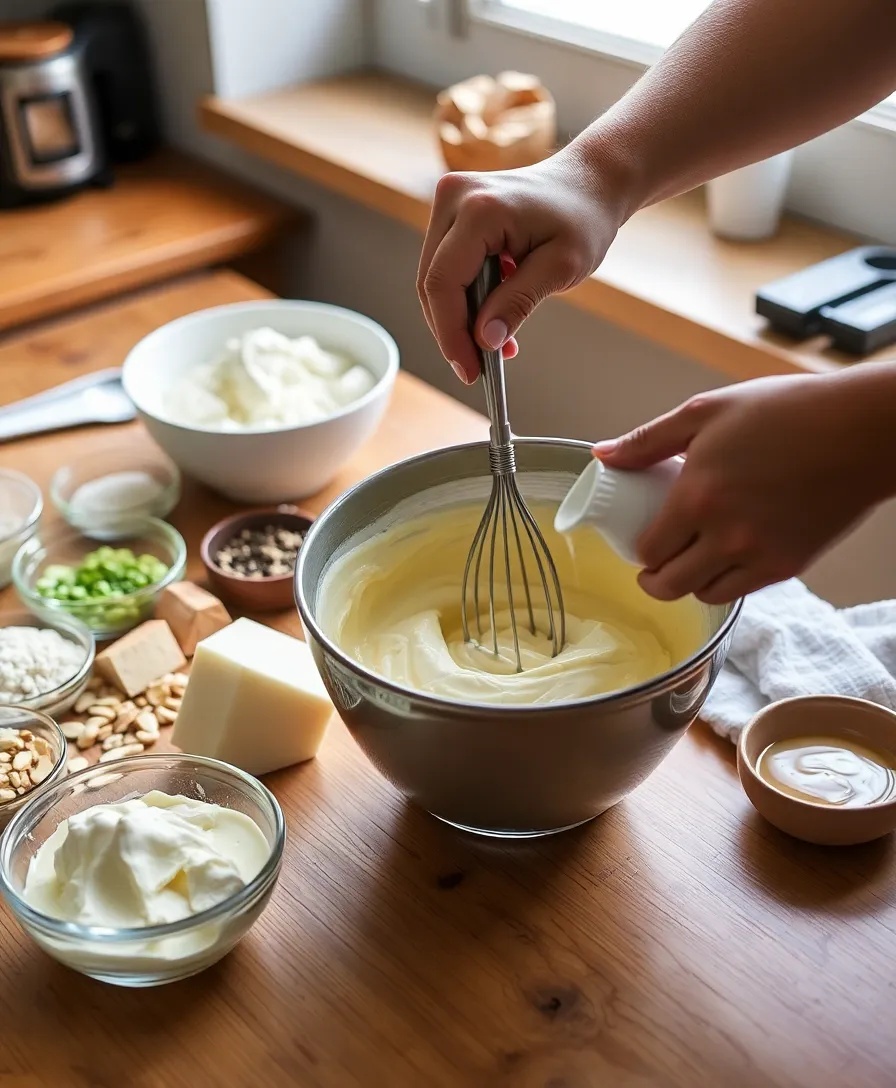
While the meringue is gracefully steaming, begin crafting the accompanying sauce: In a separate bowl, whisk the egg yolks with a mere pinch of salt and ½ cup of sugar until the mixture becomes pale and homogenous.
-
In another chilled bowl, whip the heavy cream until it forms firm, distinct peaks.
-
With a gentle hand, fold the stiffly beaten whipping cream into the egg yolk mixture, preserving its airy texture.
-
Should you desire, infuse the custard with a measure of fine brandy or Cointreau, adjusting to your preferred taste.
-
Upon the steamed dessert’s readiness, invert it onto an elegant serving platter and present it immediately, accompanied by the freshly prepared, luscious custard sauce.
-
For optimal enjoyment, serve this delicate dessert while still warm, allowing the textures and aromas to fully blossom.
Recipe Notes
The velvety custard sauce offers a delightful canvas for customization; consider enriching its depth with a touch of aged brandy or the bright, citrusy notes of Cointreau, tailored precisely to your palate’s desire.
Global Heritage Archive
Anthropological & Spice Migration Record
“A refined culinary culture valuing elaborate desserts, often served for special occasions, blending classical European techniques with traditional British pudding making.”
🌿 Spice & Botanical Migration
The core ingredients of this dessert tell tales of global exchange. Almonds, originating in Central Asia, spread westward to the Mediterranean and Europe through ancient trade routes, becoming a prized ingredient in European confections. Sugar, initially cultivated in Southeast Asia, was introduced to the West via Arab traders and later through the Columbian Exchange, transforming European sweet palates. Oranges, too, trace their botanical lineage to Southeast Asia, arriving in the Mediterranean via Arab merchants before finding their way to Europe, where Seville oranges became synonymous with British marmalade.
🏺 Historical & Archaeological Record
The earliest written record explicitly mentioning ‘meringue’ as a confection dates to François Massialot’s 1692 French cookbook, *Nouvelle instruction pour les confitures, les liqueurs et les fruits*. While specific steamed meringue desserts might be a later innovation, this marks the formal appearance of a key component. The technique of steaming desserts, particularly puddings, became a prominent feature in British culinary literature from the 17th century onward.
💡 Little Known Facts
- While often attributed to a Swiss pastry chef named Gasparini in the town of Meiringen, the term ‘meringue’ first appeared in a French cookbook by François Massialot in 1692, sparking a centuries-long debate over its precise origin.
- Steamed puddings, like the one this dessert’s preparation method draws from, evolved from medieval savory pottages (thick stews) and only fully transitioned into the sweet realm during the 17th and 18th centuries in Britain, becoming a beloved national institution.
📸 Made This Heritage Recipe?
We would love to see how your dish turned out! Send a photo of your culinary creation to [email protected] to be featured in our community gallery.
Leave a review and rate this recipe below!
Curated Literature & Washington DC Downtown Calendar
The Culinary Alchemist: Modern Gastronomy & Flavor Pairing
By LDN Gastronomy Series
Artisanal technique, seasonal sourcing, and kitchen mastery.
Upcoming Downtown Happenings
Live acoustic sessions, gallery receptions, literary salons, and independent trade shows across Washington DC.
