
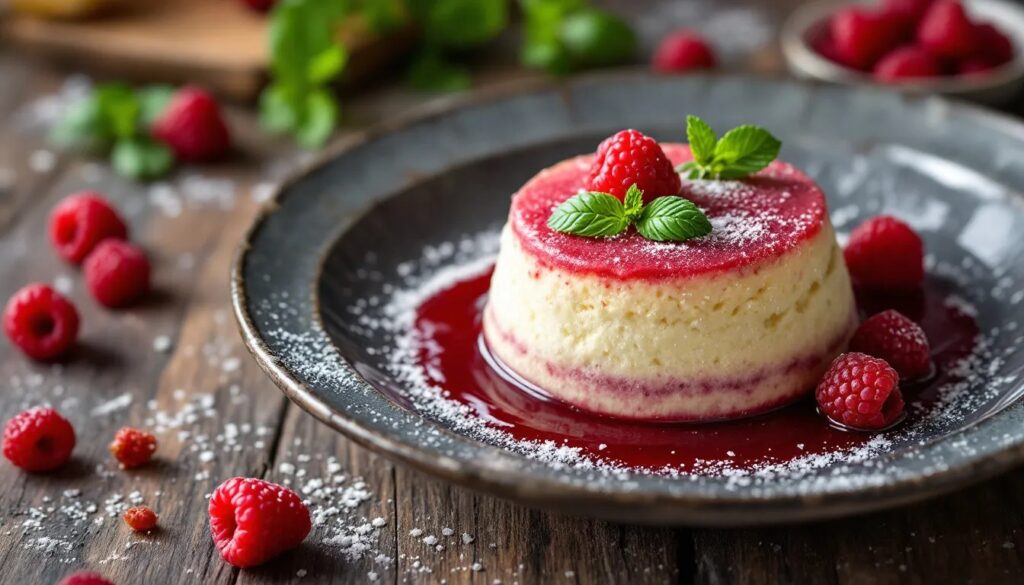
To conjure a soufflé is to summon a moment of pure, fleeting magic in the kitchen. This iconic dessert, with its cloud-like lightness and delicate flavor, is more than just a sweet treat; it’s a testament to culinary artistry, precise timing, and a rich history interwoven with global trade and cultural exchange. At its heart, the Raspberry Soufflé is undeniably French, a shining star in the grand tradition of French patisserie. The very name, ‘soufflé,’ derives from the French verb ‘souffler,’ meaning ‘to blow’ or ‘to puff,’ perfectly encapsulating its ethereal rise and delicate collapse. While culinary historians debate exact origins, the first explicit soufflé recipes appeared in French cookbooks of the mid-18th century, with chefs like Vincent La Chapelle solidifying its place in haute cuisine.
Yet, despite its quintessentially French identity, the ingredients tell a far more expansive story, charting routes of migration and discovery. Consider sugar, a fundamental component. Its journey began in New Guinea, traveling across continents before reaching Europe via Arab trade. The establishment of vast sugarcane plantations in the Americas, a tragic legacy of the Columbian Exchange and enslaved labor, dramatically increased its availability, transforming European diets. Then there is vanilla, a spice synonymous with luxury. Its botanical cradle lies in Mesoamerica, cultivated by the Totonac people. It arrived in Europe with the Spanish, but its global accessibility was limited until Edmond Albius discovered hand-pollination in 1841.
The bright, zesty notes of lemon and orange peel, added to balance richness, also hail from Southeast Asia, traversing ancient trade routes to the Mediterranean, becoming integral to European cooking. Even the humble raspberry, a native European fruit, finds its refined expression within a dessert culture that integrated diverse ingredients. Crafting a perfect soufflé demands respect for its individual components and a balance of science and art. The base, or ‘appareil,’ is carefully flavored. The magic happens with egg whites, whipped to stiff peaks and gently folded, creating air pockets that expand in the oven, causing the soufflé to ‘puff.’ Success hinges on a clean bowl, careful folding, and a precise oven temperature. A soufflé must be served immediately, savored in its brief moment of puffed glory before its inevitable collapse. This fleeting masterpiece is not merely a dessert; it is a culinary echo of global history, human ingenuity, and a delicious reminder that even the most ‘traditional’ dishes are often a beautiful tapestry woven from threads spanning the entire world.
RASPBERRY SOUFFLE
Embark on a culinary journey with this exquisite Raspberry Soufflé, a timeless creation re-envisioned for the discerning palate. This ethereal confection masterfully marries the vibrant, sun-kissed allure of fresh raspberries with a whisper-light, cloud-like soufflé. Each delicate parcel is then gracefully enfolded within tender, aromatic Orange and Lemon Crêpes, creating a harmonious interplay of sweet, tart, and fragrant citrus notes. A truly magnificent finale, ideal for elevating celebratory gatherings or simply savoring a moment of pure, luxurious indulgence.
Ingredients
-
1
pound
fresh raspberries -
2
Tablespoons
raspberry liqueur -
1½
Tablespoon
fresh lemon juice -
¼
None
vanilla bean -
¼
cup
flour
for raspberry cream -
½
teaspoon
cream of tartar -
1
cup
water -
1 cup plus 1 Tablespoon
sugar
divided for raspberry sauce, milk mixture, and meringue -
1
cup
Milk -
3
None
egg yolks -
6
None
egg whites
room temperature -
None
None
Powdered sugar
for dusting finished soufflé -
3/4
cup
flour
for Orange and Lemon Crepes -
Pinch
None
salt
for Orange and Lemon Crepes -
1½
cups
milk
for Orange and Lemon Crepes -
1½
teaspoons
vanilla
for Orange and Lemon Crepes -
1
Tablespoon
powdered sugar
for Orange and Lemon Crepes -
2
None
eggs
for Orange and Lemon Crepes -
1
None
yolk
for Orange and Lemon Crepes -
2
teaspoons
minced orange peel
for Orange and Lemon Crepes -
2
teaspoon
minced lemon peel
for Orange and Lemon Crepes
Instructions
-
Begin by crafting the Raspberry Essence and Conserve. In a medium saucepan, combine the fresh raspberries, one cup of water, and three-quarters of a cup of granulated sugar. Bring this mixture to a gentle boil, then lower the heat and allow it to simmer for approximately seven minutes. Carefully transfer the contents to a blender or food processor and process until smooth. Pass the purée through a fine-mesh sieve to remove any seeds, ensuring a silken texture. Reserve precisely one cup of this refined purée; this will serve as your elegant serving sauce.
-
Return the residual purée to the saucepan. Cook over low heat, stirring occasionally, until the mixture visibly thickens to a jam-like consistency, or reduces to about one-quarter cup. Incorporate the raspberry liqueur and fresh lemon juice, adjusting proportions to achieve your preferred flavor profile. This richly concentrated mixture now forms your foundational raspberry jam.
-
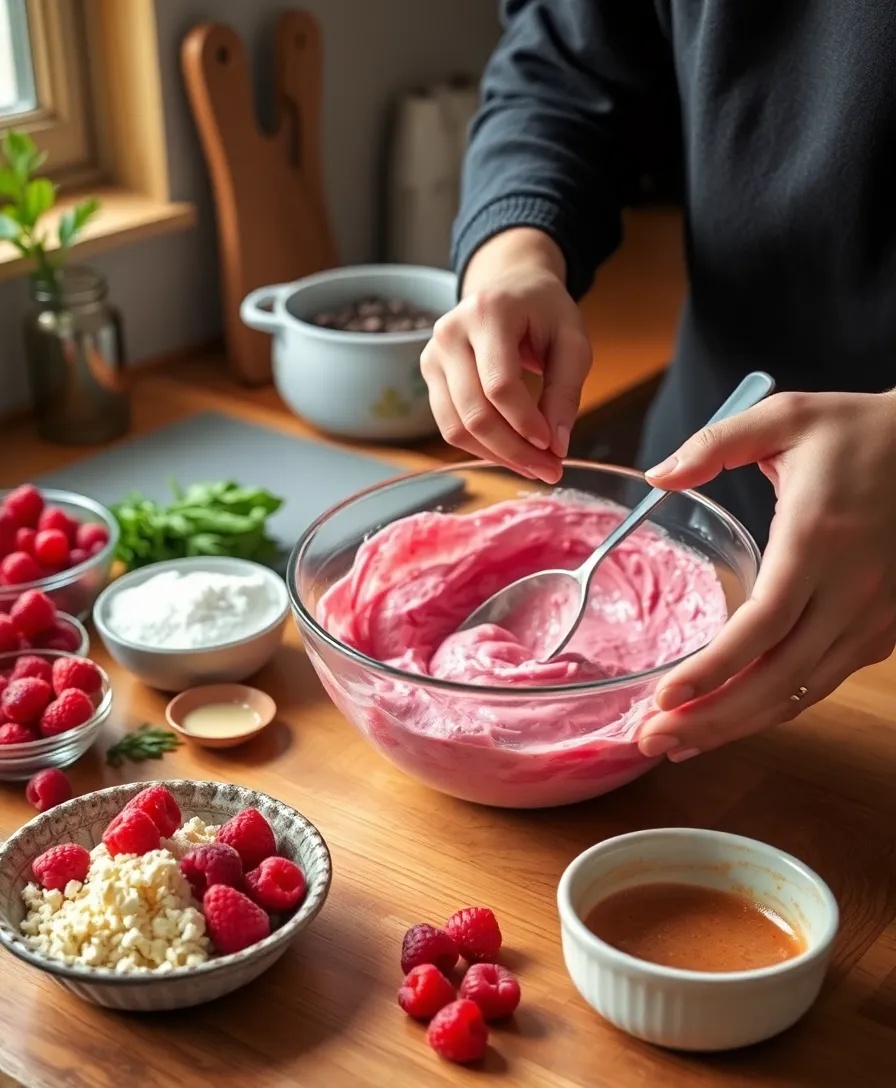
Next, construct the Raspberry Cream Base. In a separate saucepan, combine two tablespoons of granulated sugar (allocated from the primary sugar measurement), one cup of milk, and the vanilla bean. Bring this liquid gently to a boil. Simultaneously, in a mixing bowl, vigorously whisk together the remaining two tablespoons of granulated sugar (from the initial total) and three egg yolks until pale. Gradually whisk in one-quarter cup of flour until fully incorporated and smooth.
-
Slowly stream the hot milk infusion into the egg yolk mixture, whisking continuously to temper the eggs. Transfer the entire custard back to the saucepan. Cook over medium heat, whisking without interruption, for approximately two minutes, or until the mixture achieves a pronounced thickness. Promptly remove from the heat source.
-
Fold in the previously prepared raspberry jam until thoroughly combined. This vibrant blend now constitutes your raspberry cream.
-
Proceed to create the Meringue. In a clean, dry bowl, using an electric mixer fitted with a whisk attachment, beat the six egg whites and cream of tartar until soft peaks just begin to form. Gradually incorporate the final one tablespoon of granulated sugar (from the main quantity), continuing to beat until the meringue forms firm, glossy stiff peaks.
-
For assembly, delicately fold half of the whipped meringue into the raspberry cream to lighten its texture. Then, with utmost care, gently but thoroughly fold this lightened raspberry cream into the remaining meringue until just combined, preserving its ethereal volume.
-
Preheat your oven to 375°F (190°C). Lightly butter a baking sheet.
-
Carefully arrange the pre-made Orange and Lemon Crêpes on the prepared baking sheet. Onto one half of each crêpe, spoon approximately half a cup of the delicate soufflé batter (the combined raspberry cream and meringue mixture).
-
Gently fold the crêpes in half, encasing the soufflé batter within.
-
Bake for approximately ten minutes, or until the soufflés are beautifully puffed and attain a delicate golden-brown hue.
-
Finish by dusting generously with confectioners’ sugar. Serve immediately, accompanied by the reserved raspberry serving sauce.
Recipe Notes
A note on the accompanying crêpes: While the component ingredients for the ‘Orange and Lemon Crêpes’ are itemized, this particular recipe focuses solely on the soufflé and its assembly within them. For guidance on preparing the crêpe batter from scratch, please refer to a dedicated crêpe recipe. Any incidental references to a ‘lemon-lime mousse’ found elsewhere should be considered outside the scope of this Raspberry Soufflé creation.
Global Heritage Archive
Anthropological & Spice Migration Record
“A sophisticated culinary culture valuing precise techniques, delicate textures, and elegant presentations, often associated with fine dining and celebratory occasions.”
🌿 Spice & Botanical Migration
Vanilla, a key flavoring in this soufflé, originated in Mesoamerica (modern-day Mexico) and was brought to Europe by Spanish conquistadors. Its cultivation was limited until Edmond Albius developed hand-pollination in the 19th century, leading to its global spread. Sugar, another foundational ingredient, traces its botanical roots to New Guinea, traveled through India and the Middle East, and became widely accessible in Europe due to colonial plantations fueled by the Columbian Exchange and slave labor, transforming European dessert culture. Lemon and orange peels, adding a bright counterpoint, originated in Southeast Asia and were introduced to the Mediterranean via ancient trade routes, becoming integrated into European cuisine over centuries.
🏺 Historical & Archaeological Record
While the specific ‘soufflé’ as a distinct dish emerged in late 18th-century France, the underlying technique of using whipped egg whites to create volume for desserts has earlier precedents. Written records of recipes employing whipped egg whites for meringues or other confections appear in European culinary texts from the 17th century. The first detailed recipes explicitly termed ‘soufflé’ were published in French cookbooks around 1742.
💡 Little Known Facts
- The word ‘soufflé’ comes from the French verb ‘souffler,’ meaning ‘to blow’ or ‘to puff,’ describing its characteristic ethereal rise.
- The earliest known printed recipe for a soufflé is attributed to French chef Vincent La Chapelle in his 1742 cookbook, ‘Le Cuisinier Moderne,’ though simpler versions existed earlier.

Historical Locality Cartographic Map — Mestizo Media Archive
📸 Made This Heritage Recipe?
We would love to see how your dish turned out! Send a photo of your culinary creation to [email protected] to be featured in our community gallery.
Leave a review and rate this recipe below!
Curated Literature & Washington DC Downtown Calendar
The Culinary Alchemist: Modern Gastronomy & Flavor Pairing
By LDN Gastronomy Series
Artisanal technique, seasonal sourcing, and kitchen mastery.
Upcoming Downtown Happenings
Live acoustic sessions, gallery receptions, literary salons, and independent trade shows across Washington DC.
