
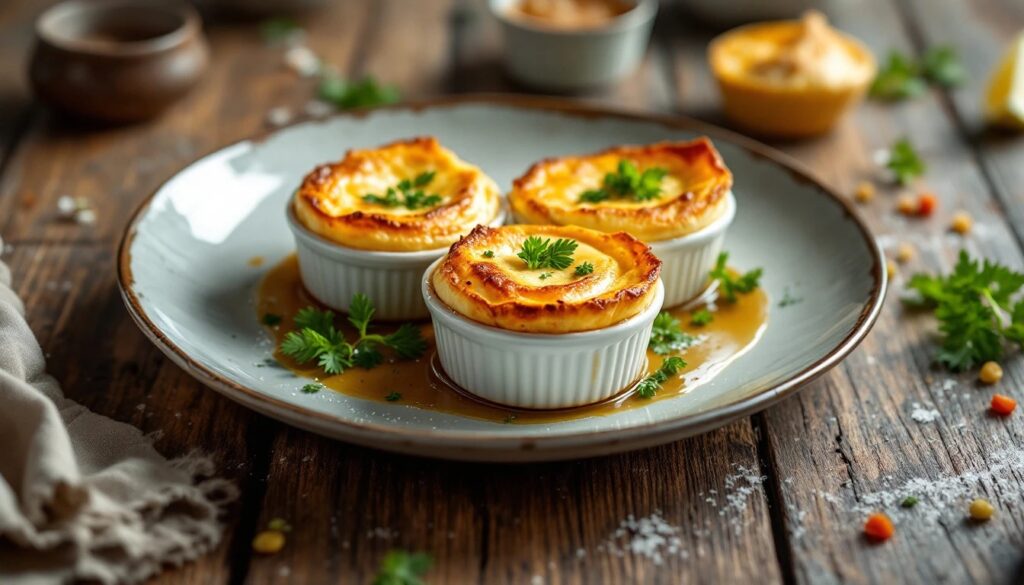
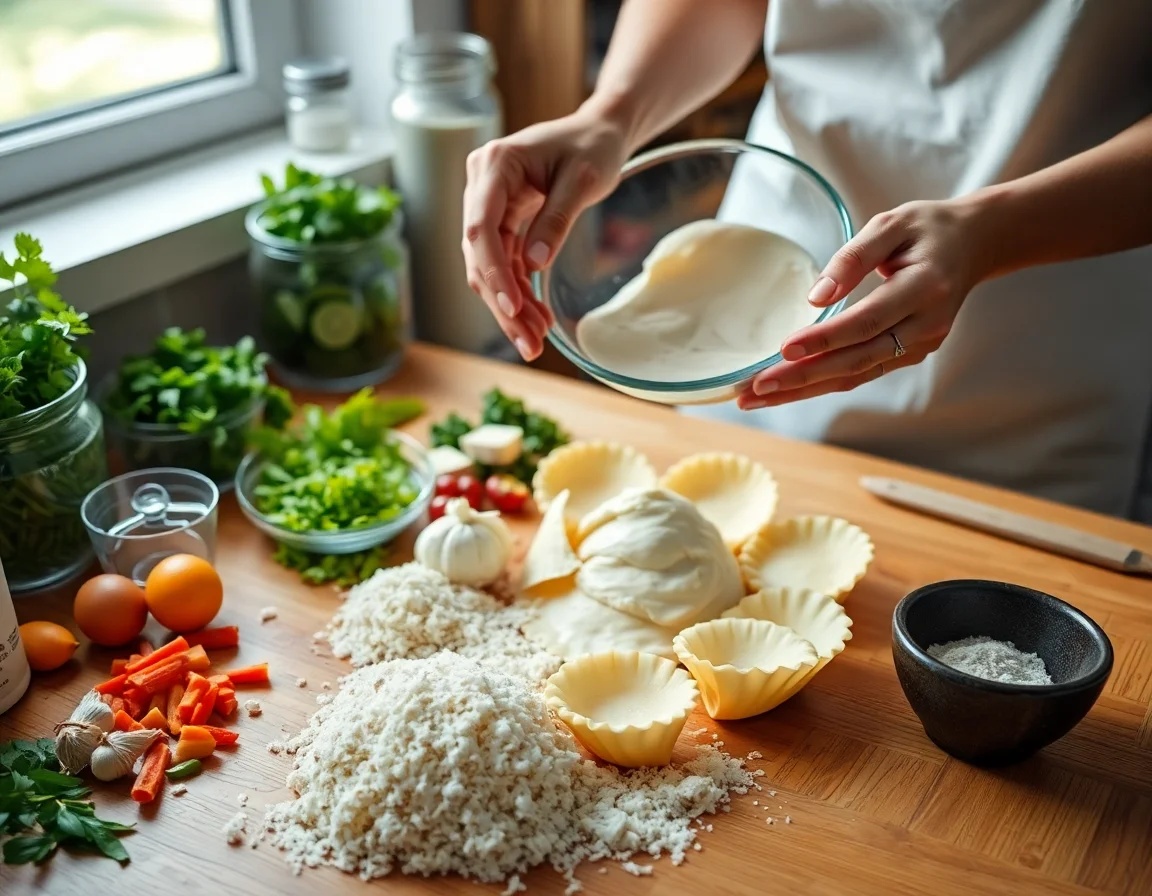
In the grand tapestry of culinary history, some dishes transcend mere sustenance, becoming eloquent expressions of culture, refinement, and human ingenuity. The ‘Pastry Shells for Crab Meat Soufflé’ is one such masterpiece, a delicate ballet of textures and flavors that speaks volumes about its origins in the heart of French haute cuisine. It is a dish that invites pause, a moment of gastronomic contemplation, hinting at a lineage as rich and layered as the pastry itself.
The history of the pastry shell, the humble yet essential vessel, stretches back into antiquity, with various forms of baked dough appearing in ancient Egyptian, Greek, and Roman kitchens. These early ‘pastries’ were often practical, designed for enclosing and preserving fillings, or for ritualistic purposes. However, it was in medieval Europe that doughs began their journey towards refinement, evolving from robust encasements to more delicate, butter-enriched constructions. The true artistry of French pastry, as we recognize it today, flourished during the Renaissance and Baroque periods, driven by royal courts and the burgeoning culinary academies that prioritized technique and aesthetic appeal.
The soufflé, on the other hand, is a more recent, distinctly French invention, dating to the 18th century. Meaning ‘puffed up’ in French, it was a creation born of an era obsessed with lightness and elegance in all things, including food. Chefs like Vincent La Chapelle and later, the legendary Marie-Antoine Carême, perfected the soufflé, transforming whisked egg whites into ethereal clouds designed to delight and surprise. When this airy soufflé met the refined pastry shell, particularly one destined to cradle the sweet, delicate flesh of crab, a culinary icon was born. Crab meat, long appreciated in coastal European diets, found its ultimate expression in this sophisticated ensemble, celebrated for its subtle brininess that complements the richness of the pastry and the lightness of the soufflé.
From a migration perspective, while the pastry shells themselves are simple, relying on flour, eggs, and milk, these foundational ingredients carry their own global stories. Wheat, the basis of flour, originated in the Fertile Crescent millennia ago, spreading across continents through ancient trade routes and early human migrations. The domestication of dairy animals and poultry, providing milk, butter, and eggs, also boasts ancient Eurasian roots, their products becoming staples through millennia of agricultural development and cultural exchange. Even a hint of nutmeg in the soufflé filling, though not in the shell recipe itself, speaks to the vast networks of the Spice Route, connecting distant islands to European palates.
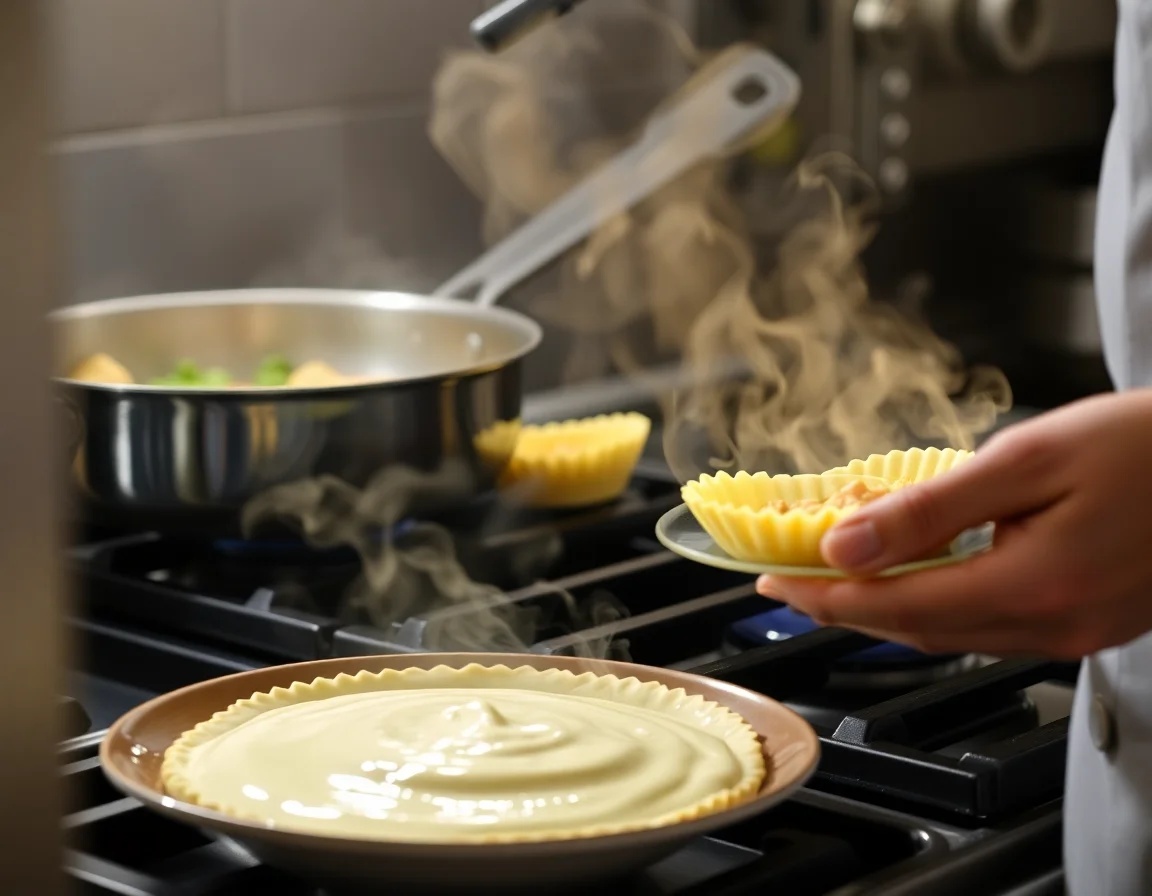
Preparing these pastry shells requires precision and a reverence for the craft. The key to a perfect shell is achieving that elusive balance of flakiness and structural integrity. Start with cold butter, cut into small pieces, and work quickly to avoid overworking the dough, which develops gluten and can lead to a tough crust. Chilling the dough meticulously between steps is paramount. For the soufflé, ensuring egg whites are stiff but not dry, and folding them gently into the crab mixture, will guarantee that characteristic ‘puff.’ Serve immediately from the oven, as the soufflé’s majesty is fleeting but unforgettable. This dish is not just food; it is a legacy, a testament to centuries of culinary evolution, inviting us to savor a taste of history.
Pastry Shells for Crab Meat Soufflé
Embark on a culinary journey to master the art of exquisite pastry shells. This precise guide unveils the secrets to crafting ethereal, golden vessels, designed as the ultimate complement to a sophisticated crab meat soufflé. Employing time-honored techniques, these delicate bases emerge from the oven light, impeccably puffed, and graced with a whisper-crisp edge. More than mere containers, they are the foundation upon which elegant appetizers and refined luncheons ascend to new heights, imbuing each serving with a touch of classic French elegance.
Ingredients
- 1 egg for egg wash
- 1 Tablespoon milk for egg wash
- pastry dough recipe for pastry dough and soufflé filling are not provided on this page
Instructions
-
Gently roll your prepared pastry dough to an even thickness of precisely half an inch, shaping it into a neat rectangle.
-
Using a fluted round cutter, measuring five and a half inches in diameter, carefully excise eight perfect circular bases from the rolled dough.
-
Next, take a fluted five-inch round cutter and create distinct rings from precisely half of the previously cut rounds, setting aside the centers for another use if desired.
-
Carefully arrange the solid, uncut pastry rounds onto a lightly moistened baking sheet. Proceed to delicately dampen the dough in a one-and-a-half-inch band around the entire perimeter of each solid round.
-
Position the prepared pastry rings atop the moistened edges of the solid rounds, applying a very gentle pressure to ensure they adhere securely, forming the sides of your shell.
-
Using the tines of a fork, lightly perforate the central base of each assembled shell to prevent excessive rising during baking.
-
With a sharp, fine point, delicately score the surface of each pastry ring, creating subtle lines between the fluted edges.
-
Carefully incise a shallow cut, approximately one-sixteenth of an inch deep, just inside the perimeter of the ring on each shell, using a very sharp knife.
-
In a small bowl, whisk together one whole egg with one tablespoon of milk until just combined, forming your glistening egg wash.
-
With a pastry brush, artfully apply the egg wash to the top rings and the visible bottom portions of the shells, exercising utmost care to avoid any drips or spills onto the outer vertical edges of the rings.
-
Transfer the shells to a preheated oven, maintained at a very hot 450°F (230°C), and bake for an initial ten minutes to achieve a rapid puff.
-
Reduce the oven temperature to 350°F (175°C) and continue baking for an additional fifteen minutes, or until the shells are magnificently puffed and boast a rich, golden-brown hue.
-
Once baked, carefully transfer the warm pastry shells to a wire cooling rack, allowing them to cool slightly.
-
Utilizing a sharp knife, carefully cut away the puffed central domes from within each shell, gently scooping out any lingering unbaked dough to create a hollow cavity perfect for filling.
Recipe Notes
This particular recipe is meticulously crafted to guide you through the preparation of these elegant pastry shells. Please note that the detailed instructions for crafting the foundational pastry dough, as well as the sumptuous crab meat soufflé filling, are presented in separate companion recipes designed to complete this sophisticated culinary ensemble.
Global Heritage Archive
Anthropological & Spice Migration Record
“This dish reflects a refined, classical European culinary tradition focused on technique, delicate flavors, and elegant presentation, often associated with formal dining and haute cuisine.”
🌿 Spice & Botanical Migration
While ‘Pastry Shells’ themselves traditionally eschew spices to serve as a neutral canvas for the filling, the intended Crab Meat Soufflé would often incorporate delicate flavor enhancers. A common subtle addition, for instance, is a whisper of nutmeg, botanically originating from the Banda Islands in Indonesia. This precious spice journeyed to European kitchens through ancient maritime trade routes, a testament to the extensive global exchange that shaped even the most refined culinary traditions.
🏺 Historical & Archaeological Record
While rudimentary forms of pastry and baked goods can be traced to ancient civilizations (e.g., Egyptian honey cakes, Roman placenta cakes), the concept of a delicate ‘pastry shell’ to encase a refined filling evolved significantly with European cuisine. The term ‘soufflé’ itself is a distinct 18th-century French culinary innovation, first appearing in written records by chef Vincent La Chapelle in 1742. Its refinement and popularization, especially savory versions, were furthered by figures like Marie-Antoine Carême in the early 19th century. Therefore, the combination of delicate pastry shells with a soufflé filling represents a pinnacle of French haute cuisine emerging from the late 18th to early 19th centuries.
💡 Little Known Facts
- The soufflé, meaning ‘puffed up’ in French, was popularized by legendary chefs like Marie-Antoine Carême in the early 19th century, building upon earlier airy preparations.
- The practice of serving delicate savory fillings in individual pastry shells, known as ‘vol-au-vents’ or similar formats, gained immense popularity in French aristocratic kitchens during the 18th century as a symbol of culinary artistry.
Historical Locality Cartographic Map — Mestizo Media Archive
📸 Made This Heritage Recipe?
We would love to see how your dish turned out! Send a photo of your culinary creation to [email protected] to be featured in our community gallery.
Leave a review and rate this recipe below!
Curated Literature & Washington DC Downtown Calendar
The Culinary Alchemist: Modern Gastronomy & Flavor Pairing
By LDN Gastronomy Series
Artisanal technique, seasonal sourcing, and kitchen mastery.
Upcoming Downtown Happenings
Live acoustic sessions, gallery receptions, literary salons, and independent trade shows across Washington DC.
