
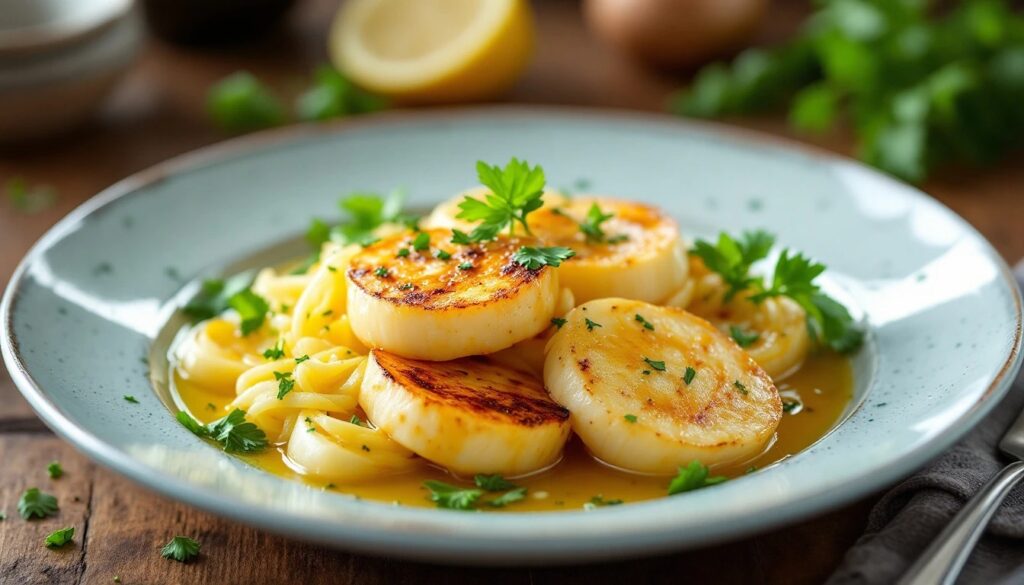
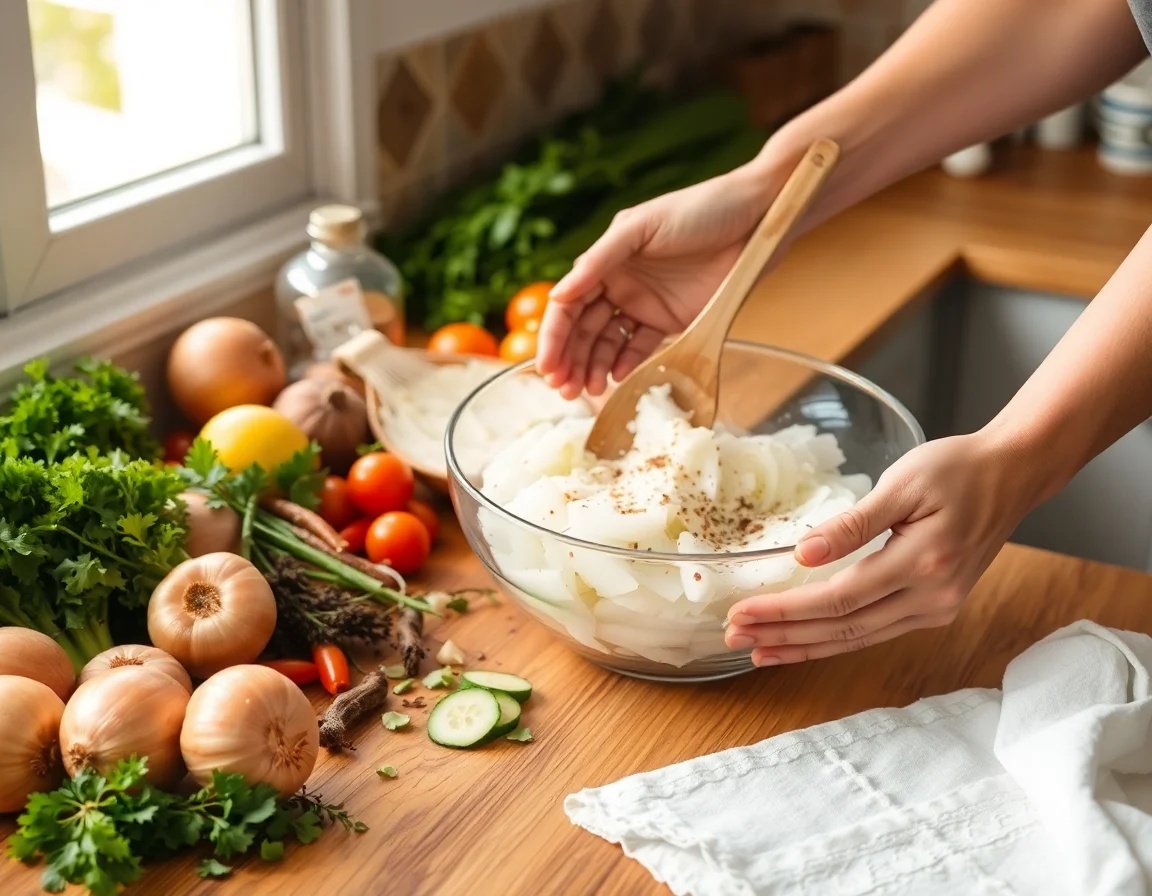
The humble onion, a culinary everyman, rarely takes center stage with such elegant conviction as it does in the ‘Onion Casserole Vinaigrette.’ This intriguing dish, with its juxtaposition of hearty baked comfort and bright, acidic counterpoint, offers a fascinating journey through culinary history, bridging continents and centuries with each flavorful bite. It speaks to the migration of ingredients, techniques, and the very people who shaped our global larder.
At its heart, this recipe is a testament to the Alpine European culinary tradition, heavily influenced by Swiss and Norwegian cheesemaking. The insistence on ‘grated Swiss or Jarlsberg cheese’ is no mere suggestion; it is a direct lineage to the robust, nutty, and subtly sweet flavors that define the mountainous regions where Emmentaler, Gruyère, and later, their Scandinavian counterparts like Jarlsberg, were perfected. These cheeses, born from rich dairy farming cultures, were not just food but a form of preserved wealth, easily transportable and deeply nourishing. Their presence here elevates the everyday onion into something truly special, providing a creamy, savory foundation that encapsulates generations of tradition.
But the story doesn’t end in the high pastures of Switzerland or Norway. The very format of an ‘Onion Casserole’ hints at a transatlantic journey. While baked dishes akin to gratins have existed in Europe for centuries, the ‘casserole’ as a distinct genre—a one-dish meal baked and served in its own vessel—flourished and became a culinary cornerstone in North America, particularly during the 20th century. It became a symbol of convenience, community, and ingenuity, often championed by immigrant populations adapting their ancestral recipes to new kitchens and available ingredients. The addition of rice, while not uncommon in European bakes, here serves to bind and extend, creating a satisfying texture against the tender onions and gooey cheese.
The ‘Vinaigrette’ component is where the dish truly pivots, offering a philosophical statement on balance. In many baked dishes, richness is the goal; here, the bright acidity of white wine vinegar, coupled with dried herbs, cuts through the dairy and onion’s sweetness, preventing it from becoming cloying. This technique echoes the classic French use of acid to brighten and finish a dish, a hallmark of sophisticated European culinary thought. It’s a reminder that even in comfort food, a touch of elegance can elevate the experience.
For the home cook, recreating this dish is an exercise in both history and technique. Begin by truly caramelizing your onions—this is non-negotiable. Patience here yields profound sweetness and depth that no shortcut can replicate. The unsalted butter offers a pure dairy flavor, allowing the cheese to shine. When combining the rice and liquid, aim for perfectly cooked, slightly al dente grains to avoid a mushy texture in the final bake. And finally, the vinaigrette: drizzle it generously after the casserole emerges, bubbling and golden, from the oven. It’s the unexpected flourish, the spark of genius that transforms a humble onion bake into a memorable culinary event, a dish that proudly wears its diverse heritage on its flavorful sleeve. It is a dish that proves comfort and complexity can, indeed, coexist harmoniously.
ONION CASSEROLE VINAIGRETTE
Indulge in a sophisticated take on comfort with this versatile onion casserole. A harmonious blend of delicately caramelized, tender onions, pillowy rice, and your choice of rich Swiss or Jarlsberg cheese, all baked in a luxurious half-and-half embrace. Whether presented warm as a comforting centerpiece or elegantly chilled, its rich flavors find a dynamic counterpoint in a bright, herb-infused vinaigrette, elevating it to a truly exceptional accompaniment for any culinary occasion.
Ingredients
- ½ stick unsalted butter
- ½ cup uncooked rice
- 5 cups boiling water salted
- None None Salt to taste
- 2/3 cup half and half
- 7 to 8 large onions cut into large chunks (approximately 7 to 8 cups); soak in milk for 2 hours if strong flavored
- 1 cup grated Swiss or Jarlsberg cheese
- 6 Tablespoons oil
- 2 Tablespoons white wine vinegar
- 2 Tablespoons finely chopped dried herbs such as parsley, tarragon, chives, and chervil
- None None Salt and freshly ground pepper for vinaigrette, to taste
Instructions
-
Should your chosen alliums possess a particularly pungent character, immerse the onion pieces in milk for a two-hour period prior to commencing the casserole preparation. Ensure they are meticulously drained thereafter.
-
In a generously-sized skillet, gently melt the butter over a medium flame, allowing it to shimmer.
-
Introduce the substantial onion segments to the warmed butter, stirring occasionally until they soften and achieve a translucent sheen. Withdraw the skillet from the heat source.
-
Preheat your oven to a steady 325°F.
-
Bring a pot of salted water to a rolling boil. Add the rice and cook precisely for 5 minutes, then meticulously drain all liquid.
-
Combine the delicately sautéed onions with the par-cooked rice, freshly grated cheese, and half-and-half, either directly in the skillet or within a sizable mixing bowl, stirring until thoroughly integrated.
-
Adjust the seasoning with salt according to your discerning palate.
-
Carefully spoon the prepared mixture into a shallow 2-quart baking vessel. Bake for a duration of 1 hour, or until golden and bubbling at the edges.
-
Present this exquisite casserole either warm from the oven or elegantly chilled. If serving cold, ensure it is accompanied by the vibrant Vinaigrette.
-
For the Vinaigrette: Into a small bowl or a jar fitted with a secure lid, introduce the olive oil, white wine vinegar, dried herbs, a pinch of salt, and a generous grind of fresh pepper. Whisk vigorously or shake resolutely until the ingredients are impeccably combined and beautifully emulsified.
Recipe Notes
This versatile casserole welcomes a variety of onion types; for more pungent varieties, a pre-soak in milk for two hours will mellow their intensity, ensuring a harmonious flavor profile. Its charm extends to both warm and cool presentations, with the bright vinaigrette serving as an ideal complement when enjoyed chilled.
Global Heritage Archive
Anthropological & Spice Migration Record
“A culinary culture valuing dairy products, hearty comfort food, and the skillful transformation of humble ingredients like onions into rich, satisfying baked dishes.”
🌿 Spice & Botanical Migration
Salt is a universal and ancient mineral, its trade routes essential to human civilization across all continents. Black pepper, originating from the Malabar Coast of India, was a cornerstone of the ancient Spice Route, reaching Europe via Arab traders and later European maritime explorers. The dried herbs (assuming common European varieties like thyme or marjoram) are indigenous to the Mediterranean basin, spreading throughout Europe during Roman expansion and medieval periods, becoming staples easily preserved for year-round culinary use.
🏺 Historical & Archaeological Record
The earliest evidence of cheesemaking dates back approximately 7,500 years to Poland, with rennet-traced pottery sieves. The specific style of large-holed, hard Alpine cheese (like Emmentaler) emerged much later, with detailed descriptions appearing in Swiss historical records from the late Middle Ages (e.g., 13th-14th century). Baked dishes resembling gratins or casseroles, combining layered ingredients with cheese or sauces, have roots in Roman ‘patina’ dishes, described in Apicius’s *De re coquinaria* (4th-5th century CE), showcasing early forms of baked savory preparations.
💡 Little Known Facts
- The word ‘casserole’ itself derives from the French term for a saucepan, evolving into the baked dish format primarily in North America during the 20th century.
- Jarlsberg cheese, while Norwegian, was specifically developed in the mid-20th century to mimic the large-holed, nutty ‘Swiss-style’ Emmentaler, highlighting the global appeal and influence of Alpine cheesemaking.
- Onions, despite being a staple ingredient across nearly all cultures, were historically often associated with peasant cuisine in parts of Europe before being elevated in dishes like French onion soup or gratinée.
Historical Locality Cartographic Map — Mestizo Media Archive
📸 Made This Heritage Recipe?
We would love to see how your dish turned out! Send a photo of your culinary creation to [email protected] to be featured in our community gallery.
Leave a review and rate this recipe below!
Curated Literature & Washington DC Downtown Calendar
The Culinary Alchemist: Modern Gastronomy & Flavor Pairing
By LDN Gastronomy Series
Artisanal technique, seasonal sourcing, and kitchen mastery.
Upcoming Downtown Happenings
Live acoustic sessions, gallery receptions, literary salons, and independent trade shows across Washington DC.
