
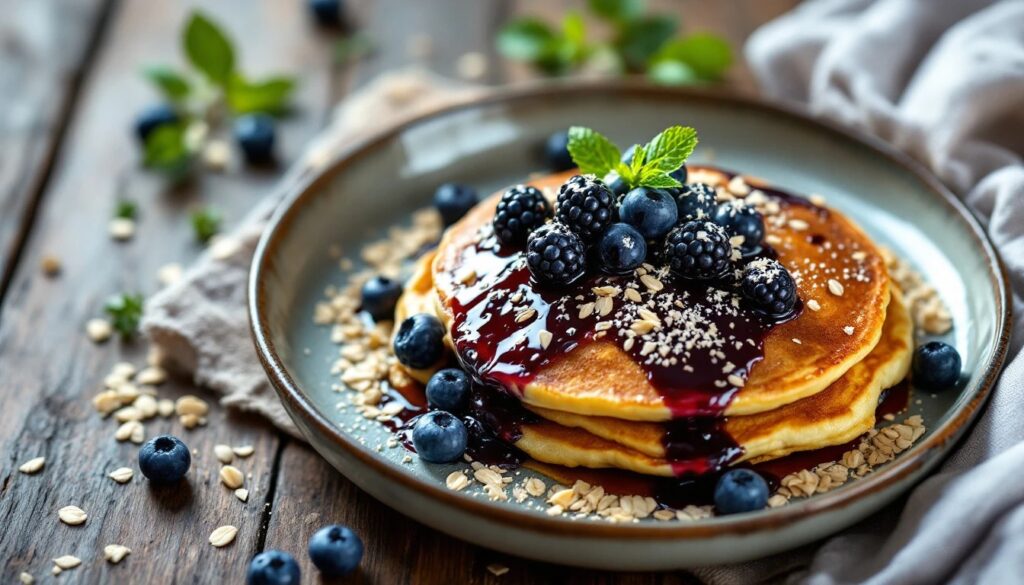
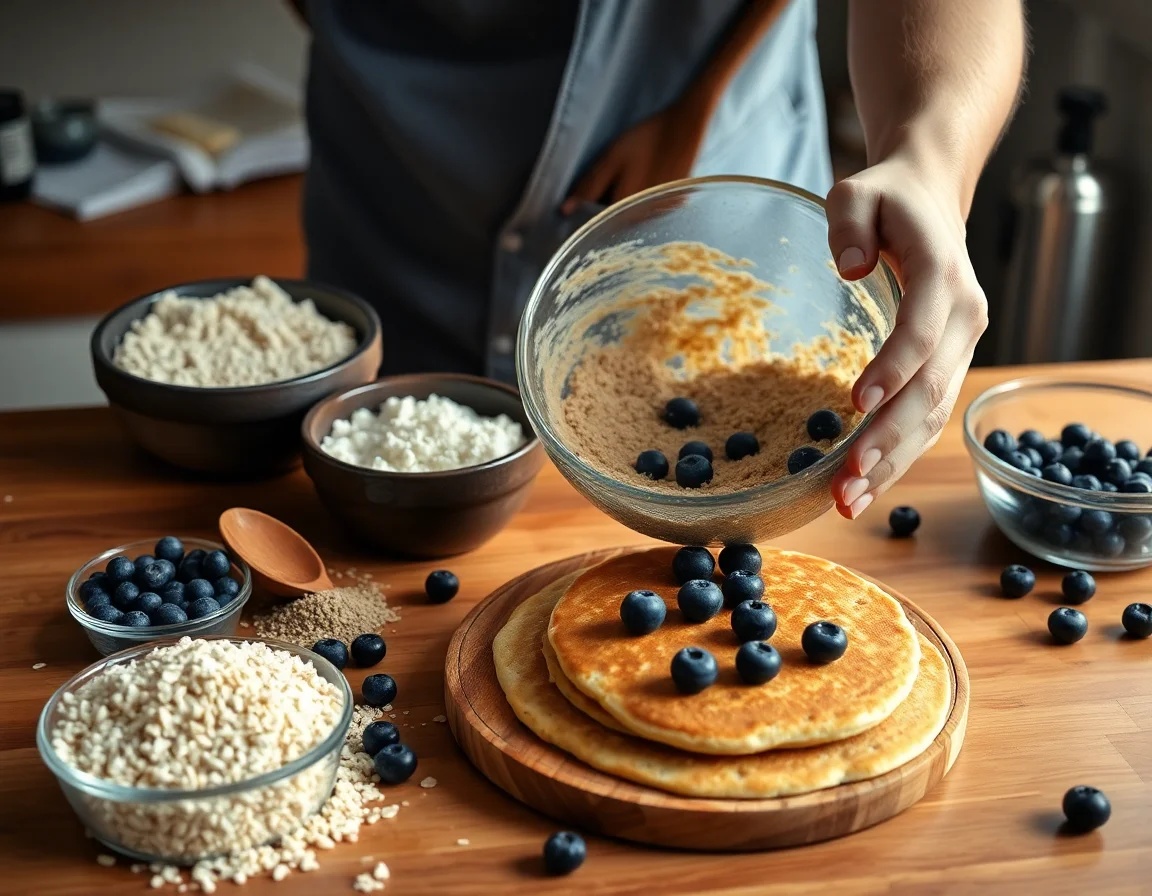
There’s an undeniable allure to the humble pancake, a comfort that transcends cultures and centuries. But our ‘OATMEAL-BLUEBERRY PANCAKES’ recipe isn’t just a simple breakfast; it’s a delicious historical tapestry, a culinary cartography tracing migrations, innovations, and the very spirit of North American ingenuity.
Imagine waking to the aroma of these golden discs, each a testament to global exchange. At their heart lies wheat flour, a grain whose journey began some 10,000 years ago in the Fertile Crescent, spreading across continents to become a cornerstone of human civilization. The specific choice of *whole-wheat* flour in this recipe speaks to a more modern sensibility, often a nod to nutritional awareness that gained traction in the late 19th and 20th centuries, or perhaps a faint echo of times when less refined flours were simply the norm before industrial milling.
Then come the oats, those resilient grains that once grew as ‘weeds’ in ancient Near Eastern wheat fields, finding their true calling in the colder, wetter climates of Northern Europe. From Scottish porridges to Irish gruels, oats became a staple, eventually migrating with European settlers across the Atlantic. Their presence here, in *rolled* form, highlights a 19th-century innovation that made oats quicker to cook, perfectly suiting the pace of modern life and the desire for convenient breakfast.
But what truly anchors this pancake firmly in the New World are the blueberries. These tiny, jewel-toned berries are indigenous to North America, cherished by Native American tribes for millennia, who recognized their nutritional and medicinal properties. For them, blueberries weren’t just food; they were a sacred part of the land, enjoyed fresh, dried, or pounded into pemmican. It wasn’t until the early 20th century that agricultural scientists in the United States developed methods for cultivating blueberries, transforming them from a wild foraging delight into a widespread commercial crop, making their inclusion in a modern breakfast accessible to all.
The leavening agent, baking powder, is another key to this dish’s timeline. Invented in the mid-19th century, it revolutionized home baking, allowing for light, fluffy pancakes without the lengthy fermentation of yeast. This chemical marvel, alongside milk, eggs, salt, and the global migrant sugar (a story spanning from New Guinea to the Caribbean and beyond), completes a picture of a distinctly American breakfast.
To master these pancakes, remember a few kitchen tips. Don’t overmix the batter; a few lumps are perfectly fine and contribute to a tender crumb. Allow the batter to rest for 5-10 minutes; this hydrates the oats and flour, resulting in a more uniform and tender pancake. Cook them on a medium-hot griddle, waiting for bubbles to appear on the surface before flipping, ensuring an even golden-brown. Serve hot, perhaps with a dollop of butter and a drizzle of maple syrup, a quintessential North American pairing, to truly complete this culinary journey. These oatmeal-blueberry pancakes are more than just a meal; they’re a chapter in the ongoing story of human connection through food.
OATMEAL-BLUEBERRY PANCAKES
Imagine a morning bathed in golden light, the aroma of warm berries and wholesome grains wafting gently through your kitchen. These pancakes are a delightful symphony of rustic elegance, marrying the robust character of whole-grain flour and comforting rolled oats with the vibrant, sweet burst of sun-kissed blueberries. More than just a breakfast, they are an invitation to slow down, savor simple culinary pleasures, and create cherished memories around the table, embodying a sense of wholesome indulgence perfect for any day.
Ingredients
- 1½ cups whole-wheat flour None
- 2 tsp. baking powder None
- ½ tsp. salt None
- 2 eggs None
- 1 cup rolled oats None
- 2 tbsp. sugar None
- 2 cups milk None
- 1 cup blueberries None
Instructions
-
In a generously sized mixing bowl, meticulously combine the whole-wheat flour, rolled oats, granulated sugar, baking powder, and a delicate pinch of salt until all dry ingredients are thoroughly integrated. Set this dry blend aside.
-
In a separate, smaller vessel, vigorously whisk together the fresh milk and farm-fresh eggs until a perfectly homogenous, pale yellow mixture is achieved.
-
Gently pour the prepared liquid ingredients into the reserved dry flour mixture. Stir just enough to moisten, being careful to avoid overmixing; a few small lumps are perfectly acceptable and contribute to a tender pancake texture.
-
Delicately fold in the vibrant fresh blueberries, ensuring they are evenly distributed throughout the batter without crushing their tender skins.
-
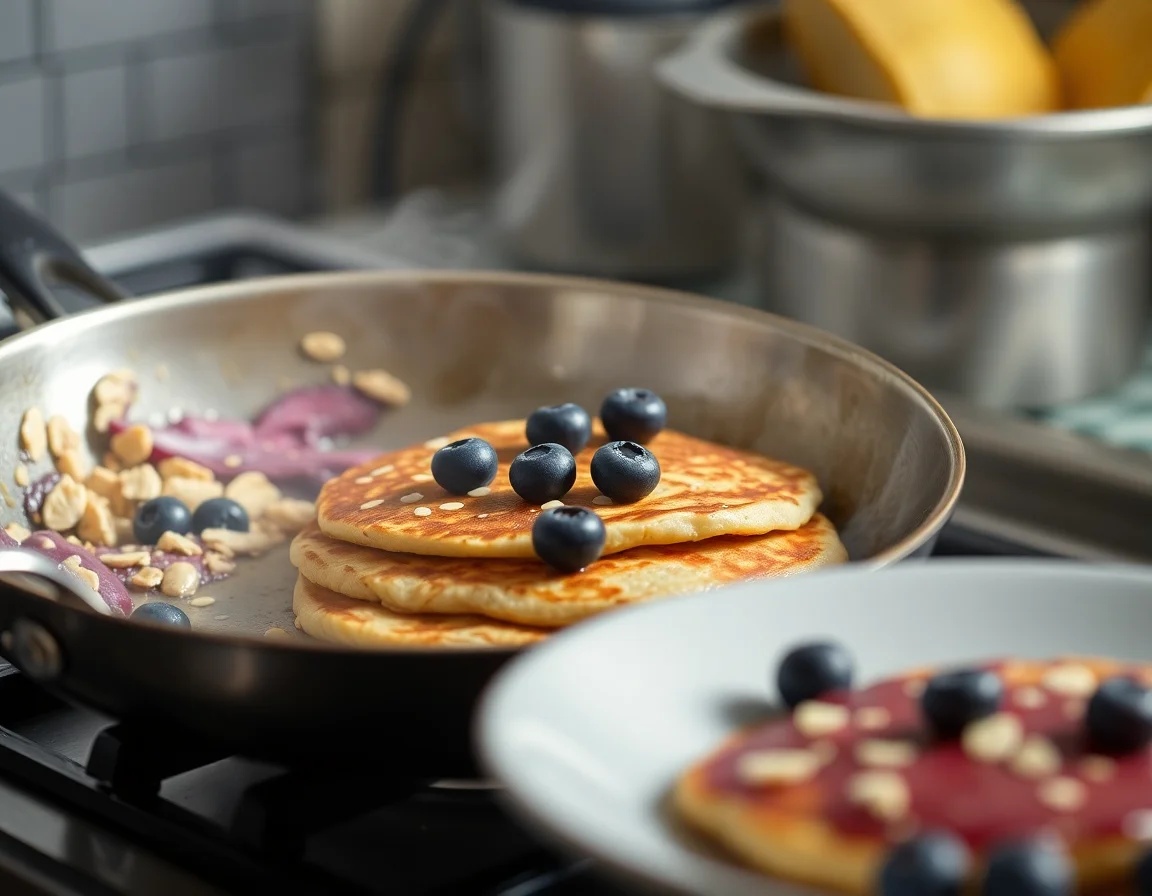
Heat a well-oiled griddle or non-stick pan over medium heat until a drop of water dances on the surface. For each pancake, spoon approximately 1/4 cup of batter onto the hot surface. Cook until the first side is beautifully golden brown and small bubbles begin to appear on the surface, then carefully flip and continue cooking until the second side is equally golden and thoroughly cooked through.
Recipe Notes
For an elevated experience, serve these warm pancakes with a generous drizzle of pure maple syrup, a dollop of crème fraîche, or a dusting of powdered sugar. A hint of fresh lemon zest folded into the batter just before cooking can add a bright, unexpected dimension. Leftover pancakes can be frozen and reheated, offering a convenient gourmet breakfast on busy mornings.
Global Heritage Archive
Anthropological & Spice Migration Record
“A popular North American breakfast and brunch item, often reflecting a blend of European culinary traditions with indigenous ingredients and a modern focus on wholesome grains.”
🌿 Spice & Botanical Migration
While this recipe contains no traditional ‘spices’ or ‘herbs’ beyond salt, its key ingredients tell a compelling migration story. Sugar, originating as sugarcane in New Guinea, was disseminated globally via ancient trade routes to India and the Middle East, then to Europe through the Crusades, and massively produced in the Americas post-Columbian Exchange. Oats, a Northern European staple, migrated with settlers to the New World, while blueberries are exclusively native to North America, making their journey from indigenous wild food to cultivated global commodity.
🏺 Historical & Archaeological Record
The oldest archaeological evidence of a flatbread-like precursor to pancakes was discovered in Jordan, dating back 14,500 years to the Natufian hunter-gatherer culture. These early flatbreads, made from wild cereals and tubers, were likely cooked on hot stones, preceding the development of leavened bread and more refined griddle cakes by millennia.
💡 Little Known Facts
- The cultivation of highbush blueberries, essential for widespread commercial availability, was primarily developed in the United States in the early 20th century by agriculturalists Frederick Coville and Elizabeth White.
- Baking powder, a crucial leavening agent for modern fluffy pancakes, was first commercially produced in the mid-19th century, revolutionizing home baking and reducing the need for yeast or sourdough starters.
- Oats, while originating as a weed in ancient Near Eastern grain fields, became a staple crop primarily in Northern European climates, such as Scotland and Ireland, before migrating with settlers to North America.
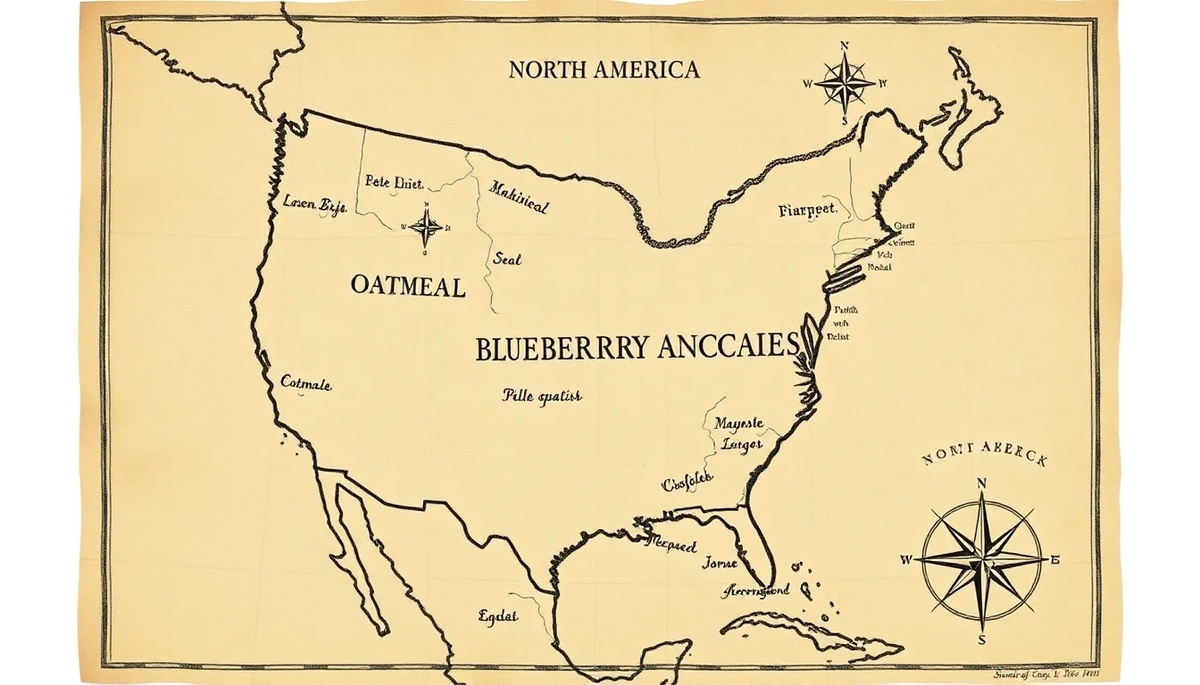
Historical Locality Cartographic Map — Mestizo Media Archive
📸 Made This Heritage Recipe?
We would love to see how your dish turned out! Send a photo of your culinary creation to [email protected] to be featured in our community gallery.
Leave a review and rate this recipe below!
Curated Literature & Washington DC Downtown Calendar
The Culinary Alchemist: Modern Gastronomy & Flavor Pairing
By LDN Gastronomy Series
Artisanal technique, seasonal sourcing, and kitchen mastery.
Upcoming Downtown Happenings
Live acoustic sessions, gallery receptions, literary salons, and independent trade shows across Washington DC.
