
The story of the lemon tart is deeply entwined with the evolution of European patisserie, particularly finding its footing in the refined kitchens of 18th-century England and France. While medieval Europe boasted a wide array of “open tarts” – flat pastries filled with everything from meat to fruit and custards – the specific iteration of a custard-based tart infused with the bright, acidic punch of lemon took time to develop. Lemons themselves, originally hailing from the foothills of the Himalayas in Northeast India and Southeast Asia, embarked on an epic journey. Carried westward by astute Arab traders along ancient spice routes through Persia, these golden fruits reached the Mediterranean basin by the 10th and 11th centuries, slowly spreading throughout Europe during the Renaissance and becoming more widely cultivated. Their increasing availability was a pivotal moment, allowing chefs and home cooks alike to experiment with their distinctive flavor.
Early English recipes often referred to a “lemon cheese” or “lemon curd,” which initially served as a spread or relish for bread, rather than a tart filling. As culinary techniques advanced and the desire for more elegant desserts grew, this vibrant lemon concoction found its true calling as the star of a delicate pastry shell. Similarly, sugar, another indispensable component, embarked on its own global odyssey from New Guinea, through India, Persia, and the Arab world, before finally reaching Europe. The insatiable demand for sugar eventually fueled the transatlantic trade and profoundly reshaped global economies and palates, transforming it from a luxury spice into an accessible sweetener. The coming together of these global ingredients – the ancient Asian lemon, the tropical sugar, alongside European staples like butter, eggs, and wheat flour – perfectly illustrates how interconnected our culinary heritage truly is, a delicious testament to centuries of trade and cultural exchange.
Crafting the perfect lemon tart is an art, but one that is surprisingly accessible. The foundation lies in a meticulously blind-baked crust, ensuring it remains crisp and golden beneath its moist filling. The filling itself demands a gentle hand; a careful balance of lemon juice, zest, sugar, and eggs, often enriched with butter, heated slowly to a silken, barely set custard. The trick is to remove it from the oven when it still has a slight wobble, allowing it to firm up perfectly as it cools. For an exceptionally smooth texture, strain the custard before pouring it into the crust to remove any bits of zest or cooked egg. Whether garnished simply with a dusting of powdered sugar or adorned with fresh berries and meringue, a lemon tart remains a timeless classic, a simple yet profound indulgence that speaks volumes about culinary history, global migration, and the pure joy of exquisite taste.
LEMON TARTS
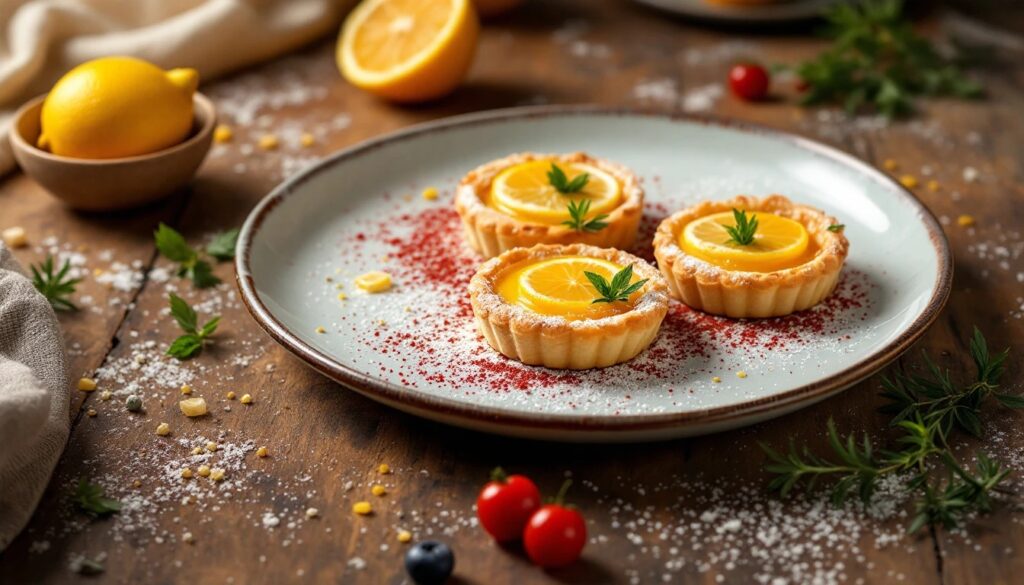
Transport your palate to sun-drenched orchards with these exquisite Lemon Tarts, a revered culinary treasure that beautifully marries heritage charm with vibrant contemporary flavor. Each tart is a miniature masterpiece, featuring a lavish, piquant citrus custard – a symphony of bright, tangy lemon notes – cradled within a delicate, golden pastry crust. This dessert embodies the quintessence of artisanal baking, offering an unparalleled indulgence perfect for elevating any special occasion or simply brightening an ordinary afternoon with a touch of sophisticated sweetness.
Ingredients
- None None Pie crust or puff paste for small tart molds
- 3 whole eggs None
- 1 lemon lemon rind shredded
- 2 lemons juice None
- ½ cup sugar None
- ¼ Tablespoon butter None
Instructions
-
Commence by carefully lining your chosen small tartlet molds with your preferred pastry, be it a tender pâte brisée or a flaky puff pastry.
-
Gently perforate the base of each pastry shell multiple times with the tines of a fork; this crucial step, known as docking, prevents the crust from puffing unevenly during baking.
-
For the luscious filling, begin by lightly whisking three whole, fresh eggs until just combined.
-
To the gently beaten eggs, meticulously incorporate the finely shredded rind of one vibrant lemon, the invigorating juice freshly squeezed from two lemons, half a cup of granulated sugar, and a quarter tablespoon of rich butter.
-
Thoroughly blend all these filling components until they are seamlessly integrated and the mixture is homogenous.
-
Over a gentle, low heat, gradually cook the lemon mixture, ensuring continuous, patient stirring, until it achieves the smooth, velvety consistency of a light custard.
-
Remove the custard from the heat and allow it to cool slightly, tempering its warmth before proceeding.
-
Gracefully spoon the cooled, luminous lemon custard into the prepared pastry-lined tartlet molds, filling them almost to the brim.
-
Finally, bake the tarts in a preheated oven at 350°F (175°C) until the pastry crusts are beautifully golden brown and the filling is set with a slight tremble in the center, indicating a perfect, creamy texture.
Recipe Notes
While this recipe thoughtfully suggests using 'small tart molds' for individual servings, it does not specify a precise quantity of yield. Chefs are encouraged to anticipate that this preparation will produce multiple individual tartlets, with the exact number depending on the specific dimensions of the molds utilized.
Global Heritage Archive
Anthropological & Spice Migration Record
“A refined pastry tradition emerging from European kitchens, often served as an elegant dessert or a staple of afternoon tea.”
🌿 Spice & Botanical Migration
The vibrant lemon, central to this tart, embarked on an epic journey from its ancestral home in Northeast India/Southeast Asia. Carried westward by Arab traders along ancient routes through Persia, it reached the Mediterranean basin by the 10th-11th centuries, eventually spreading across Europe during the Renaissance. Sugar, another key ingredient, followed a similar eastward migration from New Guinea through India, reaching Europe via the Islamic world and Crusades, later transformed by the transatlantic trade.
🏺 Historical & Archaeological Record
While open tarts with various fillings have roots in medieval Europe, specific recipes for citrus-flavored custards resembling lemon tarts began to appear in English cookbooks in the early to mid-18th century. Hannah Glasse’s ‘The Art of Cookery Made Plain and Easy’ (1747) contains recipes for ‘Lemon Cheesecakes’ that are direct precursors, solidifying its presence in the written culinary record of the era.
💡 Little Known Facts
- The precursor to modern lemon tarts, ‘lemon cheese’ or ‘lemon curd,’ was originally served in 18th-century England as a relish alongside bread, not primarily as a tart filling.
- Early recipes for lemon tarts sometimes incorporated animal fats like suet or bone marrow in the filling, a practice that gradually diminished as butter became more accessible and preferred for its flavor.
📸 Made This Heritage Recipe?
We would love to see how your dish turned out! Send a photo of your culinary creation to [email protected] to be featured in our community gallery.
Leave a review and rate this recipe below!
Curated Literature & Washington DC Downtown Calendar
The Culinary Alchemist: Modern Gastronomy & Flavor Pairing
By LDN Gastronomy Series
Artisanal technique, seasonal sourcing, and kitchen mastery.
Upcoming Downtown Happenings
Live acoustic sessions, gallery receptions, literary salons, and independent trade shows across Washington DC.
