
Our journey with lemonade begins not in a sun-drenched American backyard, but in the bustling markets and sophisticated courts of medieval Egypt. By the 13th century, sweetened lemon drinks, known as “qatarzimat” or “sikwaj,” were not just popular, but a hallmark of hospitality and refinement. These early iterations, often infused with herbs and spices, laid the groundwork for the global phenomenon lemonade would become. The lemon itself, a fruit of extraordinary versatility, embarked on an epic migration from its ancestral home in the foothills of the Himalayas, traversing the ancient Silk Road to the Middle East, North Africa, and eventually, through the hands of Arab traders and later Spanish conquistadors, to the Americas. Its journey is a testament to the interconnectedness of ancient civilizations and the enduring appeal of its vibrant acidity.
Then there is lavender, a fragrant sentinel of the Mediterranean landscape. For millennia, this elegant herb has captivated humanity, its uses stretching far beyond perfumery. Ancient Egyptians used lavender in mummification rituals and and cosmetics; the Romans incorporated it into their baths and even their cuisine, believing in its medicinal virtues and its power to ward off malevolent spirits. Its gentle, slightly camphorous, yet profoundly aromatic profile brings a sophisticated depth to the sharp brightness of lemon. When infused gently, lavender doesn’t overwhelm but rather harmonizes, softening the citrus’s edges and adding a layer of calming complexity.
And finally, mint, the perennial companion to countless refreshing beverages. With roots stretching across Europe, Asia, and Africa, various mint species have been cultivated for their invigorating scent and taste since antiquity. Whether a digestive aid, a breath freshener, or a simple garnish, mint’s bright, peppery coolness provides the perfect counterpoint, adding an immediate lift and a lingering freshness that cleanses the palate.
This particular rendition, with its convenience-driven foundation of frozen lemonade concentrate, is a distinctly modern American innovation. The post-World War II era saw a boom in processed foods, and frozen juice concentrates, initially developed for military logistics, quickly found their way into home freezers, democratizing access to fruit juices year-round. Marrying this modern convenience with the ancient wisdom of floral and herbal infusions speaks to a contemporary culinary culture that values both ease and an elevated sensory experience. It reflects a desire to blend familiar comfort with a touch of artisanal sophistication, transforming an everyday drink into a moment of mindful enjoyment.
Crafting your own Lavender Lemonade is a simple yet rewarding act. The key is in the infusion: gently simmering dried lavender blossoms in a small amount of boiling water creates a potent, aromatic extract. Once cooled, this floral essence can be added to your lemonade, allowing you to control the intensity. Remember to taste as you go, balancing the sweetness, tartness, and the delicate floral notes. A sprig of fresh mint, muddled slightly to release its oils, provides a final flourish, adding both visual appeal and an extra dimension of freshness. Serve it over ice, perhaps with a thin slice of lemon, and let the historical tapestry of its ingredients transport you, one refreshing sip at a time. This isn’t just a drink; it’s a bridge between ancient traditions and modern palates, a testament to the enduring power of global flavors coming together in perfect harmony.
LAVENDER LEMONADE
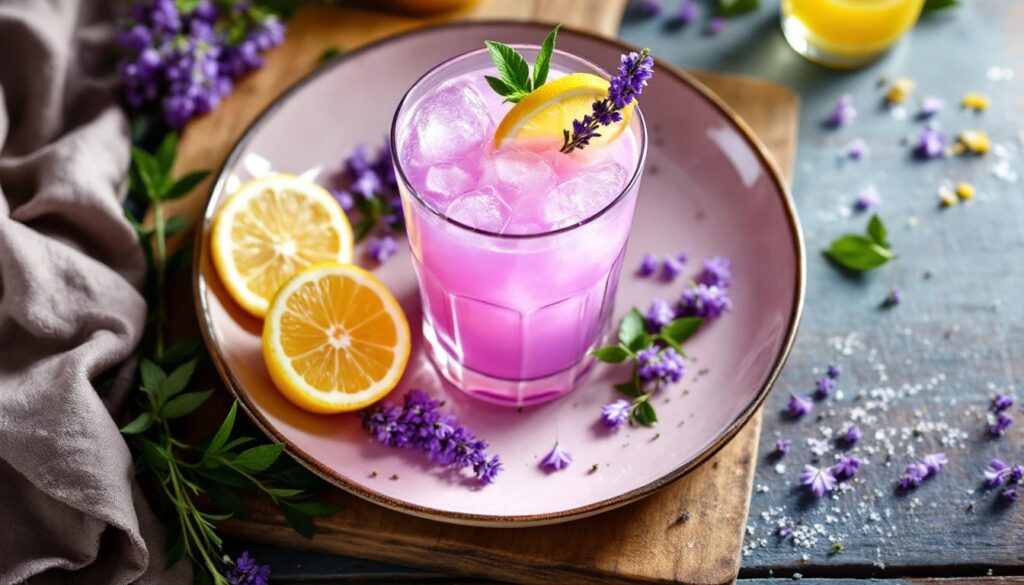
Behold a captivating elixir where the spirited tang of sun-kissed citrus gracefully intertwines with the serene, fragrant whisper of lavender. This enchanting beverage transcends mere refreshment, presenting a symphony of flavors ideal for sophisticated garden fêtes or any sun-drenched gathering. Its pièce de résistance? A breathtaking chromatic metamorphosis, as the verdant infusion dances into a delicate blush, imbuing each glass with a touch of pure liquid alchemy.
Ingredients
- 1 can frozen yellow lemonade concentrate 12-oz.
- 1.5 cup dried lavender blossoms None
- 2 cups boiling water None
- 1 gallon cold water None
- None None mint sprigs for garnish
Instructions
-
In a substantial pitcher or beverage dispenser, thoroughly combine the premium lemonade concentrate with a full gallon of pristine, cold water, stirring until uniformly blended.
-
Bring a generous quantity of water to a vigorous boil. Carefully place the fragrant lavender blossoms into a heatproof vessel and pour the freshly boiled water over them. Allow the lavender to steep undisturbed for precisely ten minutes, observing as its essence imparts a vibrant green hue to the liquid.
-
Employ a fine-mesh sieve or cheesecloth to meticulously strain the potent lavender infusion, ensuring all botanical solids are removed. Gently decant this aromatic, verdant liquid into the prepared lemonade mixture.
-
Observe with delight as the liquid undergoes its charming transformation, blossoming from green to a soft, ethereal pink. Chill thoroughly before serving over sparkling ice, adorned with fresh sprigs of garden mint for an elegant flourish.
Recipe Notes
This cherished recipe hails from the annals of an esteemed botanical collective, said to have been perfected by a visionary artisan known for their profound understanding of aromatic flora. It embodies a legacy of natural wisdom and artful infusion, a testament to the delicate dance between garden and glass, transforming the ordinary into the extraordinary through the magic of lavender.
Global Heritage Archive
Anthropological & Spice Migration Record
“A culinary culture that embraces global flavors and floral notes, integrating traditional ingredients into convenient, refreshing beverages, often reflecting modern trends in artisanal drinks and wellness.”
🌿 Spice & Botanical Migration
Lemons, originating in Southeast Asia, traversed the Silk Road and the Spice Routes, reaching the Middle East and Mediterranean by the early centuries CE, later brought to the Americas during the Columbian Exchange. Lavender, native to the Mediterranean region, was spread widely by the Romans throughout Europe. Mint, with various species native to Europe, Asia, and Africa, has been cultivated globally for millennia, its ubiquity a testament to ancient trade and human migration. This recipe, therefore, represents a modern confluence of botanicals with ancient origins, brought together through centuries of global trade and cultural exchange.
🏺 Historical & Archaeological Record
The earliest documented ‘lemonade-like’ drinks (e.g., sikwaj, a sweetened lemon drink) date to medieval Egypt, with written records appearing in the 13th and 14th centuries. Cultivation of lemons themselves can be traced back to ancient India or China, with archaeological evidence of *Citrus medica* (citron, a precursor to modern lemons) in the Near East around 1000 BCE. Lavender’s use in unguents and perfumery is evidenced in ancient Egypt (c. 3000 BCE) and later in Roman texts describing its medicinal and culinary applications.
💡 Little Known Facts
- Lemonade’s first recorded appearance as a sweetened drink dates back to medieval Egypt, where ‘qatarzimat’ (lemon and sugar drink) was common.
- Ancient Romans used lavender not just for its fragrance but also in baths and cooking, believing it had medicinal properties and and could help ward off evil spirits.
- The concept of frozen juice concentrates was pioneered in the United States in the 1940s, initially for military supply during WWII, and later became a household staple.
📸 Made This Heritage Recipe?
We would love to see how your dish turned out! Send a photo of your culinary creation to [email protected] to be featured in our community gallery.
Leave a review and rate this recipe below!
Curated Literature & Washington DC Downtown Calendar
The Culinary Alchemist: Modern Gastronomy & Flavor Pairing
By LDN Gastronomy Series
Artisanal technique, seasonal sourcing, and kitchen mastery.
Upcoming Downtown Happenings
Live acoustic sessions, gallery receptions, literary salons, and independent trade shows across Washington DC.
