
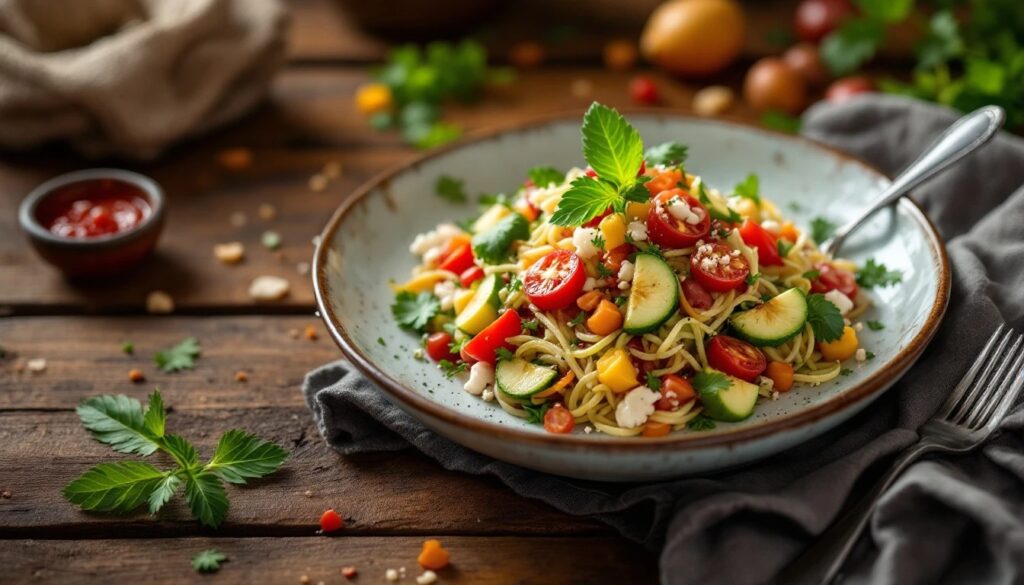
At its core, the Kansas City Salad is a vibrant medley of crisp cauliflower and broccoli florets, bright green scallions, and tender frozen peas, all bound together by a luscious, tangy dressing. This dressing—a harmonious blend of mayonnaise, sour cream, and a distinctive punch of horseradish—is where the salad truly sings, telling a story of diverse culinary influences. Mayonnaise, a French invention from the 18th century, signifies the adoption of sophisticated European sauces into American kitchens. Sour cream, on the other hand, whispers of the Central and Eastern European immigrant traditions that profoundly shaped Midwestern cuisine, bringing with it a rich heritage of fermented dairy products. The horseradish, too, points to these Germanic and Slavic roots, a powerful spice embraced for its ability to cut through richness and add a bracing piquancy.
Preparing this salad is straightforward, a testament to its humble, home-cooked charm. Traditional methods involve gently blanching the broccoli and cauliflower to tender-crisp perfection, or even using them raw for maximum crunch, ensuring the vegetables retain their vibrant color and texture. The frozen peas are simply thawed, adding a burst of sweetness and softness. The scallions provide a delicate oniony bite, balancing the earthiness of the cruciferous vegetables. The magic truly happens in the dressing, where the creamy base is seasoned with salt, pepper, and that crucial kick of horseradish. It’s a dish meant to be made ahead, allowing the flavors to meld and deepen as it chills, transforming from a mere collection of ingredients into a symphony of taste and texture.
The global migration of these ingredients is a tale as old as trade itself. Black pepper, originating in the humid climes of Southern India, embarked on epic journeys along the ancient Silk and Spice Routes, becoming a ubiquitous seasoning across continents. Cauliflower and broccoli, descendants of wild cabbage native to the Mediterranean, traveled with European explorers and settlers, finding new homes and agricultural prowess in the Americas. Even the humble pea, with roots stretching back to the Near East, traversed continents to become a staple. The Kansas City Salad, therefore, is not just a dish from one city; it’s a delicious convergence of global culinary pathways.
For kitchen tips, always ensure your vegetables are thoroughly dry before mixing them with the dressing; excess moisture can dilute the flavors. For an extra layer of texture, consider adding crumbled bacon or toasted slivered almonds just before serving. A crucial step for optimal flavor is to allow the salad to chill in the refrigerator for at least an hour, or even better, overnight. This resting period allows the dressing to permeate the vegetables, creating a more cohesive and satisfying experience. The Kansas City Salad, in its unassuming elegance, offers a delightful journey through history, flavor, and the enduring power of food to connect cultures and communities.
KANSAS CITY SALAD
Unveil a culinary mosaic with this exquisite Kansas City Salad, a vibrant tableau where garden-fresh textures meet an unforgettable zest. Tender-crisp florets of emerald broccoli and ivory cauliflower mingle gracefully with the verdant pop of sweet peas and the delicate piquancy of thinly sliced scallions. Each component is lavishly enrobed in a proprietary dressing—a creamy, exhilarating emulsion of tangy sour cream, rich mayonnaise, and the spirited kick of prepared horseradish. This magnificent creation, perfect for gracing any gathering, promises a refreshing prelude or a vibrant accompaniment, its flavors deepening to perfection with time.
Ingredients
- 1 head cauliflower None
- 1 bunch broccoli florets None
- 5-6 None scallions also tops
- 1 pkg. frozen peas 10 oz., defrosted
- 1/2 cup sour cream None
- 1/2 cup mayonnaise None
- 1 tbsp. horseradish None
- None None salt to taste
- None None pepper to taste
Instructions
-
Begin by meticulously dicing the crisp florets of cauliflower and broccoli into petite, bite-sized pieces. Concurrently, thinly slice the scallions (or opt for a finely minced red onion if preferred) to contribute a subtle allium note.
-
In a spacious mixing bowl, gently combine the freshly prepared vegetables with the thawed, sweet garden peas, ensuring an even distribution of color and texture.
-
In a separate, smaller vessel, whisk together the velvety sour cream, creamy mayonnaise, piquant horseradish, a pinch of sea salt, and freshly ground black pepper until the mixture achieves a smooth, harmonious consistency, free of any streaks.
-
Generously cascade the prepared dressing over the vibrant medley of vegetables and peas. Employ a spatula or large serving spoons to gently fold and coat every component until each piece glistens evenly.
-
For optimal flavor integration and a perfectly chilled experience, cover the salad and refrigerate it for a minimum of three hours, or ideally, overnight, allowing the distinctive elements to deeply intermingle and develop their full potential.
Recipe Notes
Chef's Insight: To deepen the dressing's complexity and ensure a truly unforgettable piquancy, taste before chilling. Should you desire an additional layer of bright, tangy flavor, stir in one tablespoon of robust Dijon mustard prior to the refrigeration period.
Global Heritage Archive
Anthropological & Spice Migration Record
“This salad embodies the potluck and picnic culinary culture of the American Midwest, characterized by hearty, communal dishes often influenced by European immigrant traditions.”
🌿 Spice & Botanical Migration
Black pepper (Piper nigrum), native to Southern India, was a cornerstone of the ancient Spice Route, eventually reaching Europe and then the Americas through colonial trade. Horseradish (Armoracia rusticana), originating in Southeastern Europe and Western Asia, was introduced to the United States by European immigrants, particularly those from German and Slavic regions, who prized its pungent kick in their cuisine.
🏺 Historical & Archaeological Record
The concept of a ‘salad’—dressed vegetables—has ancient roots, with evidence of simple mixed greens dressed with oil and vinegar found in Roman culinary texts. However, the specific genre of creamy, mayonnaise-based salads for mixed vegetables finds its formalized origins in 18th-century French cuisine, while sour cream-based vegetable preparations are deeply embedded in older Central and Eastern European culinary traditions.
💡 Little Known Facts
- The specific ‘Kansas City Salad’ name, while evocative, does not trace back to a singular originating chef or restaurant, but rather emerged as a popular regional designation for this style of creamy vegetable salad found in local diners, delis, and home kitchens.
- The use of both sour cream and mayonnaise in the dressing is a hallmark of many mid-20th century American ‘comfort salads,’ reflecting a widespread culinary trend popularized through community cookbooks and home economics guides for creating rich, tangy, and substantial side dishes.
📸 Made This Heritage Recipe?
We would love to see how your dish turned out! Send a photo of your culinary creation to [email protected] to be featured in our community gallery.
Leave a review and rate this recipe below!
Curated Literature & Washington DC Downtown Calendar
The Culinary Alchemist: Modern Gastronomy & Flavor Pairing
By LDN Gastronomy Series
Artisanal technique, seasonal sourcing, and kitchen mastery.
Upcoming Downtown Happenings
Live acoustic sessions, gallery receptions, literary salons, and independent trade shows across Washington DC.
