
At first glance, the ingredient list reads like a roll call of mid-20th century American pantry staples. Worcestershire sauce, a fermented British concoction born of colonial India’s culinary traditions, made its way across the Atlantic to become an umami powerhouse in American kitchens. Ketchup, itself a sweet and tangy Americanized descendant of Chinese *koe-chiap* fish sauce, anchors the savory-sweet balance. Then come the unmistakably American convenience items: liquid smoke, a brilliant late 19th-century invention that democratized the smoky essence of barbecue; Kitchen Bouquet, the browning and seasoning sauce that promised deeper color and richer flavor with minimal effort; and the ubiquitous garlic and onion powders, offering instant aromatic depth. These components speak to a period where efficiency and consistent flavor were paramount, a reflection of an increasingly industrialized and convenience-driven society.
Yet, amidst these mainstream giants, a star ingredient shines, firmly grounding this marinade in a specific American geography: New Mexico powdered green or red chili. This isn’t just any chili; it’s a declaration. These specific land-race varieties of *Capsicum annuum*, cultivated for centuries by Indigenous peoples and Hispano communities in the American Southwest, carry a distinct earthy, often smoky, and subtly sweet heat. Its inclusion transforms what might otherwise be a generic steak sauce into a distinctively Southwestern American experience, blending ancient indigenous flavors with the broader Anglo-American culinary lexicon. Olive oil, a Mediterranean staple, and vinegar or lemon juice, universally recognized acids for tenderization and brightness, provide the classic base, tying these disparate flavors together.
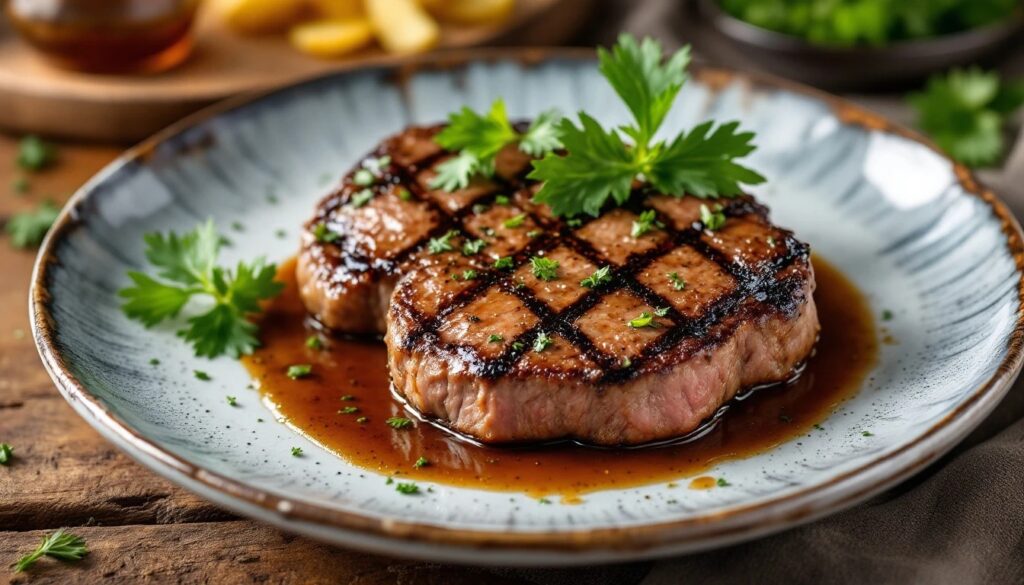
This marinade, therefore, transcends a simple list of ingredients. It embodies a culinary culture born from the American melting pot – pragmatic, resourceful, and unafraid to blend Old World sophistication with New World vibrancy. It’s a celebration of convenience without sacrificing flavor, a bridge between traditional barbecue and home kitchen practicality. Preparing a steak with this marinade means more than just cooking; it’s engaging with a narrative of migration, innovation, and taste. For best results, allow your chosen cut of beef to luxuriate in this flavorful bath for at least 4-6 hours, or even overnight, in the refrigerator. Before cooking, ensure the steak reaches room temperature for even cooking, then sear it hot and fast, or grill until perfectly charred. Each bite will reveal layers of history, a symphony of global ingredients harmonized by American ingenuity, delivering a profoundly satisfying culinary experience that is both familiar and uniquely profound.
HOME MADE STEAK MARINADE
This exquisite, handcrafted marinade serves as the quintessential secret to imbuing your prime steaks with an unparalleled depth of character. Conceived to elevate the inherent succulence of fine cuts, it promises to transform any al fresco dining experience into a truly memorable occasion. A sophisticated symphony of savory spices, the piquant allure of Worcestershire, and a subtle whisper of smoke converge in this blend, paying homage to time-honored culinary traditions where straightforward preparation yields profoundly satisfying results.
Ingredients
- 1/4 lb butter or margarine melted
- 1/4 tsp garlic powder or garlic salt None
- 1/4 cup Worcestershire sauce None
- 1/4 cup liquid smoke None
- 1/4 cup Kitchen Bouquet None
- 1/4 cup BBQ sauce Old El Paso brand specified
- 1 tbsp white vinegar or lemon juice None
- 1 tbsp olive oil optional
- 1/4 tsp New Mexico powdered green or red chili may be added for Southwest taste
- 1/4 tsp smoked salt None
- 1/4 tsp onion salt or powder None
- None None salt to taste with either artificial or real salt
- 2 tbsp catsup optional if BBQ sauce is used
- 1/2 tsp ground mustard None
Instructions
-
In a small, sealable jar, carefully combine all listed ingredients. Secure the lid and vigorously agitate the vessel until the mixture is thoroughly emulsified.
-
Properly sealed and chilled, this marinade retains its exquisite quality and efficacy for an impressive duration of multiple weeks in the refrigerator.
-
To impart optimal flavor: Approximately one hour before commencing the grilling process, liberally apply the marinade to your chosen steaks, ensuring full coverage. For superior results, we advise selecting cuts with a minimum thickness of 2½ inches.
-
While the steaks char over intensely heated charcoal, consistently brush them with the reserved marinade. This repeated application enhances flavor depth and ensures exceptional succulence.
-
Crucially, refrain from overcooking. Aim for a perfect medium-rare doneness, generally accomplished within a total cooking time of about 15 minutes.
-
For optimal searing and moisture retention, limit turning the steak to a singular occasion. Grill each surface until lustrous juices visibly emerge, indicating ideal caramelization.
Recipe Notes
This exquisite preparation draws inspiration from the cherished culinary contributions of Laurie K. Wilson, hailing from Dugway Proving Grounds, Utah, and Myrna E. Dross.
Global Heritage Archive
Anthropological & Spice Migration Record
“A culinary culture rooted in 20th-century American home cooking, showcasing a pragmatic blend of convenience ingredients with the vibrant, earthy flavors of the American Southwest, tailored for robust grilled or pan-fried meats.”
🌿 Spice & Botanical Migration
This marinade is a tapestry of global spice migration. Garlic, onion, and ground mustard trace their origins to Central Asia and the Mediterranean, traveling across continents via ancient trade routes like the Silk Road. The vital chili powder, however, is a New World contribution, originating in Mesoamerica and brought to global cuisine through the Columbian Exchange, with New Mexico varieties developing distinct regional characteristics. The confluence of these Old and New World ingredients, amplified by modern convenience products, perfectly encapsulates American culinary history.
🏺 Historical & Archaeological Record
While this specific marinade is a modern American invention, the fundamental techniques it employs are ancient. The practice of tenderizing and flavoring meat with acidic liquids, salt, and aromatic spices (the essence of a marinade) can be traced back to Neolithic times, with archaeological evidence of salt preservation and early brining techniques found across continents. Written records of complex sauces and flavorings for meat appear in ancient texts like Apicius’s *De re coquinaria* from Imperial Rome (circa 4th century CE), demonstrating sophisticated approaches to meat preparation that predate the modern concept of ‘marinade’ as we know it.
💡 Little Known Facts
- Kitchen Bouquet, a browning and seasoning sauce integral to this marinade’s depth, was first introduced in 1878 by the Kitchen Bouquet Company in Pennsylvania, becoming a staple in American kitchens by the mid-20th century.
- The specific ‘New Mexico’ chili refers to unique land-race varieties of *Capsicum annuum* cultivated in the region for centuries, with Hatch, Española, and Chimayó being famous for their distinct flavors. New Mexico is the largest producer of chile in the U.S.
📸 Made This Heritage Recipe?
We would love to see how your dish turned out! Send a photo of your culinary creation to [email protected] to be featured in our community gallery.
Leave a review and rate this recipe below!
Curated Literature & Washington DC Downtown Calendar
The Culinary Alchemist: Modern Gastronomy & Flavor Pairing
By LDN Gastronomy Series
Artisanal technique, seasonal sourcing, and kitchen mastery.
Upcoming Downtown Happenings
Live acoustic sessions, gallery receptions, literary salons, and independent trade shows across Washington DC.
