
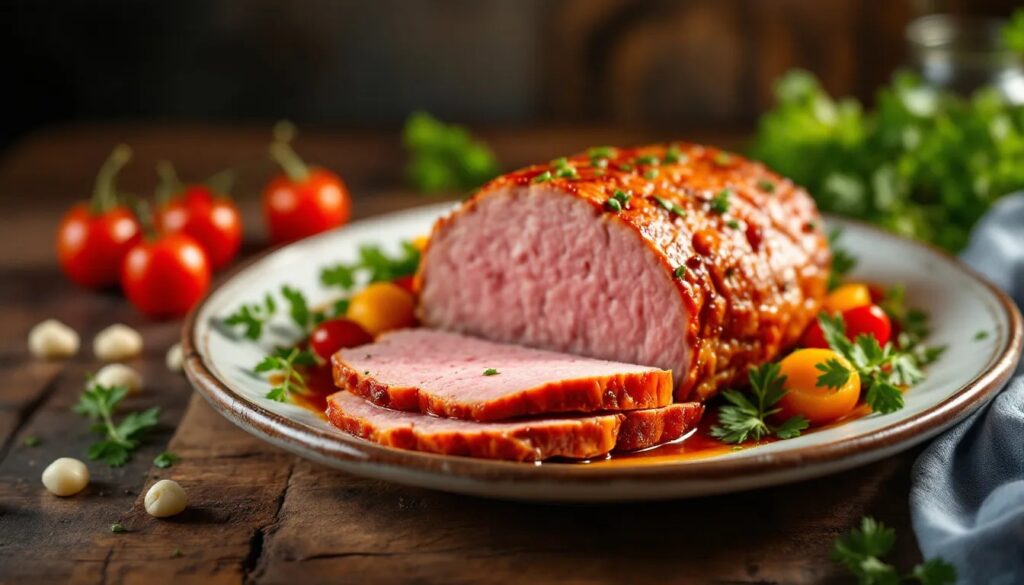
The aroma of Ham Loaf baking in the oven conjures a vivid tableau of mid-20th century American domesticity. More than just a meal, this dish is a culinary time capsule, a hearty testament to a post-war era defined by burgeoning prosperity, a fascination with convenience, and a collective palate that savored the comforting marriage of sweet and savory. It’s a dish born not in ancient traditions or exotic lands, but in the evolving kitchens of the United States, reflecting a fascinating chapter in global food migration and adaptation.
At its heart, Ham Loaf is an American riff on the broader European tradition of meatloaf, which traces its lineage through German Falscher Hase (false rabbit) or Scandinavian medisterpølse. But in America, particularly from the 1940s through the 1970s, it truly found its stride. The ubiquity of ground meats, coupled with the rising popularity of pre-packaged goods, transformed this humble concept. The inclusion of ground ham alongside pork speaks to the American affinity for cured meats and the efficiency of utilizing leftovers or economical cuts. However, it’s the supporting cast of ingredients that truly flags its American identity and mid-century provenance.
Crushed cornflakes, an ingenious substitute for traditional breadcrumbs, point directly to the burgeoning cereal industry and its integration into everyday cooking – a distinctly American culinary shortcut. Eggs and milk provide the essential binding and moisture, universal in many ground meat preparations. But then, the plot thickens with the glaze: crushed pineapple, brown sugar, cider vinegar, and dry mustard. Pineapple, a tropical fruit native to the Americas, became a symbol of exotic convenience once canned and aggressively marketed, often associated with a romanticized vision of Hawaii. Its tart sweetness perfectly complements the richness of the ham, while brown sugar and cider vinegar create that quintessential sweet-sour balance – a flavor profile beloved in American cooking, often influenced by German and Scandinavian immigrant traditions that adapted to local ingredients. Dry mustard adds a subtle, pungent warmth, enhancing the glaze’s complexity.
This Ham Loaf is more than just a recipe; it’s an artifact of cultural evolution. It tells a story of an industrious nation adopting new ingredients and techniques, making them its own, and creating a cuisine that, while sometimes humble, was undeniably comforting and deeply rooted in its time. It symbolizes a period when innovation met tradition, canning enabled new culinary pairings, and the home kitchen became a laboratory of practicality and pleasure. To prepare a Ham Loaf today is to connect with this heritage, to taste the flavors of a bygone era, and to appreciate how seemingly simple ingredients can tell such a rich and layered story. For a perfect loaf, ensure your meat mixture is well-combined but not over-worked to maintain tenderness, and let the glaze caramelize gently in the oven, creating a sticky, irresistible crust.
HAM LOAF
Journey back to the comforting embrace of a cherished culinary tradition with this magnificent Ham Loaf. A testament to classic American heritage, this dish masterfully intertwines the rich savor of ground ham and pork, punctuated by the delicate crispness of golden cornflakes. Its crowning glory is an exquisite glaze, a symphony of sweet brown sugar and the bright tang of cider vinegar, subtly spiced with dry mustard. More than just a meal, this ham loaf is an inviting centerpiece, promising a heartwarming experience that nourishes the spirit and gathers loved ones around the table, perfect for a festive brunch or a memorable family dinner.
Ingredients
-
1
lb
ground ham -
1
lb
ground pork
not seasoned -
1
cup
crushed cornflakes -
2
eggs
or Eggbeaters equivalent -
as needed
milk
optional, to hold mixture together; use if not using pineapple -
1
small can
crushed pineapple
optional, with juice, to hold mixture together; use if not using milk -
1
cup
brown sugar
for topping -
1
cup
cider vinegar
for topping -
½
tsp
dry mustard
for topping
Instructions
-
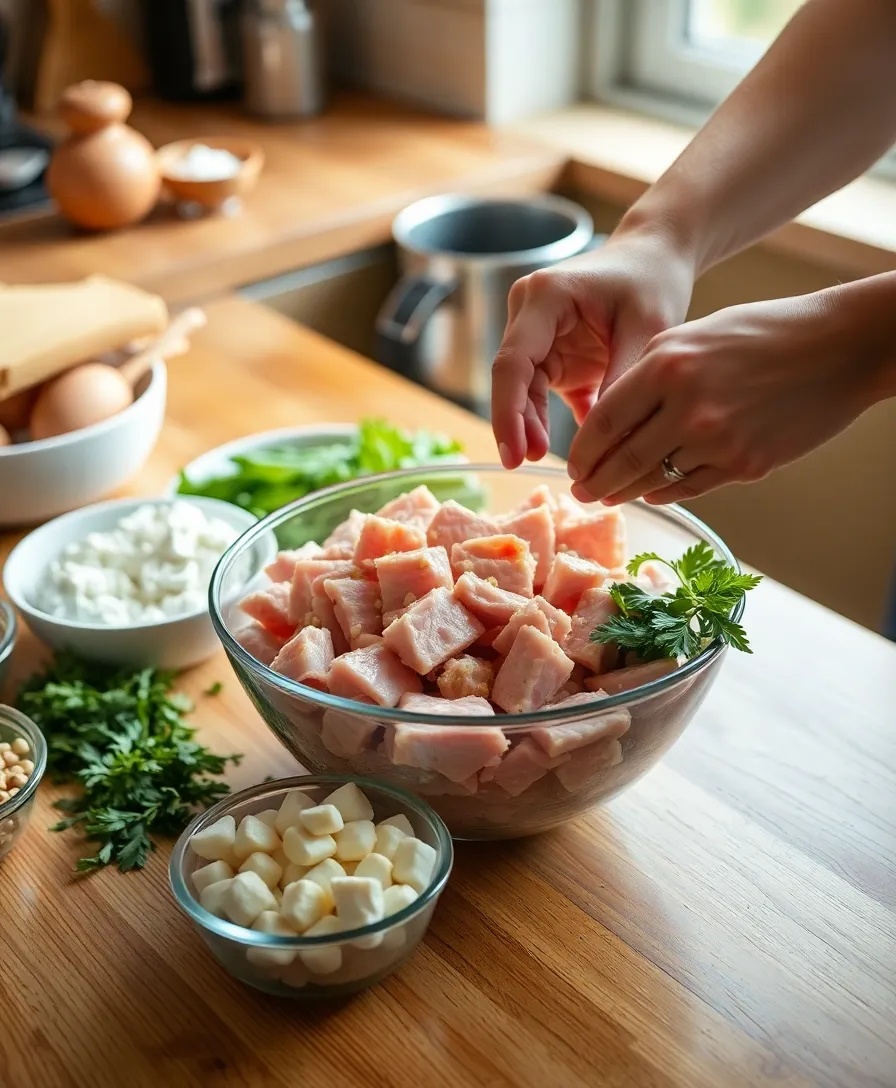
In a generously sized mixing bowl, combine the ground ham, ground pork, finely crushed cornflakes, and eggs (or a comparable liquid egg substitute) until just integrated.
-
To achieve the perfect consistency, gently incorporate a modest splash of milk to bind the mixture. Alternatively, for a subtly sweet and moist variation, fold in one small can of crushed pineapple, inclusive of its juices, omitting the milk entirely.
-
Carefully transfer and firmly press the prepared mixture into your chosen baking vessel. This could be an 8″ x 8″, 9″ x 13″, or 9″ x 9″ baking dish for a classic loaf, or a muffin pan for elegant individual servings.
-
In a separate, smaller bowl, vigorously whisk together the brown sugar, apple cider vinegar, and dry mustard until a smooth, harmonious glaze forms.
-
With an even hand, generously cascade this lustrous topping over the surface of the ham loaf mixture in the pan. (This splendid sauce quantity is ideal for a 9″ x 13″ pan, ensuring ample coverage.)
-
Place the pan into a preheated oven at 325 degrees Fahrenheit and allow it to bake for approximately 1 hour and 30 minutes, or until the loaf is thoroughly cooked through and adorned with a beautiful, caramelized crust.
Recipe Notes
This versatile creation transcends occasions, making it an exceptional focal point for elegant brunches, festive holiday gatherings, or simply a comforting weeknight meal. Its delightful balance of flavors and textures makes it a perennial crowd-pleaser, evoking a sense of nostalgic warmth with every forkful. Consider serving alongside roasted root vegetables or a vibrant green salad for a complete and satisfying spread.
Global Heritage Archive
Anthropological & Spice Migration Record
“A comfort food staple reflecting mid-20th century American ingenuity, often relying on convenience ingredients and embodying a sweet-savory flavor profile popular in home cooking.”
🌿 Spice & Botanical Migration
Dry mustard, derived from mustard seeds, is native to the Mediterranean and parts of Asia, spreading throughout Europe in antiquity and arriving in the Americas with European colonists. Brown sugar originates from sugarcane in Southeast Asia, introduced to Europe via Arab trade routes and later propagated globally through European colonial expansion. Cider vinegar, from apples native to Central Asia, highlights the ancient practice of fermenting fruit, with apples spreading westward along trade routes to Europe and then to the Americas.
🏺 Historical & Archaeological Record
While the specific ‘ham loaf’ is a modern American creation, the concept of a ground meat dish combined with binders and seasonings has ancient roots. The Roman cookbook ‘Apicius’ (4th-5th century CE) contains recipes for minced meat dishes (e.g., ‘Patina de Apua sine Apua’) mixed with ingredients like breadcrumbs, eggs, and spices, which serve as early progenitors to modern meatloaf preparations.
💡 Little Known Facts
- The use of crushed cornflakes as a binder in meatloaves became popular in the U.S. in the mid-20th century, replacing traditional breadcrumbs, as cereal became a pantry staple.
- The pairing of pineapple with ham, especially in baked dishes, was heavily popularized in the U.S. after Hawaii became a territory and then a state, promoting its tropical produce through widespread marketing campaigns for canned pineapple.
📸 Made This Heritage Recipe?
We would love to see how your dish turned out! Send a photo of your culinary creation to [email protected] to be featured in our community gallery.
Leave a review and rate this recipe below!
Curated Literature & Washington DC Downtown Calendar
The Culinary Alchemist: Modern Gastronomy & Flavor Pairing
By LDN Gastronomy Series
Artisanal technique, seasonal sourcing, and kitchen mastery.
Upcoming Downtown Happenings
Live acoustic sessions, gallery receptions, literary salons, and independent trade shows across Washington DC.
