
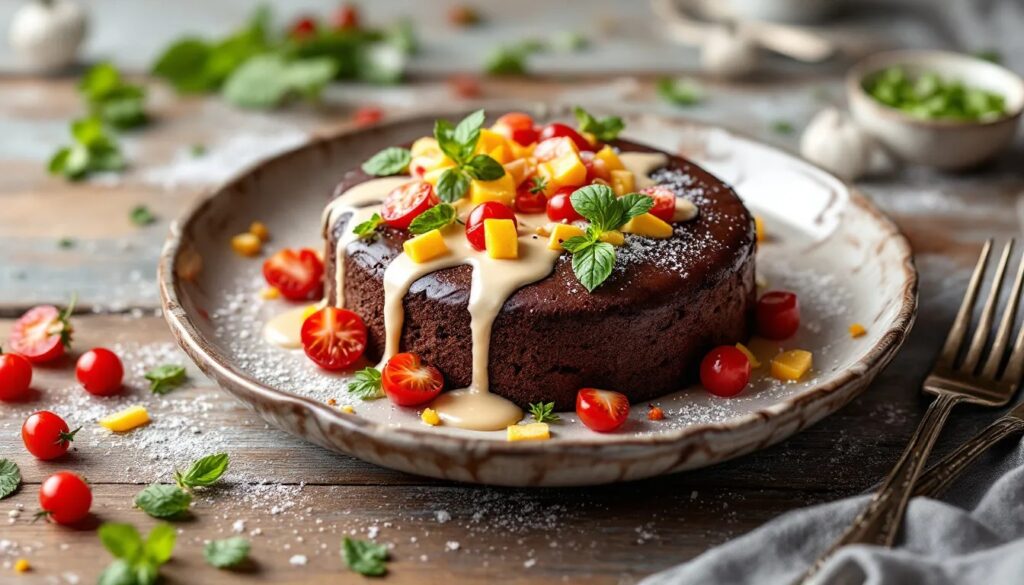
At first glance, the ingredients might raise an eyebrow: flour, sugar, cocoa, chemical leaveners – all standard fare for a chocolate cake. But then come the fascinating interlopers: nonfat milk, pureed prunes (specifically “baby-food pureed”), egg whites, and a touch of cappuccino from a mix. These aren’t just random additions; they are powerful migration indicators, speaking volumes about the era in which this recipe likely came to fruition. The use of nonfat milk and the strategic inclusion of pureed prunes point to a post-WWII America grappling with new dietary guidelines and a burgeoning interest in “lighter” or “healthier” alternatives, often driven by the home economics movement. Prunes, long valued for their moisture and natural sweetness in various European cuisines, found a new role as a fat replacer in this period, a testament to resourceful and adaptable baking.
The core flavors, cocoa and vanilla, trace their origins back thousands of years to the lush rainforests of Mesoamerica. Cultivated by ancient Olmecs, Mayans, and Aztecs, cocoa was revered as “food of the gods,” initially consumed as a bitter, spiced beverage. Vanilla, extracted from the orchid fruit, similarly held sacred significance. It was the Columbian Exchange that facilitated their arduous journey across oceans, transforming them from exotic New World treasures into global pantry staples, eventually gracing every home baker’s shelf. The addition of cappuccino (from a mix, no less) further grounds this recipe in the late 20th century. While coffee itself hails from the ancient forests of Ethiopia and spread through the Arab world before conquering Europe, its instant, flavored mix form became a popular shortcut in American kitchens, prized for its ability to deepen and enhance chocolate’s complex notes without the fuss of brewing.
Creating this “Marvel Cake” is a delightful journey in itself. The combination of baking soda and baking powder ensures a perfectly tender crumb, reacting harmoniously with the slight acidity of the cocoa and prunes. While modern recipes often call for whole eggs, the use of egg whites here would contribute to a lighter texture, adding to the “marvelous” quality promised in the title. When preparing, ensure your dry ingredients are thoroughly whisked to distribute the leaveners evenly. The prune puree will lend a unique moistness, so avoid overmixing the batter, which can lead to a tough cake. For the “Party Frosting,” whether a classic American buttercream or a glossy chocolate ganache, remember that presentation is key to truly elevating Granny’s creation. A warm, well-greased pan ensures an easy release, and allowing the cake to cool completely before frosting is paramount for a clean finish. “Granny’s Chocolate Marvel Cake” is more than just a dessert; it’s a testament to culinary evolution, a delicious snapshot of a specific time and place, and a heartwarming reminder that the best recipes are often those imbued with family history and a touch of ingenious adaptation.
GRANNY’S CHOCOLATE MARVEL CAKE
Embark on a culinary journey to rediscover the quintessential chocolate cake, reimagined as ‘Granny’s Chocolate Marvel.’ This revered heirloom recipe, cherished through generations, unveils a dessert of unparalleled depth and luxurious texture. What truly sets this confection apart is the ingenious incorporation of finely pureed prunes—not merely for moisture, but as a subtle architectural element that ensures an exquisitely tender, deeply resonant crumb. Each slice offers a profound sensory experience, marrying intense cocoa notes with an ethereal lightness, making it an utterly unforgettable centerpiece for any occasion.
Ingredients
-
2
cups
flour
None -
2
cups
sugar
None -
1
cup
unsweetened cocoa powder
None -
2
teaspoons
soda
None -
1
teaspoon
baking powder
None -
½
teaspoon
salt
None -
1
cup
nonfat milk
None -
2
teaspoons
vanilla
None -
4
2½-ounce jars
baby-food pureed prunes
None -
4
None
egg whites
or liquid egg substitute to equal 2 whole eggs -
1
cup
cappuccino (from mix)
or 2 teaspoons instant coffee in 1 cup boiling water or 1 cup strong coffee -
4
cups
Party Frosting
for topping
Instructions
-
In a spacious mixing bowl, meticulously combine the dry ingredients: all-purpose flour, granulated sugar, baking soda, baking powder, and a pinch of salt. Sift them together thoroughly to ensure proper aeration and even distribution.
-
In a separate, medium-sized bowl, whisk together the liquid components until seamlessly blended: fresh milk, the pureed prunes, pure vanilla extract, the delicate egg whites, and robust brewed coffee. Aim for a cohesive, well-integrated mixture.
-
Gently introduce the moist liquid mixture into the bowl containing the sifted dry ingredients. Stir carefully until just combined, ensuring no pockets of dry flour remain. Overmixing should be avoided to preserve the cake’s tender crumb.
-
Prepare two standard 9-inch round baking pans by lightly coating their interiors with a high-quality nonstick baking spray or by meticulously greasing and flouring them.
-
Carefully divide the rich batter evenly between the two prepared baking pans, ensuring a balanced distribution for uniform baking.
-
Transfer the pans to a preheated oven set to 350°F (175°C). Bake for approximately 30 to 35 minutes, or until the cake springs back lightly when touched and a slender wooden pick inserted into the center emerges clean.
-
Allow the baked cakes to rest in their pans on a wire rack for a full 10 minutes. This crucial resting period helps the structure set before removal.
-
After the initial resting, carefully invert the cakes onto a wire cooling rack to complete the cooling process entirely. Ensure they are completely cool before frosting or serving.
Recipe Notes
For optimal results, ensure all ingredients are at room temperature before beginning the preparation, allowing them to emulsify more effectively. When preparing your baking pans, a high-quality nonstick spray provides an excellent release, but a traditional butter and flour method also works beautifully. To accurately gauge doneness, insert a thin wooden skewer or toothpick into the very center of the cake; it should emerge free of wet batter or moist crumbs.
Global Heritage Archive
Anthropological & Spice Migration Record
“A culture of resourceful home baking in mid-to-late 20th century America, where traditional recipes adapted to evolving dietary trends (like fat reduction) and the increasing availability of convenience products, all while maintaining the comforting legacy of family recipes.”
🌿 Spice & Botanical Migration
Cocoa and vanilla, core flavors in this cake, are indigenous to Mesoamerica (modern-day Mexico, Central, and South America); they were introduced to Europe via the Columbian Exchange in the 16th century and subsequently spread globally. The coffee in cappuccino, originating from Ethiopia and the Arabian Peninsula, traveled via ancient trade routes to become a global commodity, with instant mixes emerging in the 20th century as a convenience product in American kitchens.
🏺 Historical & Archaeological Record
While sweetened, leavened cakes have ancient roots in various cultures (e.g., honey cakes in ancient Egypt), the specific form of a leavened chocolate cake, using cocoa powder and chemical leavening agents like baking soda and powder, is a relatively modern invention. The earliest known published recipes for such chocolate cakes appeared in the United States in the mid-19th century, following innovations in cocoa processing and the widespread availability of modern leaveners.
💡 Little Known Facts
- The use of pureed prunes in cakes became particularly popular in mid-20th century American baking as a natural sweetener, moisture retainer, and fat replacer, often appearing in ‘healthier’ or ‘lighter’ cake recipes.
- The combination of both baking soda and baking powder is a classic American technique for leavening cakes, especially chocolate ones, ensuring a tender crumb while reacting with acidic ingredients like cocoa and prunes.
- The inclusion of ‘cappuccino (from mix)’ is a distinctive late 20th-century addition, reflecting the popularization of instant coffee products for enhancing chocolate flavor in home baking during that era.
📸 Made This Heritage Recipe?
We would love to see how your dish turned out! Send a photo of your culinary creation to [email protected] to be featured in our community gallery.
Leave a review and rate this recipe below!
Curated Literature & Washington DC Downtown Calendar
The Culinary Alchemist: Modern Gastronomy & Flavor Pairing
By LDN Gastronomy Series
Artisanal technique, seasonal sourcing, and kitchen mastery.
Upcoming Downtown Happenings
Live acoustic sessions, gallery receptions, literary salons, and independent trade shows across Washington DC.
