
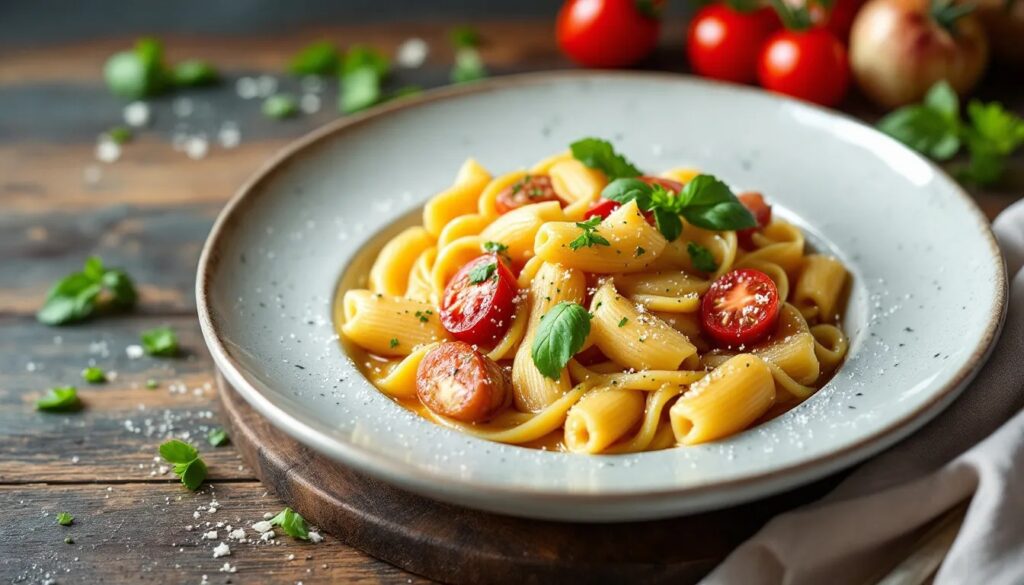
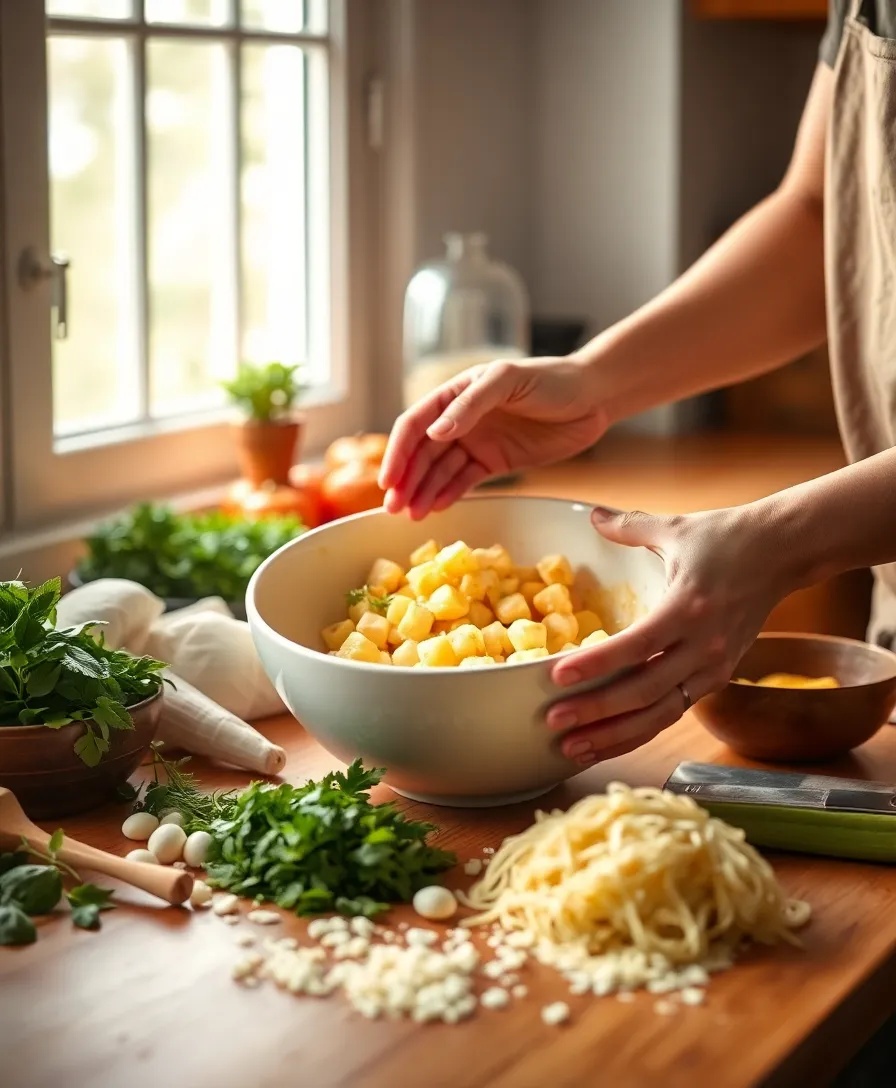
Imagine, if you will, the bustling boulevards of Belle Époque Paris, where culinary innovation met timeless elegance. At first glance, the name ‘Gnocchi à la Parisienne’ might suggest a simple Gallic interpretation of Italy’s beloved dumplings. But delve deeper, and you uncover a dish that is not merely an adaptation, but a distinct culinary creation, a testament to French gastronomic genius, particularly in this fascinating hybrid formulation. While often conceived purely from the ethereal lightness of *pâte à choux*, this particular recipe offers a richer tapestry, weaving together the humble heartiness of plain mashed potatoes with the sophisticated airiness of choux pastry.
This brilliant combination transforms a rustic concept into an elegant *hors d’oeuvre* or a refined side. The choux pastry, a cornerstone of French patisserie, born in the courts of Catherine de’ Medici and perfected by master chefs like Antonin Carême, contributes an airy, delicate structure, while the mashed potatoes ground the gnocchi with a comforting familiarity. It’s a masterful textural play that elevates the dish beyond its individual components. The process is a dance of classical techniques: the combined choux-potato dough is meticulously prepared, then piped into simmering water, where it puffs into cloud-like dumplings. These tender morsels are then cradled in a silken Béchamel sauce, one of the foundational ‘mother sauces’ of French cuisine, believed to have been refined in the Sun King’s court. Layered generously with grated Swiss-style cheese – think a nutty Emmental or a piquant Gruyère – and baked until bubbling and golden, achieving that coveted *gratiné* crust.
This dish is a narrative of culinary migration itself. The potato, a key component, traversed the Atlantic via the Columbian Exchange, forever altering European diets, eventually finding its way into Italian gnocchi and now, this Parisian fusion. The cheese, a product of alpine pastures, and the salt and pepper, ancient commodities of the global spice routes, each tell their own story of interconnectedness. But the *spirit* of ‘Gnocchi à la Parisienne’ is undeniably French – a commitment to elevating and blending ingredients through technique, transforming the familiar into the extraordinary.
For the home cook, mastering this dish offers immense satisfaction. The key lies in achieving the perfect dough consistency: smooth, glossy, and pliable enough to pipe. Don’t overcrowd your pot when poaching the gnocchi; they need space to swell. And for that irresistible crust, ensure a liberal hand with the cheese and butter, allowing the oven’s heat to work its magic. The resulting dish is a symphony of textures – a crisp, cheesy topping yielding to a tender, creamy interior – a true embodiment of French comfort and sophistication, perfect for a cozy supper or an elegant dinner party. It’s a dish that invites you to savor not just its flavors, but its rich history, bite by delicious bite.
GNOCCHI A LA PARISIENNE
Embark on a culinary voyage to the heart of French gastronomy with Gnocchi à la Parisienne, a sublime reinterpretation that transcends the ordinary. Unlike its Italian cousin, this rendition builds upon a delicate choux pastry foundation, yielding morsels of unparalleled lightness and an ethereal texture that simply melts on the palate. These exquisite gnocchi are then lovingly cloaked in a sumptuous, bubbling Mornay sauce, emerging from the oven with a captivating golden-brown finish. It’s a dish that masterfully blends comforting warmth with an undeniable elegance, ideal for elevating intimate dinners or gracing a sophisticated brunch table with its timeless charm.
Ingredients
-
2
cups
plain mashed potatoes -
1
cup
warm choux pastry -
1/3
cup
grated Swiss cheese -
None
None
Salt -
None
None
Pepper -
2
cups
Béchamel sauce
for Mornay sauce -
1/2
cup
grated Swiss cheese
for Mornay sauce -
2
Tablespoons
melted butter
for Mornay sauce -
None
None
grated Swiss or Parmesan cheese
for topping -
None
None
melted butter
for topping
Instructions
-
In a substantial saucepan set over medium heat, meticulously stir the mashed potatoes until their moisture has substantially evaporated and the mixture appears quite dry. Take the pan off the heat. Into this base, vigorously incorporate the prepared choux pastry, 1/3 cup of grated Swiss cheese, and season to your preference with salt and freshly ground black pepper, ensuring all components are thoroughly blended into a cohesive dough.
-
Transfer portions of the potato-choux mixture, one spoonful at a time, onto a meticulously floured work surface. With a gentle touch, roll and sculpt each portion into uniform, elongated cylinders, aiming for dimensions of approximately 2 ½ inches in length and 1 inch in diameter.
-
Carefully arrange the freshly sculpted gnocchi within a generously buttered shallow pan or wide skillet. Delicately pour in enough freshly boiled water to submerge them by about 1 ½ inches, seasoning the water with a pinch of salt. Poach them uncovered over a low heat, ensuring the water maintains a state just below a true simmer – merely a gentle tremor – for approximately 15 minutes.
-
The moment of perfection arrives when the gnocchi gracefully ascend to the water’s surface, indicating they are cooked through and will yield to a gentle nudge. With a slotted spoon, meticulously retrieve each delicate gnocchi, transferring them to a prepared surface lined with absorbent paper towels to thoroughly drain.
-
To compose the luscious Mornay sauce: Begin with 2 cups of your impeccably prepared Béchamel sauce. Over gentle heat, gradually whisk in ½ cup of grated Swiss cheese until it is entirely melted and seamlessly incorporated. Finish by stirring in 2 tablespoons of melted butter, ensuring a perfectly smooth and rich consistency.
-
Evenly spread a generous layer of the freshly composed Mornay sauce across the base of a deep, oven-safe baking dish.
-
Delicately arrange the thoroughly drained gnocchi in an inviting, even layer over the sauce within the baking dish.
-
Lavishly envelop the arranged gnocchi with the remaining Mornay sauce, ensuring full coverage. To create a sublime gratinéed crust, generously crown the surface with additional grated Swiss or Parmesan cheese, followed by a delicate drizzle of melted butter.
-
Place the baking dish into a preheated oven, maintained at a robust temperature of 375°F to 400°F (190°C to 200°C). Allow it to bake for 20 to 25 minutes, or until the surface achieves a magnificent golden-brown hue, deeply bubbling with irresistible allure.
-
Serve forth this magnificent creation promptly, allowing its exquisite warmth and nuanced flavors to be fully appreciated in the moment.
Recipe Notes
This elegant preparation typically yields approximately 12 tender gnocchi, perfect for an intimate serving. For the uninitiated, Mornay sauce is an exquisite derivative of the foundational Béchamel, masterfully enriched with the savory depth of grated Swiss cheese and the silken touch of melted butter, creating a truly luxurious culinary embrace.
Global Heritage Archive
Anthropological & Spice Migration Record
“This dish represents the refined and often adaptive nature of French bourgeois cuisine, blending the rustic heartiness of potato gnocchi with the sophisticated lightness of choux pastry, all bound by classical French sauces and gratin techniques.”
🌿 Spice & Botanical Migration
Black pepper (Piper nigrum), native to the Malabar Coast of India, traveled west along the ancient Spice Route to Europe, becoming a highly prized and universally adopted seasoning from Roman times onward. Its presence in French cuisine signifies centuries of global trade. Salt, while a mineral rather than a botanical spice, has been an indispensable seasoning and preservative for millennia, its trade routes predating recorded history.
🏺 Historical & Archaeological Record
While ancient cultures across the globe cooked various forms of boiled dough, the specific techniques central to ‘Gnocchi à la Parisienne’—namely, the development of *pâte à choux* and the refinement of *Béchamel sauce*—originated and were codified in French culinary texts starting from the 16th-17th centuries, with chefs like Pantanelli (16th c. for choux) and Béchameil (17th c. for sauce) being associated with their popularization in European courts. The potato itself arrived in Europe via the Columbian Exchange in the 16th century, slowly integrating into European diets and, eventually, dishes like gnocchi.
💡 Little Known Facts
- While ‘Gnocchi à la Parisienne’ is often exclusively made with choux pastry, this specific recipe’s inclusion of mashed potatoes creates a unique hybrid, offering a denser yet still airy dumpling that marries Italian tradition with French refinement.
- The traditional preparation involves piping the choux-based dough into boiling water, a technique reminiscent of making spaetzle or certain pasta shapes, before layering it with béchamel and cheese for a gratin finish.
📸 Made This Heritage Recipe?
We would love to see how your dish turned out! Send a photo of your culinary creation to [email protected] to be featured in our community gallery.
Leave a review and rate this recipe below!
Curated Literature & Washington DC Downtown Calendar
The Culinary Alchemist: Modern Gastronomy & Flavor Pairing
By LDN Gastronomy Series
Artisanal technique, seasonal sourcing, and kitchen mastery.
Upcoming Downtown Happenings
Live acoustic sessions, gallery receptions, literary salons, and independent trade shows across Washington DC.
