
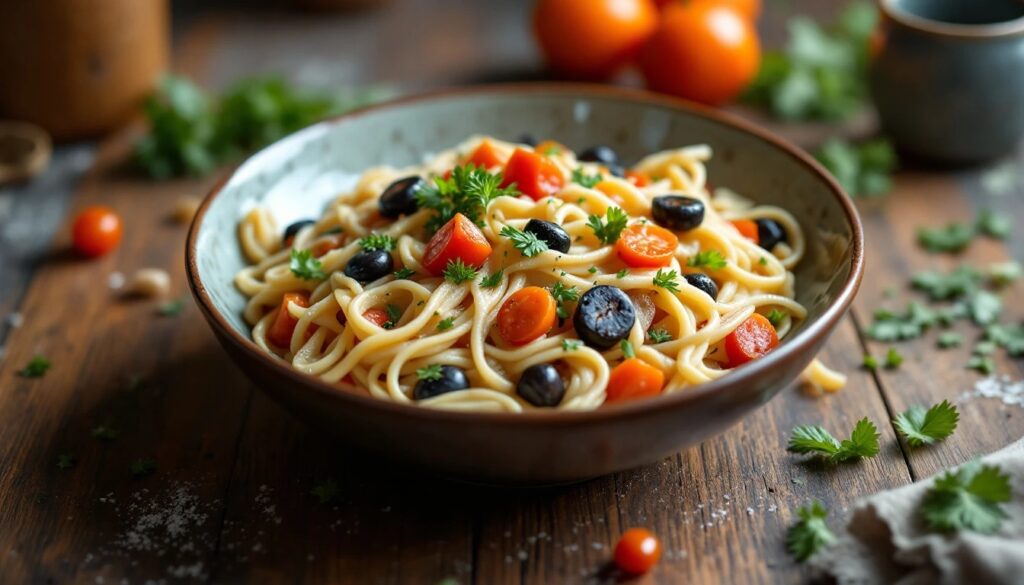
The term “slaw” itself is a shortened form of “coleslaw,” which traces its linguistic roots back to the 18th-century Dutch “koolsalade,” meaning “cabbage salad.” While its origins are clearly European, the version presented here—featuring sugar, vinegar, dry mustard, celery seed, and importantly, “Wesson or corn oil”—reveals its strong German-American identity. When waves of German immigrants arrived in the United States, particularly in the 18th and 19th centuries, they brought with them their culinary heritage, including a deep appreciation for the sweet-and-sour flavor profile that characterizes much of Central European cooking. This balance, often achieved with vinegar and sugar, was not just about taste; historically, it played a crucial role in preserving vegetables through long winters.
The spices in this recipe, while seemingly straightforward, also carry their own histories. Mustard seeds, native to the Mediterranean, have graced European tables for millennia, cherished for their pungent kick. Celery seeds, with their slightly bitter, earthy notes, also hail from the Mediterranean and Middle East, used for centuries in both medicine and cuisine before finding their way into the European and later American pantry as a pickling and seasoning staple. These ingredients, familiar to the immigrant cooks, found a new expression in the American landscape. Crucially, the specified “Wesson or corn oil” signals a distinct shift. Traditional German cabbage preparations might have used rendered animal fats like lard or bacon grease, or even nut oils. The adoption of readily available, industrially produced American vegetable oils like corn oil marked an integration into the burgeoning American food system, making the dish more accessible and fitting for a new culinary environment.
This German Slaw, therefore, is more than just a recipe; it’s a cultural artifact. It embodies the ingenuity of immigrant communities who adapted their cherished dishes using local resources, preserving the essence of their heritage while embracing their new home. It became a beloved fixture at American picnics, potlucks, and family gatherings, a refreshing counterpoint to richer dishes, and a sweet, tangy reminder of roots that run deep.
For those eager to recreate this piece of culinary history in their own kitchens, the key lies in the preparation. Start with a firm head of cabbage, thinly shredded – a mandoline or food processor can be a great asset here. The dressing should be vigorously whisked until the sugar and salt are fully dissolved, creating a harmonious emulsion. Taste and adjust the sweetness and tang to your preference; some like it sweeter, others prefer a sharper bite. The magic truly happens after chilling for at least an hour, allowing the flavors to meld and the cabbage to slightly soften, absorbing the vibrant dressing. This German Slaw is not merely a dish; it’s an invitation to savor history, one crunchy, sweet-and-sour bite at a time.
GERMAN SLAW
Transport your palate to the heart of European culinary tradition with this exquisite rendition of German Slaw. Marrying the crisp vitality of finely shredded cabbage with the piquant depth of fresh onions, this vibrant side dish is elevated by a distinctively piquant yet subtly sweet dressing. It's a remarkably refreshing accompaniment, ideal for gracing any al fresco gathering, from sun-drenched picnics to convivial potlucks, and serves as an impeccable counterpoint to robust grilled fare. Discover a timeless classic, reimagined for the modern epicure.
Ingredients
- 1 head cabbage large
- 3 onions chopped or grated
- 1 cup sugar
- 1 teaspoon salt
- 1 teaspoon dry mustard
- 1 teaspoon celery seed
- 1 cup vinegar
- 1 cup Wesson or corn oil
Instructions
-
Begin by preparing your foundational vegetables: in a generously sized mixing bowl, combine the substantial head of cabbage, meticulously chopped or grated, with the three prepared onions, ensuring a harmonious blend.
-
To craft the signature dressing, introduce the following ingredients into a medium saucepan: one cup of granulated sugar, one teaspoon of fine salt, one teaspoon of pungent dry mustard, one teaspoon of fragrant celery seed, one cup of premium vinegar, and one cup of neutral-flavored oil, such as Wesson or corn oil.
-
Gently bring the dressing concoction to a simmering boil over medium heat, taking care not to allow it to bubble vigorously for an extended period once the boil is achieved.
-
Immediately and with caution, pour the heated, aromatic dressing evenly over the prepped cabbage and onion mixture in the large bowl.
-
Employ a sturdy spatula or tongs to thoroughly incorporate the dressing, ensuring every strand of cabbage and onion is luxuriously coated.
-
For optimal flavor development and a most refreshing texture, allow the slaw to chill undisturbed in the refrigerator for a minimum of several hours prior to presentation.
-
Store any remaining slaw in an airtight, covered vessel within the refrigerator to maintain its pristine freshness.
Recipe Notes
Unlock the full potential of this slaw by preparing it a day in advance; the extended marination time allows the vibrant flavors to meld and deepen, transforming a simple side into a truly exceptional culinary experience.
Global Heritage Archive
Anthropological & Spice Migration Record
“A vibrant culinary culture that adapted traditional Central European sweet-and-sour profiles and cabbage preparations to the American palate, often featuring in community gatherings, picnics, and family meals.”
🌿 Spice & Botanical Migration
Mustard seeds, originally native to the Mediterranean region, have been cultivated and utilized as a spice and condiment for millennia, spreading across Europe and Asia via ancient trade routes. Celery seeds, derived from the wild celery plant native to the Mediterranean and Middle East, were used by ancient Egyptians and Greeks for medicinal purposes before becoming a popular culinary spice, widely adopted in European and American cooking, where their slightly bitter, earthy flavor complements the sweetness and tang of this slaw, indicative of a blending of European and New World pantry staples.
🏺 Historical & Archaeological Record
The earliest evidence of domesticated cabbage (Brassica oleracea) dates back to approximately 2000-1500 BCE in Europe, specifically along the Mediterranean coast. While early forms of raw vegetable preparations with dressings akin to salads existed in ancient Rome and Greece, the specific concept of “cabbage salad” or “coleslaw” emerged in the Low Countries (Netherlands) in the 17th and 18th centuries, with the oldest known printed recipes appearing in Dutch cookbooks around 1770.
💡 Little Known Facts
- The term “coleslaw” itself is derived from the 18th-century Dutch word “koolsla” or “koolsalade,” meaning “cabbage salad.”
- Many German-American communities distinguish between “hot slaw” (often made with bacon fat and vinegar) and “cold slaw” (like this recipe), reflecting diverse regional German culinary traditions transplanted to the New World.
- The characteristic sweet-sour balance found in this slaw is a hallmark of Central European cuisine, designed historically to enhance the flavor and aid in the preservation of vegetables.
Historical Locality Cartographic Map — Mestizo Media Archive
📸 Made This Heritage Recipe?
We would love to see how your dish turned out! Send a photo of your culinary creation to [email protected] to be featured in our community gallery.
Leave a review and rate this recipe below!
Curated Literature & Washington DC Downtown Calendar
The Culinary Alchemist: Modern Gastronomy & Flavor Pairing
By LDN Gastronomy Series
Artisanal technique, seasonal sourcing, and kitchen mastery.
Upcoming Downtown Happenings
Live acoustic sessions, gallery receptions, literary salons, and independent trade shows across Washington DC.
