
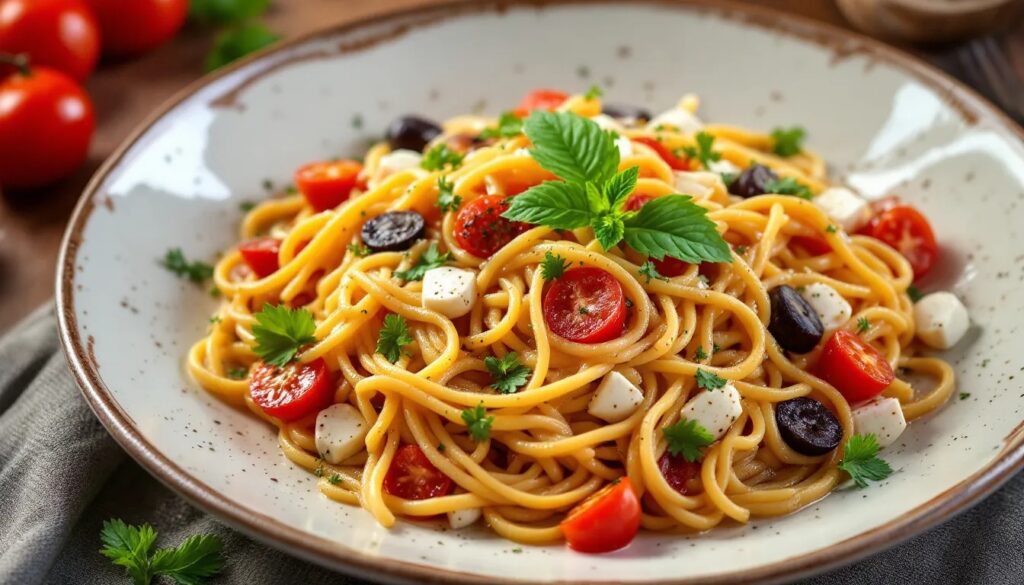

The very name ‘Five-Fiber Casserole’ instantly places this dish squarely within a particular epoch and culinary philosophy – one rooted in late 20th and early 21st-century America, where health consciousness met the enduring quest for convenience and comfort. It’s a fascinating culinary artifact, a delicious embodiment of global ingredient migration and the pragmatic creativity of the modern home kitchen.
At first glance, it appears humble, yet beneath its cheesy exterior lies a vibrant tapestry of history. The casserole itself, as a culinary genre, holds a cherished place in the American culinary psyche. Gaining immense popularity during the lean years of the Great Depression and the rationing era of World War II, it became synonymous with economy, efficiency, and the heartwarming ability to feed a crowd with minimal fuss and dishes. The idea of baking and serving a meal from a single vessel resonated deeply with generations of busy homemakers, evolving from simple baked stews into the creamy, often ingredient-rich concoctions we recognize today.
But this particular casserole tells an even richer story through its components. Take bulgur, for instance, a cornerstone of this ‘fiber-rich’ concoction. This ancient grain, a form of cracked wheat, hails from the Fertile Crescent, with archaeological evidence tracing its consumption back over 4,000 years in regions like modern-day Turkey. For millennia, it has been a staple in Middle Eastern and Mediterranean diets, forming the basis of dishes like tabbouleh and kibbeh. Its inclusion here, however, speaks to a more recent Western embrace of ‘ancient grains’ as health foods, showcasing how global ingredients are recontextualized far from their origins.
Then there are the kidney beans, vibrant and earthy. These legumes are a profound testament to the Columbian Exchange, originating in the Americas where they were domesticated millennia ago. From Mesoamerica and the Andean regions, they embarked on a global journey after 1492, becoming integral to cuisines from India to Italy. In our casserole, they anchor the ‘five-fiber’ promise, bridging continents and culinary traditions.
The supporting cast of carrots, onions, and parsley are equally seasoned travelers. Onions and carrots, believed to have have originated in Central Asia, traversed ancient trade routes, becoming universal kitchen staples. Parsley, a herb native to the Mediterranean, has flavored dishes across Europe and beyond for centuries. Their presence in this casserole highlights the continuous intermingling of agricultural biodiversity across millennia. And finally, the shredded cheddar cheese – while cheddar itself is quintessentially English, its ready-shredded form and role as a savory blanket over a baked dish is an unmistakably American innovation, emblematic of convenience-driven food production.
Preparing the Five-Fiber Casserole is refreshingly straightforward, honoring its roots in efficiency. Sautéing the onions provides a foundational sweetness. The broth brings moisture and depth, while the quick-cooking barley and bulgur ensure the dish is table-ready in a reasonable time. A helpful kitchen tip is to sauté the onions until deeply caramelized before adding other ingredients; this unlocks a profound umami that elevates the entire dish. For an extra layer of flavor, consider adding a pinch of smoked paprika or a dash of Worcestershire sauce to the broth. This casserole is not merely a recipe; it’s a narrative of global agriculture, historical exchange, and the evolving American palate – a dish that offers both sustenance and a satisfying bite of history.
FIVE-FIBER CASSEROLE
Embark on a culinary journey with this quintessentially comforting casserole, a harmonious symphony of robust, wholesome ingredients designed to nourish both body and soul. Infused with a rich, savory chicken broth, it masterfully marries the vibrant sweetness of tender-crisp carrots with the earthy depth of kidney beans and the satisfying chew of pearly barley. Crowned with a delicate hint of sharp cheddar, this dish is a testament to honest, heartfelt cooking, rendering it an ideal centerpiece for cherished family gatherings or a serene, gratifying repast on a cool weeknight.
Ingredients
-
1-1/3
cups
chicken broth
None -
1
cup
carrots
thinly sliced -
8
oz.
kidney beans
drained -
1/2
cup
quick cooking barley
None -
1/4
cup
onion
chopped -
1/4
cup
parsley
snipped -
3
tbsp.
bulgar
None -
1/4
cup
shredded cheddar cheese
1 oz.
Instructions
-
In a single 1-quart oven-safe baking dish, meticulously combine all ingredients, reserving only the shredded cheddar. Ensure a thorough integration of components.
-
Securely cover the dish with a fitted lid or foil and transfer it to a preheated oven set at 350°F (175°C). Bake for approximately 50 minutes, or until the barley is exquisitely tender and the carrots yield effortlessly to a fork.
-
Remove the casserole from the oven. Delicately scatter the reserved cheddar evenly over the warm surface. Return the uncovered dish to the oven for a brief 2 to 3 minutes, allowing the cheese to melt into a molten, golden embrace.
Recipe Notes
We extend our sincere gratitude to Eve Spencer for her gracious contribution of this delightful culinary creation.
Global Heritage Archive
Anthropological & Spice Migration Record
“This dish embodies a modern American culinary ethos, blending convenience, health-consciousness, and a global pantry into comforting, adaptable family meals.”
🌿 Spice & Botanical Migration
This casserole is a testament to global ingredient migration. Parsley, with its roots in the Mediterranean, and onions and carrots, originating in Central Asia, traveled westward along ancient trade routes and through subsequent culinary exchanges. Kidney beans represent the Columbian Exchange, having been domesticated in the Americas millennia ago before spreading across the globe after 1492. Finally, barley and bulgur, ancient staples of the Fertile Crescent, found their way into various cuisines, eventually becoming accessible ‘health’ ingredients in modern Western markets.
🏺 Historical & Archaeological Record
The foundational technique of slow-cooking ingredients together in a covered vessel, akin to a proto-casserole, can be traced back to Neolithic periods, with evidence of pottery used for cooking found across the Fertile Crescent as early as 7,000 BCE. Specifically, bulgur (cracked wheat) itself has been identified in archaeological sites in present-day Turkey dating back over 4,000 years, making it one of the earliest processed grain foods. Kidney beans, a key component, were first domesticated in Mesoamerica and the Andean region, with archaeological evidence in Peru dating back over 8,000 years.
💡 Little Known Facts
- While bulgur is an ancient grain dating back millennia, its introduction into mainstream American home cooking, often as a ‘health food’ ingredient, significantly post-dates its long history in Middle Eastern and Mediterranean diets, seeing a surge in popularity in the latter half of the 20th century.
- The casserole format, as popularized in the United States, gained widespread prominence during the Great Depression and World War II, celebrated for its economical use of ingredients, ability to feed large families, and minimal dirty dishes – factors that still resonate with modern home cooks.
📸 Made This Heritage Recipe?
We would love to see how your dish turned out! Send a photo of your culinary creation to [email protected] to be featured in our community gallery.
Leave a review and rate this recipe below!
Curated Literature & Washington DC Downtown Calendar
The Culinary Alchemist: Modern Gastronomy & Flavor Pairing
By LDN Gastronomy Series
Artisanal technique, seasonal sourcing, and kitchen mastery.
Upcoming Downtown Happenings
Live acoustic sessions, gallery receptions, literary salons, and independent trade shows across Washington DC.
