
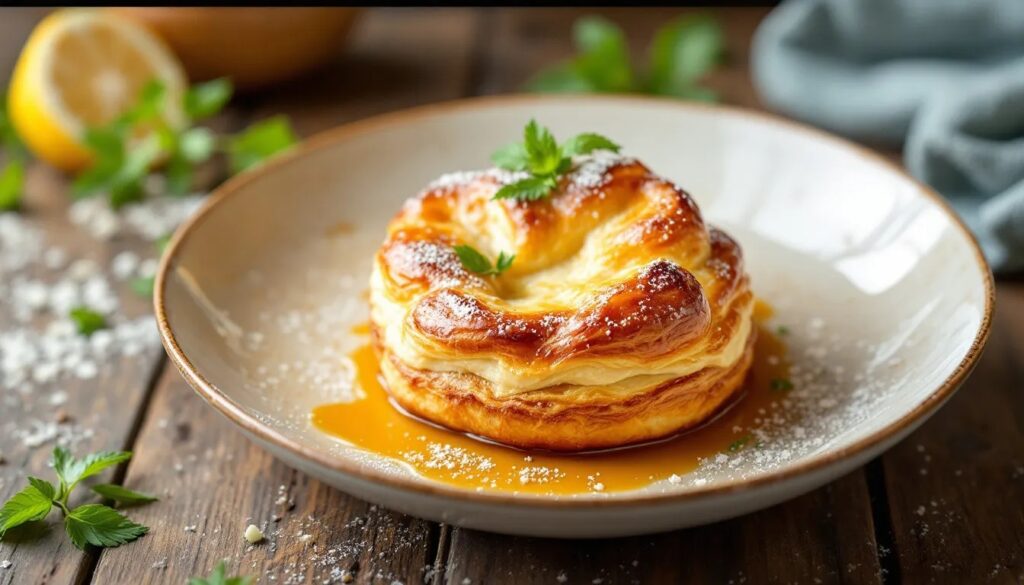
In the pantheon of French patisserie, few creations evoke such admiration and trepidation as *pâte feuilletée*, or puff pastry. Its gossamer layers, crisp golden shell, and airy interior are the stuff of culinary dreams, transforming humble flour and butter into an edible masterpiece. The very mention of ‘French Puff Pastry’ conjures images of painstaking labor, countless folds, and hours of patient chilling. Yet, here we encounter a tantalizing oxymoron: ‘FAST French Puff Pastry.’ This recipe, a modern culinary marvel, dares to bridge the gap between tradition and the demands of contemporary life, promising the elegance of a classic with a fraction of the time commitment.
The genesis of puff pastry is shrouded in delicious legend. While layered doughs—think of the ancient Greek *plakous*, a honey-drenched predecessor—have existed for millennia, the specific technique of *pâte feuilletée* is often attributed to a 17th-century baker’s apprentice. One popular tale speaks of Claude Gellée, later known as the celebrated painter Claude Lorrain, who while apprenticed to a baker in France, supposedly created the pastry for his ailing father. Wishing to lighten a rich bread dough, he haphazardly folded butter into it multiple times, resulting in an astonishingly light, flaky bread. Another account credits Claudius Gele, a pastry cook working for the Marquis de Mirepoix, with the same accidental invention. Regardless of its exact origin, the method of laminating butter into dough, creating countless thin layers that dramatically puff upon baking, became a hallmark of French cuisine, embodying precision and artistry.
Traditionally, making puff pastry is a labor of love, a rhythmic dance of rolling, folding (known as ‘turns’), and chilling. The magic lies in the high-quality, chilled unsalted butter, meticulously encased within a simple dough of flour, water, and salt. As the dough is repeatedly folded and rolled, the butter spreads into impossibly thin sheets, separated by equally thin sheets of dough. In the searing heat of the oven, the water in both the butter and the dough rapidly converts to steam, forcing these delicate layers apart, creating the characteristic rise and flakiness. The ‘fast’ rendition often achieves this by incorporating very cold, often grated, butter more quickly into the flour, reducing the number of intensive folds while still striving for that ethereal texture.
The ingredients themselves—unbleached and bleached flours, unsalted butter, salt, and iced water—are telling migration indicators, not of exotic spices, but of fundamental agricultural and culinary developments. Wheat, the source of our flour, originated in the Fertile Crescent and spread across continents through millennia of human migration and cultivation, becoming a staple in European diets. Butter, a product of dairy farming, signifies the domestication of animals and the evolution of pastoral societies, with its widespread use in northern European cuisines shaping the fat-rich patisserie distinct from the olive oil traditions of the Mediterranean. Salt, a universal necessity, has been a cornerstone of trade and survival since antiquity. Together, these simple, foundational ingredients speak to a long history of human interaction with the land and the development of sophisticated culinary techniques that elevate the ordinary to the extraordinary.
For the aspiring home baker tackling this ‘fast’ version, the core philosophy remains: keep everything cold. Cold butter, cold water, and even a cold kitchen can make a world of difference. Don’t overwork the dough; handle it gently and confidently. Allow ample resting time in the refrigerator between folds, even if the ‘fast’ method reduces their number. The patience invested in chilling is repaid tenfold in the final texture. This recipe isn’t merely about speed; it’s about respecting the principles of a classic while adapting them to modern life. It’s an invitation to experience the delicate joy of French patisserie, a triumph of technique and simple ingredients, making the seemingly impossible, delightfully achievable.
FAST FRENCH PUFF PASTRY
Embark on a culinary journey to master the marvel of flaky pastry, expedited. This innovative rendition of classic French puff pastry ingeniously condenses the traditional preparation timeline, offering a swift yet remarkably effective path to exquisite, buttery layers. Designed for both the hurried gourmet and the adventurous home chef, it promises the coveted ethereal crispness and tender melt-in-your-mouth texture, making it an indispensable foundation for a myriad of sophisticated sweet confections and elegant savory canapés.
Ingredients
-
3
cups
unbleached all-purpose flour
None -
1
cup
plain bleached flour
None -
6½
sticks
chilled unsalted butter
None -
1½
teaspoons
salt
None -
1
cup
iced water
None
Instructions
-
Begin by ensuring your unsalted butter is exceptionally cold, then dice it into uniform ½-inch (1.25 cm) cubes. In a spacious mixing bowl, whisk together the all-purpose flour and fine sea salt, creating a homogenous dry blend.
-
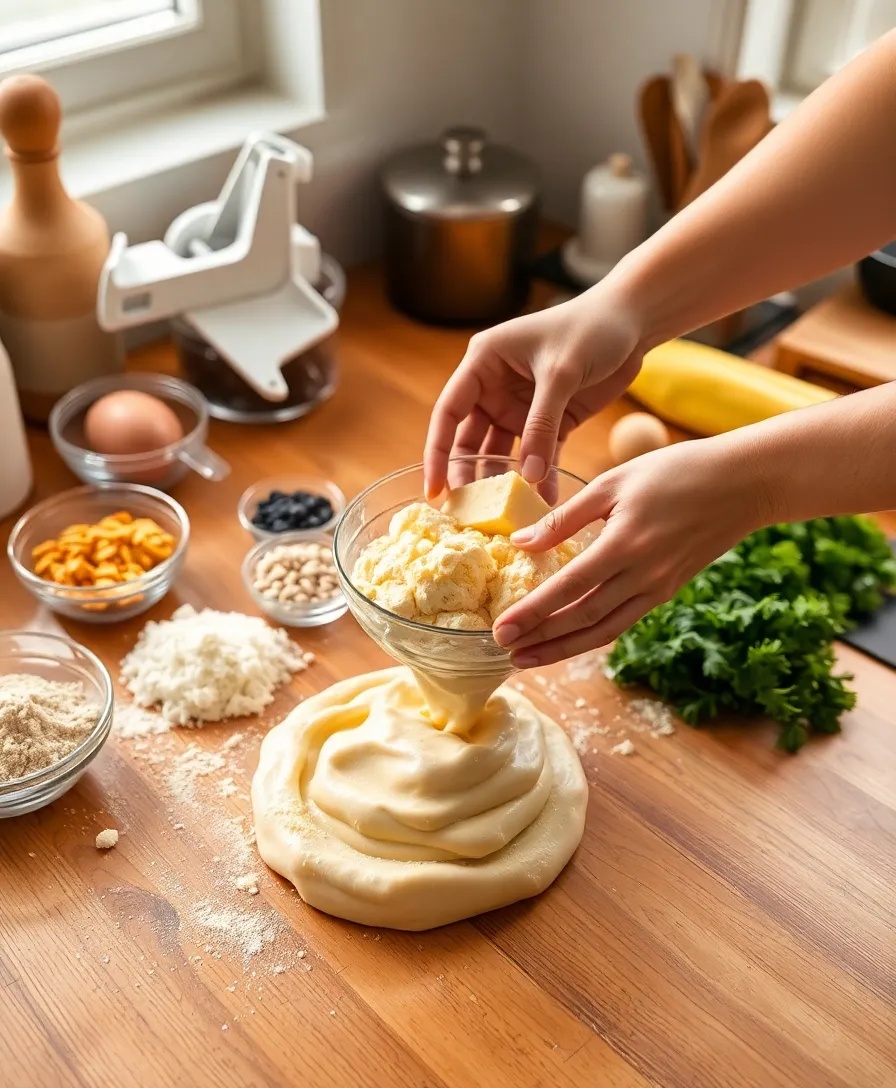
Introduce the chilled butter cubes to the flour mixture. Using your fingertips, a pastry blender, or a stand mixer with a paddle attachment on low speed, work the butter into the flour until the pieces are roughly the size of small peas or flattened almonds, with some larger chunks still visible. The goal is a sandy, crumbly texture.
-
Gradually add the ice-cold water, a tablespoon at a time, mixing gently until the dough just begins to come together in a shaggy mass. Be careful not to overmix; the dough should appear quite rough.
-
Turn the nascent dough out onto a lightly floured surface. Gently gather it into a cohesive ball, then carefully flatten it into a rough rectangular shape, approximately 1-inch (2.5 cm) thick. Wrap the dough tightly in plastic film and refrigerate for a minimum of 30 minutes to allow the gluten to relax and the butter to firm up.
-
Unwrap the chilled dough and place it on a generously floured work surface. Roll the dough into a long rectangle, roughly 1/4-inch (0.6 cm) thick and about three times as long as it is wide. Aim for even thickness.
-
Carefully fold one-third of the dough from one end towards the center, then fold the remaining third over the top, much like folding a letter. This completes one “turn.” Lightly brush off any excess flour.
-
Rotate the folded dough 90 degrees (so the open edge is facing you), re-wrap it snugly in plastic film, and return it to the refrigerator for another 20-30 minutes. This chilling period is crucial for preventing the butter from melting and ensuring distinct layers.
-
Repeat the previous rolling and folding sequence: unwrap, roll the dough into another long, thin rectangle, and perform another ‘letter fold.’ Gently brush away any excess flour.
-
Re-wrap the dough and chill it for a minimum of 30 minutes, or ideally for an hour, before proceeding.
-
For even more pronounced layers, you may perform a third roll and fold following the same procedure as outlined for the first two turns. This is often recommended for maximum flakiness.
-
After its final turn and sufficient chill, the puff pastry is now ready to be rolled out to your desired thickness for your chosen culinary application, whether sweet or savory. Ensure it is well chilled before baking to achieve optimal rise and flakiness.
Recipe Notes
The secret to a truly spectacular ‘fast’ puff pastry lies in maintaining extreme cold throughout the process—especially the butter and water. A cold kitchen environment and diligent chilling periods between turns are paramount for developing those coveted, distinct layers. Don’t be tempted to rush the chilling; it’s the bedrock of success. This versatile pastry base is exquisite when transformed into delicate palmiers, elegant tarts, savory pithiviers, or simply baked into golden, airy volumes for a myriad of culinary creations.
Global Heritage Archive
Anthropological & Spice Migration Record
“A cornerstone of French patisserie, celebrating precision, technique, and the transformation of simple ingredients into a delicate, layered masterpiece.”
🌿 Spice & Botanical Migration
This recipe for ‘FAST FRENCH PUFF PASTRY’ does not contain any spices or herbs. Its characteristic flavor and texture are derived solely from the meticulous technique applied to its fundamental ingredients. The key ingredient, *wheat flour*, has its botanical origins in the Fertile Crescent (modern-day Middle East) and spread across Europe through ancient agricultural practices and trade routes. *Butter*, derived from dairy, represents the long history of animal domestication and dairy farming prevalent in Europe, particularly northern regions, which historically favored butter over olive oil, influencing the development of such pastries. *Salt* is a universal and ancient commodity, traded across all major routes for millennia, essential for both flavor and preservation.
🏺 Historical & Archaeological Record
The concept of layered doughs can be traced back to ancient Greece and Rome, where early forms of flaky pastries, often made with oil and honey, existed (e.g., *plakous* in Greek cuisine, which was a kind of layered cake). However, the specific technique of *pâte feuilletée* as we know it, relying on layers of butter laminated into a dough to create a dramatic rise and distinct separation, emerged in Europe much later, likely in 16th or 17th century France, with written accounts appearing in cookbooks of that period.
💡 Little Known Facts
- The invention of classic pâte feuilletée is often attributed to the French painter Claude Lorrain (born Claude Gellée, c. 1600-1682), who as a baker’s apprentice supposedly created it for his sick father, incorporating butter into the dough in folds. Another theory points to Claudius Gele, a pastry cook from the same era.
- The lightness and flakiness of puff pastry come from the steam created by the water in the butter and dough evaporating rapidly in a hot oven, forcing the layers apart. This process is known as ‘physical leavening’.
📸 Made This Heritage Recipe?
We would love to see how your dish turned out! Send a photo of your culinary creation to [email protected] to be featured in our community gallery.
Leave a review and rate this recipe below!
Curated Literature & Washington DC Downtown Calendar
The Culinary Alchemist: Modern Gastronomy & Flavor Pairing
By LDN Gastronomy Series
Artisanal technique, seasonal sourcing, and kitchen mastery.
Upcoming Downtown Happenings
Live acoustic sessions, gallery receptions, literary salons, and independent trade shows across Washington DC.
