
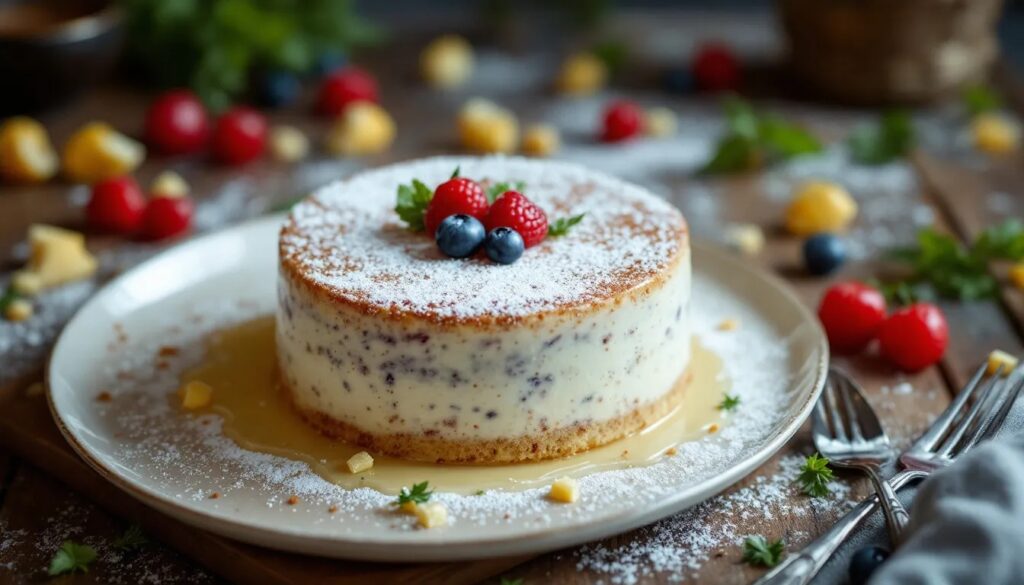
Imagine a time when butter was a luxury, milk a precious commodity, and eggs scarce. Instead of despairing, home cooks, largely American women, innovated. They discovered that by combining humble pantry staples – flour, sugar, water, and oil – with the scientific marvels of baking soda and baking powder, they could still conjure a tender, moist cake. The secret often lay in a subtle acidic reaction, perhaps from a splash of vinegar, or the inherent slight acidity in ingredients like brown sugar or coffee (though not always in this specific recipe), which, when mixed with baking soda, created the effervescence needed for leavening, bypassing the need for traditional dairy and eggs altogether. This chemical wizardry wasn’t just practical; it was empowering, allowing families to enjoy a taste of normalcy and sweetness amidst widespread deprivation.
The spices chosen for this cake – cinnamon, ginger, and allspice – tell their own intricate tale of global migration and interconnectedness. Cinnamon and ginger, with their aromatic warmth, trace their origins back to the ancient Spice Routes of Southeast Asia, journeying across continents through centuries of trade, first to the Middle East, then Europe, and eventually to the New World. Allspice, however, is a uniquely American contribution to the global spice pantry, native to the Caribbean. Its warm, complex flavor, reminiscent of a blend of cloves, nutmeg, and cinnamon, was discovered by Europeans after the Columbian Exchange and quickly integrated into Western baking, highlighting the ongoing exchange of botanical treasures that shaped global cuisines. These spices not only elevated a simple cake into a fragrant delight but also served as a reminder of the far-flung world, even during times of isolation.
Preparing this cake is deceptively simple, often a one-bowl affair, a testament to its practical origins. The technique minimizes dishes and fuss, making it perfect for busy homemakers. When recreating this historical gem today, remember its ethos: simplicity and resourcefulness. Don’t overmix the batter; a gentle hand ensures a tender crumb. Feel free to play with the quantity of raisins and nuts, or even substitute with other dried fruits like cranberries or chopped dried apricots for a different twist. A sprinkle of powdered sugar or a simple water glaze is all it needs, honoring its humble beginnings. More than just a dessert, the Eggless – Milkless – Butterless Cake is a slice of history, a profound reminder that creativity flourishes even in adversity, and that comfort can be found in the simplest, most ingenious culinary creations. It’s a dish that continues to nourish not just our bodies, but also our understanding of human spirit.
EGGLESS – MILKLESS – BUTTERLESS CAKE
Unearth a culinary relic with this remarkable heritage cake, a profound testament to resourcefulness born from an era of scarcity and innovation. Dispensing with traditional staples like eggs, milk, and butter, this magnificent creation nevertheless delivers an exquisitely moist crumb and an abundance of flavor. Each bite is an aromatic journey, infused with the warming embrace of cinnamon, ginger, and allspice, beautifully complemented by plump, sweet raisins and the rustic crunch of hearty nuts. It’s more than just a dessert; it’s a comforting slice of history, designed to be savored and shared, proving that ingenuity can create enduring deliciousness.
Ingredients
-
2
cups
raisins
None -
1
cup
granulated sugar
None -
¾
cup
brown sugar
None -
1
tsp.
salt
None -
3
cups
water
None -
½
cup
cooking oil
None -
1
tsp.
cinnamon
None -
½
tsp.
ginger
None -
½
tsp.
allspice
None -
½
tsp.
baking soda
None -
3½
cups
all-purpose flour
None -
½
tsp.
baking powder
None -
1
cup
chopped nuts
None
Instructions
-
In a substantial saucepan, meticulously combine the luscious raisins, granulated sugars, fine salt, pure water, neutral vegetable oil, and the vibrant trio of ground cinnamon, ginger, and allspice.
-
Gently bring this aromatic mixture to a vigorous boil over medium heat. Once achieved, maintain a robust, rolling boil for precisely five minutes. Subsequently, remove the saucepan from the heat and allow the mixture to cool completely until it reaches a comfortable lukewarm temperature.
-
Once cooled, incorporate the baking soda, stirring thoroughly until it is fully dissolved and evenly integrated into the mixture.
-
Delicately fold in the all-purpose flour and the coarsely chopped nuts. Continue stirring until the batter achieves a smooth, unified, and lump-free consistency.
-
Transfer the prepared batter into a meticulously greased and floured 13 x 9 x 2-inch baking pan. Bake in an oven preheated to 350°F (175°C) for approximately 75 minutes, or until a wooden skewer inserted into the cake’s core emerges impeccably clean.
Recipe Notes
This cherished culinary heirloom hails from the esteemed kitchens of Myrna E. Dross, and its original publication graced the pages of The Billings Gazette in Billings, Montana, circa 1945. A true testament to enduring flavor and ingenious baking.
Global Heritage Archive
Anthropological & Spice Migration Record
“A resourceful and resilient culinary culture, born from necessity and a desire for comforting sweets during periods of economic hardship and resource scarcity.”
🌿 Spice & Botanical Migration
Cinnamon and ginger, originating from Southeast Asia, journeyed westward along ancient Silk Road and maritime Spice Route trade networks, reaching the Middle East and Europe over millennia. Allspice, conversely, is indigenous to the Caribbean islands, primarily Jamaica, and was introduced to European palates following the Columbian Exchange, subsequently making its way into global and American culinary traditions. This trio of spices in one cake reflects centuries of interconnected global trade and botanical exchange.
🏺 Historical & Archaeological Record
While the concept of sweet cakes and leavened bread is ancient, the specific technique of an “eggless, milkless, butterless” cake relying on chemical leavening (baking soda and baking powder) emerged relatively recently. The oldest widespread written records of recipes of this type, often called “Depression Cake” or “Wacky Cake,” appear in American community cookbooks and newspapers from the late 19th century, gaining significant popularity and formal documentation during the Great Depression of the 1930s and World War II rationing of the 1940s in the United States.
💡 Little Known Facts
- Often referred to as “Wacky Cake” or “Depression Cake,” this recipe gained widespread popularity during the Great Depression and World War II rationing in the United States.
- The absence of eggs and dairy is ingeniously compensated by the chemical reaction between baking soda and an acidic ingredient (often vinegar or, in some versions, the slight acidity of brown sugar or fruit), creating the necessary leavening and tenderness.
📸 Made This Heritage Recipe?
We would love to see how your dish turned out! Send a photo of your culinary creation to [email protected] to be featured in our community gallery.
Leave a review and rate this recipe below!
Curated Literature & Washington DC Downtown Calendar
The Culinary Alchemist: Modern Gastronomy & Flavor Pairing
By LDN Gastronomy Series
Artisanal technique, seasonal sourcing, and kitchen mastery.
Upcoming Downtown Happenings
Live acoustic sessions, gallery receptions, literary salons, and independent trade shows across Washington DC.
