
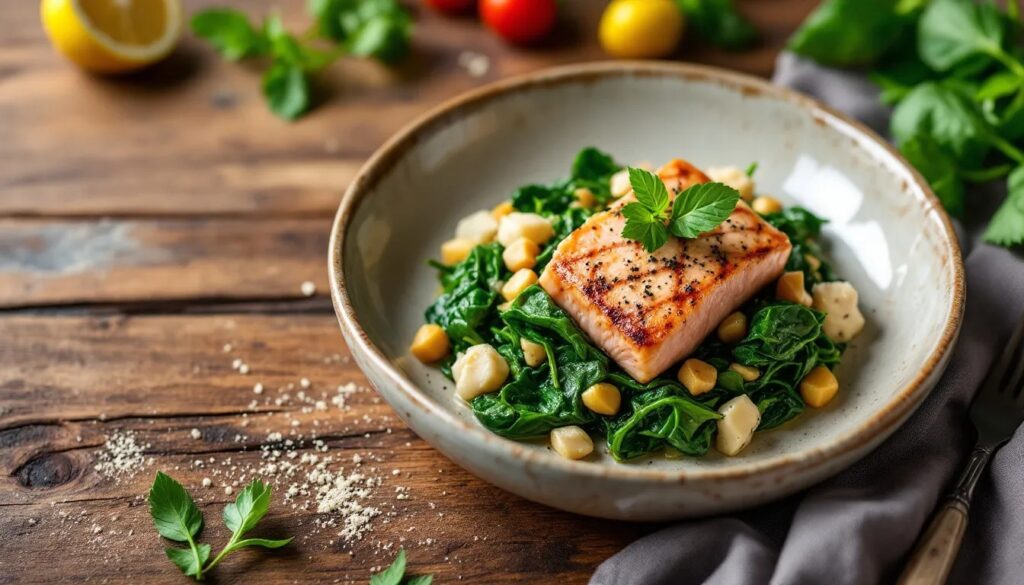
At its heart, this dish speaks to the democratizing power of canned goods. Tuna, specifically water-packed, became a pantry superstar in the decades following World War I. What began as a strategic shift for sardine canneries on the American West Coast transformed into a national culinary phenomenon. Suddenly, a lean, affordable protein was available year-round, empowering homemakers to stretch budgets and conjure nutritious meals with minimal effort. Paired with this, the inclusion of frozen chopped spinach highlights another seismic shift: the freezer revolution. As home freezers became commonplace from the 1940s onwards, the convenience of pre-prepped, flash-frozen vegetables brought fresh flavors to dinner tables regardless of season, dramatically simplifying meal preparation.
The dish’s binder, full-fat mayonnaise, is a fascinating global traveler in its own right. Its origins are debated between 18th-century French and Spanish culinary traditions, but its journey across the Atlantic cemented its status as an indispensable condiment and cooking ingredient in America. Here, it acts as a rich, creamy bridge between the earthy spinach and the briny tuna, providing moisture and a velvety texture. Grated Parmesan cheese, a quintessential Italian export, adds a layer of umami and a golden, irresistible crust. The scattering of fine dry bread crumbs, a technique found across European culinary traditions, further enhances this textural delight, promising a satisfying crunch with every bite. Even the lemon juice and black pepper, seemingly simple seasonings, tell tales of ancient trade routes and the global exchange of botanical wonders, tracing back to Asian origins for both.
Preparing this dish is wonderfully straightforward, embodying its “easy” moniker. The key is to ensure both the tuna and spinach are thoroughly drained to prevent a watery result. A gentle hand when mixing ensures the tuna flakes remain intact, contributing to a pleasant texture. For a golden-brown topping that truly sings, don’t be shy about letting it bake until the cheese is bubbling and the breadcrumbs are crisp. Serve it alongside a crisp green salad or a simple tomato bruschetta to complete a meal that is both comforting and surprisingly elegant. In a world increasingly complex, “Easy Tuna and Spinach for Two” reminds us of the profound satisfaction found in simple ingredients, thoughtfully combined, to create enduring culinary memories.
EASY TUNA AND SPINACH FOR TWO
Embark on a culinary journey back to the heart of uncomplicated gourmet with this exquisite tuna and spinach creation. Meticulously crafted for intimate dining, this bake masterfully marries the delicate flakiness of premium tuna with vibrant, verdant spinach, all enrobed in a luscious, cheesy embrace. It’s a nostalgic nod to time-honored recipes, transforming everyday staples into a comforting, sophisticated treasure that echoes the charm of cherished, resourceful home meals.
Ingredients
-
1
7-oz. can
water-packed tuna
None -
1
10-oz. pkg.
frozen chopped spinach
thawed and drained -
¼
cup
fine dry bread crumbs
None -
2
tbsp.
grated Parmesan cheese
None -
None
None
salt
to taste -
None
None
pepper
to taste -
1/3
cup
full-fat mayonnaise
None -
1
tbsp.
lemon juice
None
Instructions
-
Gently bring the frozen spinach to a fully thawed state, either by utilizing a quick four-minute cycle on high in the microwave, or by simmering with approximately ½ cup of water on the stovetop until tender. The critical next step is to meticulously press out all excess moisture, ensuring the spinach is thoroughly drained.
-
In a suitable mixing vessel, delicately separate the tuna into tender flakes. Introduce the remaining core components: the golden breadcrumbs, the initial measure of Parmesan cheese, a whisper of fine sea salt, a flourish of freshly ground black pepper, the creamy mayonnaise, and a bright splash of lemon juice. Employ a gentle folding technique to combine these ingredients; *do not stir*, as this preserves the optimal, aerated texture of the mixture.
-
Carefully transfer the artfully combined mixture into a gratin dish or a small casserole that has been thoughtfully prepared with a light coating of oil or butter to prevent sticking.
-
Crown the surface of the mixture with the reserved two tablespoons of Parmesan cheese, distributing it evenly to ensure a beautiful golden crust forms during baking.
-
Introduce the dish into a preheated oven at 350 degrees Fahrenheit (175 degrees Celsius) and allow it to bake for approximately 20 minutes, or until the top is beautifully golden and bubbling gently at the edges.
Recipe Notes
This elegant creation, a testament to timeless home cooking, owes its delightful structure to a singular, crucial technique: the gentle fold. As originally championed by its esteemed contributor, Eve Spencer, resisting the urge to stir is paramount. This careful motion is key to preventing the ingredients from becoming dense or stringy, instead ensuring a light, cohesive texture that truly elevates the dish.
Global Heritage Archive
Anthropological & Spice Migration Record
“This dish embodies the mid-20th century American culinary culture of convenience, thrift, and resourceful home cooking, utilizing pantry staples and frozen ingredients for quick, comforting meals.”
🌿 Spice & Botanical Migration
Black pepper, a staple in this dish, originated on the Malabar Coast of India and journeyed globally via ancient Spice Routes, reaching Europe and eventually the Americas through trade and colonial expansion. Lemon juice, providing a bright counterpoint, traces its origins to Northeast India, northern Myanmar, or China, spreading westward through Middle Eastern trade routes to the Mediterranean, and finally to the Americas during the Columbian Exchange.
🏺 Historical & Archaeological Record
The oldest written record of a recipe utilizing a key preparatory technique similar to this dish (a baked, savory composition often topped with cheese or breadcrumbs to form a crust) can be found in the Roman cookbook *Apicius* from the 4th/5th century AD, which details various *patinae* – baked savory dishes, sometimes incorporating fish and cheese.
💡 Little Known Facts
- Canned tuna gained immense popularity in the United States after World War I, when sardine canneries on the West Coast pivoted production to albacore tuna, providing an affordable and shelf-stable protein source.
- The widespread adoption of home freezers and the rise of frozen food companies in the post-WWII era significantly boosted the inclusion of frozen vegetables like spinach in everyday American cooking, making them readily accessible year-round.
📸 Made This Heritage Recipe?
We would love to see how your dish turned out! Send a photo of your culinary creation to [email protected] to be featured in our community gallery.
Leave a review and rate this recipe below!
Curated Literature & Washington DC Downtown Calendar
The Culinary Alchemist: Modern Gastronomy & Flavor Pairing
By LDN Gastronomy Series
Artisanal technique, seasonal sourcing, and kitchen mastery.
Upcoming Downtown Happenings
Live acoustic sessions, gallery receptions, literary salons, and independent trade shows across Washington DC.
