
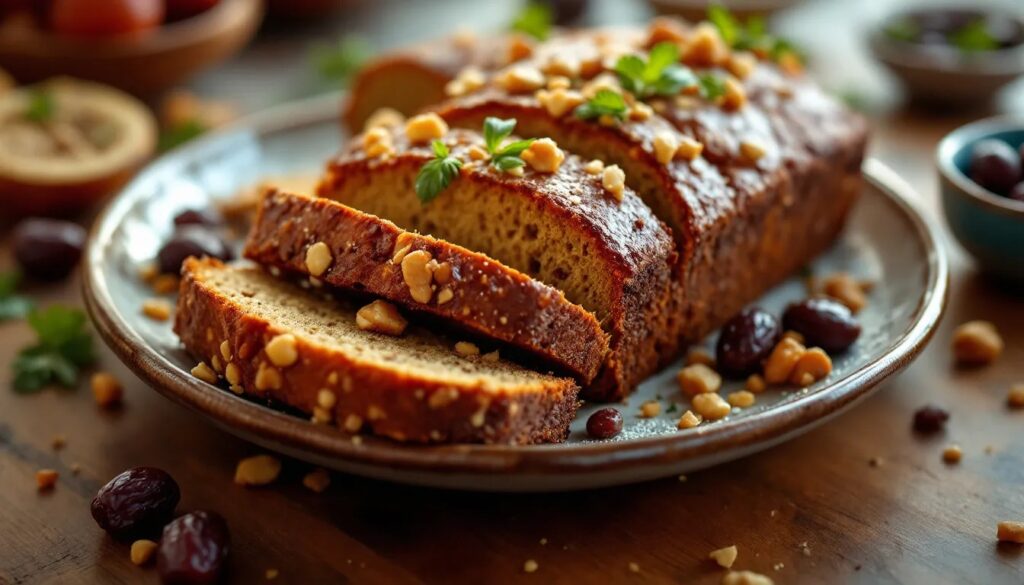
At its heart lies the date, a fruit whose lineage stretches back to Mesopotamia, a symbol of fertility and survival in arid lands. For millennia, the date palm (Phoenix dactylifera) has nourished civilizations across the Middle East and North Africa, its fruit traveling along ancient caravan routes, from the Silk Road to the Spice Route, eventually reaching European markets and, later, the New World. It was a prized commodity, a natural sweetener, and a source of vital energy. Its journey to become a star ingredient in an American quick bread is a fascinating chapter in the story of global foodways.
The “bread” aspect of Date Nut Bread, specifically its “quick” nature, is distinctly American. The 19th century saw a revolution in home baking with the advent of chemical leavening agents like baking soda and baking powder. No longer did cooks have to rely solely on fickle yeast; a swift reaction could produce a light, tender crumb, making bread-making accessible and less time-consuming. This innovation perfectly aligned with the burgeoning American spirit of practicality and efficiency, giving rise to an entire category of “quick breads” that remain beloved staples today. Date Nut Bread perfectly embodies this convergence: an ancient, exotic fruit meeting a modern, convenient baking technique.
The supporting cast of ingredients further illustrates this culinary confluence. Vanilla, with its intoxicating fragrance, hails from the rainforests of Mesoamerica, a precious discovery brought back to Europe by Spanish conquistadors and later cultivated globally. The chopped nuts—often walnuts, whose origins trace back to Central Asia and have been cultivated for thousands of years, or native North American pecans—add not just texture and flavor but another layer of global history to each slice. Even humble wheat flour, a cornerstone of Western baking, represents millennia of agricultural development and trade.
Preparing Date Nut Bread is a wonderfully forgiving process, perfect for bakers of all skill levels. The magic often begins with steeping the dates in boiling water, a step that not only softens them to a delightful pulp but also helps activate the baking soda, ensuring an even rise. The key to a tender loaf is gentle mixing; overworking the batter develops the gluten, leading to a tough bread. A light hand and a keen eye for that golden-brown crust are all it takes. While traditionally a simple loaf, variations abound: a hint of orange zest can brighten the flavor, a sprinkle of cinnamon or nutmeg can add warmth, or a simple cream cheese frosting can elevate it to dessert status.
More than just a recipe, Date Nut Bread is a cultural artifact, a tangible link to our shared past. It’s a testament to how human migration, trade, and innovation transform simple ingredients into something enduringly comforting and universally cherished. Slice into a warm loaf, and you’re not just tasting a treat; you’re savoring a slice of history.
DATE NUT BREAD
Transport your senses with this exquisite Date Nut Loaf, a timeless confection ideal for an elegant brunch spread or a refined afternoon repast. Each slice unveils a symphony of textures, from the sumptuous, caramelized sweetness of tender dates to the delightful, earthy counterpoint of finely chopped nuts. Expect a gorgeously moist crumb and an inviting fragrance that will lovingly embrace your home, evoking cherished memories and the enduring charm of artisanal baking traditions.
Ingredients
-
1
pkg.
dates
8 oz., or already chopped -
1
tsp.
baking soda -
1
cup
boiling water -
1
egg
beaten -
¾
cup
sugar -
1½
cups
all-purpose flour -
½
tsp.
salt -
2
tbsp.
oil -
1
tsp.
vanilla -
1
cup
chopped nuts
Instructions
-
Begin by finely dicing the 8-ounce measure of dates, if not already processed. Transfer these prepared dates into a spacious mixing vessel.
-
Evenly dust the diced dates with baking soda, then cascade the freshly boiled water over them. Allow this mixture to steep undisturbed for precisely ten minutes.
-
Incorporate the well-whisked egg into the date mixture, blending thoroughly until seamlessly combined.
-
Next, introduce the granulated sugar, all-purpose flour, and a pinch of salt. Gently fold these dry components into the wet mixture until just integrated.
-
Pour in the vegetable oil and fragrant vanilla extract, stirring until the liquids are fully absorbed and the batter achieves a harmonious consistency.
-
As the final addition, gently fold in the chopped nuts, mixing only until they are evenly dispersed throughout the batter without overworking.
-
Carefully spoon the prepared batter into a meticulously greased loaf pan, ensuring an even distribution.
-
Transfer to a preheated oven at 350°F (175°C) and bake for approximately one hour. Should you opt for four smaller loaf pans, fill each three-quarters full and reduce the baking time to around 45 minutes, or until a wooden skewer inserted into the center emerges clean.
-
Permit the baked loaf to cool completely on a wire rack before carefully slicing and serving, to ensure optimal texture and flavor.
Recipe Notes
This versatile recipe is readily adaptable; feel empowered to scale the proportions to double or even triple, accommodating larger gatherings or batch baking. For charming individual servings or thoughtful culinary gifts, the batter perfectly fills four miniature loaf pans when filled to three-quarters capacity. Adjust the baking duration for these smaller loaves to approximately 45 minutes. Opting for pre-chopped dates presents a convenient shortcut, streamlining your preparation process. This cherished recipe is graciously shared by the esteemed Marcella Lockhart.
Global Heritage Archive
Anthropological & Spice Migration Record
“A cherished tradition of home baking emphasizing convenience, comfort, and resourceful use of available ingredients, often associated with community gatherings and everyday enjoyment.”
🌿 Spice & Botanical Migration
This recipe, while not heavy on traditional ‘spices,’ is a testament to ingredient migration. Dates, originating from the fertile crescents of the Middle East and North Africa, journeyed globally via ancient trade routes, becoming a staple. Vanilla, a fragrant orchid fruit, was first cultivated in Mesoamerica, arriving in European and then American kitchens following the Columbian Exchange. The chopped nuts, often walnuts tracing their lineage to Central Asia or pecans native to North America, further illustrate the vast botanical exchange facilitated by historical trade and exploration.
🏺 Historical & Archaeological Record
While leavened breads date back to ancient Egypt (c. 3000 BCE) and sweet fruit breads have Roman antecedents, the specific “quick bread” preparation technique employing chemical leaveners like baking soda is a relatively modern innovation. The earliest published recipes utilizing baking soda (or “saleratus”) to create quick-rising breads and cakes began appearing in American cookbooks in the mid-19th century, notably in works like Eliza Leslie’s “Directions for Cookery” (1847).
💡 Little Known Facts
- Quick breads, including Date Nut Bread, rose to prominence in American kitchens during the 19th century due to the widespread availability of chemical leavening agents like baking soda and baking powder, which offered a faster alternative to yeast breads.
- The cultivation of dates in the United States, particularly in California’s Coachella Valley, was heavily promoted in the early 20th century, making dates an accessible and popular ingredient in American home baking.
📸 Made This Heritage Recipe?
We would love to see how your dish turned out! Send a photo of your culinary creation to [email protected] to be featured in our community gallery.
Leave a review and rate this recipe below!
Curated Literature & Washington DC Downtown Calendar
The Culinary Alchemist: Modern Gastronomy & Flavor Pairing
By LDN Gastronomy Series
Artisanal technique, seasonal sourcing, and kitchen mastery.
Upcoming Downtown Happenings
Live acoustic sessions, gallery receptions, literary salons, and independent trade shows across Washington DC.
