
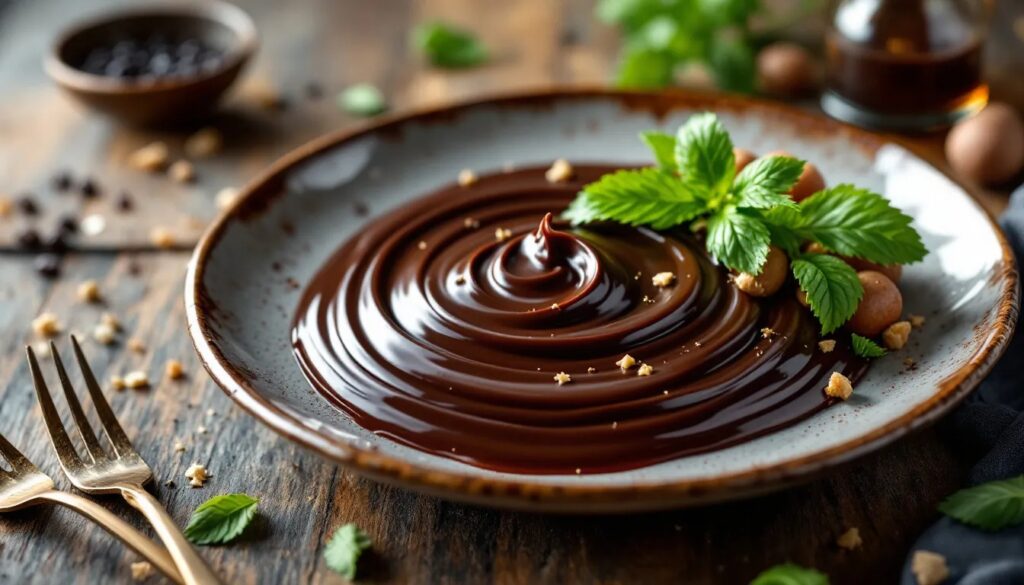
The allure of dark chocolate sauce is primal, a whisper of indulgence that promises comfort and luxury in every glossy, bittersweet spoonful. More than just a simple confection, this recipe for Dark Chocolate Sauce is a profound testament to millennia of human migration, botanical exchange, and culinary evolution. It is a true culinary tapestry woven from threads spanning continents and cultures.
Our journey begins not in a modern kitchen, but in the steamy jungles of Mesoamerica, where the Olmec, Maya, and Aztec civilizations revered cacao as a bitter, sacred beverage, often spiced with chili and herbs, reserved for rituals and royalty. It was a potent elixir, far removed from the sweet dessert we know today. The arrival of the Spanish conquistadors marked the first major migration of this “food of the gods” across the Atlantic, initiating its transformation. In European courts, cacao encountered new companions: sugar, itself a migrant from Southeast Asia via the Arab world and Caribbean plantations, and milk. This alchemy gradually softened cacao’s edges, evolving it from a bitter drink to a sweetened, luxurious beverage, and eventually, in the 19th century, into solid, edible bars – the very foundation of our sauce.
The recipe’s sophistication is further enhanced by its supporting cast. Instant espresso powder, a relatively modern invention, owes its heritage to the ancient coffee forests of Ethiopia, where *Coffea arabica* first bloomed. Its journey through the Arabian Peninsula, across the Mediterranean, and into Europe led to the Italian innovation of espresso brewing. In this sauce, espresso doesn’t overpower but rather deepens the chocolate’s inherent bitterness, amplifying its complexity, a subtle nod to the enduring partnership of coffee and chocolate in Western patisserie. Similarly, almond liqueur traces its roots to the ancient almond groves of Central Asia and the Middle East, reaching Europe via millennia of trade, culminating in beloved liqueurs like the Italian Amaretto. Its inclusion here adds a warm, nutty counterpoint, elevating the sauce from merely sweet to truly nuanced.
This particular formulation – combining various chocolates, sugar, espresso, and almond liqueur – speaks to a distinctly modern, Western culinary sensibility, likely North American, that values both indulgence and convenience. It embodies a culture with access to a global pantry and a desire to create sophisticated desserts that are still achievable in a home kitchen. It’s a celebration of global ingredients brought together through centuries of trade and adaptation.
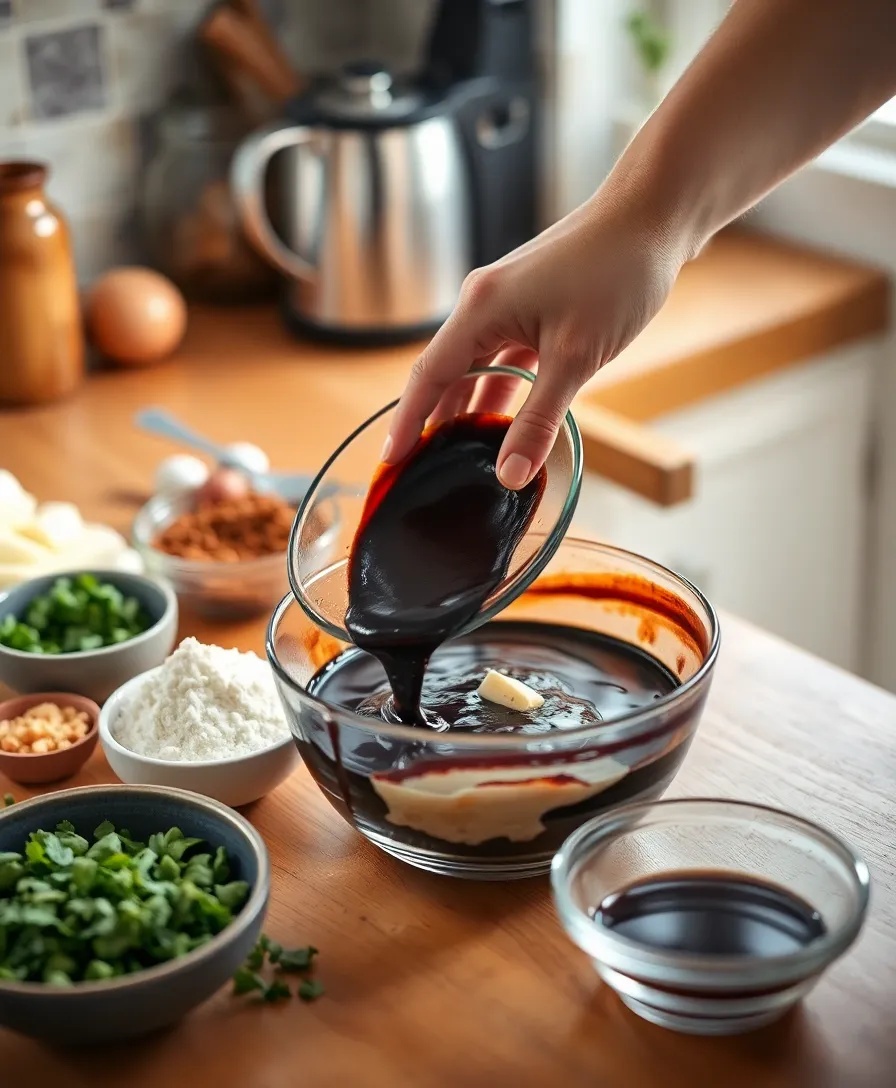
For the aspiring home chef, crafting this sauce is a simple pleasure. Begin with high-quality chocolate; the nuanced balance of semisweet, bittersweet, and unsweetened ensures depth without excessive cloying sweetness. Gently melt the chocolates with sugar and the espresso powder in boiling water, either over a double boiler or carefully in a microwave, stirring until silken smooth. The key is patience and a light hand to prevent scorching. Finally, stir in the almond liqueur off the heat to preserve its delicate aromatics. The result is a glossy, opulent river of dark chocolate, perfect drizzled over vanilla bean ice cream, fruit tarts, or even enjoyed by the spoonful. Store it in an airtight container in the refrigerator, and gently rewarm for that fresh-made consistency. This sauce isn’t just a dessert; it’s a narrative, a delicious journey through human history and ingenuity, best savored slowly, mindfully.
Dark Chocolate Sauce
Unveil a truly exceptional chocolate experience with this deeply luxurious sauce, a versatile masterpiece designed to transform any dessert into an unforgettable indulgence. Its profound cocoa character is beautifully interwoven with the invigorating embrace of rich espresso, while a subtle whisper of almond liqueur lends an air of sophisticated intrigue. Perfect for artfully adorning delicate cakes, cascading over scoops of artisanal ice cream, or gracing more intricate confections, it bestows a touch of timeless elegance upon every sweet creation.
Ingredients
-
5
ounces
semisweet or bittersweet chocolate
coarsely chopped -
1
ounce
unsweetened baking chocolate
coarsely chopped -
¼
cup
sugar -
1
teaspoon
instant espresso powder -
½
cup
boiling water -
2
Tablespoons
almond liqueur
Instructions
-
Gently melt the chocolate over a bain-marie, ensuring the water below maintains a simmering heat without reaching a rolling boil, to achieve a perfectly smooth, luscious consistency.
-
In a separate vessel, combine the granulated sugar with the steaming espresso and the specified amount of hot water, stirring until the sugar crystals are completely dissolved into the fragrant liquid.
-
Carefully incorporate the warm espresso-sugar fusion into the molten chocolate, whisking continuously until the mixture is thoroughly unified and boasts a silken sheen.
-
Stir in the almond liqueur, and if desired for an even richer mouthfeel, emulsify the butter until fully integrated, creating a flawlessly smooth finish.
-
Allow the finished sauce to rest briefly, cooling to a temperate warmth ideal for immediate drizzling and serving.
Recipe Notes
While the original formulation suggests the addition of butter for an enhanced richness, its precise measure is left to the culinary discretion of the preparer. For the most sublime experience, this exceptional sauce is best served warm; gently rewarm it before artfully drizzling onto individual dessert plates. It serves as an exquisite complement to a variety of confections, most notably pairing harmoniously with the described dacquoise-based ‘croquettes,’ which themselves frequently feature a generous coating of three cups of toasted, finely chopped almonds, offering a delightful textural counterpoint.
Global Heritage Archive
Anthropological & Spice Migration Record
“A culinary culture focused on indulgent, sophisticated home desserts that blend global flavors with modern convenience, often reflecting a high standard of living and access to diverse ingredients.”
🌿 Spice & Botanical Migration
The primary ‘flavor’ components beyond chocolate and sugar are coffee and almond. Coffee (Coffea arabica) originated in the highlands of Ethiopia, spreading via ancient trade routes to the Arabian Peninsula and then to Europe and the Americas. Almonds (Prunus dulcis) are native to Central Asia and the Middle East, reaching Europe thousands of years ago through ancient trade networks, leading to their widespread use in Mediterranean confections and liqueurs. These ingredients, combined with Mesoamerican cacao, represent a truly global culinary convergence facilitated by centuries of trade and exchange.
🏺 Historical & Archaeological Record
The earliest direct archaeological evidence for the consumption of cacao, the core ingredient of chocolate, dates back to 1900-1500 BCE among the Olmec civilization in present-day Mexico. Here, cacao was consumed as a bitter, frothy beverage, often spiced, a stark contrast to the sweet, indulgent sauce prepared today. The concept of a *sweetened* chocolate preparation, let alone a sauce, developed much later in European courts from the 16th century onwards, with solid chocolate confectionery becoming widespread only in the 19th century.
💡 Little Known Facts
- The concept of solid, edible chocolate bars, a prerequisite for this sauce, only emerged in the mid-19th century, transforming chocolate from a beverage to a confection.
- The inclusion of instant espresso powder isn’t just for adding a coffee flavor; coffee enhances and deepens chocolate’s bitterness and complexity without adding a distinct coffee taste, a technique often employed by professional chocolatiers and bakers.
📸 Made This Heritage Recipe?
We would love to see how your dish turned out! Send a photo of your culinary creation to [email protected] to be featured in our community gallery.
Leave a review and rate this recipe below!
Curated Literature & Washington DC Downtown Calendar
The Culinary Alchemist: Modern Gastronomy & Flavor Pairing
By LDN Gastronomy Series
Artisanal technique, seasonal sourcing, and kitchen mastery.
Upcoming Downtown Happenings
Live acoustic sessions, gallery receptions, literary salons, and independent trade shows across Washington DC.
