
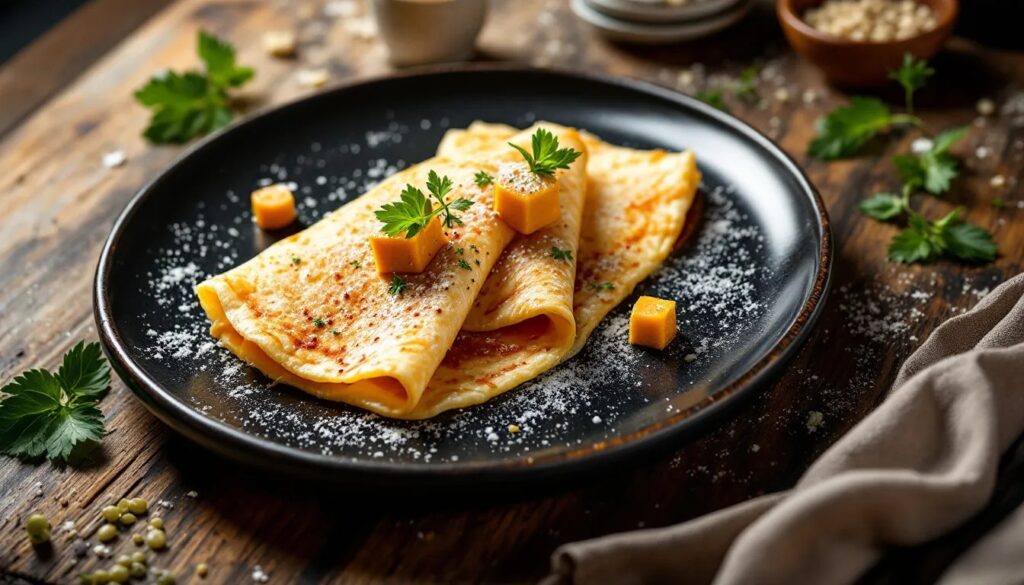
To call a crêpe merely a pancake is to miss the whispered histories, the subtle migrations, and the sheer culinary poetry folded within its delicate embrace. More than just a breakfast item, the crêpe is a canvas, a comfort, and a chronicle, its thin, ethereal form belying a rich tapestry of global exchange and timeless tradition.
Our journey begins, as many good food stories do, in the rustic heartland of Brittany, France. Here, amidst the windswept coasts and fertile fields, the *galette* was born. Originally crafted from buckwheat flour – a robust grain introduced to Europe from Asia around the 12th century – these savory pancakes were a nourishing staple, deeply entwined with the region’s agricultural rhythm. The word “crêpe” itself is said to derive from the Latin “crispa,” meaning “curled,” reflecting the delicate, sometimes ruffled edges of these griddle-cooked wonders. Over centuries, as wheat flour became more accessible, the sweeter *crêpes de froment* emerged, transforming the humble galette into the dessert and sweet treat we often recognize today, though savory versions remain profoundly popular.
But the crêpe’s story is not merely one of regional evolution; it is a testament to the interconnectedness of our world. Consider the seemingly simple ingredients: flour, milk, eggs, oil, sugar, vanilla. Each tells a migratory tale. While wheat flour traces its lineage back to the Fertile Crescent, spreading across continents with ancient farmers, and milk and eggs represent long-standing human-animal symbiosis, it is sugar and vanilla that truly illuminate the vast networks of global trade and exploration. Sugar, derived from sugarcane, originated in New Guinea, journeyed through India and the Middle East along ancient Spice Routes, eventually becoming a cornerstone of the Columbian Exchange and a commodity that reshaped global economies and diets, often with tragic human costs. Vanilla, that intoxicatingly fragrant pod, hails from the rainforests of Mesoamerica, a precious discovery brought to Europe by Spanish conquistadors. Its global cultivation only truly took off in the mid-19th century with the discovery of hand-pollination techniques, transforming it from an exotic rarity into an accessible luxury. These once far-flung ingredients converged in the crêpe, enriching its flavor and broadening its cultural footprint.
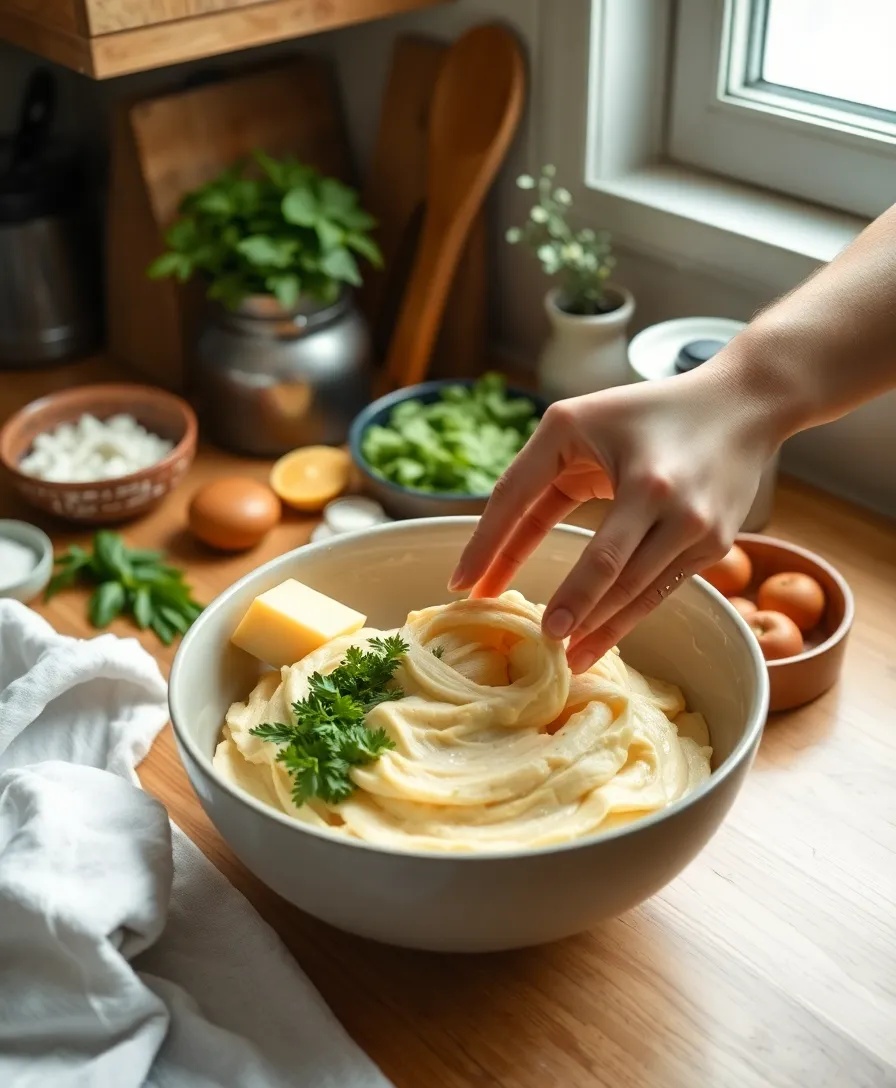
Preparing a crêpe is a dance between simplicity and finesse. The batter, a silky liquid of flour, eggs, milk, and a touch of sweetness, benefits immensely from a good rest in the refrigerator, allowing the gluten to relax and the flavors to meld. The secret lies in a hot, lightly oiled pan and a swift, confident pour, tilting the pan to spread the batter into an impossibly thin, even circle. The first crêpe, affectionately known as the “test crêpe,” is often sacrificed to calibrate the heat and technique. A perfect crêpe is golden-brown with delicate lacy edges, supple enough to fold or roll around a myriad of fillings, from simple butter and sugar to elaborate fruit compotes, Nutella, or savory ham and cheese.
Beyond its deliciousness, the crêpe holds a special place in cultural practices. In France, it is intrinsically linked to Chandeleur (Candlemas) on February 2nd, a day when families traditionally gather to make crêpes, often flipping the first one with a coin in hand, believing it brings good fortune for the year. This ritual speaks to the crêpe’s role not just as food, but as a symbol of tradition, community, and hope.
From its humble beginnings as a buckwheat galette in Brittany to a global culinary icon, the crêpe remains a testament to human ingenuity, cultural exchange, and the enduring power of simple ingredients transformed into something extraordinary. It invites us to savor not just its taste, but the journey of its making, and the countless hands and histories that have shaped it.
CREPES
Unveil the culinary magic of classic crêpes, an embodiment of effortless elegance and gastronomic versatility. These gossamer-thin creations serve as a pristine canvas, beckoning both sweet indulgence and savory exploration. Whether gracing a leisurely brunch or concluding an intimate dinner, this foundational recipe promises tender, ethereal pancakes, ready to be adorned with your chosen fillings or savored in their exquisite, unadorned purity.
Ingredients
-
1
cup
flour
None -
1 1/2
cups
milk
None -
3
eggs
None -
1
Tablespoon
oil
None -
4
Tablespoons
sugar
for sweet crepes -
1
teaspoon
vanilla
for sweet crepes
Instructions
-
In a high-speed blender, meticulously combine all specified ingredients.
-
Process the mixture until it achieves a perfectly smooth, homogeneous consistency, ensuring no lumps remain.
-
Transfer the impeccably smooth batter to a suitable container, then refrigerate for a minimum of two hours. This crucial resting period allows the gluten to relax and the flavors to meld, resulting in more pliable crêpes. The prepared batter maintains its exquisite quality when stored chilled for up to three to four days.
-
Position a small non-stick crêpe pan or skillet over medium-high heat. Introduce one teaspoon of a neutral cooking oil, allowing it to shimmer and become exceptionally hot, just shy of smoking.
-
Once the pan is adequately heated, lift it briefly from the burner. Pour just enough batter — typically 2-3 tablespoons, depending on pan size — into the center, then swiftly tilt and swirl the pan to coat the entire bottom surface with a delicate, ultra-thin layer.
-
Return the pan to the heat and cook the crêpe for approximately one minute, or until its edges appear subtly golden and the surface begins to set and dry.
-
With a thin spatula, deftly loosen the crêpe, then flip it to the opposing side. Continue to cook for an additional 30 seconds, or until it develops a light golden hue.
-
Serve the freshly cooked crêpes immediately to enjoy their warmth and delicate texture. Alternatively, allow them to cool completely on a wire rack before stacking with parchment paper in between, then transfer to an airtight container or freezer bag for future culinary endeavors.
Recipe Notes
To transform these into an elegant sweet treat, enrich the basic batter with an additional 4 tablespoons of fine granulated sugar and 1 teaspoon of pure vanilla extract. For convenience, the meticulously prepared batter can be chilled and preserved for up to three to four days, making spontaneous crêpe creations wonderfully accessible.
Global Heritage Archive
Anthropological & Spice Migration Record
“A versatile culinary tradition where thin, griddle-cooked batters bridge the gap between simple rustic fare and elegant dessert, often celebrated during festivals and family gatherings.”
🌿 Spice & Botanical Migration
Vanilla, native to Mesoamerica, was introduced to Europe by Spanish conquistadors in the 16th century, its global spread accelerated by the development of hand-pollination techniques in the mid-19th century. Sugar, originating from sugarcane in New Guinea/Southeast Asia, traversed the ancient Spice Routes to the Middle East and Europe, later becoming a major commodity in the Columbian Exchange, profoundly impacting global diets.
🏺 Historical & Archaeological Record
The earliest known precursors to crêpes are believed to be the ancient Greek *tagenias*, thin griddle cakes made from wheat flour, olive oil, and honey, dating back to at least 500 BCE. More directly, buckwheat galettes, the savory ancestor of modern crêpes, became a staple in Brittany, France, after buckwheat was introduced from Asia in the 12th century.
💡 Little Known Facts
- The practice of making crêpes on Chandeleur (Candlemas, February 2nd) traditionally involved holding a coin in one hand while flipping the crêpe with the other, believed to bring prosperity for the year.
- Historically, savory crêpes in Brittany (known as *galettes*) were made exclusively with buckwheat flour, a robust grain introduced to Europe from Asia around the 12th century, thriving in the region’s cooler climate.
📸 Made This Heritage Recipe?
We would love to see how your dish turned out! Send a photo of your culinary creation to [email protected] to be featured in our community gallery.
Leave a review and rate this recipe below!
Curated Literature & Washington DC Downtown Calendar
The Culinary Alchemist: Modern Gastronomy & Flavor Pairing
By LDN Gastronomy Series
Artisanal technique, seasonal sourcing, and kitchen mastery.
Upcoming Downtown Happenings
Live acoustic sessions, gallery receptions, literary salons, and independent trade shows across Washington DC.
