
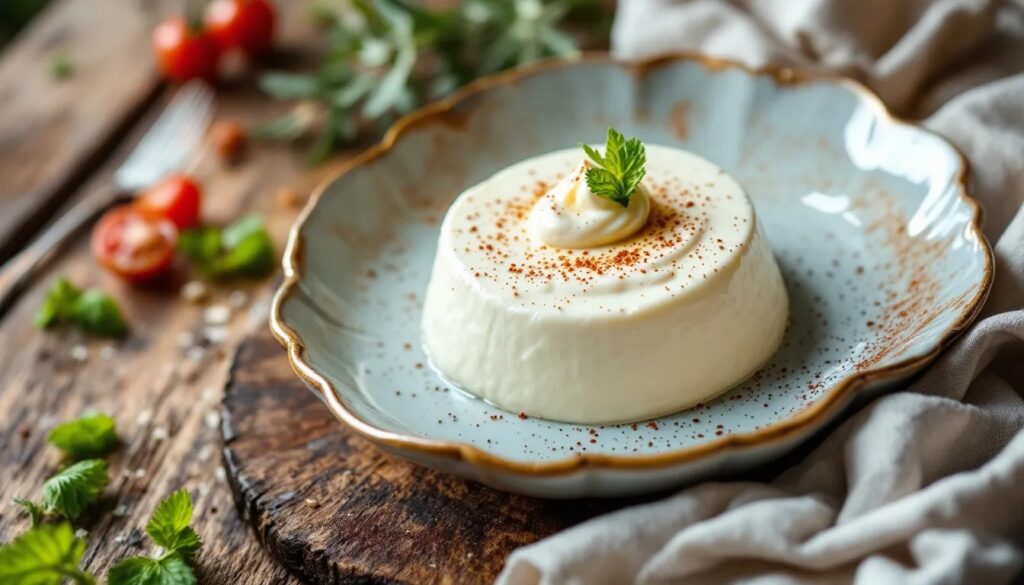
The story of crème fraîche begins not with a specific invention, but with an evolutionary adaptation. For millennia, early dairy farmers faced the challenge of preserving milk, a highly perishable commodity. They discovered, often by serendipity, that allowing milk or cream to sour naturally—a process driven by ubiquitous lactic acid bacteria—not only extended its shelf life but also imparted a delightful tang and thickened its consistency. This natural fermentation was the primordial precursor to what we now cherish as crème fraîche. In ancient Gaul, long before the rise of modern France, communities with domesticated livestock would have undoubtedly utilized similar methods, harnessing ambient microorganisms to create cultured dairy products from their bounty.
What distinguishes crème fraîche, however, is its unique blend of richness and subtle acidity, achieved through a specific fermentation process that uses mesophilic bacteria. Unlike sour cream, which can be quite tart and often contains stabilizers, traditional crème fraîche is characterized by a lower acidity and a higher butterfat content, giving it a velvety texture and an exceptional resistance to curdling at high temperatures. This latter quality made it invaluable in French cuisine, where it could be stirred into hot sauces, soups, and stews without fear of separation, adding a luxurious mouthfeel and delicate counterpoint to rich flavors.
The “recipe” for crème fraîche itself is remarkably simple: heavy cream and a starter culture, traditionally buttermilk, which provides the necessary lactic acid bacteria. This method echoes ancient practices where a small portion of a previous batch of fermented milk, or even a naturally soured cream, would be used to inoculate a new one. This technique represents a fundamental principle of food preservation that transcended geographical boundaries, from making sourdough to brewing beer. While the modern world often relies on specific starter cultures, the essence remains the same: coaxing milk’s natural sugars into lactic acid, transforming a liquid into a rich, tangy emulsion.
Crème fraîche’s journey is intrinsically tied to the migration of dairy farming itself. Originating in the Fertile Crescent approximately 9,000 years ago, the practice of animal domestication and dairying slowly spread across Europe. As it moved, local environmental factors, specific breeds of cattle, and regional culinary preferences shaped the myriad of dairy products we see today. In the lush pastures of Normandy, Alsace, and Bresse, conditions were ideal for producing high-quality milk and cream, leading to the particular prominence of crème fraîche in these regions. The Appellation d’Origine Contrôlée (AOC) status awarded to “Crème de Bresse” underscores this deep connection to terroir, recognizing a product whose character is inseparable from its geographical origin and traditional preparation.
Today, while store-bought versions are readily available, crafting crème fraîche at home is a simple, rewarding endeavor. Just combine 1 tablespoon of good quality buttermilk with 1 cup of heavy cream in a clean jar. Cover loosely and let it sit at room temperature (ideally 68-72°F or 20-22°C) for 12-24 hours, or until it has thickened and developed a pleasant, tangy aroma. Stir well, then refrigerate. It can last for up to two weeks in the refrigerator. This homemade crème fraîche will elevate everything from a dollop on fresh berries and a swirl into bisque to a vital component in a classic French tart or a creamy pasta sauce, proving that some of the greatest culinary treasures are born from the simplest of ingredients and the most ancient of techniques.
Crème Fraiche
Unlock a world of sophisticated flavor with your own artisanal crème fraîche. This beloved French dairy marvel, easily crafted in your kitchen, transforms from a simple cream into a silken, subtly tart accompaniment. It provides a luxurious depth and velvety texture to savory preparations, offering an exquisite counterpoint to rich dishes, and a bright, piquant tang that beautifully balances sweet indulgences. A true culinary chameleon, it lends a touch of refined elegance to nearly any dish, developing its characteristic body and complexity as it gently matures.
Ingredients
-
1
tsp
buttermilk
for each cup of heavy cream -
1
cup
heavy cream
Instructions
-
Gently warm the rich heavy cream in a small, impeccably clean saucepan over low heat. Utilize a precise thermometer to monitor the temperature, removing it from the heat once it reaches a temperate 85°F (approximately 29°C). Exercise caution to prevent boiling.
-
Carefully decant the tempered cream into a pristine, non-reactive glass jar or suitable container, ensuring it is thoroughly sanitized.
-
Introduce the active buttermilk culture to the warmed cream, stirring gently but thoroughly to ensure complete integration of the starter.
-
Secure the container with a lid, allowing for slight ventilation if possible (e.g., loosely covered), and permit the inoculated cream to rest undisturbed at ambient room temperature. Allow it to cultivate its signature texture, observing as it thickens to a luscious consistency, akin to soft yogurt.
Recipe Notes
For optimal culturing and the most exquisite texture, ensure the ambient temperature during the thickening phase remains within a preferred range of 60°F (15°C) to 85°F (29°C). In warmer environments or during summer months, this transformation can be expedited, achieving the desired consistency in as little as 6 hours. Conversely, cooler conditions may extend the maturation period, potentially taking up to 36 hours. Once your crème fraîche has reached its ideal body, transfer it to the refrigerator, where its quality and freshness will be preserved for a minimum of one week.
Global Heritage Archive
Anthropological & Spice Migration Record
“A culinary culture deeply rooted in terroir, valuing the richness of dairy and the transformative power of natural fermentation for both refined and rustic dishes.”
🌿 Spice & Botanical Migration
Crème Fraiche, at its heart, is a product of sophisticated dairy farming and natural fermentation rather than the migration of exotic spices or herbs. Its core “ingredients”—heavy cream and buttermilk (providing lactic acid bacteria)—are indigenous to regions with a long history of cattle domestication and dairy production. The migration story here is less about long-distance trade routes and more about the historical diffusion of dairy agriculture itself from the Fertile Crescent across Europe, where communities developed methods to preserve and enhance milk’s bounty.
🏺 Historical & Archaeological Record
The earliest archaeological evidence of dairy consumption dates back approximately 9,000 years to the Neolithic sites in Anatolia and the Near East. Evidence for the deliberate fermentation of milk to produce various dairy products (like yogurt, cheese, and likely fermented cream) appears across Europe and Asia from the Neolithic period onwards, with specific vessel residues suggesting such practices. While “crème fraîche” as a named product is more recent, the underlying technique of culturing cream for preservation and flavor enrichment is an ancient dairy practice.
💡 Little Known Facts
- Historically, crème fraîche often spontaneously fermented due to naturally occurring lactic acid bacteria in unpasteurized cream and the surrounding environment, especially prevalent in dairy-rich regions of France.
- The term “crème fraîche” is protected in some French regions, notably “Crème de Bresse,” which holds an Appellation d’Origine Contrôlée (AOC) status, ensuring it comes from specific cows in a defined geographical area and follows traditional production methods.
📸 Made This Heritage Recipe?
We would love to see how your dish turned out! Send a photo of your culinary creation to [email protected] to be featured in our community gallery.
Leave a review and rate this recipe below!
Curated Literature & Washington DC Downtown Calendar
The Culinary Alchemist: Modern Gastronomy & Flavor Pairing
By LDN Gastronomy Series
Artisanal technique, seasonal sourcing, and kitchen mastery.
Upcoming Downtown Happenings
Live acoustic sessions, gallery receptions, literary salons, and independent trade shows across Washington DC.
