
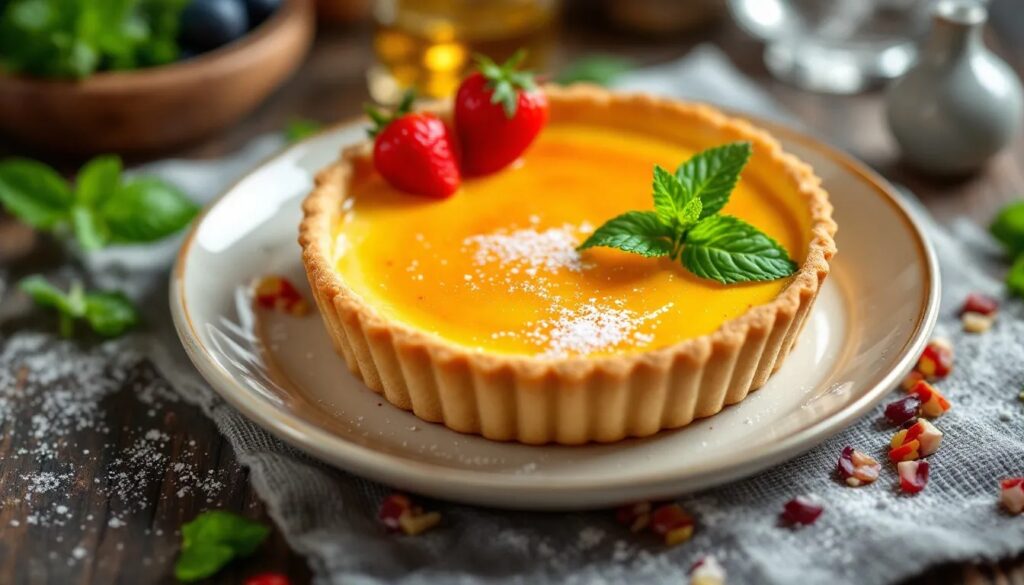
The “Creme Brulee Tart” stands as a testament to the timeless appeal of French patisserie, a harmonious marriage of two beloved classics: the silken luxury of crème brûlée and the elegant simplicity of a tart. This isn’t merely a dessert; it’s a journey through culinary history, a delicate dance of textures and temperatures, and a profound narrative of global exchange.
At its heart lies the crème brûlée, a dish whose precise origins are shrouded in delightful debate. Was it born in the sun-drenched kitchens of Catalonia as *crema catalana*, infused with lemon and cinnamon, dating back to the Middle Ages? Or did it emerge from the hallowed halls of Trinity College, Cambridge, in the 17th century, as “burnt cream” or “Trinity cream,” complete with an iron branding? France, ever the arbiter of culinary refinement, stakes its claim with François Massialot’s 1691 *Cuisinier roial et bourgeois*, offering the first documented recipe for “crème brûlée.” Regardless of its true birthplace, the essence remained: a rich, vanilla-infused custard crowned with a brittle, caramelized sugar crust – a contrast that has captivated palates for centuries.
The tart, its steadfast companion in this recipe, boasts an equally venerable lineage. From the robust, savory *tourtes* of medieval Europe to the delicate fruit tarts of Renaissance courts, it has long served as a versatile canvas for culinary creativity. Its buttery, flaky (or sometimes crisp, shortcrust) shell provides the perfect structural integrity and textural counterpoint to the creamy filling. In this iteration, the tart transforms the individual ramekin experience of crème brûlée into a communal centerpiece, elegant and inviting.
The ingredients themselves tell a profound story of migration and globalization. Take vanilla, the soul of the custard. Its intoxicating aroma, once confined to the tropical forests of Mesoamerica where the Totonac people first cultivated it, embarked on a grand voyage with Spanish conquistadors. For centuries, its cultivation outside its native habitat proved elusive, until a breakthrough in hand-pollination in the 19th century in Réunion unlocked its global potential, transforming it from a rare exotic spice into a beloved staple. Sugar, both sweetening the custard and forming its iconic brittle topping, traces an even longer journey from the sugarcane fields of New Guinea, across ancient trade routes to India, Persia, and the Arab world, before arriving in Europe and then crossing the Atlantic with Columbus – a journey that tragically fueled the transatlantic slave trade and reshaped global economies. Even the subtle addition of semi-sweet chocolate, while not traditional for a pure crème brûlée, hints at the European embrace of cacao, originally a sacred drink of Mayan and Aztec civilizations. Blackberries, a refreshing and tart counterpoint, are native to temperate regions and symbolize a grounding in local produce, often paired with richer desserts.
Creating the perfect Crème Brûlée Tart is an art, but one accessible to any passionate home baker. The secret to a flawless shortcrust pastry lies in using very cold butter and minimal handling to prevent gluten development, resulting in a tender, melt-in-your-mouth crust. For the custard, temper the egg yolks carefully with warm cream to avoid scrambling, ensuring a silky-smooth texture. A low and slow bake will yield a wobble that sets perfectly upon chilling. The crowning glory, of course, is the “brulee.” A generous, even layer of brown sugar (or granulated sugar) is crucial, and a kitchen blowtorch is your best friend here, creating that satisfyingly crisp, glassy caramel shell. Don’t rush this step; watch as the sugar bubbles and browns, transforming into an amber masterpiece. Serve it cool, letting the contrast between the chilled, smooth custard and the warm, brittle caramel tantalize your senses. This dessert is more than just a sweet treat; it’s an edible artifact, a delicious narrative of human ingenuity, exploration, and the enduring pleasure of culinary tradition.
CREME BRULEE TART
Elevate your dessert repertoire with this exquisite Crème Brulée Tart, a masterful fusion of classic French patisserie and timeless sophistication. This captivating creation showcases a meticulously crafted, delicate pâte sucrée base, cradling a velvety, ethereal custard. A vibrant layer of plump, juicy blackberries provides a delightful counterpoint, all crowned with the signature crisp, amber sheen of caramelized brown sugar. A true culinary jewel, it’s destined to become the dazzling centerpiece of any celebratory occasion.
Ingredients
-
1
cup
all-purpose flour
None -
Pinch
salt
None -
1
egg yolk
None -
2.5
Tablespoons
sugar
None -
7
Tablespoons
chilled, unsalted butter
cut into ½-inch pieces -
6
egg yolks
room temperature -
2
cups
whipping cream
None -
1
teaspoon
vanilla
None -
3
ounces
semi-sweet chocolate
melted -
2
cups
blackberries
None -
6
Tablespoons
sugar
None -
1
cup
sour cream
None -
0.5
stick
unsalted butter
cut into pieces at room temperature -
Brown sugar
for topping
Instructions
-
To prepare the pâte sucrée: In a spacious mixing bowl, thoroughly combine the flour, granulated sugar, and salt. Incorporate the chilled butter by cutting it in until the texture resembles coarse crumbs. Introduce the egg yolk and blend just until the mixture coalesces into a cohesive dough. Gently shape the dough into a flattened disc, then enfold it in plastic wrap and chill for a minimum of one hour (or up to three days for convenience).
-
Lightly butter an 8 or 9-inch tart pan (or springform pan). On a subtly floured surface, carefully roll out the chilled dough into a uniform circle, approximately 1/8-inch thick. Delicately transfer and press the dough into the prepared pan, allowing it to conform to the contours. Neatly trim any excess dough and sculpt the edges for a refined finish. Puncture the base of the pastry shell numerous times with a fork, then transfer to the freezer until completely firm (this can be done up to one month in advance).
-
Preheat your oven to 400°F (200°C). Carefully line the frozen pastry shell with a sheet of parchment paper and fill it with baking weights or dried beans. Bake for 15 minutes. Reduce the oven temperature to 350°F (175°C) and continue baking for an additional 10 minutes. Gently remove the parchment and weights. Return the shell to the oven and bake until it achieves a beautiful golden-brown hue, approximately 8 minutes more.
-
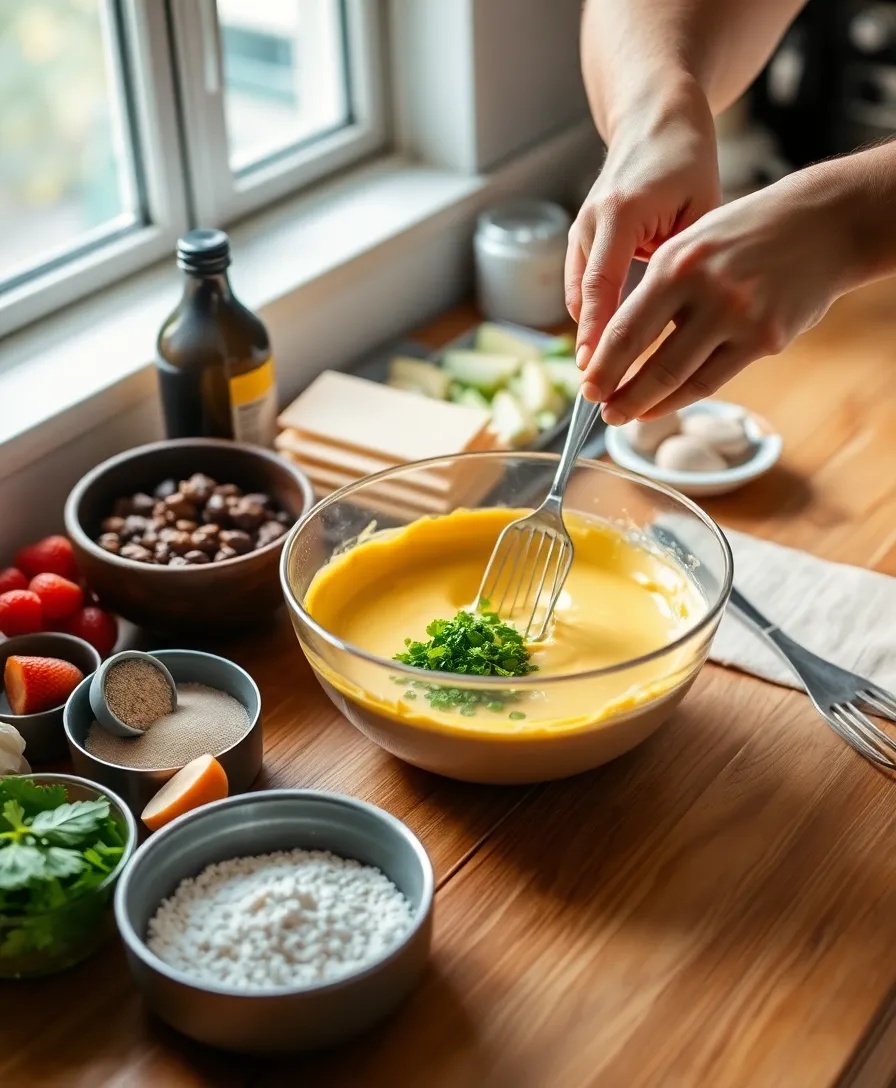
To prepare the crème filling: In a heatproof bowl, vigorously whisk the egg yolks and granulated sugar until thoroughly combined and slightly pale. Position this bowl securely over a saucepan of gently simmering water, ensuring the bottom of the bowl does not make contact with the water’s surface.
-
Introduce the heavy cream, sour cream, and vanilla extract to the mixture in the heatproof bowl. Continue cooking over the simmering water, stirring or whisking occasionally, until the crème has thickened considerably to a velvety consistency, which typically takes between 30 to 35 minutes. Exercise caution to prevent the mixture from boiling, as this will cause it to curdle.
-
Carefully remove the bowl from the heat source. Whisk in the unsalted butter until it is fully incorporated and melted, lending a luxurious sheen to the crème. Allow the crème to cool at room temperature for approximately 20 minutes.
-
To assemble the tart: Initiate your broiler function. Evenly spread the melted chocolate across the base of the cooled, blind-baked crust. Arrange the fresh blackberries in a single, generous layer over the chocolate. Carefully pour the prepared crème filling over the berries, then gently smooth the surface with an offset spatula to create an even layer.
-
Liberally sift a uniform layer of brown sugar over the entire surface of the crème. Transfer the tart to the preheated broiler and watch continuously as the sugar rapidly caramelizes to a deep, glistening amber hue. This process happens quickly; vigilant monitoring is essential to prevent burning.
-
Allow the tart to cool completely at room temperature, then transfer it to the refrigerator to chill thoroughly for several hours. Present this exquisite tart well-chilled for optimal flavor and texture.
Recipe Notes
For the most consistent and flawless caramelization, consider using a culinary blowtorch instead of a broiler. This allows for greater control and precision, minimizing the risk of overheating the custard. Both the pâte sucrée and the crème filling can be prepared a day in advance, making this an excellent dessert for entertaining. Store the finished tart, covered, in the refrigerator for up to 3 days to maintain its exquisite quality.
Global Heritage Archive
Anthropological & Spice Migration Record
“A pinnacle of French patisserie, blending classic custard artistry with the structural elegance of a tart and modern ingredient additions, embodying sophistication and indulgence.”
🌿 Spice & Botanical Migration
Vanilla, a key flavoring in the custard, originated with the Totonac people in Mesoamerica (modern-day Mexico) and was brought to Europe by Spanish conquistadors in the 16th century, representing a significant culinary exchange from the Americas. Sugar, essential for the custard and the caramelized topping, has its botanical roots in New Guinea, spreading across Asia and the Middle East before being introduced to Europe and then the Americas, profoundly shaping global trade routes and economies and tragically linked to the transatlantic slave trade. Chocolate, used as a semi-sweet element, also traces its origins to ancient Mesoamerican civilizations (Mayan, Aztec) before its introduction to European palates.
🏺 Historical & Archaeological Record
The earliest written record resembling “crème brûlée” appears in François Massialot’s 1691 French cookbook *Cuisinier roial et bourgeois*. However, similar “burnt cream” recipes existed in England even earlier, notably at Trinity College, Cambridge, in the 17th century. The concept of a *tart* – a baked pastry base with a filling – has roots stretching back to medieval Europe, evolving from simple open-faced pies.
💡 Little Known Facts
- The true origin of Crème Brûlée is a culinary debate, with claimants in Spain (Crema Catalana, dating back to the Middle Ages), England (Burnt Cream or Trinity Cream, 17th century), and France (Crème Brûlée, late 17th century).
- The iconic ‘brulee’ effect traditionally requires a salamander (a red-hot iron disk) or a kitchen blowtorch to caramelize the sugar topping to a crisp, glassy shell.
📸 Made This Heritage Recipe?
We would love to see how your dish turned out! Send a photo of your culinary creation to [email protected] to be featured in our community gallery.
Leave a review and rate this recipe below!
Curated Literature & Washington DC Downtown Calendar
The Culinary Alchemist: Modern Gastronomy & Flavor Pairing
By LDN Gastronomy Series
Artisanal technique, seasonal sourcing, and kitchen mastery.
Upcoming Downtown Happenings
Live acoustic sessions, gallery receptions, literary salons, and independent trade shows across Washington DC.
