
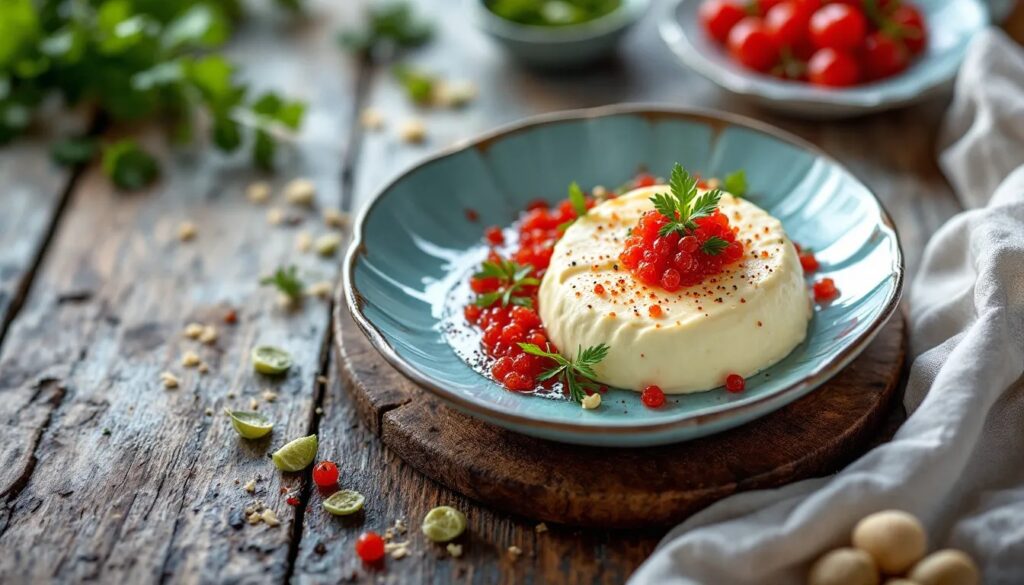
The clink of crystal, the murmur of conversation, and the soft glow of a twilight gathering – these are the vignettes that often frame the appearance of Cream Cheese & Red Caviar Croustades. More than a mere appetizer, this dish is a culinary ambassador, carrying with it tales of migration, luxury, and the ingenious adaptations that forge new traditions. It’s a testament to how disparate worlds can meet on a single, delightful bite, marrying the rich, briny essence of the sea with the creamy comfort of dairy, all perched atop a crisp, humble piece of toast.
At its heart, this dish is a fascinating microcosm of American culinary history in the early to mid-20th century. While red caviar, or *ikra*, has graced Russian tables for centuries, often served with delicate *blini* and a dollop of *smetana* (sour cream), its journey to the American party platter speaks volumes. The influx of Russian immigrants, particularly after the Russian Revolution, brought with them a taste for their homeland’s delicacies, including the vibrant red roe of salmon. Simultaneously, sour cream, a staple across Eastern and Central Europe, found its natural place alongside this luxurious ingredient.
The distinctly American twist, however, comes with the inclusion of cream cheese. An accidental invention by a New York dairyman named William Lawrence in 1872, cream cheese quickly became a national sensation. Its smooth, tangy profile offered an unparalleled canvas for savory spreads, becoming a cornerstone of American entertaining. The concept of the ‘croustade’ itself, a French term for a small toasted bread or pastry case, was a popular vehicle for cocktail party canapés, signifying an elegant yet approachable style of hospitality. Thus, the croustade became the perfect stage for this East-meets-West fusion.
The synergy is undeniable: the subtly tart sour cream mellows the assertive saltiness of the caviar, while the cream cheese provides a rich, unctuous base that binds the flavors together. Minced white onion adds a delicate sharpness, and fresh parsley offers a bright, herbaceous counterpoint, ensuring each bite is balanced and invigorating. Black pepper, a global traveler itself, adds a gentle warmth.
For those venturing into crafting these bites, remember that quality is paramount. Seek out good-grade red caviar; its pop and flavor are the stars. A full-fat cream cheese will yield the creamiest result, and a good quality sour cream is essential. When assembling, gently fold the ingredients to maintain the caviar’s delicate texture. Toasting your croustades just before serving ensures optimal crispness. These aren’t just snacks; they are small declarations of refinement and a celebration of a culinary journey. The Cream Cheese & Red Caviar Croustade stands as a delicious marker of how cultures intertwine, evolve, and ultimately enrich our global palate, one exquisite mouthful at a time.
Cream Cheese & Red Caviar Croustades
Elevate your next gathering with these exquisite morsels, where classic elegance meets vibrant flavor. Each golden, crisp toast shell cradles a silken blend of rich cream cheese and tangy sour cream, perfectly seasoned for depth. A delicate ring of thinly sliced, piquant onion provides a refreshing counterpoint, crowned by a luxurious dollop of glistening red caviar, delivering a sophisticated symphony of textures and tastes. These visually stunning appetisers promise to captivate and delight every palate.
Ingredients
-
as needed
toast croustades -
as needed
cream cheese
softened -
as needed
sour cream
for thinning cream cheese -
to taste
salt -
to taste
pepper -
as needed
minced parsley -
small
white onions
½ inch thick slices -
as needed
red caviar
Instructions
-
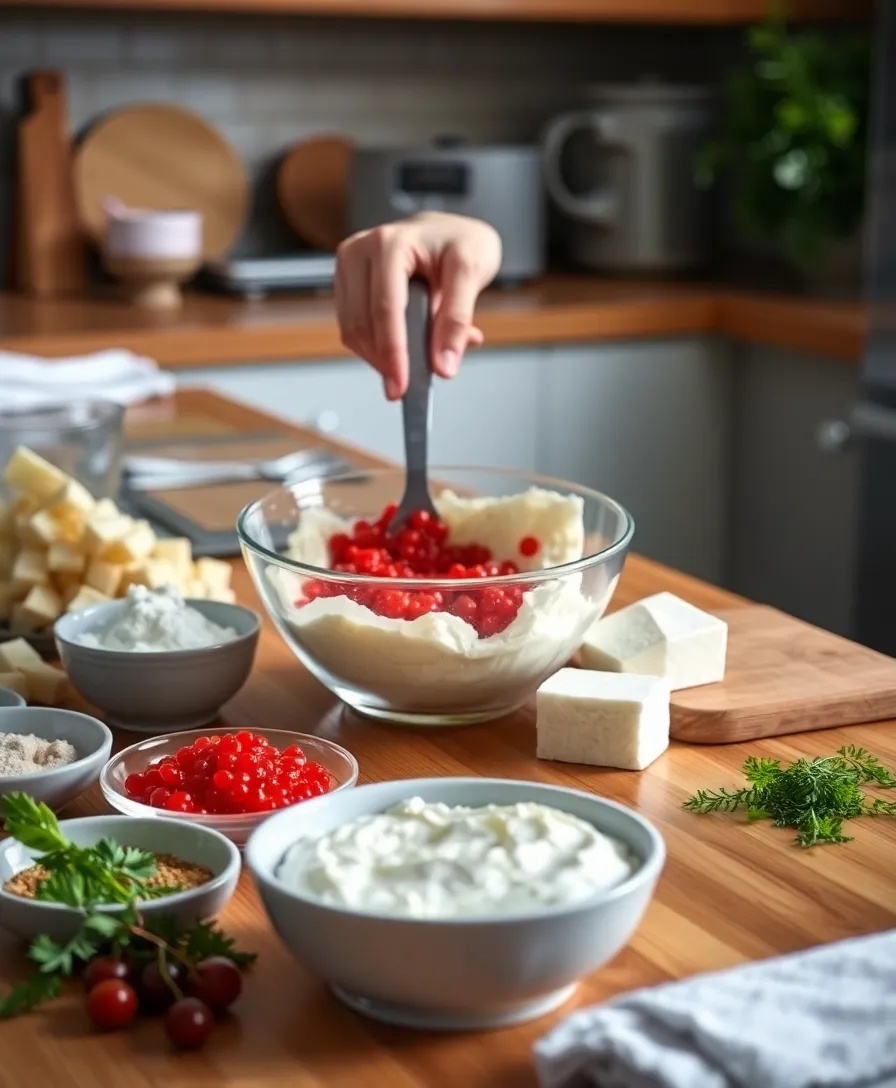
In a chilled bowl, gently combine the cream cheese with the sour cream until the mixture is beautifully smooth and boasts a velvety, spreadable consistency. Season this base judiciously with freshly cracked black pepper and a whisper of sea salt, tasting and adjusting to perfection.
-
Carefully spoon or pipe the prepared velvety cheese mixture into each golden, crisp croustade shell, creating an even and pleasing mound.
-
Delicately adorn the perimeter of the creamy filling with a finely minced verdant parsley crown, using a demitasse spoon for precision.
-
From petite white onions, meticulously cut cross-sections approximately half an inch thick, then gently separate them into individual, pristine rings.
-
Position a single, perfectly formed onion ring atop the cheese mixture in each croustade, pressing ever so gently to secure its place.
-
Crown the heart of each onion ring with a generous, glistening spoonful of ruby-red caviar, allowing its brilliant hue to captivate the eye.
Recipe Notes
For ultimate convenience, select pre-baked, artisanal toast croustades from a specialty grocer, ensuring they are fresh and impeccably crisp. Alternatively, for a bespoke touch, craft your own from thinly sliced brioche or pain de mie, lightly buttered and toasted to a perfect golden crunch.
Global Heritage Archive
Anthropological & Spice Migration Record
“A culture of sophisticated, yet accessible, entertaining that emerged in the United States, blending imported luxury ingredients with domestic culinary innovations for cocktail parties and social gatherings.”
🌿 Spice & Botanical Migration
Black pepper, native to the Malabar Coast of India, traversed ancient trade routes like the Silk Road, becoming a universal seasoning. Parsley, originating in the central Mediterranean, spread across Europe with the Roman Empire, establishing itself as a foundational herb. Onions, one of the oldest cultivated vegetables, trace their botanical lineage to Central Asia, migrating globally along ancient trade networks and becoming indispensable in virtually every cuisine.
🏺 Historical & Archaeological Record
The concept of serving flavorful spreads or toppings on small pieces of bread, a direct precursor to modern croustades or canapés, can be traced back to ancient Roman *gustatio* (appetizer) courses. However, the specific combination featuring American cream cheese, Eastern European-associated sour cream, and Russian red caviar on a croustade is a modern culinary development from the late 19th to early 20th century in the United States, marking a specific period of culinary fusion and social entertaining.
💡 Little Known Facts
- Cream cheese was originally an accidental invention by a New York dairyman, William Lawrence, in 1872, who was trying to replicate French Neufchâtel cheese.
- Red caviar, or *ikra*, derived from salmon roe, was historically a staple of coastal communities in Russia and the Pacific Northwest, often enjoyed with *blini* and sour cream, before becoming a luxury item in Western gastronomy.
📸 Made This Heritage Recipe?
We would love to see how your dish turned out! Send a photo of your culinary creation to [email protected] to be featured in our community gallery.
Leave a review and rate this recipe below!
Curated Literature & Washington DC Downtown Calendar
The Culinary Alchemist: Modern Gastronomy & Flavor Pairing
By LDN Gastronomy Series
Artisanal technique, seasonal sourcing, and kitchen mastery.
Upcoming Downtown Happenings
Live acoustic sessions, gallery receptions, literary salons, and independent trade shows across Washington DC.
