
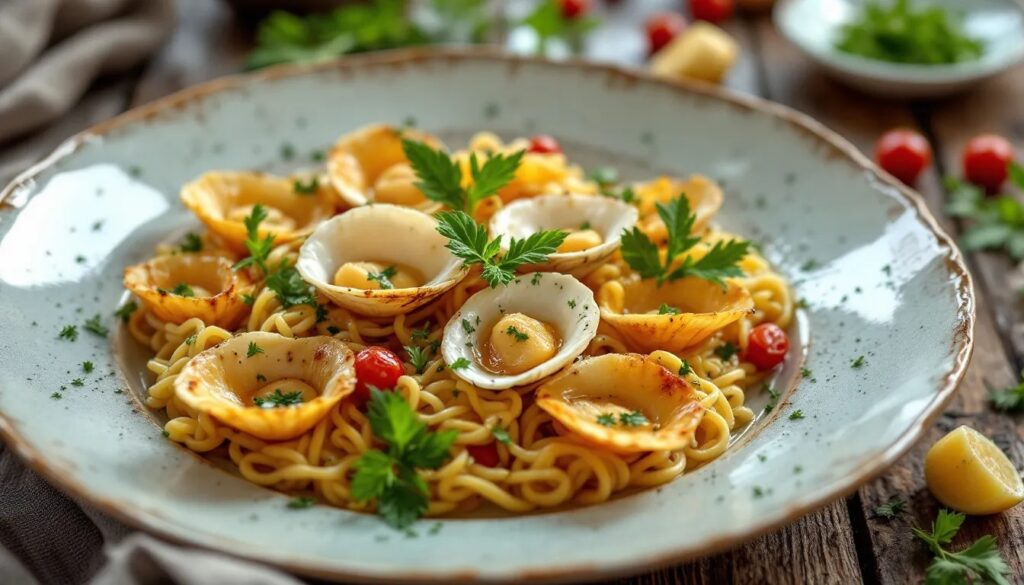
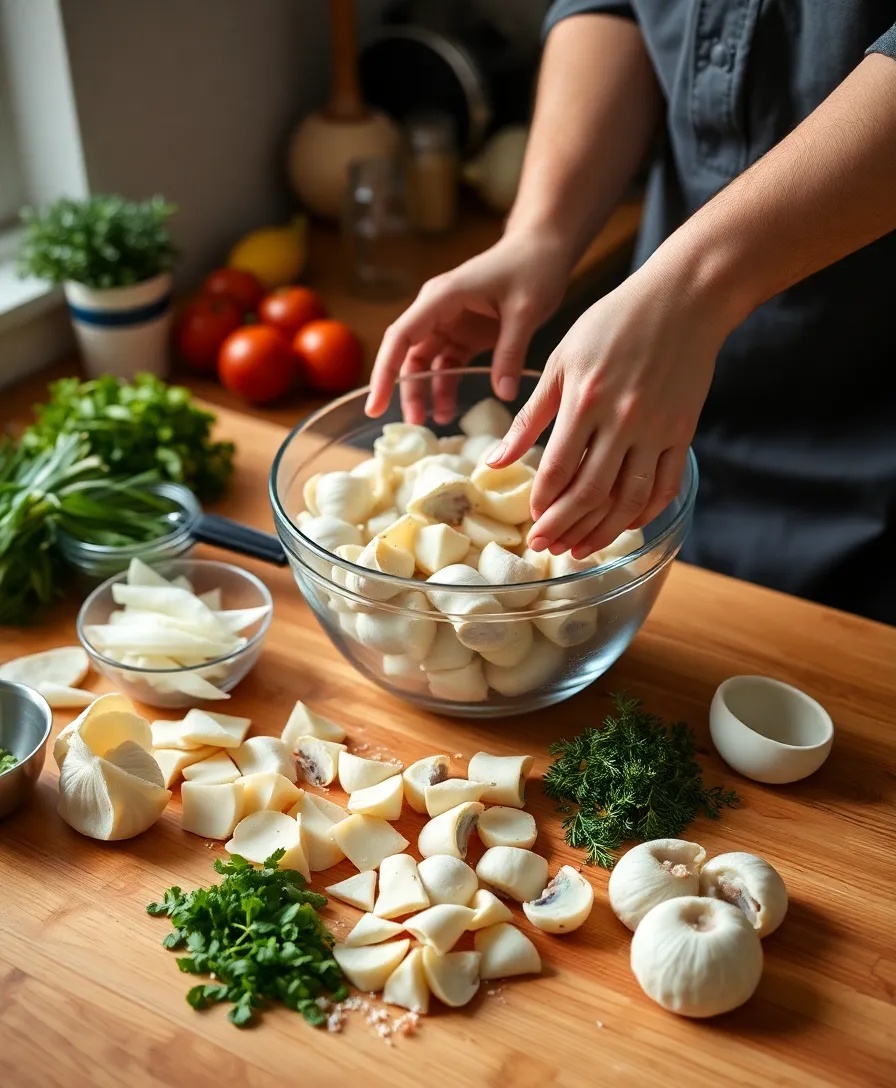
Coquilles Saint Jacques – the very name whispers of elegance, of refined taste and culinary heritage. This iconic dish, a shimmering symphony of tender scallops enrobed in a creamy, wine-infused sauce, baked to golden perfection within its natural shell, is more than just a recipe; it’s a tangible piece of French history, a testament to the nation’s enduring love affair with gastronomic excellence.
The story of Coquilles Saint Jacques begins not in a bustling Parisian kitchen, but on the rugged Atlantic coastlines, where the revered scallop (pecten maximus) thrives. The scallop, or “coquille Saint Jacques” in French, owes its spiritual moniker to Saint James the Great, the patron saint of pilgrims, whose emblem—the scallop shell—was carried by those returning from the arduous Camino de Santiago. This symbolic connection elevates the dish beyond mere sustenance, imbuing it with a sense of journey and tradition.
Historically, the dish as we know it blossomed within the opulent world of French haute cuisine during the late 19th and early 20th centuries. It was a period of grand culinary codification, where master chefs like Auguste Escoffier meticulously documented and elevated regional specialties into a coherent national gastronomy. The dish embodies the era’s pursuit of harmonious flavors and sophisticated presentation. The preparation is a delicate dance: plump scallops are briefly seared, then nestled into individual shells, blanketed in a meticulously crafted sauce that typically begins with a roux—a classic French thickening agent of butter and flour. This roux then forms the base for a velouté, enriched with dry white wine, fragrant shallots, and earthy mushrooms, often further brightened with a touch of clam juice for an oceanic depth. A final lacing of heavy cream and egg yolks creates an unctuous richness, before a sprinkle of fine breadcrumbs and a drizzle of melted butter ensure a golden, crisp gratinéed topping.
The ingredients themselves tell a tale of both local bounty and global migration. The scallops, butter, cream, mushrooms, and white wine are deeply rooted in European agriculture and maritime traditions, reflecting the fertile lands and abundant waters of France. Yet, even in this quintessentially French dish, the threads of global trade are subtly woven. The peppercorns, lending their piquant warmth, embarked on epic journeys from the Malabar Coast of India, traversing ancient Spice Routes to reach European shores. They were a prized commodity, shaping empires and inspiring voyages of discovery. The humble bay leaf and vibrant parsley, conversely, are natives of the Mediterranean, their aromatic presence a constant in European kitchens for millennia, a testament to localized culinary evolution.
For the home cook seeking to recreate this masterpiece, a few pearls of wisdom are paramount. First, quality matters—seek out the freshest, highest-grade scallops available. Second, precision in cooking is key: scallops cook quickly, so a swift sear ensures their tender, sweet integrity. The sauce, while rich, should be delicate enough to complement, not overwhelm, the scallops’ natural flavor. Master your roux, stirring constantly to prevent lumps, and introduce liquids gradually for a silky-smooth finish. Finally, don’t shy away from serving this dish in its traditional shell; it’s not just for aesthetics but adds to the ceremonial pleasure of the experience. Coquilles Saint Jacques is more than a meal; it’s an invitation to savor history, craftsmanship, and the enduring allure of French gastronomy.
COQUILLES SAINT JACQUES
Embark on a gastronomic journey with Coquilles Saint Jacques, a revered classic of French haute cuisine. This initial culinary exposition unveils the meticulous art of crafting an exquisitely aromatic court-bouillon. Infused with crisp white wine, an intricate blend of fresh herbs, and the subtle depth of clam essence, this foundational liquid is perfected for the gentle poaching of tender, succulent scallops, promising an elegant prelude to a truly distinguished dish.
Ingredients
-
1
pound
scallops
None -
2
Tablespoons
butter or margarine
None -
1
cup
dry white wine
None -
3
None
shallots
chopped, or 2 green onions -
1½
cup
water
None -
¼
lb.
fresh mushrooms
sliced thin -
1
cup or 7 oz. bottle
clam juice
None -
1
None
bay leaf
None -
2 or 3
sprigs
fresh parsley
None -
3
Tablespoons
flour
None -
5 or 6
None
peppercorns
whole -
2
None
egg yolks
beaten -
½
teaspoon
salt
None -
½
cup
heavy cream
None -
4
Tablespoons
melted butter
None -
1
teaspoon
lemon juice
None -
¼
cup
fine breadcrumbs
for the topping
Instructions
-
In a substantial, heavy-bottomed kettle or pot, unite the specified white wine, pure water, and clam nectar, then introduce the fragrant bay leaf, vibrant parsley sprigs, aromatic peppercorns, and a delicate measure of sea salt. This confluence of ingredients will meticulously cultivate a pristine court-bouillon.
-
Delicately submerge the prepared scallops into the aromatic liquid. Nurture the contents to a gradual simmer, just below a rolling boil, allowing the scallops to exquisitely poach until barely opaque, ensuring their tender texture is preserved.
Recipe Notes
These foundational steps meticulously prepare the heart of the Coquilles Saint Jacques. The complete tapestry of this celebrated dish unfolds in subsequent stages, integrating the remaining exquisite ingredients to achieve its ultimate gastronomic splendor and grand presentation.
Global Heritage Archive
Anthropological & Spice Migration Record
“A celebration of refined French culinary artistry, elevating local seafood with intricate sauces and classic techniques that embody elegance and tradition.”
🌿 Spice & Botanical Migration
The peppercorns, fundamental for seasoning, trace their origins to the Malabar Coast of India. They arrived in France via the ancient Spice Routes, first reaching the Roman Empire through maritime trade, and later redistributed across Europe by Venetian and Portuguese merchants. In contrast, the bay leaf and fresh parsley are indigenous to the Mediterranean region, having been cultivated and used in European cooking for millennia, deeply integrated into French culinary traditions long before global spice trade flourished.
🏺 Historical & Archaeological Record
While the exact recipe for “Coquilles Saint Jacques” as we know it emerged in the late 19th to early 20th century, codified in French haute cuisine texts like Auguste Escoffier’s “Le Guide Culinaire” (1903), the foundational techniques are much older. Rich, flour-thickened sauces (roux-based veloutés or béchamels) can be traced to French cookbooks of the 17th century, such as La Varenne’s “Le Cuisinier François” (1651). The concept of baking or gratinating dishes (gratins) also has roots in medieval European cooking, though refined significantly in the classical French culinary tradition.
💡 Little Known Facts
- The name “Saint Jacques” refers to Saint James the Great, patron saint of pilgrims, whose emblem is the scallop shell, a symbol carried by those returning from the Camino de Santiago.
- While now a classic of French cuisine, the dish’s popularity soared in the mid-20th century, becoming a symbol of sophisticated dining in many international restaurants.
📸 Made This Heritage Recipe?
We would love to see how your dish turned out! Send a photo of your culinary creation to [email protected] to be featured in our community gallery.
Leave a review and rate this recipe below!
Curated Literature & Washington DC Downtown Calendar
The Culinary Alchemist: Modern Gastronomy & Flavor Pairing
By LDN Gastronomy Series
Artisanal technique, seasonal sourcing, and kitchen mastery.
Upcoming Downtown Happenings
Live acoustic sessions, gallery receptions, literary salons, and independent trade shows across Washington DC.
