
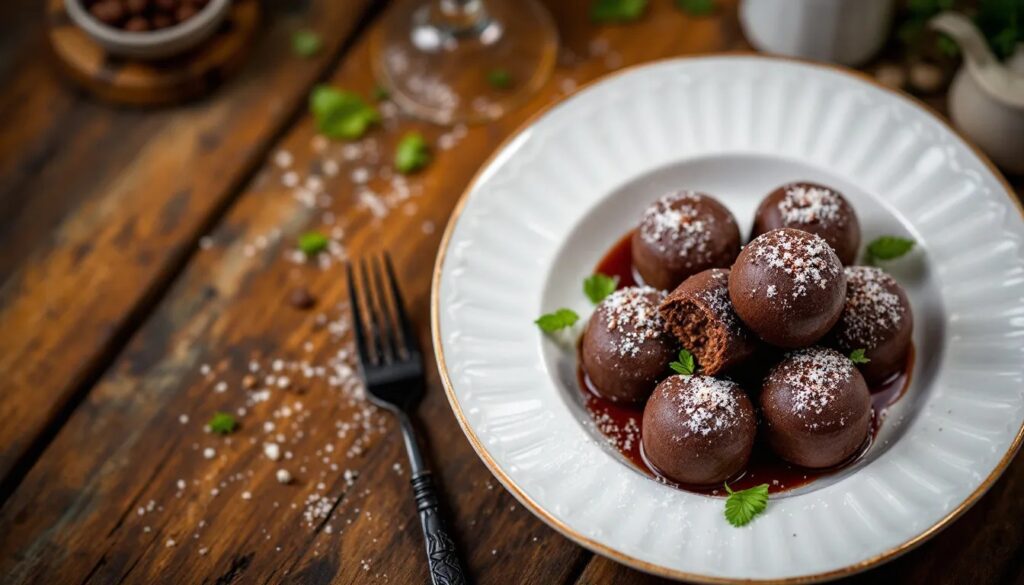
The humble chocolate truffle, in its myriad forms, is more than just a confection; it’s a testament to human ingenuity, global trade, and the relentless pursuit of culinary pleasure. Its very name evokes a sense of earthy luxury, a nod to the elusive, aromatic fungi unearthed from the forest floor, and indeed, the original chocolates bore a striking resemblance to these culinary gems – irregular, dusted, and deeply flavorful.
The story of the chocolate truffle, as we largely understand it, begins not in ancient cacao groves, but in the bustling, precise world of 19th-century French kitchens, arguably within the hallowed halls of Georges Auguste Escoffier’s establishment. Legend has it that around 1895, an apprentice, in a moment of either genius or pure mishap, poured hot cream not into a bowl of eggs as intended, but directly into a container of chopped chocolate. This seemingly disastrous error, a happy accident of the highest order, resulted in a smooth, rich emulsion – the ganache – which, once cooled and rolled, became the prototype for the modern chocolate truffle. Dusted with cocoa powder, these dark, lumpy spheres quickly captivated palates, embodying the French culinary ethos of transforming simple, high-quality ingredients into an experience of profound elegance.
The ingredients themselves tell a vibrant tale of migration and cultural exchange. The very soul of the truffle, *Theobroma cacao*, traces its lineage back thousands of years to the rainforests of Mesoamerica, where ancient Olmec, Mayan, and Aztec civilizations revered it, consuming it as a bitter, spiced beverage. It was Columbus and later Cortés who introduced cacao to Europe, initiating a culinary revolution that would eventually see chocolate transform from a royal drink to a solid, sweetened delight. The sugar that tamed chocolate’s inherent bitterness journeyed even further, originating in Southeast Asia, passing through India and the Middle East along ancient trade routes before being cultivated on a grand scale in the Americas, forever intertwining its history with global commerce and often, unfortunate human exploitation.
Adding texture and depth, the nuts in our recipe – hazelnuts from Eurasia, walnuts spread globally since antiquity, or pecans native to North America – represent centuries of agricultural development and intercontinental trade. The heavy cream and egg white speak to established European dairy and pastry traditions, while the chosen liqueurs – Grand Marnier or Cointreau, with their citrus notes tracing back to Asian oranges, or rum born from Caribbean sugarcane – infuse the confection with sophisticated aromas, adding another layer of global flavor to this seemingly localized treat.
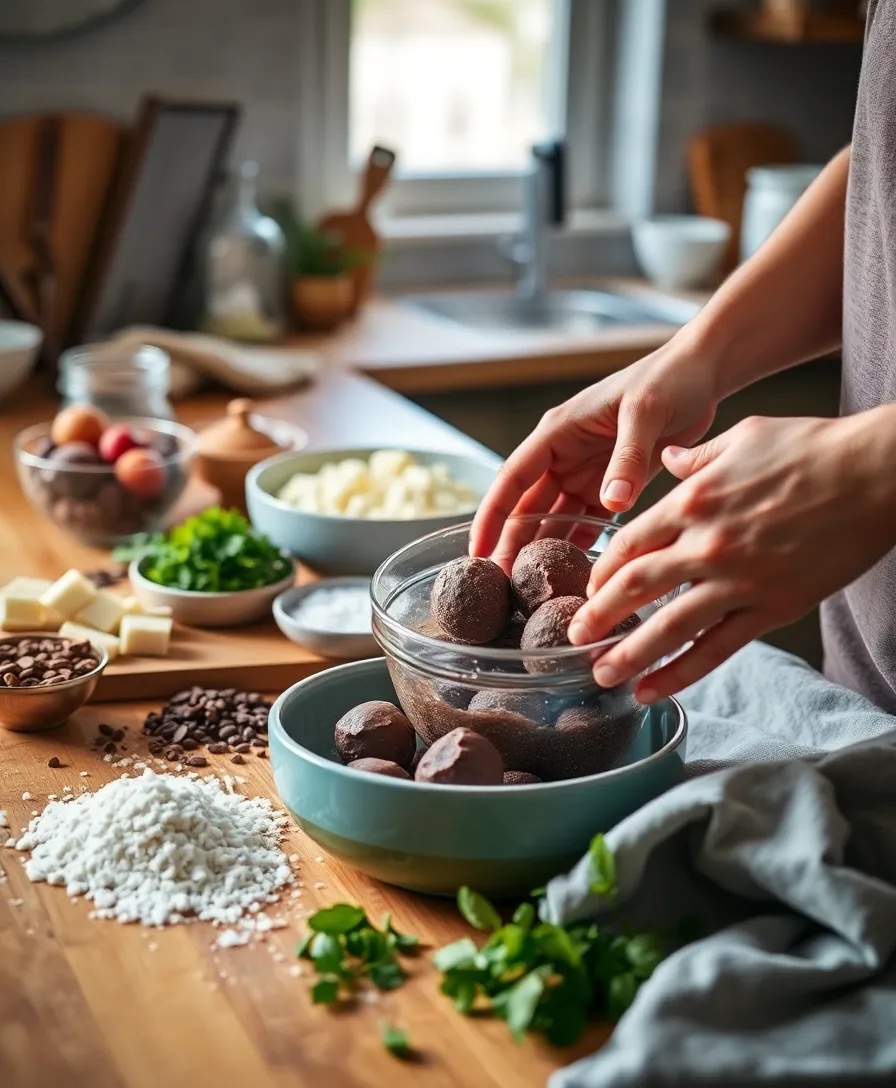
Crafting these miniature marvels at home is a wonderfully sensory experience. The key lies in the ganache: gently heating the cream, then pouring it over finely chopped semi-sweet chocolate, allowing the residual heat to melt the chocolate into a glossy, unctuous mixture. Incorporating a spirit like Grand Marnier or rum not only adds flavor but also acts as a natural preservative, enriching the truffle’s shelf life and complexity. Once chilled sufficiently, the ganache becomes pliable, ready to be scooped and rolled into rustic spheres, dusted with cocoa, or adorned with chocolate sprinkles. The final step, adding an egg white to the confectioners’ sugar for rolling, suggests a light binding agent or a technique to achieve a specific texture for the coating.
The chocolate truffle, therefore, is a microcosm of culinary history – an edible artifact that encapsulates ancient traditions, accidental innovation, global trade networks, and the universal human desire for sweetness and luxury. Each bite is not just a taste of exquisite chocolate, but a journey across continents and through time, a testament to how ingredients and ideas, once set in motion, continue to shape our plates and palates.
CHOCOLATE TRUFFLES
Embark on a culinary journey with these exquisitely handcrafted chocolate truffles, a timeless confection designed to elevate any celebratory moment or quiet indulgence. Each silken sphere is a testament to sophisticated simplicity, merging the profound richness of premium semi-sweet chocolate with the luxurious caress of heavy cream. A whisper of your preferred elegant liqueur infuses an extra layer of complexity, transforming these homemade treasures into bespoke delights that evoke the refined charm of a bygone era.
Ingredients
-
1/4
cup
hazelnuts, walnuts or pecans -
6
squares
semi-sweet chocolate
1-ounce size -
1/3
cup
heavy cream -
1 1/3
cups
confectioner’s sugar -
1
egg white -
2
Tablespoons
Grand Marnier, Cointreau or rum - Chocolate sprinkles
Instructions
-
Finely process the hazelnuts in a food processor or high-speed blender until a coarse, flour-like consistency is achieved.
-
Prepare a 9×3-inch loaf pan by precisely lining its base with a sheet of wax paper, ensuring full coverage.
-
Introduce the chopped chocolate and heavy cream into a small, sturdy saucepan.
-
Gently warm the mixture over very low heat, stirring continuously, until the chocolate is fully melted and the ingredients are smoothly emulsified. Immediately withdraw from the heat source.
-
In a separate, mid-sized mixing bowl, combine the finely ground hazelnuts, granulated sugar, and egg white. Incorporate thoroughly using a wooden spoon until a cohesive mixture forms.
-
Carefully fold the warm chocolate ganache and your selected liqueur into the hazelnut mixture, blending until uniformly combined.
-
Pour the truffle mixture into the prepared loaf pan, spreading it evenly. Refrigerate until it has achieved a firm, scoopable consistency, typically several hours or overnight.
-
Once firm, use a rounded half-teaspoon measure to scoop portions, then gently roll each portion between your palms to form elegant, uniform spheres.
-
Delicately roll each handcrafted truffle through a generous bed of chocolate sprinkles, ensuring an even and complete coating.
-
Arrange the finished truffles on a serving tray. For optimal preservation, meticulously freezer-wrap them before transferring to the freezer for storage.
Recipe Notes
To fully appreciate their sophisticated flavor, allow the truffles to temper for 10-15 minutes at room temperature before serving. They pair exquisitely with a robust espresso, a fine digestif, or as a luxurious finale to any meal. For gifting, arrange them in an elegant confectionery box lined with parchment. Store these culinary gems in an airtight container in the refrigerator for up to two weeks, or in the freezer for up to three months. If frozen, thaw in the refrigerator overnight before serving. Consider customizing your truffles: for an alternative coating, try rolling them in sifted cocoa powder, finely chopped pistachios, or a dusting of confectioners’ sugar. Experiment with different liqueurs like Grand Marnier, Amaretto, or rum to impart unique flavor profiles.
Global Heritage Archive
Anthropological & Spice Migration Record
“A culinary culture celebrated for its artistry, precision, and the elevation of simple ingredients into luxurious experiences, often characterized by rich flavors and elegant presentation.”
🌿 Spice & Botanical Migration
The star ingredient, cacao, originated in the Amazon basin and Mesoamerica, migrating globally through the Columbian Exchange from the 16th century. Sugar, initially cultivated in Southeast Asia, traversed the ancient spice routes to the Middle East and Europe, later becoming a major commodity through colonial plantations in the Americas. Hazelnuts and walnuts are indigenous to Eurasia, with pecans native to North America, all now globally traded thanks to historic and modern agricultural networks.
🏺 Historical & Archaeological Record
The earliest archaeological evidence of cacao consumption dates back over 3,900 years, found in pottery vessels from the ancient Olmec civilization in Soconusco, Chiapas, Mexico, used to prepare a bitter, frothy beverage. The specific confection known as ‘chocolate truffle’ emerged in European culinary history in the late 19th century.
💡 Little Known Facts
- The chocolate truffle is widely believed to have been invented by accident in the kitchen of French chef Georges Auguste Escoffier around 1895, when his apprentice mistakenly poured hot cream into a bowl of chopped chocolate instead of eggs.
- The confection received its name ‘truffle’ due to its uncanny resemblance to the prized, irregularly shaped, subterranean fungus, the *Tuber melanosporum* or black truffle, found primarily in France.
📸 Made This Heritage Recipe?
We would love to see how your dish turned out! Send a photo of your culinary creation to [email protected] to be featured in our community gallery.
Leave a review and rate this recipe below!
Curated Literature & Washington DC Downtown Calendar
The Culinary Alchemist: Modern Gastronomy & Flavor Pairing
By LDN Gastronomy Series
Artisanal technique, seasonal sourcing, and kitchen mastery.
Upcoming Downtown Happenings
Live acoustic sessions, gallery receptions, literary salons, and independent trade shows across Washington DC.
