
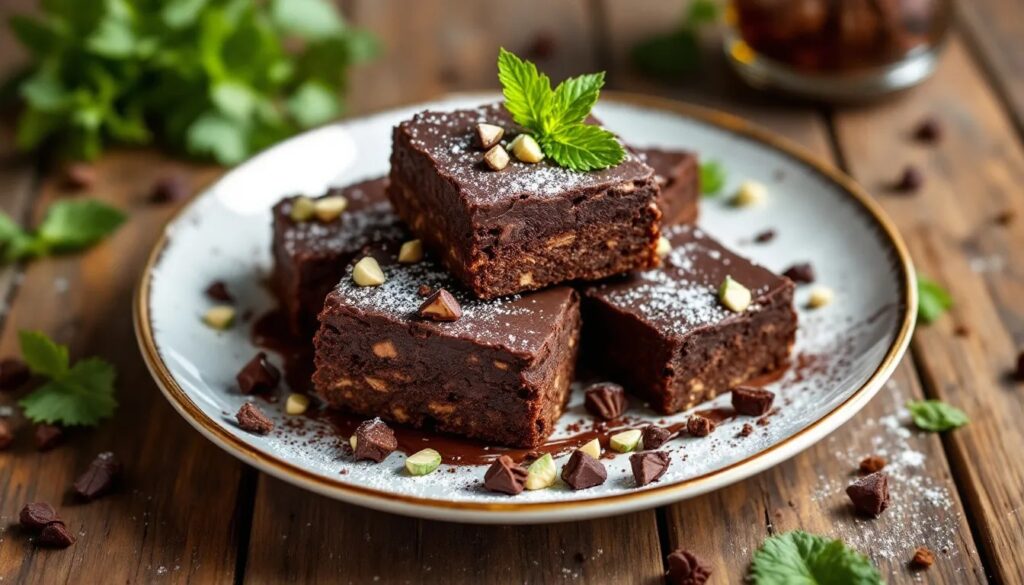
The Irresistible Allure of Chocolate Revel Bars: A Sweet Slice of American History
There are some desserts that transcend mere sustenance, becoming edible snapshots of a particular time and place. Chocolate Revel Bars, with their irresistible layers of crumbly oat base, rich chocolate chips, and sweet, gooey filling, are precisely such a creation. More than just a treat, these bars tell a compelling story of American culinary ingenuity, adaptation, and the enduring quest for comfort in a rapidly changing world. Each bite is a journey back to mid-20th century kitchens, where innovation met frugality, and simple ingredients transformed into something truly magical.
The very name “Revel Bars” suggests a celebration, a joyous indulgence, and indeed, these bars embody a distinctly American approach to dessert: convenient, crowd-pleasing, and utterly satisfying. Their history is deeply intertwined with pivotal moments in American social and economic history. The use of “oleo”—margarine—is a key indicator. Invented in France in the late 19th century, margarine became a staple in American households, particularly during wartime rationing and economic downturns when butter was either scarce or prohibitively expensive. Its inclusion in recipes like this speaks to an era of resourcefulness, where clever substitutions were not just accepted but celebrated.
But perhaps no ingredient anchors these bars more firmly in their American heritage than sweetened condensed milk. Patented by Gail Borden in the mid-19th century, this shelf-stable marvel was a lifesaver for soldiers during the Civil War and later became an indispensable pantry item in homes without reliable refrigeration. Its ability to create a thick, sweet, and creamy texture without requiring complex custards made it a revolutionary ingredient for quick, impressive desserts. The “revel” in these bars often comes from this luscious, milky layer, which caramelizes slightly during baking, binding the chocolate and nuts into a decadent, chewy dream.
And what would a “chocolate” revel bar be without its namesake? The advent of chocolate chips in the 1930s, famously by Ruth Graves Wakefield for her Toll House Cookies, democratized chocolate in baking, making it accessible and easy to incorporate into home recipes. Before this innovation, bakers had to laboriously chop blocks of chocolate, a task that often deterred casual baking. Paired with hearty quick rolled oats, which add a delightful chew and wholesome texture to the base, these ingredients combine to form a symphony of textures and flavors that are simultaneously rustic and refined.
Making Chocolate Revel Bars today is not just about following a recipe; it’s about connecting with a legacy of comfort and community. The beauty of these bars lies in their simplicity and resilience. To achieve the perfect revel bar, ensure your oleo (or butter, if you prefer) is properly softened for the base, allowing for a uniform crumb. Press the base firmly into a parchment-lined pan to prevent crumbling, and be mindful not to overbake; the top layer should be golden and bubbly, but the center still slightly soft, firming up as it cools. Cooling completely before cutting is paramount to achieving clean, distinct squares. While traditional recipes call for walnuts or pecans, don’t hesitate to experiment with almonds or even a sprinkle of toasted coconut for an extra layer of flavor. These bars are ideal for potlucks, bake sales, or simply a comforting treat with a cup of coffee, continuing their tradition as a beloved staple in the American dessert repertoire. They are a testament to how simple ingredients, combined with a touch of ingenuity, can create a lasting culinary icon.
CHOCOLATE REVEL BARS
Transport your senses with a confection that whispers of cherished traditions and heartwarming gatherings. These exquisite Revel Bars offer a symphony of textures and profound chocolate indulgence, meticulously crafted to evoke nostalgic delight. A tender, golden oat-kissed crust forms the foundation, rising to meet a lavish layer of silken chocolate, sweetened condensed milk, and finely chopped nuts. Crowned with an artful scattering of the same wholesome crumble, each square is a testament to timeless appeal and an irresistible interplay of crisp edges, yielding crumb, and molten richness. Ideal for elevating any celebratory spread or simply savoring a moment of pure bliss, they promise an unforgettable taste of artisanal comfort.
Ingredients
-
2½
cups
all-purpose flour -
1
cup
oleo
(margarine or butter) -
2
tsp
vanilla extract
(for dough) -
3
cups
quick rolled oats -
2
cups
brown sugar -
2
large eggs -
1
tsp
baking soda -
1
can
sweetened condensed milk
(14 oz.) -
2
tbsp
oleo
(margarine or butter, for filling) -
1½
cups
chocolate chips -
2
tsp
vanilla extract
(for filling) -
½
cup
chopped nuts
Instructions
-
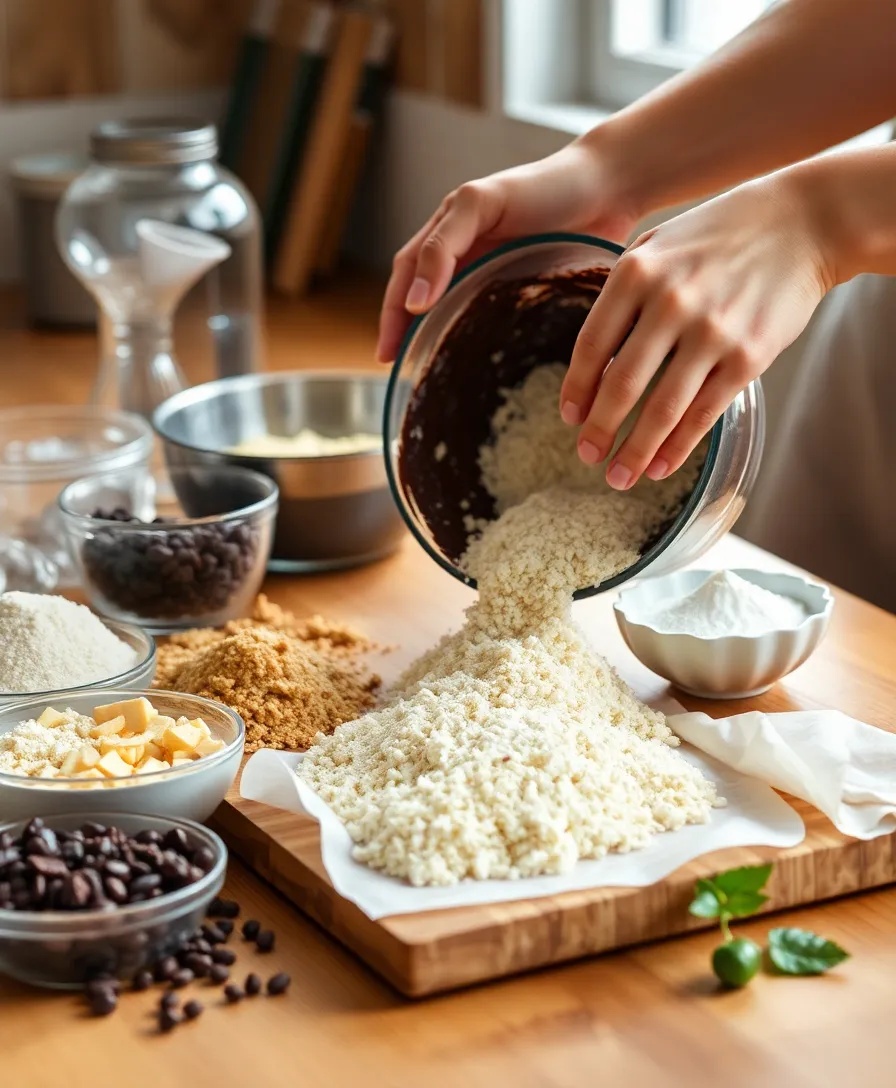
Begin by creaming the 1 cup of oleo (or your chosen fat) in a spacious mixing bowl, utilizing a high-speed setting until the mixture achieves a light, airy, and uniformly creamy consistency.
-
Carefully incorporate the initial 1¼ cups of flour, brown sugar, eggs, the first measure of vanilla extract (2 teaspoons), and baking soda into the prepared creamy base. Thoroughly combine all ingredients until integrated.
-
Next, introduce the remaining 1¼ cups of flour along with the quick rolled oats to the bowl. Blend gently until the ingredients are just incorporated and a cohesive dough forms.
-
For the luscious filling, combine the chocolate chips, sweetened condensed milk, and 2 tablespoons of oleo (or butter) in a medium saucepan. Place over low heat, stirring without interruption, until the chocolate is fully melted and the mixture achieves a silky, homogeneous texture.
-
Remove the saucepan from the heat source. Stir in the final 2 teaspoons of vanilla extract (reserved for the filling) and the chopped nuts, ensuring they are evenly distributed throughout the warm chocolate mixture.
-
Evenly press approximately two-thirds of the prepared dough mixture into the base of an ungreased 10″ x 15″ baking pan, forming a uniform layer.
-
Gently spread the warm, prepared chocolate filling across the dough layer, ensuring complete and even coverage.
-
Crumble the remaining one-third of the dough into small, irregular pieces and artfully scatter them over the chocolate layer.
-
Transfer to a preheated oven and bake at 350 degrees Fahrenheit for approximately 25 minutes, or until the top acquires a delicate golden hue and the bars are visibly set.
Recipe Notes
This beloved recipe arrives courtesy of Jan Barber, whose culinary wisdom shines through in every bite. For those unfamiliar, ‘oleo’ is an historical term for margarine; however, substituting an equal measure of unsalted butter will impart a notably richer, more luxurious depth of flavor to the final creation.
Global Heritage Archive
Anthropological & Spice Migration Record
“A quintessential American comfort dessert, rooted in post-Depression and post-war home baking traditions emphasizing convenience, affordability, and sweet indulgence for family gatherings and social events.”
🌿 Spice & Botanical Migration
The recipe’s primary flavor enhancer, vanilla, traces its botanical origins to the Totonac people of Mesoamerica, who cultivated it centuries before the Columbian Exchange introduced it to Europe. From there, it traveled via trade routes to be cultivated globally, notably in Madagascar and Indonesia, before industrial processing made vanilla extract a common pantry staple in dishes like these. Chocolate, another key flavor, also originated in Mesoamerica, making its way to Europe and then globally through similar routes.
🏺 Historical & Archaeological Record
While ancient civilizations baked various forms of sweet flatbreads and cakes, the specific ‘bar’ format, especially one featuring chocolate chips and sweetened condensed milk, emerged in the United States post-1930s. The oldest written record of a recipe resembling these ‘revel bars’ or their close cousins (like Magic Bars or Seven-Layer Bars) would be found in American cookbooks and community recipe collections from the mid-20th century, following the commercialization of chocolate chips (1930s) and the widespread use of sweetened condensed milk in convenience baking.
💡 Little Known Facts
- The term ‘oleo’ for margarine was particularly prevalent in the United States, especially during wartime rationing when butter was scarce and margarine was promoted as a patriotic and economical substitute, solidifying its place in mid-20th century American recipes.
- Sweetened condensed milk, a core ingredient, was popularized in the U.S. by Gail Borden during the Civil War to provide a safe, shelf-stable dairy product for soldiers, cementing its reputation as a resilient and versatile ingredient for both necessity and indulgence.
📸 Made This Heritage Recipe?
We would love to see how your dish turned out! Send a photo of your culinary creation to [email protected] to be featured in our community gallery.
Leave a review and rate this recipe below!
Curated Literature & Washington DC Downtown Calendar
The Culinary Alchemist: Modern Gastronomy & Flavor Pairing
By LDN Gastronomy Series
Artisanal technique, seasonal sourcing, and kitchen mastery.
Upcoming Downtown Happenings
Live acoustic sessions, gallery receptions, literary salons, and independent trade shows across Washington DC.
