
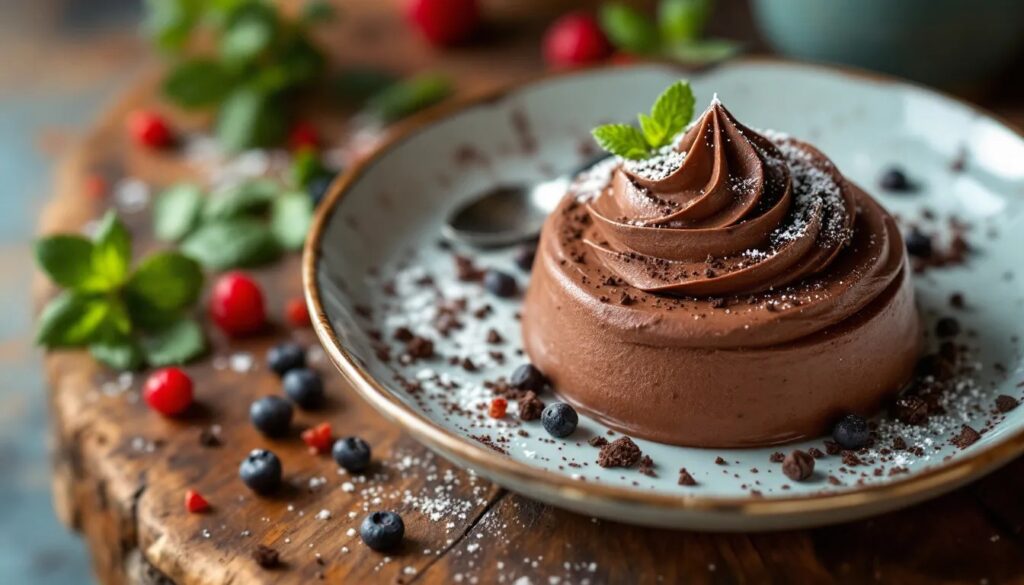
Few desserts command such universal adoration and evoke such a sense of decadent delight as Chocolate Mousse. It’s a dish that, in its deceptively simple elegance, whispers tales of culinary innovation, global exploration, and the relentless pursuit of epicurean perfection. More than just a dessert, it is a cultural artifact, a testament to the confluence of ingredients and techniques across continents and centuries.
The very word “mousse” is French for “foam” or “froth,” hinting at the dish’s defining characteristic: its ethereal lightness. Historically, the concept of a mousse predates its chocolate incarnation by centuries, with early French culinary texts from the 18th century detailing savory mousses made from fish, liver, or vegetables, whipped to a delicate consistency. It was a preparation technique, a way to elevate and refine humble ingredients into something sophisticated and new. The marriage of this frothy technique with the rich complexity of chocolate, however, was a stroke of genius that would forever alter the dessert landscape.
The journey of chocolate itself is a remarkable saga of migration. Cacao, the source of chocolate, originated in the verdant rainforests of Mesoamerica, cultivated by ancient Olmec, Mayan, and Aztec civilizations for millennia. It was revered, often consumed as a bitter, spicy, ceremonial beverage, a far cry from the sweetened European confection we know today. Vanilla, too, a fragrant orchid pod, hails from the same region. Both these “New World” treasures were introduced to Europe by Spanish conquistadors following the Columbian Exchange, slowly migrating from courtly curiosities to indispensable luxury ingredients.
In Europe, particularly in France, chocolate underwent a profound transformation. From a drink, it evolved into a solid form and, crucially, became an ingredient in pastries and confections. The late 19th century was a fertile period for French culinary creativity, marked by a burgeoning fine dining culture and an emphasis on refined techniques. It was during this era that the concept of whipping egg whites to achieve unparalleled lightness, combined with the rich depth of melted chocolate and often softened with cream, gave birth to the chocolate mousse we recognize today. While its precise origin is debated, legends connect it to legendary figures like Henri de Toulouse-Lautrec, whose “Mayonnaise au Chocolat” hinted at its coming.
At its heart, chocolate mousse is a study in contrasts and balance: the bitter notes of good quality chocolate against the sweetness, the airy lightness against the satisfying richness, the simplicity of its core ingredients against the complexity of its execution. It embodies the French culinary philosophy of respecting ingredients while employing meticulous technique to elevate them to something extraordinary. It is a dish that speaks of celebration, of indulgence, and of the sheer joy of truly exceptional food.
For those venturing into its preparation, a few tips are paramount. Always use the best quality chocolate you can source; its flavor will be the soul of your mousse. Ensure your egg whites are entirely free of any fat or yolk, and your mixing bowl is immaculately clean, to guarantee they whip to their fullest, most stable volume. Gentle folding is crucial to maintain that delicate aeration – the very essence of a mousse. Finally, patience in chilling allows the flavors to meld and the mousse to set into its perfect, voluptuous texture. Chocolate mousse is not merely a recipe; it is an experience, a journey through history, and a testament to the enduring power of culinary artistry.
Chocolate Mousse (Base)
Embark on a culinary journey with our Chocolate Mousse (Base), an exquisitely airy yet profoundly rich foundation for countless dessert aspirations. This elegant preparation masterfully unites the intense depth of premium melted chocolate with the ethereal lightness of whipped egg whites and luscious cream. The result is a silken, decadent texture that dissolves on the palate, promising an unparalleled epicurean experience. Designed as a versatile canvas, it shines brilliantly on its own or serves as the perfect starting point for more elaborate gastronomic creations.
Ingredients
-
13
ounces
semisweet chocolate -
7
egg whites -
¼
teaspoon
cream of tartar -
3
cups
heavy cream
well chilled -
1½
teaspoons
vanilla
Instructions
-
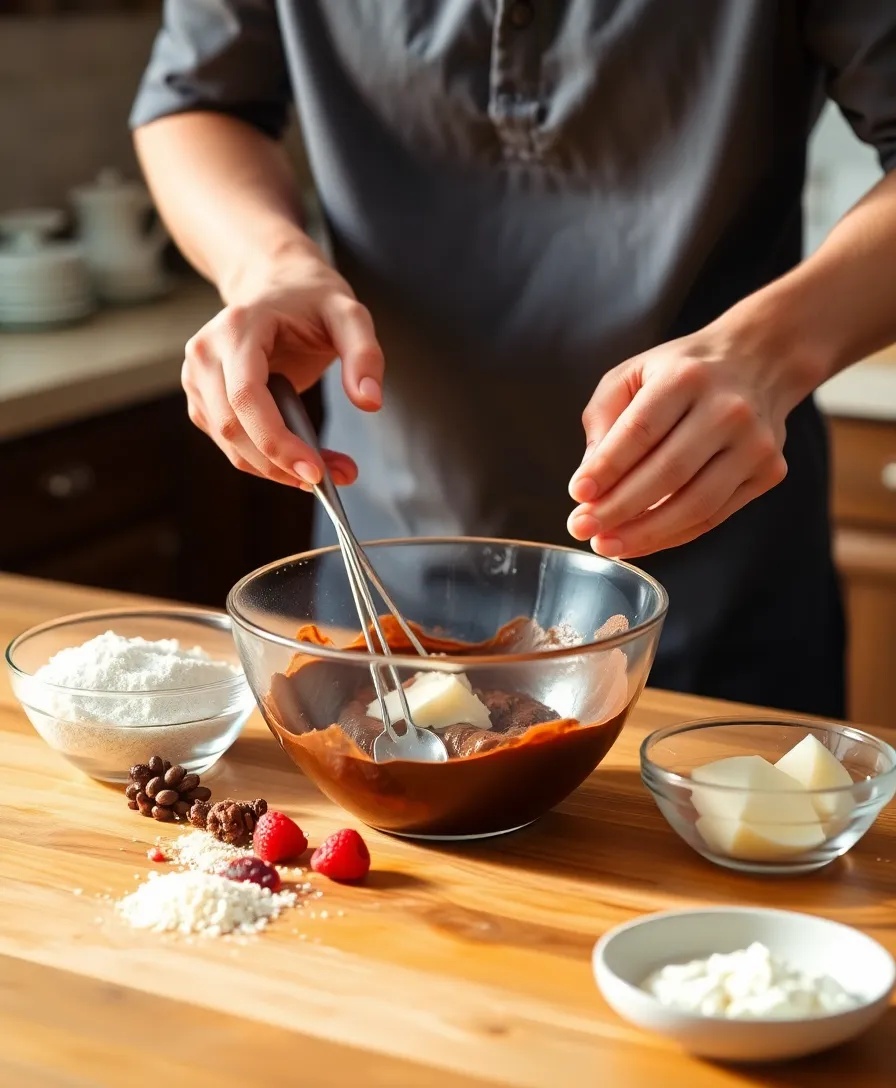
Within a meticulously prepared double boiler (bain-marie), gently liquefy the designated quantity of semi-sweet chocolate, allowing it to transform into a glossy, fluid stream over a bath of simmering water.
-
Remove the warmed chocolate from its heat source and allow it to cool gradually until it reaches a comfortably lukewarm temperature, ensuring it remains fluid but is no longer hot to the touch.
-
In a generously sized, impeccably clean mixing bowl, aerate the seven egg whites alongside the cream of tartar. Continue to whip diligently until they achieve magnificent, firm peaks that stand proudly, indicating perfect incorporation of air.
-
In a separate, well-chilled bowl, vigorously whip the three cups of heavy cream with the fragrant vanilla extract. Continue this process until the cream achieves robust, voluminous peaks, holding its shape with elegant precision.
-
With utmost care and a delicate touch, gradually integrate the now lukewarm, silken chocolate into the aerated egg whites, folding gently to preserve the ethereal volume created in the previous step.
-
Finally, introduce the perfectly whipped vanilla cream into the chocolate and egg white emulsion. Fold meticulously until all components are harmoniously combined, yielding a consistently light and unified mousse mixture.
Recipe Notes
This foundational chocolate mousse is a testament to understated elegance, offering immense versatility. For an immediate indulgence, serve chilled in delicate coupes, perhaps garnished with fresh berries or a dusting of premium cocoa powder. To elevate its profile, consider folding in a tablespoon of your favorite coffee liqueur or a hint of espresso powder with the chocolate for an added layer of complexity. When incorporating into larger desserts, ensure the mousse is thoroughly chilled to achieve optimal structural integrity. It stores beautifully, sealed, in the refrigerator for up to three days, though its allure often proves too irresistible for such longevity.
Global Heritage Archive
Anthropological & Spice Migration Record
“A refined culinary tradition that values technique, quality ingredients, and the elegant presentation of sophisticated desserts.”
🌿 Spice & Botanical Migration
The stars of this dish, semisweet chocolate and vanilla, both trace their origins to Mesoamerica. Cacao was first cultivated by ancient Olmec, Maya, and Aztec civilizations, then introduced to Europe by Spanish conquistadors in the 16th century via the Columbian Exchange. Vanilla, derived from an orchid native to Mexico, similarly made its way to European palates through the same routes, transforming from indigenous ritual ingredients into global culinary staples.
🏺 Historical & Archaeological Record
The earliest evidence of cacao consumption dates back to the Olmec civilization in Mesoamerica around 1500 BCE, primarily as a bitter, frothy beverage. While specific recipes for “mousse” as a foamy dessert appear in French culinary texts from the late 18th and 19th centuries, the chocolate mousse we know today, relying on whipped egg whites and cream, solidified its form and popularity in French kitchens during the late 19th century.
💡 Little Known Facts
- The term “mousse” (meaning “foam” in French) was originally applied to savory dishes, such as fish or vegetable mousses, long before chocolate mousse became popular.
- While the exact inventor is debated, French artist Henri de Toulouse-Lautrec is sometimes credited with creating a “Mayonnaise au Chocolat” in the late 19th century, a rich chocolate preparation considered a precursor to modern chocolate mousse.
📸 Made This Heritage Recipe?
We would love to see how your dish turned out! Send a photo of your culinary creation to [email protected] to be featured in our community gallery.
Leave a review and rate this recipe below!
Curated Literature & Washington DC Downtown Calendar
The Culinary Alchemist: Modern Gastronomy & Flavor Pairing
By LDN Gastronomy Series
Artisanal technique, seasonal sourcing, and kitchen mastery.
Upcoming Downtown Happenings
Live acoustic sessions, gallery receptions, literary salons, and independent trade shows across Washington DC.
