
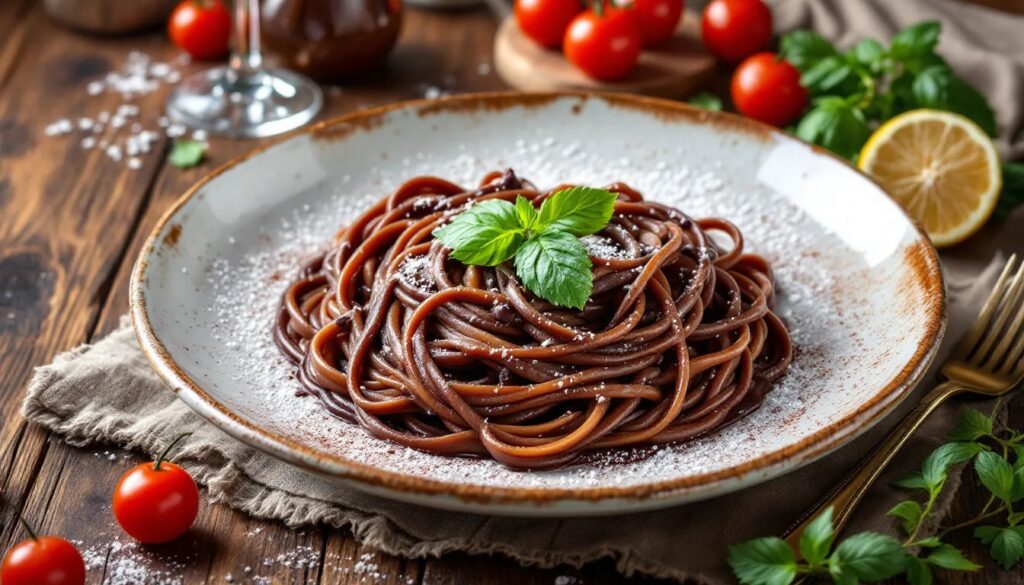
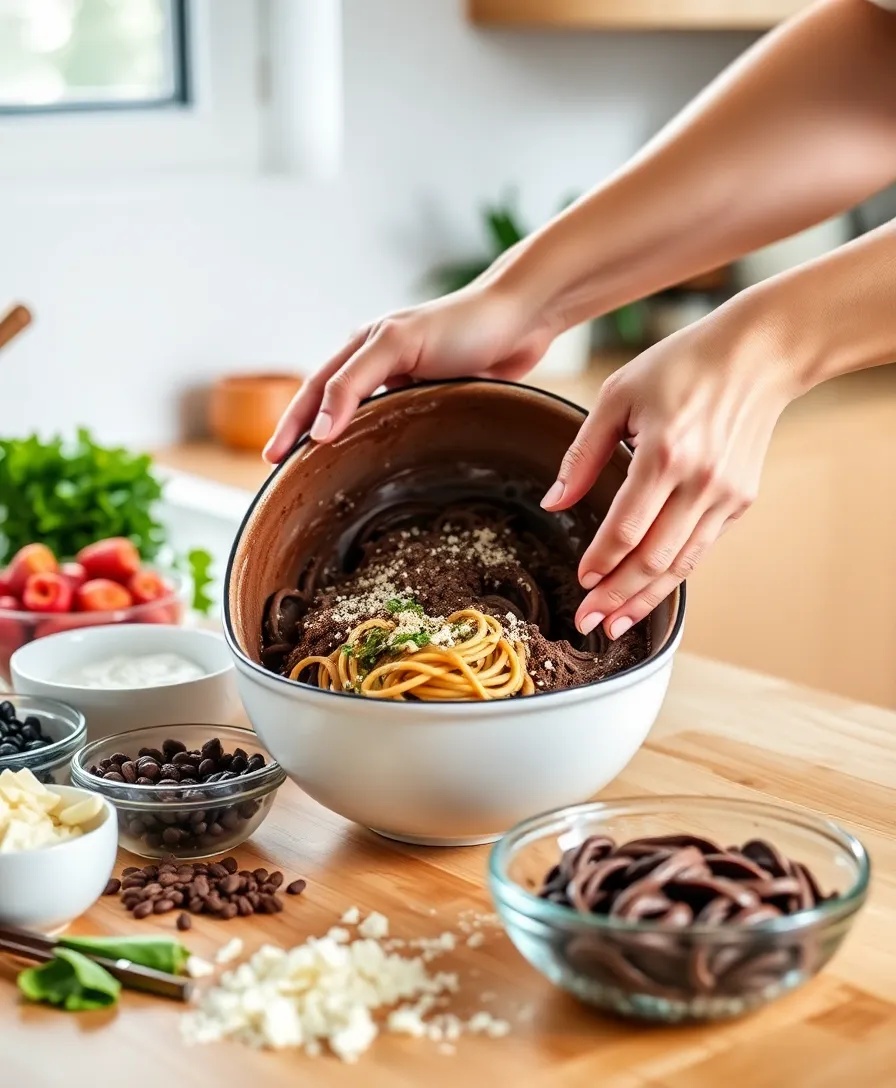
In the vast and varied tapestry of global cuisine, few dishes encapsulate the spirit of culinary evolution quite like Chocolate Fettuccini. At first glance, it appears a playful paradox: the beloved Italian pasta, a symbol of savory sustenance, reimagined as a decadent dessert. Yet, delve deeper, and this dish reveals itself as a fascinating confluence of history, migration, and gastronomic ingenuity, a velvet ribbon weaving together continents and centuries.
Traditionally, fettuccini, meaning ‘little ribbons’ in Italian, traces its lineage back to the heart of Rome and Lazio, where it evolved from broader, flatter egg pastas. Its preparation is an art form, a dance of durum wheat flour, fresh eggs, and water, kneaded with passion, rolled with precision, and cut with care. This unassuming base, a staple for centuries, served as the canvas upon which countless savory sauces would be painted, from rich ragùs to creamy Alfredo. But the introduction of chocolate—a New World marvel—transformed this culinary paradigm.
Cacao, the source of our beloved chocolate, was once the sacred currency and ceremonial drink of Mesoamerican civilizations like the Maya and Aztecs. It journeyed across the Atlantic with the Columbian Exchange, initially as a bitter, spiced beverage for European nobility, eventually evolving into the sweet indulgence we know today. Marrying this ancient bean with Italian pasta was an act of culinary audacity, an embrace of fusion that characterizes modern gastronomy. The addition of espresso liqueur further anchors the dish in Italian innovation, as coffee itself, originating in the highlands of Ethiopia, was perfected into the iconic espresso in Italy. Amaretto, a sweet almond-flavored Italian liqueur, provides a final, fragrant nod to the Mediterranean’s ancient orchards and Italy’s sophisticated liqueur tradition.
The creation of chocolate pasta reflects a globalized culinary landscape where traditional boundaries are playfully blurred. It speaks to a culture that values novelty, gourmet experiences, and a delightful subversion of expectation. Making it at home requires attention to detail: ensuring the cocoa is thoroughly integrated into the dough for a uniform color and flavor, achieving the right hydration for a pliable yet firm consistency, and rolling it thinly enough to cook quickly and absorb the sauce beautifully. The key lies in using high-quality unsweetened cocoa and balancing the sweetness in the sauce to prevent it from becoming cloyingly rich. Serve with a delicate sauce of melted semisweet chocolate, a hint of espresso, and a dollop of mascarpone, perhaps garnished with fresh berries or a dusting of confectioner’s sugar, to truly elevate this extraordinary dessert to a symphony of flavors and textures. It is not merely food; it is a conversation, a celebration of history, and a testament to the endless possibilities of the culinary imagination.
CHOCOLATE FETTUCCINI
Prepare to be enchanted by a culinary illusion: a dessert that cunningly transforms gossamer-thin cocoa crêpes into luxurious silken ribbons, reminiscent of classic pasta. Each delicate chocolate strand is sumptuously enrobed in a velvety, dark espresso-chocolate sauce, then crowned with an ethereal cloud of freshly whipped vanilla cream. This artful confection offers a sophisticated, yet playfully nostalgic, experience – an exquisite finale certain to captivate and impress at any special occasion.
Ingredients
-
3
large
eggs
None -
2/3
cup
water
None -
1/8
teaspoon
salt
None -
2/3
cup
half and half or light cream
None -
2
Tablespoons
sugar
for crepes -
2/3 cup less 1 Tablespoon
None
all-purpose flour
None -
3
Tablespoons
butter
melted and cooled, for crepes -
2
Tablespoons
unsweetened cocoa
None -
5
ounces
semisweet chocolate
coarsely chopped -
1
ounce
unsweetened chocolate
coarsely chopped -
1
cup
brewed espresso liqueur
See notes for clarification. -
1/4
cup
sugar
for chocolate sauce -
2
Tablespoons
Amaretto liqueur
None -
2
Tablespoons
butter
for chocolate sauce -
1
cup
heavy cream
well chilled -
1
teaspoon
vanilla
None -
1
Tablespoon
confectioner’s sugar
None
Instructions
-
In the chamber of a food processor or a high-speed blender, meticulously combine the three large eggs, the water, salt, half and half (or light cream), granulated sugar, the specified amount of all-purpose flour, the gently melted and cooled butter, and the unsweetened cocoa powder. Activate the appliance and process until the mixture achieves a perfectly smooth, uniform consistency.
-
To achieve an impeccably smooth texture, carefully pass the freshly prepared crêpe batter through a fine-mesh sieve, discarding any residual lumps. Transfer the refined batter to a suitable container and refrigerate for a minimum of two hours, or ideally, allow it to rest overnight. This crucial chilling period permits the flour to fully hydrate, enhancing the crêpes’ pliability and delicate structure.
-
Lightly anoint a crêpe pan or non-stick skillet with a whisper of butter, then heat until it reaches a very hot, almost shimmering temperature. Ladle approximately ½ cup (adjusting for your pan’s specific dimensions) of the chilled batter into the center, swiftly swirling the pan to spread the liquid into an even, gossamer-thin film across the entire base. Cook until the edges exhibit a delicate browning, then expertly flip and continue cooking for an additional 15-20 seconds. Carefully transfer the finished crêpe to a plate to cool completely. Proceed with the remaining batter, gently stacking the cooled crêpes as you complete each one. (This preparation typically yields 14-16 crêpes, each approximately 6 inches in diameter.)
-
Utilizing the top vessel of a double boiler, suspended over a gentle bain-marie (hot, but not vigorously boiling, water), carefully introduce the 5 ounces of coarsely chopped semisweet chocolate and the 1 ounce of coarsely chopped unsweetened chocolate. Allow the chocolates to melt slowly and thoroughly, stirring occasionally, until a perfectly smooth and lustrous emulsion is achieved.
-
In a distinct bowl, combine the ¼ cup granulated sugar with the 1 cup brewed espresso liqueur, stirring until the sugar completely dissolves. Gently incorporate this fragrant liquid into the melted chocolate mixture, blending thoroughly until unified. Next, fold in the 2 tablespoons of Amaretto liqueur and the 2 tablespoons of butter, continuing to stir until they are fully integrated and the sauce boasts a rich, velvety sheen. Remove the double boiler from the heat and permit the sauce to cool to a warm, ambient temperature.
-
In a thoroughly chilled mixing bowl, combine the 1 cup of well-refrigerated heavy cream, the 1 teaspoon of pure vanilla extract, and the 1 tablespoon of confectioner’s sugar. Employ an electric mixer to vigorously whip the ingredients until the cream achieves a light, aerated texture, forming soft, ethereal peaks. (This preparation typically yields approximately 2 cups of finished whipped cream.)
-
Once the crêpes have completely cooled, carefully stack them one atop another. Using a meticulously sharpened knife, uniformly incise the stacked crêpes into long, slender ribbons, aiming for a width of approximately 3/8 inch. With gentle hands, carefully disentangle these chocolate strands to artfully simulate the appearance of classic fettuccine noodles.
-
Gracefully arrange the chocolate ‘fettuccini’ strands within a large, shallow serving vessel. Form a subtle depression in the center of the crêpe ribbons and spoon the freshly whipped cream into this inviting well. Lavishly cascade the cooled dark chocolate sauce over the entire presentation. Before serving, gently toss the ‘fettuccini’ to allow the decadent sauce and ethereal whipped cream to lovingly intermingle with each chocolate strand.
Recipe Notes
Regarding the flour measurement, ‘2/3 cup less 1 Tablespoon’ has been precisely interpreted as a direct subtraction from the two-thirds cup quantity. A note on the ‘1 cup brewed espresso liqueur’: this instruction appears verbatim from the original source. For clarity and optimal flavor, this may be interpreted as a strong brewed espresso combined with a complementary liqueur, or an espresso-flavored liqueur (such as Kahlúa) could be effectively substituted. The extended chilling period for the crêpe batter – a minimum of two hours, or ideally overnight – is absolutely paramount. This vital step ensures the flour fully hydrates, resulting in crêpes with superior pliability, a delicate texture, and significantly enhanced ease of cooking.
Global Heritage Archive
Anthropological & Spice Migration Record
“A sophisticated, often dessert-focused culinary culture that playfully fuses traditional Italian pasta forms with indulgent, global dessert ingredients, appealing to a modern palate seeking novelty and gourmet experiences.”
🌿 Spice & Botanical Migration
The centerpiece, unsweetened cocoa, traces its origins to ancient Mesoamerica, where cacao was revered by civilizations like the Maya and Aztecs, arriving in Europe via the Columbian Exchange in the 16th century. Coffee, the base for espresso liqueur, began its global journey in the ancient forests of Ethiopia before spreading through the Arabian Peninsula and eventually reaching Europe. Amaretto, a distinctly Italian liqueur flavored with almonds, draws from a long Mediterranean history of nut cultivation, marrying these diverse botanical histories into a harmonious modern indulgence.
🏺 Historical & Archaeological Record
The concept of flour and water noodles, the precursor to fettuccini, has ancient roots, with the oldest archaeological evidence for a noodle-like food dating back 4,000 years to the Lajia archaeological site in China. While specific Italian pasta forms emerged much later in the Mediterranean, this fundamental technique of combining grains and liquid into strands is a testament to humanity’s early culinary ingenuity.
💡 Little Known Facts
- While we predominantly associate chocolate pasta with sweet preparations today, early culinary experiments with chocolate in pasta sometimes included savory elements, occasionally even chili, reflecting chocolate’s original use in Mesoamerican cuisine.
- The concept of sweet pasta, particularly chocolate varieties, gained significant traction in the late 20th century, often emerging from creative fine dining chefs looking to innovate on traditional ingredients and offer unique dessert experiences.
📸 Made This Heritage Recipe?
We would love to see how your dish turned out! Send a photo of your culinary creation to [email protected] to be featured in our community gallery.
Leave a review and rate this recipe below!
Curated Literature & Washington DC Downtown Calendar
The Culinary Alchemist: Modern Gastronomy & Flavor Pairing
By LDN Gastronomy Series
Artisanal technique, seasonal sourcing, and kitchen mastery.
Upcoming Downtown Happenings
Live acoustic sessions, gallery receptions, literary salons, and independent trade shows across Washington DC.
