
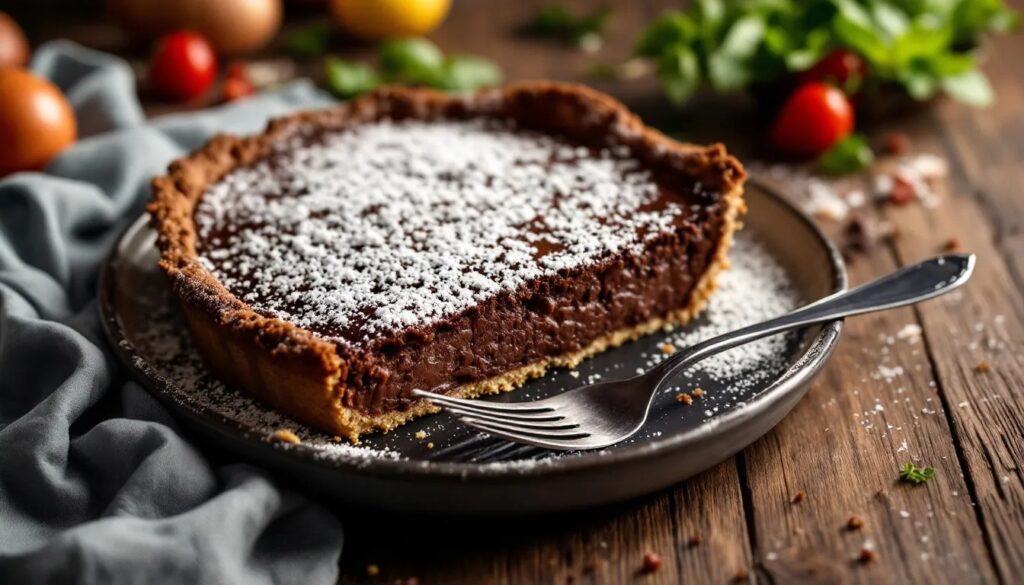
In the annals of American Southern cuisine, few desserts evoke such profound comfort and nostalgia as the Chess Pie. A humble confection born of necessity and transformed into a staple of hospitality, the Chocolate Chess Pie stands as a testament to ingenuity, resourcefulness, and the enduring allure of simple, profound flavors. It’s a dish that whispers tales of sun-drenched kitchens, bustling family gatherings, and the quiet satisfaction of a perfect sweet treat.
The genesis of ‘Chess Pie’ itself is shrouded in charming folklore. While lacking a definitive origin story, popular theories suggest its name might be a corruption of ‘chest pie,’ referring to pies stored in a pie chest; a playful ‘jest pie,’ meaning ‘it’s just pie’ when asked what kind it was; or even a distant echo of ‘cheese pie,’ though no cheese graces its ingredients. Regardless of its nomenclature, the core of a Chess Pie has always been its ability to transform basic pantry staples—sugar, butter, eggs, and a little flour or cornmeal—into a marvelously rich, custardy filling, particularly useful in times when fresh fruit was scarce.
The introduction of chocolate elevated this classic to new heights. Cocoa, a precious gift from the ancient civilizations of Mesoamerica, traversed oceans through the Columbian Exchange, eventually finding its way into the kitchens of the American South. Its deep, complex bitterness perfectly counterbalances the pie’s inherent sweetness, creating a harmonious symphony of flavors. Similarly, the inclusion of pecans anchors the pie firmly in its Southern terroir. These native North American nuts, celebrated for their buttery crunch, provide a textural counterpoint and a distinct regional identity. While coconut might seem an exotic addition, its presence hints at the maritime trade routes that brought tropical produce from the Caribbean and beyond to Southern ports, integrating seamlessly into the local culinary landscape.
Preparing a Chocolate Chess Pie is less about elaborate technique and more about mindful execution. The magic lies in the melding of simple ingredients. Start with room temperature eggs and butter for a smoother emulsion. Creaming the butter and sugar thoroughly is paramount to achieving that characteristic crackled crust and fudgy interior. A splash of vanilla extract can deepen the flavor profile, while a pinch of salt enhances the chocolate’s richness. Be cautious not to overbake; the center should still have a slight jiggle when removed from the oven, as it will continue to set as it cools. Patience is a virtue here: allow the pie to cool completely, preferably chilling it for a few hours, to achieve the ideal firm, yet yielding texture. Serve it plain, perhaps with a dusting of confectioners’ sugar, or alongside a dollop of freshly whipped cream. Each slice is not just a dessert; it’s a bite of history, a taste of Southern hospitality, and a reminder that sometimes, the simplest ingredients yield the most extraordinary pleasures.
CHOCOLATE CHESS PIE
Embrace the cherished heritage of Southern confectionery with our distinguished Chocolate Chess Pie. This timeless masterpiece transcends mere dessert, offering a profoundly rich and comforting experience. Each decadent slice unveils a lusciously fudgy heart, imbued with the subtle sophistication of toasted pecans and a whisper of tropical coconut. Effortlessly prepared from foundational ingredients, its inherent simplicity belies an extraordinary depth of flavor, making it the consummate indulgence for both intimate family gatherings and moments of quiet, blissful solitude.
Ingredients
-
4
Tablespoons
cocoa
None -
½
cup
chopped pecans
None -
1½
cup
melted butter
None -
1
cup + 2 Tablespoons
sugar
None -
2
None
eggs
None -
½
cup
evaporated milk
None -
½
cup
coconut
None
Instructions
-
Initiate your culinary process by preheating your oven to a precise 400°F (200°C), ensuring a consistently hot environment for optimal baking.
-
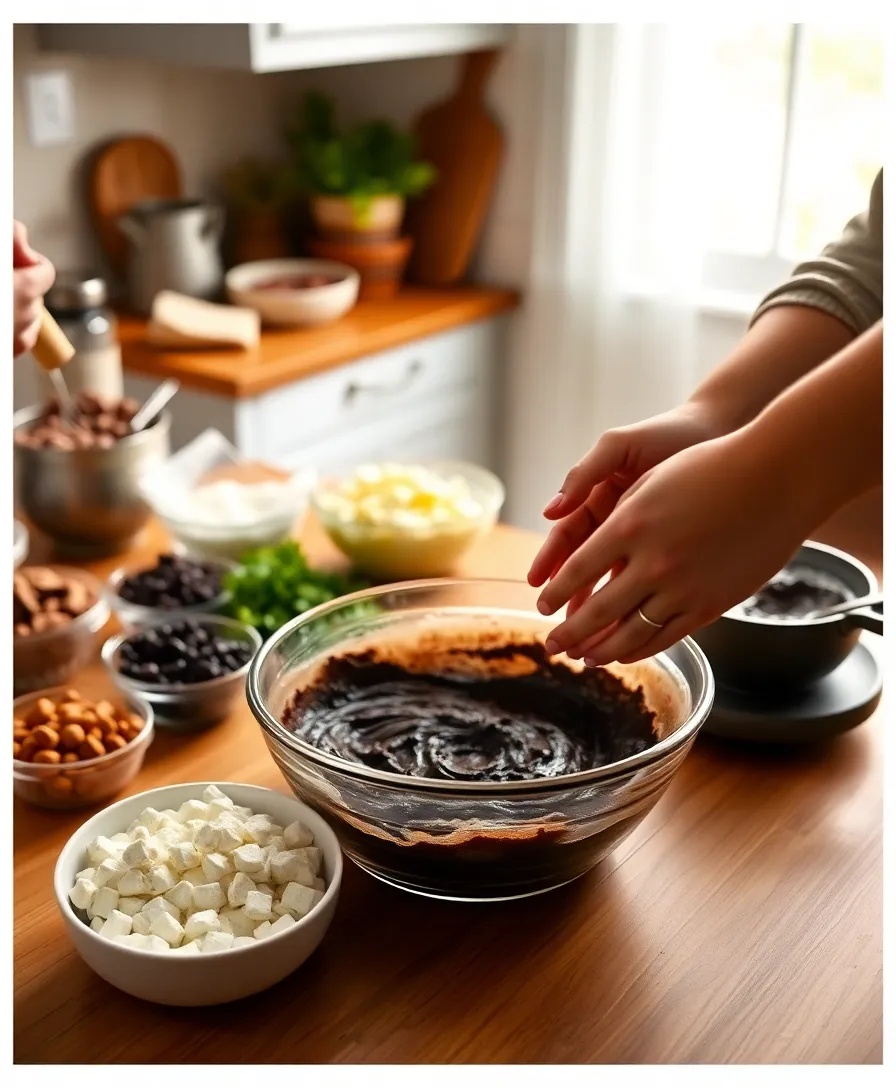
In a substantial mixing bowl, meticulously combine all remaining specified ingredients. Whisk thoroughly until the mixture achieves a perfectly homogenous and velvety smooth consistency. Gently pour this exquisite chocolate batter into a pristine 9-inch unbaked pie shell, distributing it evenly.
-
Carefully transfer the filled pie shell to the preheated oven. Bake for a duration of 30 to 40 minutes, or until the perimeter is visibly set and the center exhibits only a slight, delicate quiver when gently jostled.
-
Upon removal from the oven, allow the pie to cool completely on a wire rack at room temperature. This essential cooling period is crucial for the filling to achieve its ideal set and signature fudgy texture.
-
For an elevated presentation and palate experience, serve each generous slice either accompanied by a cloud of freshly whipped cream or a luxurious scoop of artisanal vanilla bean ice cream, offering a delightful contrast in temperature and texture.
Recipe Notes
To further enhance the pie’s profound chocolate notes, consider incorporating a half-teaspoon of finely ground espresso powder into the filling mixture. For an exquisite finish, a light dusting of cocoa powder or a scattering of toasted coconut flakes can be applied just before serving. Any remaining pie should be stored, covered, in the refrigerator for up to three days, though it is best enjoyed at room temperature for optimal richness.
Global Heritage Archive
Anthropological & Spice Migration Record
“A culinary culture deeply rooted in hospitality, resourcefulness, and the utilization of local produce combined with pantry staples, often reflecting European influences and adaptations by various ethnic groups, including enslaved African people.”
🌿 Spice & Botanical Migration
Cocoa, derived from the cacao bean, originated in Mesoamerica and was introduced to Europe via the Columbian Exchange, eventually making its way to North America and becoming a beloved ingredient in desserts. Pecans are native to North America, particularly the Mississippi River basin, making them a distinctly indigenous ingredient to this region. Coconut, while tropical, spread globally through ancient ocean currents and later maritime trade, arriving in the Americas and becoming a versatile ingredient in many Southern and Caribbean recipes.
🏺 Historical & Archaeological Record
While the specific ‘Chocolate Chess Pie’ is a relatively modern American invention, the concept of sweet custards baked in pastry shells dates back to Roman times with dishes like ‘placenta cake’. The earliest written records of recipes resembling Chess Pie, characterized by a rich, sugary custard, began to appear in American cookbooks in the late 19th century, solidifying its place in Southern culinary history.
💡 Little Known Facts
- The origin of the name ‘Chess Pie’ is debated, with theories ranging from ‘chest pie’ (kept in a pie chest), ‘jest pie’ (as in ‘it’s just pie’), or a phonetic corruption of ‘cheese pie’, though it contains no cheese.
- Traditional chess pie often incorporates a small amount of cornmeal or flour, which acts as a stabilizer, preventing the rich custard filling from separating and contributing to its signature texture.
📸 Made This Heritage Recipe?
We would love to see how your dish turned out! Send a photo of your culinary creation to [email protected] to be featured in our community gallery.
Leave a review and rate this recipe below!
Curated Literature & Washington DC Downtown Calendar
The Culinary Alchemist: Modern Gastronomy & Flavor Pairing
By LDN Gastronomy Series
Artisanal technique, seasonal sourcing, and kitchen mastery.
Upcoming Downtown Happenings
Live acoustic sessions, gallery receptions, literary salons, and independent trade shows across Washington DC.
