
At its heart lies Madeira wine, a singular spirit from the rugged volcanic island bearing its name, an autonomous region of Portugal. The story of Madeira wine is inextricably linked to the Age of Discovery. Early sailing ships, traversing vast oceans, discovered that storing wine in the hold, enduring tropical heat and the rocking motion of the sea, actually improved its flavor rather than spoiling it. This accidental ‘cooking’ process led to the development of the unique ‘estufagem’ (heating) and ‘canteiro’ (aging in warm attics) methods that give Madeira its distinctive caramelized, nutty notes and remarkable longevity. It became the wine of choice for long voyages, a favored tipple of American Founding Fathers, and eventually, a revered culinary ingredient, imbuing sauces with unparalleled depth.
The chicken breast, a relatively modern star in the culinary firmament, represents a shift towards efficiency and lean protein. While whole chickens have graced tables for millennia, the specific isolation and preparation of the breast as a quick-cooking canvas for elegant sauces gained prominence in the 20th century. Here, it is treated with respect: seasoned simply with salt, the subtle warmth of white pepper, and a bright splash of lemon juice – ingredients whose own migrations underscore global trade networks.
White pepper, a descendant of the black peppercorn from India’s Malabar Coast, traveled along ancient spice routes, becoming a staple in European pantries. Lemon, too, journeyed from its origins in Asia to the Mediterranean, becoming indispensable for its acidity. Butter, a cornerstone of French and other Western European cuisines, provides richness and helps carry the flavors, forming the luscious foundation of the pan sauce. The technique itself – pan-searing the chicken, deglazing the pan with Madeira to capture every delicious scrap, and reducing it into a glossy, flavorful sauce – is a testament to the timeless elegance of classical European cookery, emphasizing flavor extraction and balance.
To recreate this historical masterpiece at home, choose a high-quality, dry Madeira wine – Rainwater or Sercial are excellent choices for cooking. Resist the urge to use a cheap cooking wine; the flavor of the Madeira is paramount. Ensure your chicken breasts are pounded to an even thickness for uniform cooking. Sear them until golden, but take care not to overcook, as breast meat dries out easily. The deglazing step is crucial: scrape up all the browned bits (fond) from the pan, as these hold immense flavor. Reduce the Madeira until it’s slightly syrupy, then swirl in a knob of cold butter at the very end to emulsify and add a luxurious sheen. Serve immediately, perhaps with simple steamed asparagus or creamy mashed potatoes, allowing the rich, complex sauce to be the star. This dish is not just a meal; it’s a narrative on a plate, a journey through time and across oceans, served with understated sophistication.
CHICKEN BREASTS IN MADEIRA
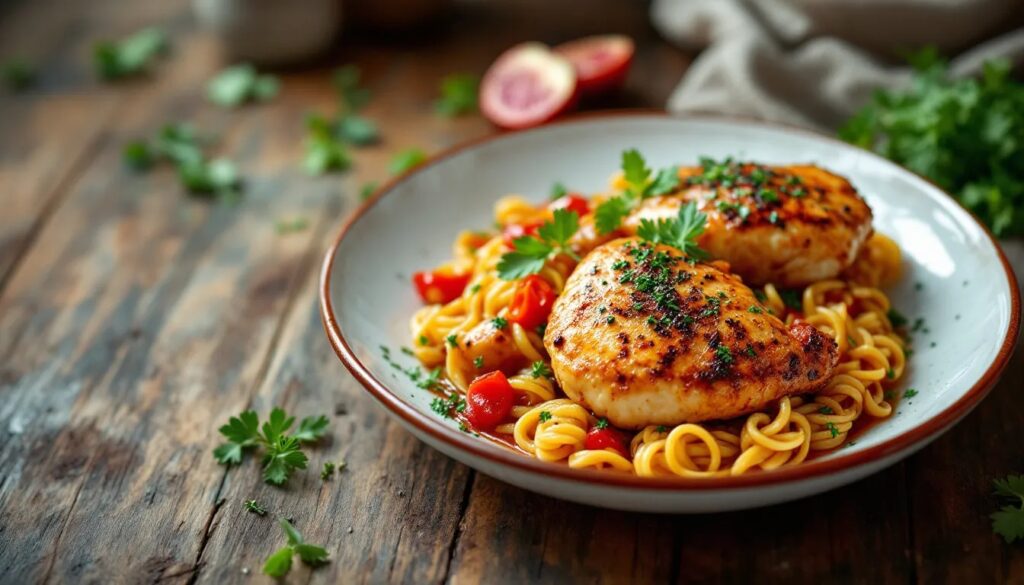
Indulge in a timeless culinary experience with these magnificent Chicken Breasts in Madeira. This exquisite creation seamlessly blends the comforting appeal of perfectly seared poultry with the distinguished character of a fortified wine, resulting in a dish that is both effortlessly elegant and deeply satisfying. Each plump chicken breast, subtly brightened by a hint of citrus and a delicate kiss of seasoning, is skillfully browned to a radiant golden hue before being gently braised in the rich, complex depths of Madeira. The outcome is a supremely tender and sumptuously flavored main course, remarkably simple to execute yet sophisticated enough to command attention at an intimate gathering or transform a special evening into a cherished memory.
Ingredients
-
4
none
boned chicken breasts -
1/4
cup
lemon juice -
1/4
teaspoon
salt -
Pinch
none
white pepper -
as needed
none
butter
for heating in skillet -
1/2
cup
Madeira wine
estimated amount for simmering
Instructions
-
Begin by preparing the boneless chicken breasts: delicately anoint each piece with fresh lemon juice, ensuring a light, even coating. Follow with a judicious dusting of fine sea salt and pristine white pepper, gently caressing the seasonings into the flesh to imbue it with nuanced flavor.
-
In a substantial skillet, introduce a generous pat of unsalted butter over medium heat, allowing it to melt and shimmer without browning. Carefully lay the seasoned chicken breasts into the warmed pan, searing them to achieve a beautiful golden-amber crust on both sides. This process typically takes several minutes per side, developing depth of flavor and texture.
-
Once perfectly seared, gently pour in the Madeira wine, allowing its aromatic essence to begin deglazing the pan and mingling with the rich pan drippings. Bring the liquid to a gentle simmer, then reduce the heat, cover the skillet, and allow the chicken to slowly braise until it reaches a state of exquisite tenderness, easily pierced with a fork. Cooking time will vary based on breast thickness.
Recipe Notes
For optimal results, the precise quantities of butter and Madeira wine are entrusted to the chef’s keen judgment. Employ just enough high-quality butter to create a shimmering, even coating across the pan’s surface, ensuring a perfect sear without excess. As for the Madeira, aim for a luxurious, shallow pool that gently cradles and enshrouds the chicken breasts, allowing them to luxuriate in the wine’s rich essence. A starting point of approximately ½ cup is often ideal, but adjust as needed to achieve a harmonious simmer that infuses the poultry with its signature depth.
Global Heritage Archive
Anthropological & Spice Migration Record
“A sophisticated European culinary tradition that emphasizes high-quality ingredients, classic pan-sauce techniques, and a balance of rich and acidic flavors, often influenced by colonial trade and Atlantic island produce.”
🌿 Spice & Botanical Migration
White pepper, derived from the fruit of the Piper nigrum vine, originated on the Malabar Coast of India. Its journey across ancient trade routes, including the maritime Spice Route and overland Silk Road, brought it to the Mediterranean and then across Europe, becoming a foundational spice. Lemons, originally from Northeast India, Myanmar, or China, were introduced to the Mediterranean by Arab traders around the 10th century, becoming a crucial acidic component in European cuisine.
🏺 Historical & Archaeological Record
The oldest written records of cooking meat with a deglazed pan sauce, a precursor to this technique, can be found in ancient Roman cookbooks such as Apicius’s ‘De re culinaria,’ dating back to the 4th-5th century CE. These texts describe various meat preparations incorporating wine and other liquids to create flavorful reductions.
💡 Little Known Facts
- Madeira wine’s unique ‘estufagem’ (heating) and ‘canteiro’ (aging in warm attics) processes were discovered accidentally due to long sea voyages through tropical climates, leading to its exceptional longevity and distinct flavor.
- The chicken breast, as a distinct and prized cut, gained significant popularity in Western cuisines primarily in the 20th century due to its lean profile and quicker cooking time, symbolizing a shift towards convenience and health-conscious eating.
📸 Made This Heritage Recipe?
We would love to see how your dish turned out! Send a photo of your culinary creation to [email protected] to be featured in our community gallery.
Leave a review and rate this recipe below!
Curated Literature & Washington DC Downtown Calendar
The Culinary Alchemist: Modern Gastronomy & Flavor Pairing
By LDN Gastronomy Series
Artisanal technique, seasonal sourcing, and kitchen mastery.
Upcoming Downtown Happenings
Live acoustic sessions, gallery receptions, literary salons, and independent trade shows across Washington DC.
