
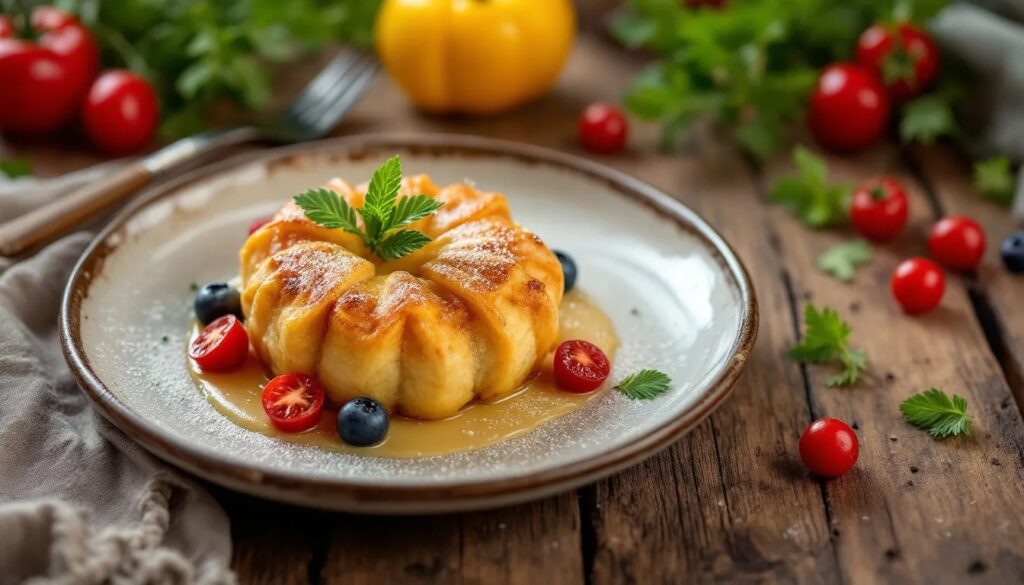
Few desserts embody the warmth of home and the sweeping saga of global trade quite like the Charlotte aux Pommes. More than just a simple apple pudding, this classic French confection is a delicious testament to culinary evolution, cross-cultural exchange, and the enduring allure of comfort food. Imagine a crisp, buttery crust giving way to tender, spiced apples, their sweetness perfectly balanced by a whisper of vanilla and the deep resonance of rum – it’s a sensory journey through centuries.
The very name “Charlotte” sparks a delightful historical debate. Some whisper of Queen Charlotte, wife of King George III, a known patron of apple orchards, lending her regal name to this humble yet exquisite dessert. Others point to “charlyt,” an old English term for a medieval baked custard or meat pie, suggesting a more rustic lineage before its French metamorphosis. Regardless of its exact etymological path, the Charlotte aux Pommes, as we know it today, blossomed in 18th and 19th-century France. While its more famous cousin, the cold, ladyfinger-lined Charlotte Russe, is attributed to the legendary Antonin Carême, the warm, bread-molded apple version represents an earlier, perhaps more authentically comforting, tradition, perfecting the art of transforming everyday ingredients into something extraordinary.
Yet, beyond its French refinement, the Charlotte aux Pommes tells a profound story of global migration. The very apples that form its core, while ubiquitous across Europe, trace their origins to the ancient forests of Central Asia, journeying westward along the Silk Road millennia ago. The aromatic vanilla, a cornerstone of its delicate perfume, hails from the humid jungles of Mesoamerica, its precious pods making their way to European kitchens via the Columbian Exchange and later, the revolutionary cultivation techniques developed in colonial territories like Réunion. Cinnamon, with its sweet warmth, whispers tales of ancient spice routes from Southeast Asia, traversing oceans and continents for millennia. Even the dark rum, offering a subtle depth of flavor, is a liquid legacy of the Caribbean’s sugarcane plantations – themselves a transplant from Asia – and the complex transatlantic trade routes that linked distant shores. This dessert is, quite literally, an edible map of human endeavor and interconnectedness.
Traditionally, preparing a Charlotte aux Pommes is a heartwarming ritual. Thick slices of day-old bread, generously buttered, are used to line a charlotte mold, creating a golden, yielding crust. Inside, a luscious compote of firm apples, sautéed with butter, sugar, cinnamon, and vanilla, then brightened with a hint of apricot jam and a splash of dark rum, awaits. The mold is filled, topped with more buttered bread, and baked until deeply golden and fragrant. When inverted, it reveals a beautifully shaped, bronzed dome, ready to be adorned with a dusting of confectioners’ sugar or a dollop of crème fraîche. For the best results, choose firm, tart-sweet apples like Honeycrisp, Braeburn, or Granny Smith, and don’t skimp on the butter for the bread – it’s key to that irresistible crust. Allow the baked charlotte to rest briefly before inverting to ensure it holds its shape perfectly.
The Charlotte aux Pommes endures not just as a recipe, but as a cultural artifact. It reminds us that even the simplest of pleasures can contain layers of history, geography, and human innovation, connecting us to a world far beyond our kitchen walls with every delicious bite.
CHARLOTTE AUX POMMES
Transport your palate to the heart of France with this exquisite Charlotte aux Pommes, a timeless dessert that whispers tales of rustic elegance and refined simplicity. This revered recipe meticulously transforms orchard-fresh apples into a sumptuously spiced, deeply flavored marmalade, artfully encased within delicate, butter-kissed bread. Baked to a sublime golden hue, the Charlotte emerges as a comforting yet utterly sophisticated creation, destined to grace any discerning table and elevate moments into cherished memories.
Ingredients
-
8
pounds
firm eating or cooking apples -
1½
cups
butter
for apples -
1
cup
sugar -
2
teaspoons
vanilla -
½
cup
apricot jam
forced through a sieve -
½
teaspoon
cinnamon -
¼
cup
dark rum -
12 to 14
slices
bread
4 inches square, crust removed -
About 1
cup
butter
melted (Note: The original recipe states ‘1½ pound’ in parentheses, but 1 cup of butter is typically ½ pound. Use about 1 cup melted butter.) -
½
cup
apricot jam
for optional glaze, forced through a sieve -
2
Tablespoons
sugar
for optional glaze -
3
Tablespoons
dark rum
for optional glaze
Instructions
-
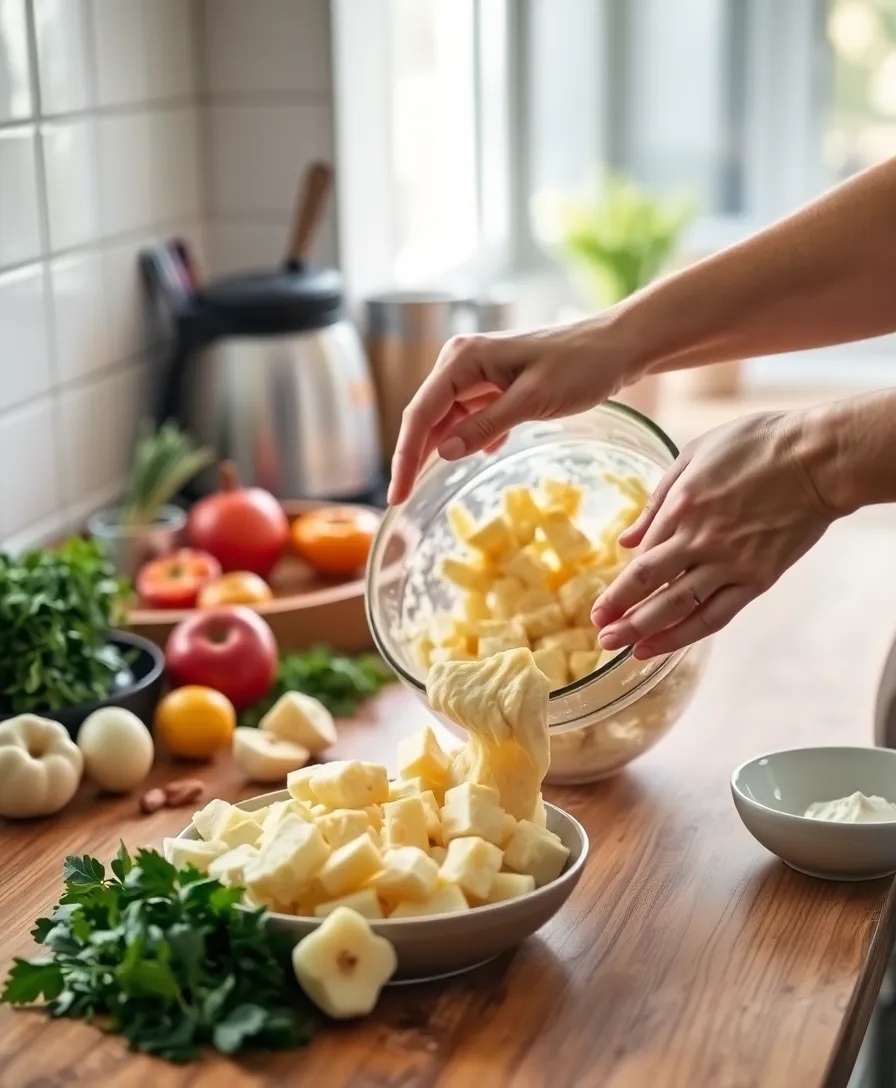
Begin by meticulously quartering, peeling, and coring each apple. Subsequently, slice the prepared fruit into substantial ½-inch pieces.
-
Transfer these apple slices to a substantial pan alongside 1½ cups of butter. Cover and gently cook for approximately 20 minutes, stirring occasionally, until the apples yield to tenderness.
-
Carefully incorporate the apricot jam, 1 cup of sugar, 2 teaspoons of vanilla extract, cinnamon, and ¼ cup of rum into the warm apple mixture, stirring until thoroughly combined.
-
Increase the heat to high and continue to boil the mixture, uncovered, for 15 to 20 minutes. Stir diligently until the liquid reduces and a lusciously thick marmalade consistency is achieved.
-
To prepare for assembly, preheat your oven to a precise 425°F (220°C).
-
For the base, immerse 4 slices of bread (previously trimmed into immaculate 4-inch squares) into approximately 1 cup of melted butter. Divide these buttered squares into neat triangles and arrange them snugly at the bottom of your mold, ensuring edges interlock seamlessly.
-
To construct the sides, cut the remaining bread into elegant strips, each about 1½ inches wide. Dip these strips into the melted butter and arrange them vertically around the interior perimeter of the mold, allowing for a slight, artful overlap.
-
Gently but firmly spoon the exquisitely prepared apple marmalade into the bread-lined mold. Should any buttered bread remain, arrange an additional layer atop the marmalade.
-
Bake the Charlotte for approximately 30 minutes. The dessert is perfectly done when a knife inserted delicately between the bread and the mold’s sides reveals beautifully golden-brown bread strips.
-
Upon removal from the oven, allow the Charlotte to cool gracefully for 15 to 20 minutes before proceeding.
-
For an optional, exquisite serving glaze: In a small saucepan, combine ½ cup of apricot jam, 2 tablespoons of sugar, and 3 tablespoons of dark rum. Bring this mixture to a boil and simmer until it achieves a richly thick and sticky consistency.
-
Delicately brush or ‘paint’ this prepared glaze over the cooled Charlotte just prior to presentation and serving.
Recipe Notes
For the finest culinary outcome, always select unsalted butter, allowing you complete control over the flavor profile.
Global Heritage Archive
Anthropological & Spice Migration Record
“An elegant, comforting dessert from French culinary tradition, often enjoyed in domestic settings, showcasing local produce enhanced by colonial luxury goods.”
🌿 Spice & Botanical Migration
Vanilla, native to Mesoamerica, and cinnamon, originating in Southeast Asia, traversed vast distances via the Columbian Exchange and ancient spice routes, respectively, to reach European kitchens. Dark rum, a product of Caribbean sugarcane plantations (itself a transplanted crop from Asia), further highlights the intricate global trade networks that shaped this ostensibly simple French dessert, alongside apricots from Central Asia via the Silk Road.
🏺 Historical & Archaeological Record
While the specific “Charlotte aux Pommes” as a sweet, bread-lined apple dessert gained prominence in 18th-19th century France, early forms of “charlyt” (savory baked custards or pies) appear in medieval English texts, such as “A Forme of Cury” from the late 14th century.
💡 Little Known Facts
- The name “Charlotte” is believed to be derived either from Queen Charlotte, wife of King George III, known for her patronage of apple orchards, or from the old English word “charlyt,” referring to a medieval baked dish.
- While the “Charlotte aux Pommes” is a warm, bread-lined dessert, the more famous “Charlotte Russe” is a cold dessert invented by Marie-Antoine Carême, lined with ladyfingers and filled with Bavarian cream.
📸 Made This Heritage Recipe?
We would love to see how your dish turned out! Send a photo of your culinary creation to [email protected] to be featured in our community gallery.
Leave a review and rate this recipe below!
Curated Literature & Washington DC Downtown Calendar
The Culinary Alchemist: Modern Gastronomy & Flavor Pairing
By LDN Gastronomy Series
Artisanal technique, seasonal sourcing, and kitchen mastery.
Upcoming Downtown Happenings
Live acoustic sessions, gallery receptions, literary salons, and independent trade shows across Washington DC.
