
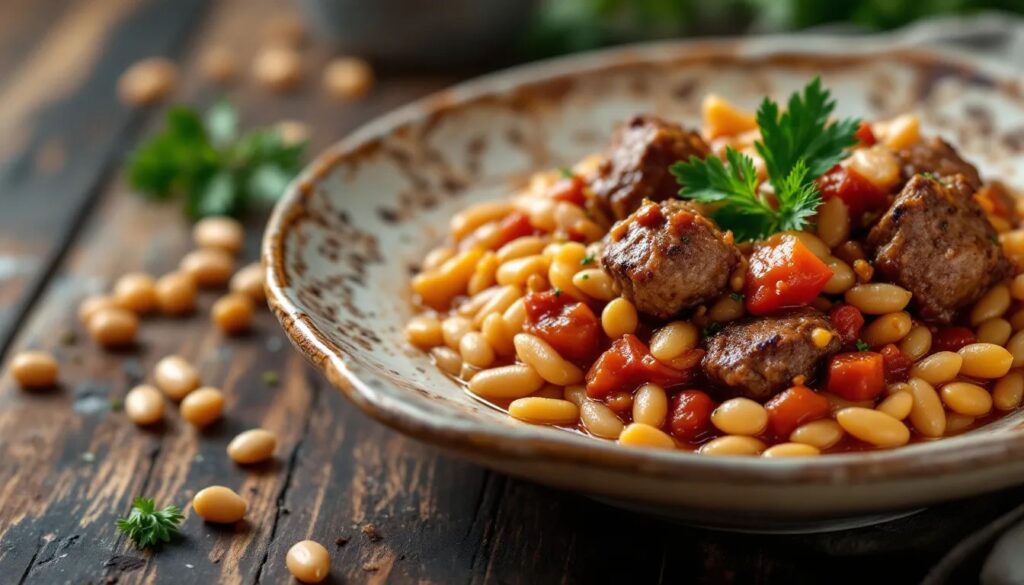
Deep within the sun-drenched, rugged heart of France’s Languedoc region lies a culinary legend: Cassoulet. More than just a dish, it is a profoundly historical, anthropological, and philosophical testament to ingenuity, perseverance, and the timeless human desire for communal sustenance. This hearty lamb and bean stew, simmered low and slow, embodies the very soul of Southwestern French cuisine, a robust symphony of flavors that tells tales of centuries past.
At its core, cassoulet is a peasant dish, born from necessity and a profound respect for every part of the harvest and hunt. The medley of meats—shoulder mutton, rich garlic sausages, fresh pork, and a succulent pig’s hock—speaks to a time when no morsel was wasted. Each cut contributes its unique texture and depth, slow-rendering fats infusing the entire pot with an unparalleled richness. The inclusion of lard, a quintessential fat of regional French cooking, not only provides a flavorful cooking medium but also a nod to traditional methods of preservation and flavor enhancement, a technique honed over generations in larders across Europe. These ingredients weren’t luxuries; they were life, a direct result of local agriculture and butchery, reflective of the local ecosystem and the ingenuity of its inhabitants.
The historical narrative woven into cassoulet is further enriched by the journey of its botanical components. While the aromatic embrace of onions, garlic, and a Bouquet Garni (typically parsley, thyme, bay leaf) feels inherently European—with thyme and bay native to the Mediterranean, and garlic and onion tracing origins to Central Asia via ancient trade routes—the true global tapestry emerges with the beans and tomatoes. The flageolet or dried white beans, a foundational pillar of the dish, are a direct legacy of the Columbian Exchange. These New World legumes, along with the vibrant, acidic punch of tomato paste, transformed European cooking after their 16th-century arrival from the Americas, slowly integrating into traditional dishes and eventually becoming indispensable. This migration of ingredients underscores how even the most regionally specific dishes are, in fact, culinary melting pots, silently narrating millennia of human exploration, trade, and cultural exchange.
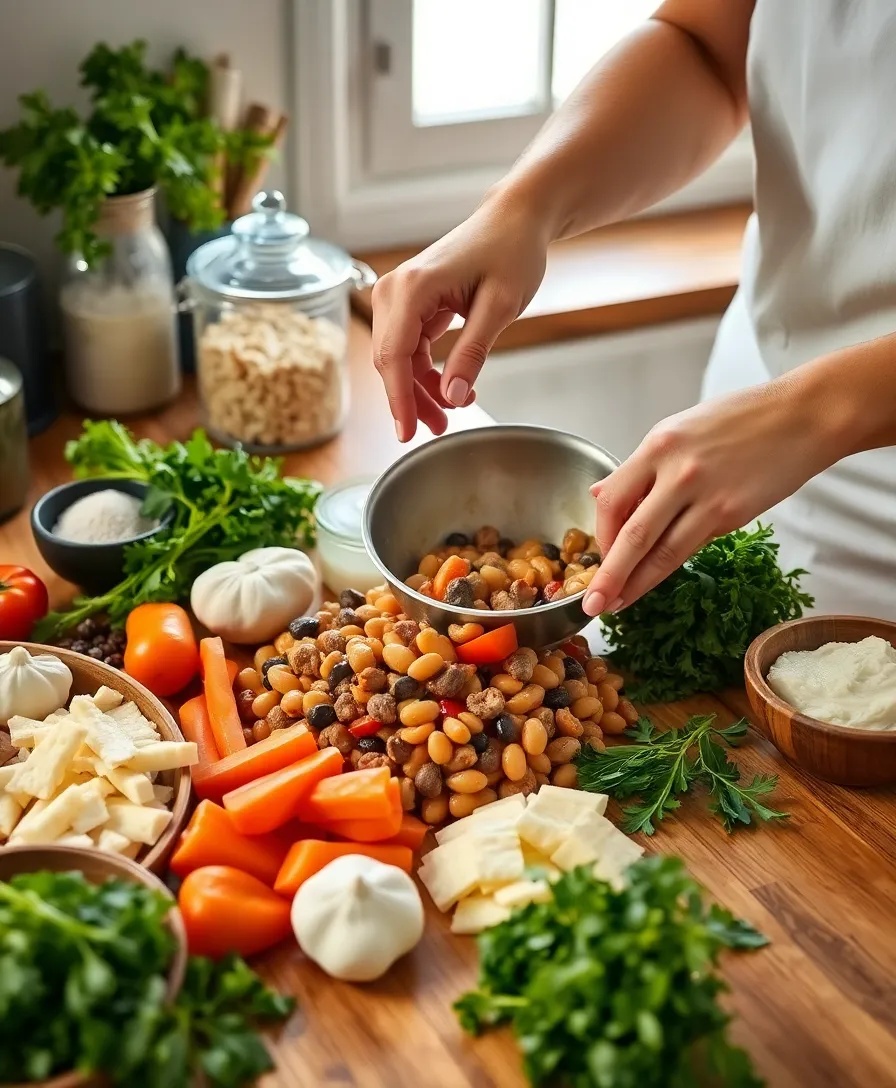
Preparing cassoulet is not merely cooking; it is an act of historical reverence. It demands patience and a willingness to embrace tradition. The process begins with the careful soaking of beans, an ancient technique ensuring tenderness. Meats are often browned to develop a deep, savory crust, then layered with aromatics and beans in the eponymous ‘cassole’—a special earthenware pot from which the dish draws its name. The magic unfolds over hours of gentle simmering, allowing flavors to meld and deepen, culminating in that iconic golden-brown crust, traditionally broken and stirred back into the stew multiple times during baking. For the home cook, the key lies in sourcing good quality ingredients, embracing the long cooking time, and understanding that each stirring and layering contributes to the profound depth of flavor. A true cassoulet is a dish not just to be eaten, but to be experienced—a warm, hearty embrace that connects us to generations past and to a shared global culinary heritage.
CASSOULET (LAMB AND BEANS)
Embark on a culinary journey to the heart of Gascony with this quintessential French Cassoulet. A testament to time-honored techniques, this deeply flavorful creation masterfully marries tender lamb, succulent pork, and creamy white beans in a slow-simmered symphony. Each spoonful offers a profound depth of savory satisfaction, culminating in a dish that exudes both sophisticated comfort and robust character, perfect for an intimate supper or a grand celebratory feast.
Ingredients
-
¼
pounds
shoulder mutton -
3
Tablespoons
lard -
½
pound
garlic sausages -
½
pound
fresh pork -
1
pig’s hock -
½
pound
flageolet or dried white beans
soaked overnight in cold water -
1
onion
stuck with 1 clove -
1
Bouquet Garni - Salt
- Freshly ground black pepper
-
4
Tablespoons
tomato paste -
4
garlic cloves -
Bread crumbs
for topping
Instructions
-
Commence by uniformly dicing the lamb shoulder and pork into substantial pieces. In a capacious, heavy-bottomed pot or Dutch oven, render the lard over medium-high heat. Introduce the prepared meats, searing them on all sides until they achieve a rich, golden-brown crust. Carefully remove the browned meats and set aside.
-
Add the finely minced garlic to the residual pan drippings. Sauté gently for approximately one minute, allowing its aromatic essence to release without browning.
-
Integrate the pre-cooked, half-tender white beans, ensuring they are thoroughly drained. Gently nestle the bouquet garni amidst the ingredients, allowing its herbal fragrances to infuse the mixture.
-
Season generously with freshly ground salt and black pepper to taste.
-
Return the seared meats to the pot. Bring the liquid to a gentle simmer and allow it to cook undisturbed for one hour. Following this initial simmering period, incorporate the sausages into the pot.
-
Continue to simmer the cassoulet until all components are exquisitely tender and the flavors have fully melded, which typically requires an additional hour.
-
Carefully transfer the rich stew into a suitable oven-safe gratin dish or earthenware pot. Conduct a final seasoning check, adjusting as necessary. Delicately spread the concentrated tomato paste over the surface, then sprinkle evenly with bread crumbs.
-
Position the dish under a preheated grill element (broiler) until a golden-brown, inviting crust forms on top.
-
Present and serve directly from the gratin dish, allowing guests to appreciate its rustic elegance.
Recipe Notes
It is important for the discerning chef to note that this recipe implicitly requires the white beans to be prepared to a half-tender consistency prior to their inclusion in the main cooking process. Furthermore, for a truly complete and authentic rendition utilizing all listed ingredients, explicit instructions for the preparation and integration of both the pig’s hock and the onion studded with a clove would be beneficial.
Global Heritage Archive
Anthropological & Spice Migration Record
“A rich, slow-cooked, hearty stew born from the necessity of peasant life in Southern France, evolving into a celebrated communal dish embodying regional pride and conviviality.”
🌿 Spice & Botanical Migration
Black pepper, originating from the Malabar Coast of India, traversed ancient trade routes like the Spice Route, reaching Europe via Arab and Venetian merchants. Herbs such as thyme, bay leaf, and parsley are indigenous to the Mediterranean basin, while garlic and onion trace their origins back to Central Asia, spreading across continents through early agricultural diffusion and trade. Notably, critical ingredients like white beans and tomatoes are New World contributions, introduced to Europe via the Columbian Exchange in the 16th century, profoundly shaping the dish’s flavor profile over centuries.
🏺 Historical & Archaeological Record
While hearty stews of legumes and meat are ancient, the specific concept of ‘cassoulet’ is tied to the medieval Languedoc region of France. The term ‘cassoulet’ itself is believed to derive from the ‘cassole,’ an earthenware pot, with early written records mentioning a similar slow-cooked bean and meat dish appearing in the 14th century, though the full modern recipe, particularly with tomatoes, evolved much later, post-Columbian Exchange.
💡 Little Known Facts
- The dish takes its name from the earthenware pot in which it is traditionally cooked, called a ‘cassole,’ specifically crafted in Issel, near Castelnaudary.
- There is a fierce culinary debate among the cities of Castelnaudary, Carcassonne, and Toulouse, each claiming to be the originators of true cassoulet, leading to distinct regional variations in ingredients.
📸 Made This Heritage Recipe?
We would love to see how your dish turned out! Send a photo of your culinary creation to [email protected] to be featured in our community gallery.
Leave a review and rate this recipe below!
Curated Literature & Washington DC Downtown Calendar
The Culinary Alchemist: Modern Gastronomy & Flavor Pairing
By LDN Gastronomy Series
Artisanal technique, seasonal sourcing, and kitchen mastery.
Upcoming Downtown Happenings
Live acoustic sessions, gallery receptions, literary salons, and independent trade shows across Washington DC.
