
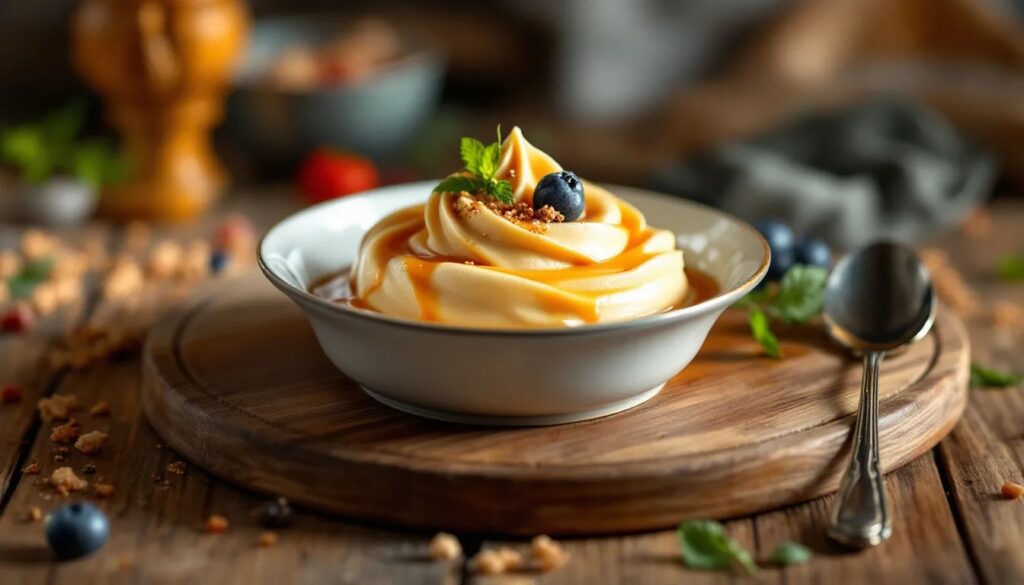
The Caramel Mousse: A Culinary Symphony of Air and Ambition
There are desserts, and then there are *experiences*. The Caramel Mousse belongs firmly in the latter category, a testament to the transformative power of a few humble ingredients elevated by precise technique and a dash of global history. Its very name, ‘mousse,’ whispers of its French origins, literally meaning ‘foam’ – a promise of the ethereal lightness that defines this culinary marvel. But beneath that delicate surface lies a rich tapestry woven from centuries of exploration, ingenuity, and the relentless human quest for sweetness.
The journey of the mousse begins not in sugar-dusted patisseries, but in the kitchens of 18th-century France, where chefs first experimented with aerating various mixtures. Initially, mousses were often savory, featuring ingredients like fish or vegetables, providing a playful contrast of texture. It was through the refinement of French haute cuisine that the sweet mousse truly blossomed, becoming synonymous with elegance and celebratory dining. This particular rendition, a caramel mousse, marries that airy grace with the primal allure of caramelized sugar, a technique whose roots reach back to ancient times, long before sugar became the globally traded commodity it is today.
The ingredients themselves are silent chroniclers of human migration. Sugar, the very soul of caramel, embarked on an epic voyage from its botanical home in New Guinea and Southeast Asia, eventually reaching the Indian subcontinent and Persia, then the Arab world, before arriving in Europe. The insatiable demand for this ‘white gold’ fueled the Age of Exploration and the establishment of vast plantations in the Americas, irrevocably altering global economies and demographics. Its presence in our recipe is a direct echo of this powerful, often painful, history of trade.
Then there’s the ‘imported white chocolate’ – a fascinating detail. While chocolate itself hails from the ancient cacao forests of Mesoamerica, revered by the Olmec, Maya, and Aztec civilizations, its transformation into a solid confectionary, especially white chocolate (a more recent 20th-century invention), is distinctly European. The ‘imported’ qualifier speaks volumes about a sophisticated palate and a globalized supply chain, where exotic ingredients are not just available but expected in high-end culinary creations. The butter and cream, staples of European dairy farming, ground the dessert in its immediate regional context, providing the luxurious foundation for the aerated structure.
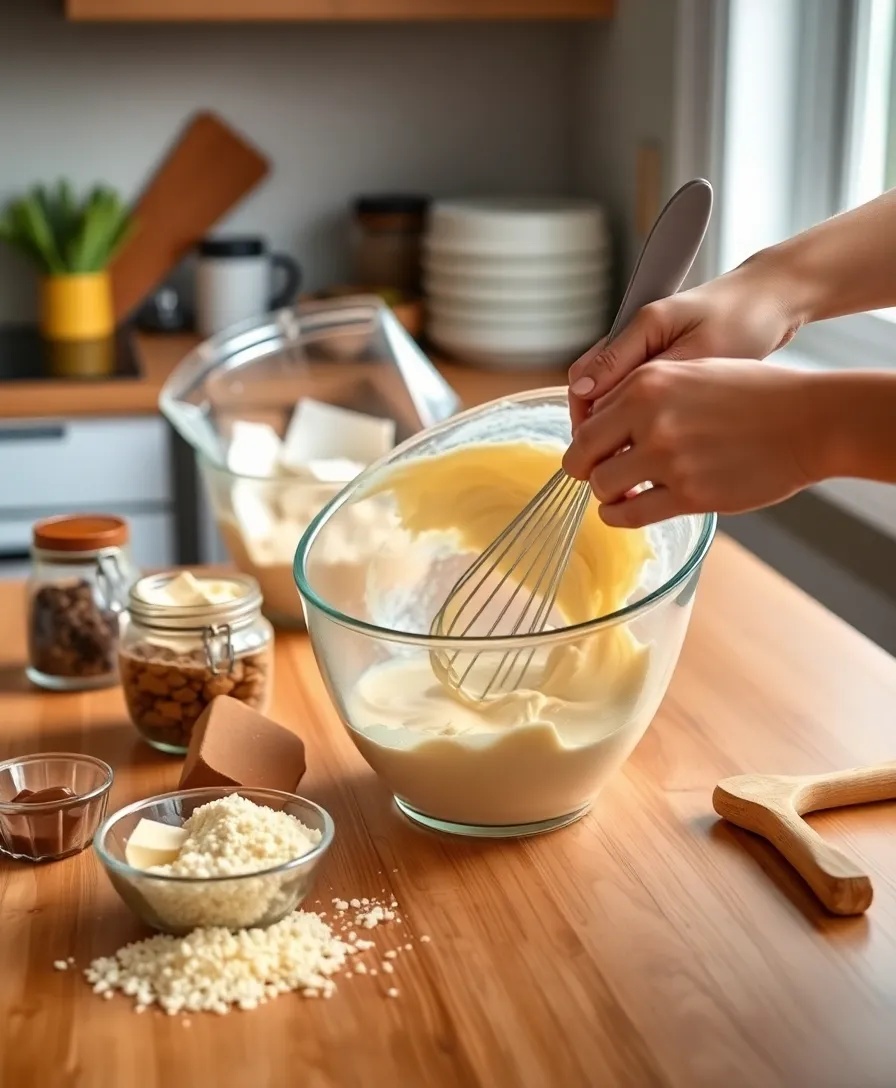
Crafting a perfect Caramel Mousse is a delicate dance between precision and patience. The initial caramelization of sugar requires a watchful eye – a moment too long, and bitterness descends; a moment too short, and the depth of flavor is lost. The egg yolks, tempered carefully with the hot caramel, create a rich custard base, while the unsalted butter provides an unparalleled silkiness. But the true magic lies in the gentle folding of whipped cream into this cooled base, incorporating air and lightness without sacrificing the structural integrity. Over-mixing is the enemy, collapsing the very ‘foam’ that defines the dish. The chilled setting is paramount, allowing the flavors to meld and the mousse to firm into its characteristic voluptuous, yet buoyant, texture.
In every spoonful of Caramel Mousse, we taste not just sugar, cream, and chocolate, but also echoes of empires, trade routes, and the enduring human desire to create beauty and delight. It is a dessert that, in its simplicity and complexity, offers a profound narrative of culinary evolution.
Caramel Mousse
Imagine a dessert that whispers tales of sophisticated soirées and elegant gatherings, an heirloom indulgence passed down through generations. This Caramel Mousse is a timeless masterpiece, masterfully uniting the deep, burnished notes of true caramel with the silken caress of premium imported white chocolate. Each spoonful delivers an ethereal lightness, a creamy counterpoint to its profound sweetness, culminating in a truly exquisite experience. It’s the quintessential showstopper, perfect for transforming any special occasion into a cherished memory.
Ingredients
-
½
cup
sugar -
4
large egg yolks -
6
ounces
imported white chocolate
lukewarm -
½
cup
chilled whipping cream -
2
Tablespoons
water -
3
Tablespoons
whipping cream -
9
Tablespoons
unsalted butter
cut into small pieces, room temperature -
½
cup
chilled whipping cream
Instructions
-
Combine the measured water and granulated sugar in a heavy-bottomed saucepan. Heat gently over low heat, stirring consistently, until the sugar crystals have completely dissolved and the mixture is perfectly clear.
-
Elevate the heat to medium-high and bring the syrup to a rolling boil. Resist the urge to stir; instead, allow it to cook undisturbed until it transforms into a rich, amber, deep caramel hue. Watch carefully to prevent burning.
-
Concurrently, in a separate, impeccably clean bowl, vigorously whisk the egg yolks with an electric mixer. Continue beating until they lighten in color, thicken, and form a slowly dissolving ribbon when the beaters are lifted.
-
Carefully remove the intensely hot caramel from the stovetop. Immediately and cautiously incorporate the 3 tablespoons of cream, stirring vigorously until the mixture is homogenous and perfectly smooth. Exercise extreme caution as the mixture will bubble intensely.
-
With the electric mixer running on medium speed, gradually and steadily drizzle the hot caramel mixture into the prepared egg yolks. Pour in a slow, continuous stream, ensuring constant agitation to prevent the yolks from scrambling.
-
Persist in beating the mixture until it cools significantly and achieves a noticeably thick, luxurious consistency.
-
Smoothly incorporate the melted white chocolate into the cooled caramel-yolk base, beating until fully combined. Next, add the softened butter, continuing to beat until the mousse base is entirely smooth and glossy.
-
Transfer the mixture to the refrigerator and chill until it just begins to set and firm up around the edges.
-
In a separate, chilled bowl, whip the ½ cup of chilled whipping cream using an electric mixer until firm, yet airy, peaks form. Be careful not to over-whip.
-
Gently and carefully fold the whipped cream into the partially firmed caramel mixture until no streaks remain and the mousse is uniformly light and airy.
-
Delicately spoon approximately 2 ½ cups of the finished mousse over a pre-existing chocolate layer (or into desired serving vessels), ensuring an even spread across the surface.
-
Place the prepared mousse (or dessert component) into the freezer until completely set and firm.
Recipe Notes
A meticulous review of the ingredient list reveals two distinct entries for ‘½ cup chilled whipping cream,’ yet the preparation steps explicitly call for whipping and folding in only one of these specified portions. Should the second quantity be intended for garnish or an additional structural component, its application is not detailed within these instructions. Furthermore, the directive to ‘Spoon 2 ½ cups mousse over chocolate layer spreading evenly’ strongly suggests this exquisite mousse is designed as an integral component within a more elaborate, multi-layered dessert, likely atop a rich chocolate base that is not provided in this specific recipe. Culinary enthusiasts may wish to explore this mousse as a standalone indulgence or integrate it into their own complex dessert architecture.
Global Heritage Archive
Anthropological & Spice Migration Record
“A sophisticated, technique-driven dessert culture emphasizing lightness, richness, and elegant presentation, often associated with formal dining or celebratory occasions.”
🌿 Spice & Botanical Migration
While this particular Caramel Mousse recipe does not feature traditional aromatic spices or herbs, its core ingredients tell a profound story of global migration and trade. Sugar, originating in Southeast Asia and New Guinea, journeyed across continents via the Indian subcontinent and the Arab world before its cultivation in the Americas by European powers dramatically reshaped global economies and diets. Similarly, chocolate, derived from the cacao bean indigenous to Mesoamerica, was introduced to Europe by the Spanish, eventually transforming from a bitter ceremonial drink into a beloved confectionery staple after its pairing with sugar and adaptation into solid forms. These two ingredients, fundamental to this mousse, represent vast historical networks of exploration, colonization, and culinary innovation rather than the ‘Spice Routes’ traditionally associated with ginger or pepper.
🏺 Historical & Archaeological Record
The foundational technique of creating a light, aerated dessert – a precursor to modern mousse – can be traced to 16th-century European kitchens with the emergence of whipped cream (‘crème fouettée’) or ‘snow’ desserts. However, the term ‘mousse’ and its more refined application in both savory and sweet dishes became prevalent in French culinary literature, with early mentions of ‘mousse au chocolat’ appearing in French cookbooks as early as 1750 by chefs like Menon, though the airy texture we recognize today evolved significantly in the 19th century.
💡 Little Known Facts
- The term ‘mousse’ in French originally referred to any ‘foam’ or ‘froth’, and early versions included savory preparations like fish mousse before evolving into predominantly sweet desserts.
- White chocolate, a key ingredient, was only commercially developed and popularized in the 1930s by Nestlé, making its inclusion a marker of relatively modern confectionery.
📸 Made This Heritage Recipe?
We would love to see how your dish turned out! Send a photo of your culinary creation to [email protected] to be featured in our community gallery.
Leave a review and rate this recipe below!
Curated Literature & Washington DC Downtown Calendar
The Culinary Alchemist: Modern Gastronomy & Flavor Pairing
By LDN Gastronomy Series
Artisanal technique, seasonal sourcing, and kitchen mastery.
Upcoming Downtown Happenings
Live acoustic sessions, gallery receptions, literary salons, and independent trade shows across Washington DC.
