
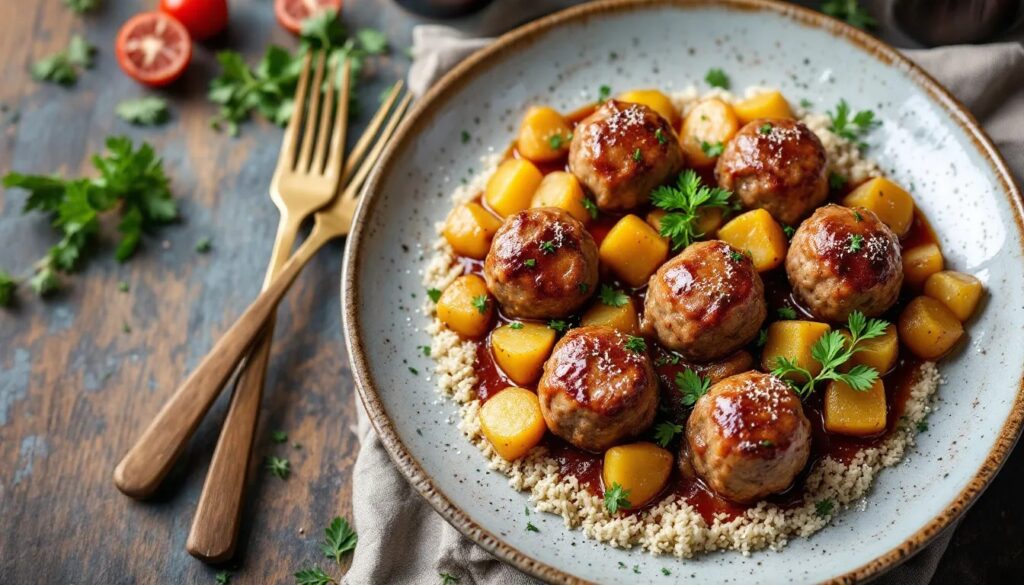
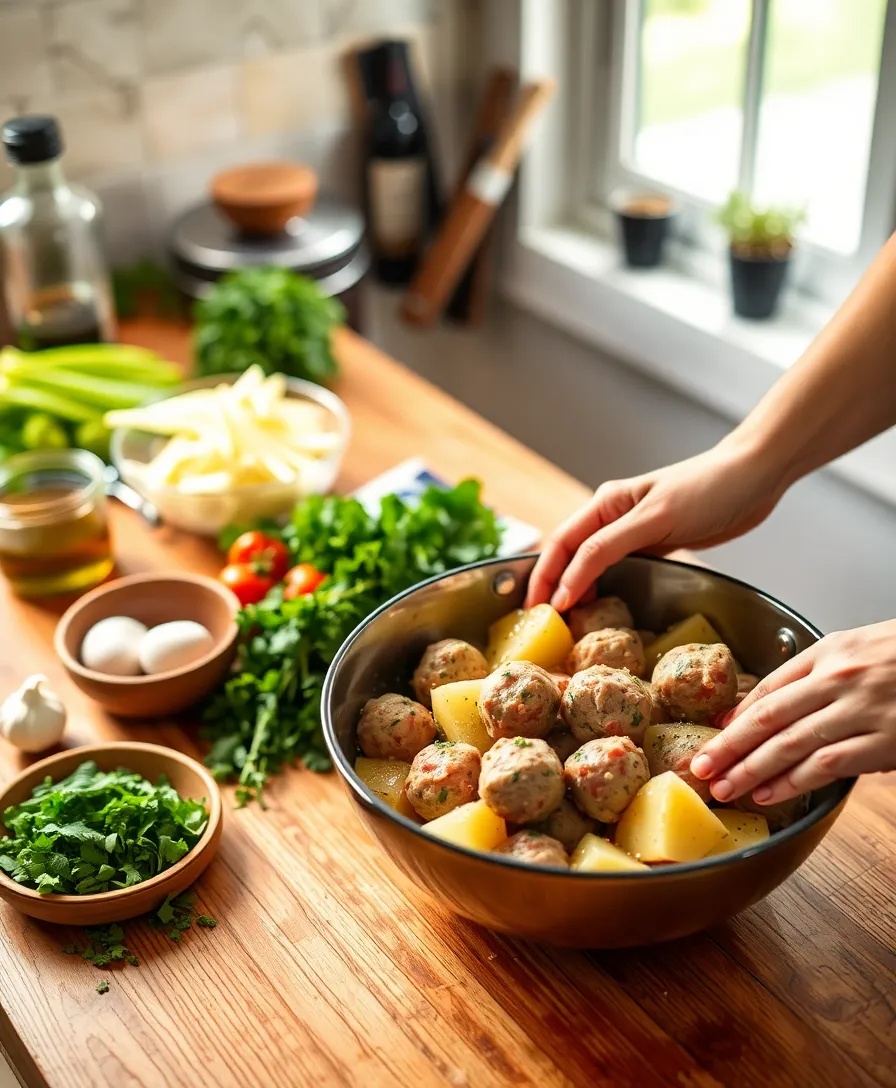
In the sprawling tapestry of culinary history, some dishes emerge not as mere recipes, but as eloquent storytellers of migration, innovation, and the enduring human desire for comfort. Our “Braised Pork and Veal Meatballs with Potatoes and Wine” is one such tale, a symphony of flavors that whispers of ancient trade routes, New World discoveries, and the hearths of Northern Italy and Central Europe where it truly found its soul.
Imagine the bustling kitchens of Lombardy or Emilia-Romagna, or perhaps a cozy Gasthaus in Bavaria or Austria, centuries ago. Here, the art of transforming humble ingredients into something extraordinary was perfected. Meatballs, or *polpette* as they are known in Italy, are far from a modern invention. Their lineage stretches back to the Roman Empire, where Apicius, the legendary gourmand, detailed recipes for spiced, minced meat dishes. The genius of these early cooks, and their successors, was to understand that grinding meat, combining it with binders like stale bread and eggs, and then shaping it, could unlock unparalleled tenderness and absorbency for rich sauces.
The choice of combining pork and veal is a testament to the region’s culinary sensibility. Pork offers a robust, savory depth, while veal contributes a delicate, refined texture and a subtle sweetness that elevates the dish beyond the ordinary. This pairing is characteristic of Northern Italian cuisine, where the availability of both meats allowed for such sophisticated blends. The use of white bread, often soaked in milk or water to create a *panade*, is a classic technique, ensuring the meatballs remain moist and light, never dense or dry – a crucial secret passed down through generations.
As for the spices and herbs, they tell a fascinating global narrative. The gentle warmth of nutmeg, an essential partner to meats and dairy in European cooking, traveled thousands of miles from the Banda Islands of Indonesia, arriving via the arduous Spice Routes. Black pepper, providing its quintessential piquant kick, journeyed from the Malabar Coast of India, a testament to ancient trade networks linking East and West. Yet, the aromatic foundation of bay leaf, thyme, and parsley are all indigenous children of the Mediterranean landscape, their earthy, herbaceous notes a familiar comfort in European kitchens for millennia. And then there are the potatoes – seemingly ubiquitous today, but once exotic newcomers from the distant Andes of South America, introduced to European palates through the Columbian Exchange, eventually becoming an indispensable component of hearty braises like this one.
The preparation itself is a ritual of patience and passion. It begins with creating perfectly seasoned meatballs, gently browned to develop a deep, savory crust. This browning isn’t just for color; it’s a crucial flavor-building step, caramelizing the meat’s surface and creating a delicious fond at the bottom of the pan. The mirepoix of onions (often with carrots and celery, though only onions are listed here, they are typically implied for a soffritto base), then cooked until sweet and translucent, forms the aromatic backbone. Deglazing with white wine adds acidity and complexity, scraping up all those flavorful browned bits. The slow braise, with stock, bay leaf, and thyme, tenderizes the meatballs to perfection, allowing them to absorb all the rich liquid. Adding potatoes ensures they cook in the flavorful sauce, becoming tender and infused with every nuance.
In your own kitchen, remember these time-honored techniques. Don’t overmix the meatball mixture; a light hand ensures tenderness. Always brown your meatballs thoroughly before braising. Embrace the slow simmer; it’s the key to truly tender meat and a deeply flavored sauce. Serve this dish with a sprinkle of fresh chopped parsley for brightness and a crusty bread to sop up every last drop of the exquisite sauce. It’s more than just a meal; it’s a journey through history, a taste of comfort, and a celebration of the interconnected world on a single plate.
Braised Pork and Veal Meatballs with Potatoes and Wine
Journey back to a time-honored culinary tradition with a dish that whispers tales of rustic elegance and profound comfort. These magnificent braised meatballs, crafted from a harmonious marriage of succulent pork and tender veal, are elevated by sweet, fragrant sautéed onions, a medley of garden herbs, and a sophisticated whisper of white wine. Gently simmered until silken, they mingle beautifully with diminutive pearl onions and creamy, petite potatoes, creating a tapestry of textures and flavors. This is more than a meal; it’s a soul-satisfying centerpiece, perfectly poised to grace your most cherished Sunday repasts or elevate any special gathering into an unforgettable occasion.
Ingredients
-
1
pound
ground pork
very lean -
1
pound
veal -
2
small
onions
chopped and sautéed in butter -
5
slices
white bread
soaked in milk and pressed -
None
None
salt -
None
None
pepper -
a pinch
None
nutmeg -
¼
cup
white wine
Chablis or any very dry wine -
3
None
egg yolks -
3
None
egg whites
well beaten -
2
Tablespoons
butter -
15 to 20
small
onions
(10 to 12 if they are medium), pearl or spring onions implied -
1
None
bay leaf -
None
None
thyme -
5 to 6
None
parsley stems -
None
None
stock
enough to reach top of meatballs; beef stock preferred, chicken broth suitable, or half wine and half water -
Small
None
potatoes -
None
None
chopped parsley
for garnish -
None
None
beef extract
if needed for seasoning
Instructions
-
In a generous mixing vessel, carefully combine the finely ground pork and veal. Introduce the delicate sautéed chopped onions, the softened and thoroughly pressed white bread, a measured pinch of sea salt, freshly cracked black pepper, and a hint of freshly grated nutmeg. Gently meld these elements until uniformly incorporated.
-
Cascade a quarter cup of crisp white wine over the mixture, then continue to blend the ingredients until fully integrated, allowing the flavors to begin their delicate intermingling.
-
Incorporate the rich egg yolks, followed by the meticulously whipped egg whites, folding them into the mixture until just combined, ensuring a light and cohesive texture.
-
With practiced hands, sculpt the prepared mixture into uniform orbs, each roughly the dimension of a large egg. Delicately roll each sphere in a light dusting of flour, ensuring an even coating.
-
Allow the formed meatballs to rest within the refrigerator for a minimum of one hour; this vital step enhances their structure and ensures they hold their shape beautifully during cooking.
-
Within a deep, substantial skillet or Dutch oven, introduce two tablespoons of premium butter, allowing it to gently melt and deepen to a warm, nutty brown hue, signaling its readiness.
-
Carefully arrange the floured meatballs alongside the fifteen to twenty small, whole pearl onions (or ten to twelve medium-sized spring onions) within the skillet. Skillfully rotate the pan to encourage an even, golden-brown sear on all surfaces of the meatballs and onions.
-
Nestle in the aromatic bay leaf, a sprig of fresh thyme, and the verdant parsley stems. Pour in your chosen stock – be it a robust beef stock, a delicate chicken broth, or a thoughtful blend of half wine and half water – ensuring the liquid ascends to the upper edge of the meatballs without fully submerging them.
-
Adjust the seasoning to your discerning taste. Bring the liquid to a gentle, bubbling simmer, then introduce all the petite potatoes simultaneously, distributing them evenly throughout the pan.
-
Drape the skillet with its lid and allow the medley to braise gently until both the potatoes are fork-tender and the meatballs are cooked through to perfection, ideally reaching their peak simultaneously.
-
Upon completion, carefully retrieve and discard the spent bay leaf and parsley stems, having imparted their full aromatic essence to the dish.
-
Gracefully transfer the entire succulent preparation into a deep, elegant serving dish. Conclude with a generous shower of freshly chopped parsley, adding a vibrant flourish.
-
For an added layer of complexity and depth, should your palate desire, a final adjustment of seasoning, a splash more wine, or a touch of rich beef extract can be gently stirred in.
Recipe Notes
Should the charm of small, uniform potatoes prove elusive, larger specimens can be artfully transformed into elegant rounds using a melon baller. Similarly, if authentic pearl onions or substantial spring onions are not readily available, a more generous quantity, approximately fifty, of smaller, tender spring onions will beautifully fulfill their role, adding a delicate sweetness to the braise.
Global Heritage Archive
Anthropological & Spice Migration Record
“A comforting, hearty dish often prepared for family gatherings, showcasing local meats and seasonal vegetables, deeply rooted in regional traditions of slow cooking and robust flavors.”
🌿 Spice & Botanical Migration
The recipe’s flavor profile is a testament to millennia of global trade. Black pepper, originating from India’s Malabar Coast, traveled to Europe via the ancient Spice Routes. Nutmeg, vital for its warming notes, hails from the remote Banda Islands in Indonesia, reaching European kitchens through intrepid traders. Conversely, bay leaf, thyme, and parsley are indigenous to the Mediterranean, providing the aromatic foundation of European cuisine, while the essential potato journeyed from the Andes in South America via the Columbian Exchange.
🏺 Historical & Archaeological Record
The concept of ground meat formed into balls and cooked dates back to antiquity, with recipes found in the Roman cookbook “Apicius” (De re coquinaria) from the 4th/5th century AD, detailing spiced minced meat preparations. The technique of braising, or slow cooking in liquid within a covered vessel, is equally ancient, with archaeological evidence of stewing pots found in prehistoric settlements worldwide, dating back thousands of years. The integration of potatoes, however, is a post-16th century development in Europe.
💡 Little Known Facts
- The use of bread soaked in milk or water (panade) as a binder in meatballs is an ancient culinary technique, designed to lighten the texture of the meat mixture and make the final product more tender and juicy, rather than just as a mere filler.
- While meatballs have a long history, the specific combination of pork and veal, braised in wine with potatoes, reflects a post-Columbian exchange integration, where New World potatoes became a staple in European stews and braises, particularly from the 18th century onwards.
📸 Made This Heritage Recipe?
We would love to see how your dish turned out! Send a photo of your culinary creation to [email protected] to be featured in our community gallery.
Leave a review and rate this recipe below!
Curated Literature & Washington DC Downtown Calendar
The Culinary Alchemist: Modern Gastronomy & Flavor Pairing
By LDN Gastronomy Series
Artisanal technique, seasonal sourcing, and kitchen mastery.
Upcoming Downtown Happenings
Live acoustic sessions, gallery receptions, literary salons, and independent trade shows across Washington DC.
