
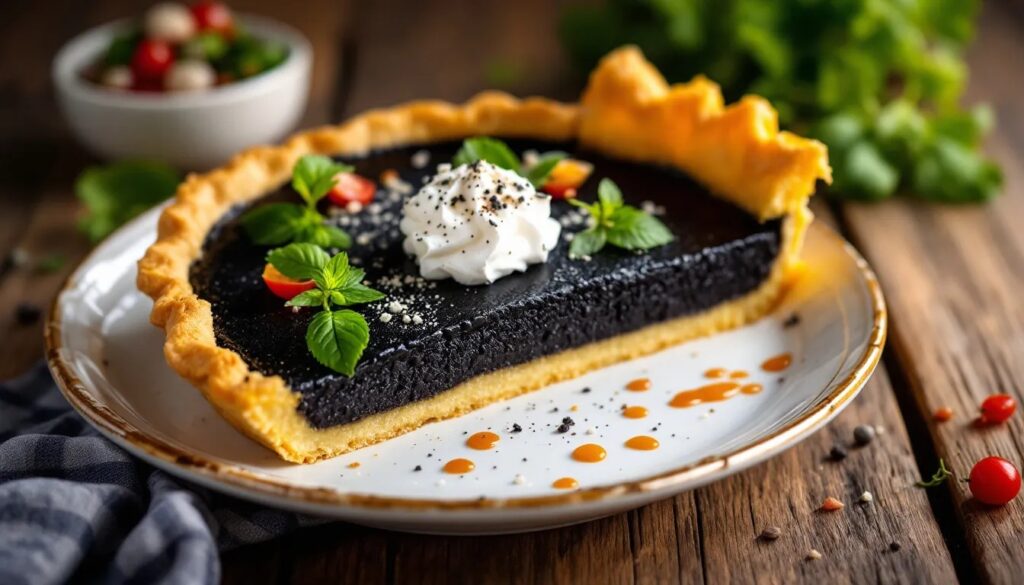
The very name ‘Black Bottom’ is steeped in intriguing ambiguity. While it literally refers to the rich, dark chocolate layer that forms the pie’s foundation, it also dances with a playful nod to the spirited ‘Black Bottom’ dance craze that swept America in the Roaring Twenties. Originating in African American communities in the Southern United States, this energetic dance became a cultural phenomenon, much like the pie itself, which emerged around the same era, finding its footing in community cookbooks and women’s magazines by the 1930s.
Its ingredients tell a global story. The earthy, intoxicating fragrance of vanilla hails from the tropical forests of Mesoamerica, where the Totonac people first cultivated the orchid. It made its arduous journey across the Atlantic with Spanish conquistadors, slowly permeating European kitchens before becoming an indispensable flavor in American baking. Then there is chocolate, derived from cacao beans, another prized gift from the ancient Maya and Aztec civilizations. Once a bitter, sacred drink, cacao was transformed through European refinement into the sweetened confectionary we know today, arriving in American kitchens as ready-to-use semi-sweet pieces—a symbol of modern convenience. The familiar evaporated milk, a pantry staple, speaks volumes about 20th-century American resourcefulness, especially during periods of economic hardship like the Great Depression, offering a shelf-stable, economical richness to countless desserts. The very concept of the ‘pie’ itself, with its baked pastry shell, is a direct lineage from European culinary traditions, brought to the New World by colonists and adapted with local ingredients and inventive spirit.
Crafting a Black Bottom Pie is a labor of love that rewards precision. Begin with a perfectly blind-baked pastry shell, ensuring a crisp foundation. The magic truly happens in the custard: tempering the egg yolks with hot milk is crucial to avoid scrambled eggs, yielding a velvety smooth consistency. A portion of this golden custard is then infused with melted chocolate, forming the signature ‘black bottom’ layer. The remaining custard, often brightened with a touch of vanilla, floats above it. While our recipe focuses on a luscious custard, many historical variations incorporated a lighter, rum-kissed meringue topping, folded in or delicately placed atop, using the separated egg whites – a technique that adds another layer of texture and flavor. Careful chilling is paramount; it allows the layers to set properly and the flavors to meld into a harmonious symphony.
In every bite of Black Bottom Pie, we taste not just sugar and spice, but history itself. It is a humble yet elegant creation, embodying the spirit of an era—a testament to resourcefulness, a celebration of new flavors, and a comforting embrace of tradition that continues to grace tables and tantalize palates, bridging generations with its irresistible charm.
BLACK BOTTOM PIE
Step into a timeless culinary embrace with this exquisite Black Bottom Pie, a confectionary masterpiece that elegantly balances contrasting textures and profound flavors. A whisper-light, golden-baked pastry shell cradles an opulent foundation of rich, melted chocolate, upon which rests a silken, vanilla-infused custard. Capped with ethereal peaks of perfectly toasted meringue, each forkful delivers a harmonious symphony of creamy, dark, and airy elements. This cherished vintage dessert transforms any gathering into a truly memorable event, offering both comforting nostalgia and sophisticated indulgence.
Ingredients
-
2/3
cup
sugar -
4
Tablespoons
cornstarch -
1/2
teaspoon
salt -
1 1/3
cups
undiluted evaporated milk -
1
cup
water -
3
egg yolks -
1
teaspoon
vanilla -
1/2
cup
semi-sweet chocolate pieces -
1
9-inch baked pastry shell -
3
egg whites -
6
Tablespoons
sugar
Instructions
-
In a substantial saucepan, whisk together the granulated sugar, cornstarch, and salt. Gradually incorporate the evaporated milk and water, stirring until the mixture is smooth and fully combined. Place the saucepan over medium heat, bringing the contents to a gentle simmer. Cook for approximately 12 to 15 minutes, stirring continuously, until the mixture achieves a slightly thickened consistency. Crucially, do not allow it to reach a full, rolling boil.
-
In a separate bowl, lightly beat the egg yolks. Slowly drizzle a small portion of the warm, thickened mixture into the beaten yolks, whisking vigorously to temper them. Once combined, carefully return the tempered egg yolk mixture to the saucepan with the remaining custard base.
-
Return the saucepan to the heat and continue to cook, stirring constantly, until the custard just begins to show small bubbles at the edges, signaling it is on the verge of boiling. Promptly remove the pan from the heat source.
-
Stir in the vanilla extract until it is thoroughly incorporated, imparting its aromatic essence throughout the custard.
-
Ladle out precisely one-half cup of the warm custard into a separate, small bowl. Add the chocolate pieces to this smaller portion and stir gently until the chocolate is completely melted and smoothly integrated into a luscious ganache-like consistency. Pour this dark chocolate mixture evenly into the base of your pre-baked pastry shell. Transfer to the refrigerator to chill and set firm.
-
Allow the remaining vanilla custard in the saucepan to cool slightly, losing some of its initial heat. Once tempered, carefully pour it over the chilled chocolate layer within the pastry shell.
-
In a clean, dry mixing bowl, beat the egg whites with an electric mixer until they become frothy and light. Gradually add the sugar, one tablespoon at a time, continuing to beat until the meringue forms soft, glossy peaks that hold their shape.
-
Gently spoon the prepared meringue over the cooled pie filling, spreading it evenly and ensuring it makes contact with and seals to the edges of the pastry shell to prevent shrinking during baking. Create decorative peaks with the back of your spoon or an offset spatula.
-
Transfer the assembled pie to a preheated 400°F (200°C) oven. Bake for a short duration, just until the meringue’s peaks are beautifully golden brown and lightly toasted.
-
Allow the pie to cool completely at room temperature for at least three to four hours before slicing and serving, ensuring the fillings are perfectly set and firm for optimal enjoyment.
Recipe Notes
For an impeccably crisp crust, consider blind-baking your pastry shell until lightly golden before adding the filling. Ensure your egg whites are at room temperature for maximum volume and stability when preparing the meringue; also, confirm your mixing bowl and beaters are impeccably clean and grease-free. To prevent condensation, allow the pie to cool fully before any refrigeration. This pie can be prepared a day in advance and stored loosely covered in the refrigerator. Leftovers are best enjoyed within two days for peak freshness. For a sophisticated touch, finely grate a whisper of dark chocolate over the finished pie just before serving.
Global Heritage Archive
Anthropological & Spice Migration Record
“A testament to American ingenuity in dessert making, combining European culinary traditions with New World ingredients and modern conveniences to create a comforting, layered classic.”
🌿 Spice & Botanical Migration
The star flavors, vanilla and chocolate, embark on epic journeys. Vanilla, extracted from the fruit of an orchid native to Mesoamerica (modern-day Mexico), was brought to Europe by Spanish conquistadors and later cultivated globally. Similarly, cacao, the source of chocolate, originated in ancient Mesoamerican civilizations and traversed the Atlantic, transforming from a bitter ritualistic drink into a sweetened global confectionary delight via the Columbian Exchange and subsequent trade routes, culminating in its use in processed ‘semi-sweet pieces’ for American baking.
🏺 Historical & Archaeological Record
The foundational techniques for ‘pie’ and ‘custard’ date back to antiquity. Ancient Egyptians crafted honey cakes in crude crusts, while Romans developed baked custard dishes known as *Patina*. Sweetened custards within pastry shells became prominent in Medieval and Renaissance European cuisine, evolving from simple fillings to more refined desserts. The specific combination seen in Black Bottom Pie, however, with its distinctive chocolate and vanilla layers, is a much more recent invention, with the first written recipes appearing in American cookbooks and publications in the early 20th century (c. 1920s-1930s).
💡 Little Known Facts
- The ‘Black Bottom’ name, beyond its literal reference to the dark chocolate layer, also slyly nods to the popular ‘Black Bottom’ dance craze that swept American ballrooms in the 1920s, a dance originating in African American communities.
- Many classic Black Bottom Pie recipes from the mid-20th century, when the pie reached peak popularity, incorporated a distinct rum-flavored meringue layer or topping, often made with the separated egg whites.
📸 Made This Heritage Recipe?
We would love to see how your dish turned out! Send a photo of your culinary creation to [email protected] to be featured in our community gallery.
Leave a review and rate this recipe below!
Curated Literature & Washington DC Downtown Calendar
The Culinary Alchemist: Modern Gastronomy & Flavor Pairing
By LDN Gastronomy Series
Artisanal technique, seasonal sourcing, and kitchen mastery.
Upcoming Downtown Happenings
Live acoustic sessions, gallery receptions, literary salons, and independent trade shows across Washington DC.
