
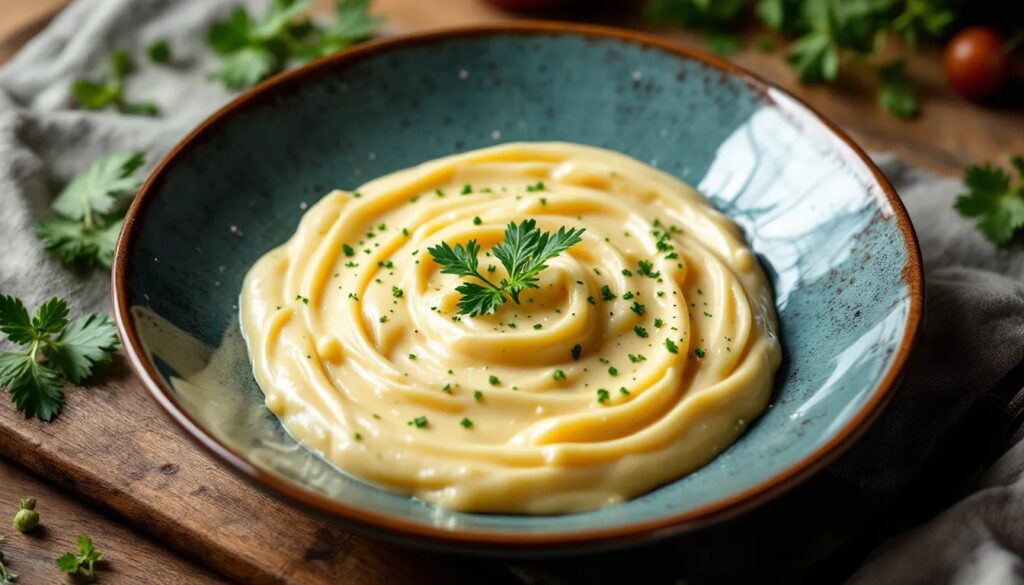
The genesis of Béchamel is, fittingly for a sauce of such profound influence, shrouded in a delightful blend of legend and historical record. While often credited to Louis de Béchamel, a steward in the court of Louis XIV, the truth is likely more nuanced. Similar thickened white sauces existed in Italian kitchens, particularly in Tuscany, under names like ‘salsa colla’ or ‘salsa balsamella,’ long before the Sun King’s era. It’s plausible that this Italian precursor arrived in France with Catherine de’ Medici in the 16th century, evolving over time through the genius of French chefs into the refined sauce we know today. What Béchamel, or more accurately, the culinary minds of his time, did was perhaps to standardize, codify, and elevate this simple thickening method into a cornerstone of French haute cuisine, establishing it as one of the five ‘mother sauces.’
The ingredients themselves tell a story of agricultural heritage and global migration. Butter and milk speak volumes of a dairy-rich European landscape, where cattle farming provided essential sustenance and culinary fats. Wheat flour, too, is a testament to Europe’s agrarian foundations, its fine milling allowing for the creation of the smooth, stable roux that is Béchamel’s heart. Then there is white pepper – a whisper from the East. Originating from the verdant Malabar Coast of India, *Piper nigrum* traveled across vast distances via ancient Spice Routes, reaching European markets through the tireless efforts of Arab, Venetian, and later, European colonial traders. Its inclusion in Béchamel is a quiet, yet powerful, reminder of the interconnectedness of the world, long before modern globalization, illustrating how a humble spice could traverse oceans and cultures to find its place in the most classic of Western dishes.
Preparing a perfect Béchamel is a rite of passage for any aspiring cook, a lesson in precision and patience. The alchemy begins with the roux: melting butter, adding flour, and cooking it gently until it forms a pale, nutty paste. This golden key unlocks the sauce’s smooth texture, ensuring no raw flour taste. The crucial next step involves gradually whisking in warm milk, a continuous, meditative motion that prevents lumps and encourages a velvety embrace. Season with salt to taste and a dash of white pepper, which provides a clean, subtle warmth without the visual intrusion of black specks. Avoid rushing the process; a slow, steady hand yields the most exquisite results. Whether it’s enriching a gratin, binding a lasagna, or forming the base of a soufflé, Béchamel is a testament to the power of simple ingredients, transformed by thoughtful technique into a timeless culinary masterpiece.
Béchamel Sauce
Embark on a foundational journey into the heart of French gastronomy with this quintessential Béchamel. Revered as one of the culinary world’s esteemed ‘mother sauces,’ its opulent, velvety character is a testament to simplicity perfected. Crafted from a meticulously prepared roux—a harmonious union of rich butter and fine flour—then patiently coaxed into a luscious emulsion with fresh milk, it achieves an unparalleled silken smoothness. This versatile elixir elevates myriad preparations, bestowing a profound richness and a touch of sublime decadence upon every dish it graces.
Ingredients
-
3
Tablespoons
butter -
2
Tablespoons
flour -
2
cups
milk -
¾
teaspoon
salt -
¼
teaspoon
white pepper
Instructions
-
In a medium-sized, heavy-bottomed saucepan set over gentle heat, meticulously melt the butter until it shimmers. Introduce the flour, sprinkling it evenly over the liquid fat.
-
Continue to cook the mixture for approximately two to three minutes, stirring continuously to form a pale roux, ensuring it remains pristine and doesn’t take on any color. Begin to incorporate the milk, pouring it in a slow, steady stream while vigorously whisking to prevent lumps and encourage a seamless emulsification. Maintain this persistent whisking as the sauce gently simmers and progressively thickens to a luxurious, pourable consistency. Finally, season to perfection with a pinch of fine sea salt and freshly ground black pepper, stirring once more to integrate.
Recipe Notes
This recipe gracefully yields approximately two cups of exquisite Béchamel, perfectly poised for immediate culinary application.
Global Heritage Archive
Anthropological & Spice Migration Record
“Béchamel is a foundational mother sauce in classical French cuisine, embodying refinement and the structured culinary arts.”
🌿 Spice & Botanical Migration
White pepper, like its black counterpart, originates from the Malabar Coast of southwestern India, a region historically central to the global spice trade. It traveled to Europe via ancient Spice Routes, traded by Arab and Venetian merchants, and later through colonial ventures, establishing itself as a cherished seasoning in European kitchens and thus finding its way into classic dishes like Béchamel, reflecting a deep integration of Eastern spices into Western cuisine.
🏺 Historical & Archaeological Record
One of the earliest written records describing a sauce thickened with butter and flour (a precursor to Béchamel’s roux technique) can be found in François Pierre de la Varenne’s seminal cookbook, *Le Cuisinier François*, published in 1651 in France. While not explicitly named ‘Béchamel,’ it details the fundamental method, signaling the formalization of such sauces in European haute cuisine.
💡 Little Known Facts
- While often attributed to Louis de Béchamel, a maître d’hôtel to Louis XIV in the 17th century, the sauce likely existed in simpler forms long before him, possibly perfected or codified under his patronage rather than invented.
- A similar thickened white sauce, ‘salsa balsamella,’ is claimed by Italian culinary traditions, with some historians suggesting it was brought to France from Tuscany by chefs accompanying Catherine de’ Medici in the 16th century.
📸 Made This Heritage Recipe?
We would love to see how your dish turned out! Send a photo of your culinary creation to [email protected] to be featured in our community gallery.
Leave a review and rate this recipe below!
Curated Literature & Washington DC Downtown Calendar
The Culinary Alchemist: Modern Gastronomy & Flavor Pairing
By LDN Gastronomy Series
Artisanal technique, seasonal sourcing, and kitchen mastery.
Upcoming Downtown Happenings
Live acoustic sessions, gallery receptions, literary salons, and independent trade shows across Washington DC.
