
The humble crepe, in its elegant simplicity, belies a culinary history as rich and expansive as the migrations of humanity itself. Born from basic ingredients—flour, milk, egg, a touch of oil and salt—this ‘Batter for Giant Crepe’ embodies millennia of agricultural innovation, trade, and cultural exchange. While its most iconic form hails from the windswept region of Brittany in France, where it has been a dietary staple since at least the 13th century, the lineage of this thin, griddle-cooked marvel stretches back to the very dawn of settled human societies.
Historically, the Breton ‘galette’ (made with robust buckwheat flour, or ‘blé noir’) was the workhorse of the region, a savory staple that nourished families, particularly in leaner times. The sweeter, more delicate ‘crêpes froment’ made with wheat flour, emerged as a treat, often reserved for holidays or celebrations. This distinction speaks volumes about the availability and value of different grains in centuries past. Wheat itself, the backbone of all-purpose flour, embarked on an extraordinary journey from its origins in the Fertile Crescent some 10,000 years ago, spreading across continents through early agricultural migrations, Roman expansion, and the ancient Silk Roads. Its ubiquitous presence in global pantries today is a testament to its adaptability and the enduring human quest for sustenance.
The inclusion of milk and eggs further enriches this narrative. Dairy farming, originating alongside wheat cultivation in the Middle East, spread with pastoralist societies, shaping not just diets but also human genetics, as lactose tolerance developed in various populations. Eggs, from chickens domesticated in Southeast Asia, traversed the globe through ancient trade routes, becoming an indispensable binder and leavening agent in countless cuisines. The simplicity of this crepe batter, therefore, is not a lack of complexity, but rather a distillation of essential global ingredients, brought together through countless millennia of human endeavor.
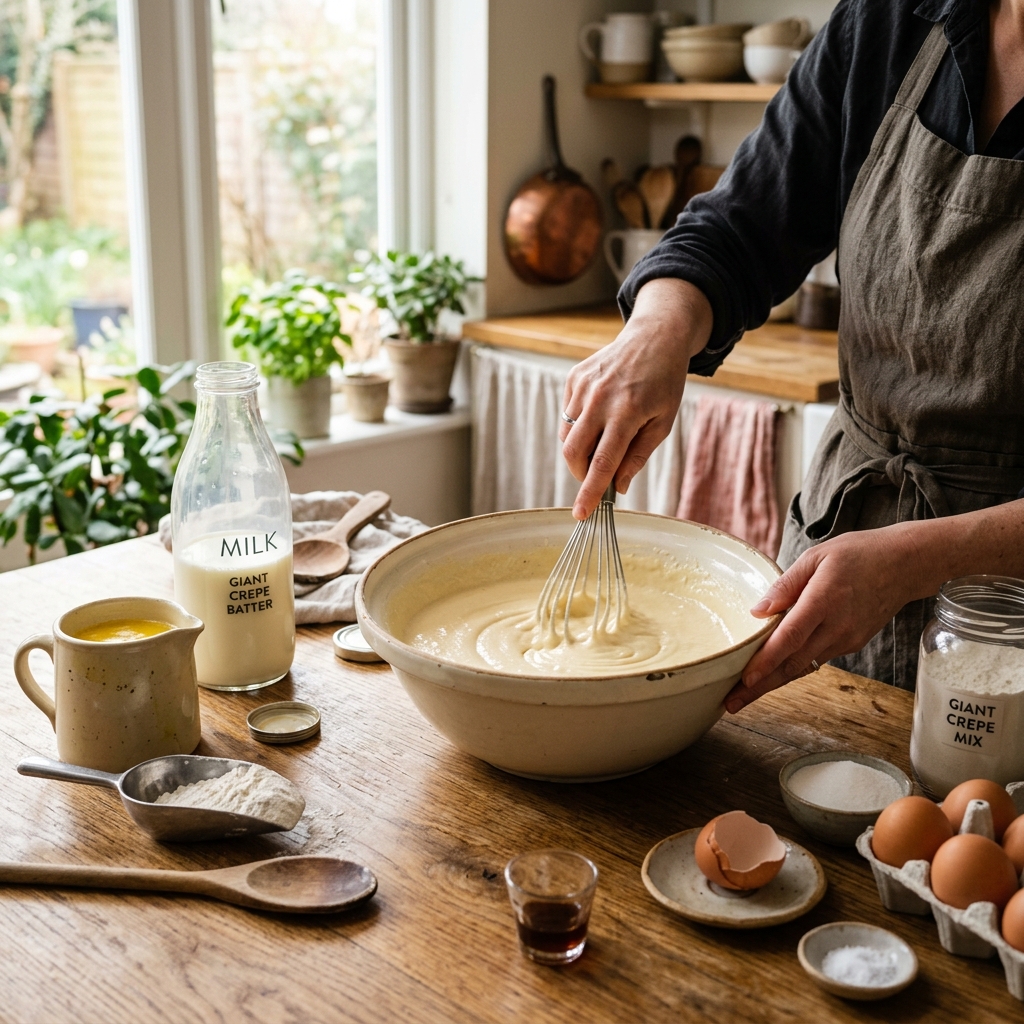
Preparing a giant crepe is an act of culinary poetry, a dance between heat and batter. The key lies in achieving the perfect consistency: a batter thin enough to spread easily, yet substantial enough to hold together. Many culinary traditions recommend letting the batter rest for at least 30 minutes, or even overnight, allowing the flour to fully hydrate and the gluten to relax, resulting in a more tender crepe. When it comes to cooking, a well-seasoned, flat griddle or crepe pan and a consistent medium heat are your allies. The first crepe is almost always a sacrifice, a test of the pan’s temperature and your technique—don’t be disheartened! For a giant crepe, a specialized spreader or the tilt-and-swirl method is essential for an even, delicate canvas.
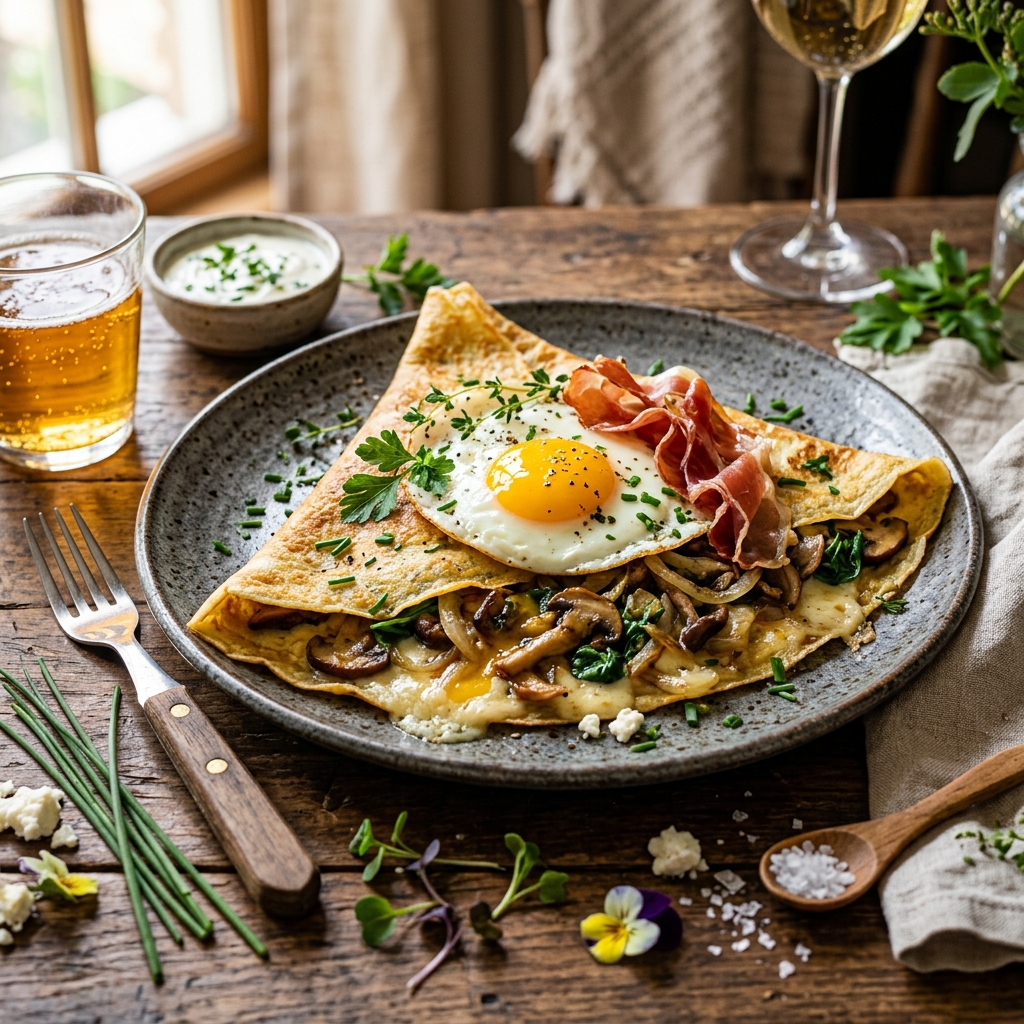
From the ancient hearths of our ancestors to the bustling crêperies of modern Paris, the crepe remains a profound symbol of culinary resilience and shared human experience. It transcends borders, offering a blank slate for endless fillings, a testament to the power of a few simple ingredients to create something truly extraordinary. Whether filled with fruit and cream, or savory cheese and ham, this batter is an invitation to partake in a tradition that spans civilizations, a delicious echo of our collective past.
Batter for Giant Crepe
Hailing from a time-honored culinary tradition, this exceptional crêpe batter provides the perfect foundation for assembling a magnificent Choulibiac. It masterfully yields a generously sized, gossamer-thin sheet, exquisitely suited to cradle a cornucopia of sophisticated savory fillings. Achieved through a method that marries elegant simplicity with precise execution, this remarkably delicate layer stands poised to transform fine ingredients into a truly unforgettable epicurean spectacle.
Ingredients
-
1/3
cup
all-purpose flour
None -
1/2
cup
milk
None -
1
large
egg
None -
1
Tablespoon
cooking oil
None -
½
teaspoon
salt
None
Instructions
-
In a capacious mixing bowl (or high-speed blender for ultimate smoothness), introduce the sifted flour. Gradually incorporate the milk, fresh egg, preferred culinary oil, and a delicate pinch of salt, whisking vigorously until the mixture achieves a perfectly smooth, lump-free consistency. Allow this nascent batter to repose undisturbed for a full ten minutes, encouraging the gluten to relax and the flavors to meld.
-
Initiate the oven’s preheating sequence, setting the temperature to a precise 400°F (200°C) to ensure optimal heat for the initial setting.
-
Into a meticulously buttered and lightly floured 11×17 inch jelly roll pan, carefully pour the rested batter, ensuring an even layer approximately 1/8 inch deep. Transfer the pan to the lower rack of the preheated oven and bake for 4 to 5 minutes, or just until the batter firms up and sets into a delicate sheet.
-
Subsequently, reposition the pan beneath a medium-hot broiler, maintaining a distance of 4 to 5 inches. Monitor attentively as the crêpe’s surface acquires a slow, subtle golden hue, taking care to prevent any hint of overbrowning or excessive crisping.
-
Upon removal from the oven, immediately and with utmost care, detach the perimeter of the crêpe from the pan’s edges, working gently inwards towards the center to ensure complete release.
-
Delicately slide the perfectly formed crêpe onto a sturdy wire cooling rack, allowing it to cool completely and maintain its pristine form.
Recipe Notes
This magnificent crêpe is specifically engineered as a foundational element for constructing a rectangular Choulibiac, typically fashioned to grand dimensions of approximately 12x5x2 ½ inches.
Global Heritage Archive
Anthropological & Spice Migration Record
“A culinary tradition rooted in simple, accessible ingredients, crepes symbolize versatility, comfort, and often a celebratory or communal experience.”
🌿 Spice & Botanical Migration
While this recipe for a giant crepe batter contains no traditional spices or herbs, its fundamental ingredients – all-purpose flour (wheat), milk, and eggs – are profound indicators of human migration and agricultural development. Wheat flour traces its botanical origin to the Fertile Crescent over 10,000 years ago, spreading across Europe and Asia via ancient trade routes and the movement of farming communities. Similarly, dairy (milk) and poultry (eggs) were domesticated in the Middle East and Southeast Asia, respectively, disseminating globally with human populations, forever shaping culinary practices and diets across continents.
🏺 Historical & Archaeological Record
The concept of thin, griddle-cooked flatbreads, direct ancestors to the modern crepe, is exceptionally ancient. Archaeological evidence of early grain-based flatbreads has been found in the Fertile Crescent dating back over 14,000 years, with more directly ‘pancake-like’ foods inferred from the stomach contents of Ötzi the Iceman (c. 3300 BCE), which contained ground einkorn wheat. Written recipes for similar thin, griddle-cooked pastries, such as the Roman *alia dulcia* or *placenta cake* using flour, milk, and eggs, can be found in ancient texts like Apicius’s ‘De re culinaria’ from the 4th-5th century CE, highlighting an enduring culinary tradition.
💡 Little Known Facts
- In France, it is traditional to make crepes on La Chandeleur (Candlemass), February 2nd. People often hold a coin in one hand while flipping the crepe with the other, believing it brings good fortune for the year.
- The original ‘galettes’ of Brittany, from which crepes evolved, were made with buckwheat flour (sarrasin), especially in the poorer regions, and were traditionally savory, while the wheat flour ‘crêpes froment’ were reserved for sweeter preparations.

Historical Locality Cartographic Map — Mestizo Media Archive
📸 Made This Heritage Recipe?
We would love to see how your dish turned out! Send a photo of your culinary creation to [email protected] to be featured in our community gallery.
Leave a review and rate this recipe below!
Curated Literature & Washington DC Downtown Calendar
The Culinary Alchemist: Modern Gastronomy & Flavor Pairing
By LDN Gastronomy Series
Artisanal technique, seasonal sourcing, and kitchen mastery.
Upcoming Downtown Happenings
Live acoustic sessions, gallery receptions, literary salons, and independent trade shows across Washington DC.
