
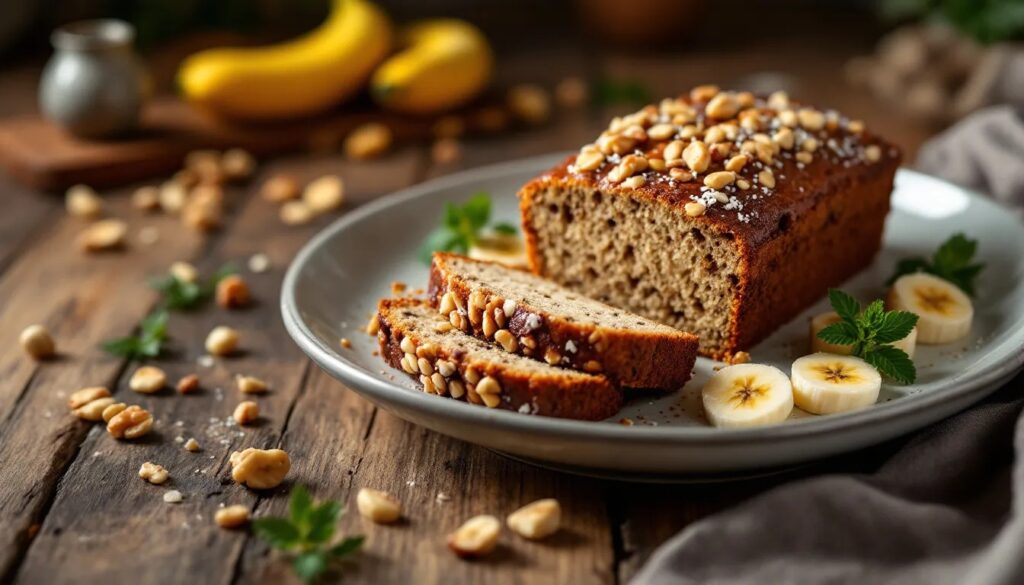
Its true genesis lies not in ancient empires or aristocratic kitchens, but in the resourceful American kitchens of the early 20th century, particularly finding its footing during the lean years of the Great Depression. As bananas, once an exotic luxury, became more affordable and widely available in the United States—thanks to the burgeoning tropical fruit import industry spearheaded by companies like United Fruit—housewives found themselves with an abundance of quickly ripening fruit. Wasting food was anathema, especially during hard times. The solution? A brilliant transformation. The overripe, browning bananas, too soft for eating raw, were mashed into a batter, giving birth to a dish that epitomized frugality and culinary cleverness.
The advent of chemical leavening agents was equally pivotal. Before baking soda and baking powder became kitchen staples in the mid-19th century, most breads relied on yeast, a time-consuming process. These new ‘quick’ leaveners allowed for rapid preparation, making banana bread a perfect fit for busy homemakers seeking efficiency without sacrificing deliciousness. The recipe, often passed down handwritten on recipe cards or tucked into community cookbooks, became a testament to the resilience and adaptability of American home cooking.
The ingredients themselves tell a fascinating story of global migration. The very star, the banana, traces its botanical lineage back to the lush jungles of Southeast Asia, specifically the Malaysian archipelago. From there, it journeyed across continents, carried by ancient traders and later by European colonizers, eventually finding its way to the tropical climates of the Americas, where it flourished. Sugar, the sweetener, embarked on an even longer odyssey from its origins in New Guinea, spreading west along ancient spice routes to India, the Middle East, and finally Europe, before its cultivation exploded in the Americas through the Columbian Exchange and the tragic transatlantic slave trade. The nuts, often walnuts or pecans, add another layer of global heritage: walnuts hailing from Central Asia via the Silk Road, and pecans proudly native to the forests of North America.
Traditionally, banana nut bread is prepared with a loving hand, combining mashed overripe bananas, flour, sugar, eggs, butter, baking powder, salt, and, of course, a generous scattering of chopped nuts. The beauty of this recipe lies in its simplicity and forgiving nature. The key is truly *overripe* bananas—the browner, the sweeter, the more flavorful. Resist the urge to overmix the batter; a gentle hand ensures a tender crumb. While walnuts and pecans are classic choices, feel free to experiment with chocolate chips, dried fruits, or a hint of cinnamon or nutmeg for an extra layer of warmth.
More than just a recipe, Banana Nut Bread is a tangible link to our culinary past, a narrative woven with threads of global trade, economic hardship, and the enduring human desire to create joy from simplicity. It reminds us that sometimes, the most extraordinary creations emerge from the most ordinary circumstances, transforming a forgotten fruit into an unforgettable culinary embrace.
BANANA NUT BREAD
Imagine a warm embrace, rendered in the form of a supremely moist and tender quick bread. This elevated rendition of a time-honored banana loaf delivers a symphony of comforting flavors, where the mellow sweetness of perfectly ripened bananas intertwines with the satisfying crunch of toasted pecans. A subtle whisper of spice adds depth, transforming each slice into an irresistible treat. Whether gracing your morning table, serving as an afternoon indulgence, or shared as a heartwarming gesture, this bread is a testament to simple ingredients crafting extraordinary moments.
Ingredients
-
3
ripe bananas
medium size -
2
cups
all-purpose flour
None -
1
tsp.
baking powder
None -
pinch
salt
None -
1/2
cup
butter or margarine
None -
2
eggs
None -
1
cup
sugar
None -
1
cup
chopped nuts
I use Pecans
Instructions
-
In a generously sized mixing bowl, combine the softened butter, granulated sugar, and eggs. Beat vigorously until the mixture achieves a pale, fluffy consistency, indicating proper aeration.
-
Gently incorporate the thoroughly mashed ripe bananas into the creamed butter-egg-sugar blend, stirring until just combined.
-
In a separate, medium-sized bowl, meticulously sift together the all-purpose flour, baking powder, and salt. Then, fold in the chopped nuts, ensuring they are thoroughly coated by the flour mixture for uniform distribution throughout the final batter.
-
Introduce the prepared dry ingredients, along with the coated nuts, to the wet banana mixture. Stir gently with a spatula or wooden spoon until the ingredients are *barely* moistened and just come together, being careful not to overmix.
-
Transfer the batter into a loaf pan that has been meticulously prepared with a light coating of grease. Bake in a preheated oven at 350°F (175°C) for approximately 60 minutes, or until a wooden skewer inserted into the center emerges clean.
Recipe Notes
For an unparalleled depth of flavor and texture, select high-quality pecans for their distinct buttery crunch and subtle sweetness, which beautifully complements the ripe banana. A helpful technique to ensure that these delightful nuts, along with other leavening agents, are evenly dispersed throughout the batter is to toss them with the dry flour mixture before integrating them into the wet ingredients. This simple step prevents them from sinking to the bottom during baking, guaranteeing a consistent bite in every slice.
Global Heritage Archive
Anthropological & Spice Migration Record
“A culinary culture rooted in resourcefulness and frugality, transforming overripe fruit into a comforting staple during economically challenging times, evolving into a beloved treat that symbolizes home and hospitality.”
🌿 Spice & Botanical Migration
The central ingredient, bananas, originated in Southeast Asia, specifically in the Malaysian archipelago, and spread through ancient trade routes to India, the Middle East, and Africa, before being introduced to the Americas by European explorers in the 16th century, becoming widely consumed in the United States by the early 20th century. Sugar, another key ingredient, traces its origins to New Guinea and spread globally via the ancient Spice Routes and later the Columbian Exchange, while nuts like walnuts arrived from Central Asia via the Silk Road, or pecans from native North American trees, reflecting diverse botanical origins converging in a modern American dish.
🏺 Historical & Archaeological Record
While the specific recipe for “banana nut bread” as we know it emerged in American cookbooks in the 1930s, the foundational technique of “quick bread” baking, relying on chemical leavening agents like baking soda and later baking powder, dates back to the mid-19th century in the United States. The earliest commercial production of baking powder occurred in the 1840s, developed by Alfred Bird in England, and popularized in America by companies like Horsford’s, revolutionizing home baking and making such rapidly prepared loaves possible.
💡 Little Known Facts
- Baking soda, a key leavening agent that allowed for the creation of ‘quick breads’ without yeast, became widely available to American households in the late 19th and early 20th centuries, often marketed by companies like Arm & Hammer, laying the groundwork for banana bread.
- The widespread availability and affordability of bananas in the United States, facilitated by large-scale imports from Central and South America by companies like United Fruit (now Chiquita), coincided with the Great Depression era, making overripe bananas a common ingredient to repurpose, thus spurring the dish’s popularity.
📸 Made This Heritage Recipe?
We would love to see how your dish turned out! Send a photo of your culinary creation to [email protected] to be featured in our community gallery.
Leave a review and rate this recipe below!
Curated Literature & Washington DC Downtown Calendar
The Culinary Alchemist: Modern Gastronomy & Flavor Pairing
By LDN Gastronomy Series
Artisanal technique, seasonal sourcing, and kitchen mastery.
Upcoming Downtown Happenings
Live acoustic sessions, gallery receptions, literary salons, and independent trade shows across Washington DC.
