
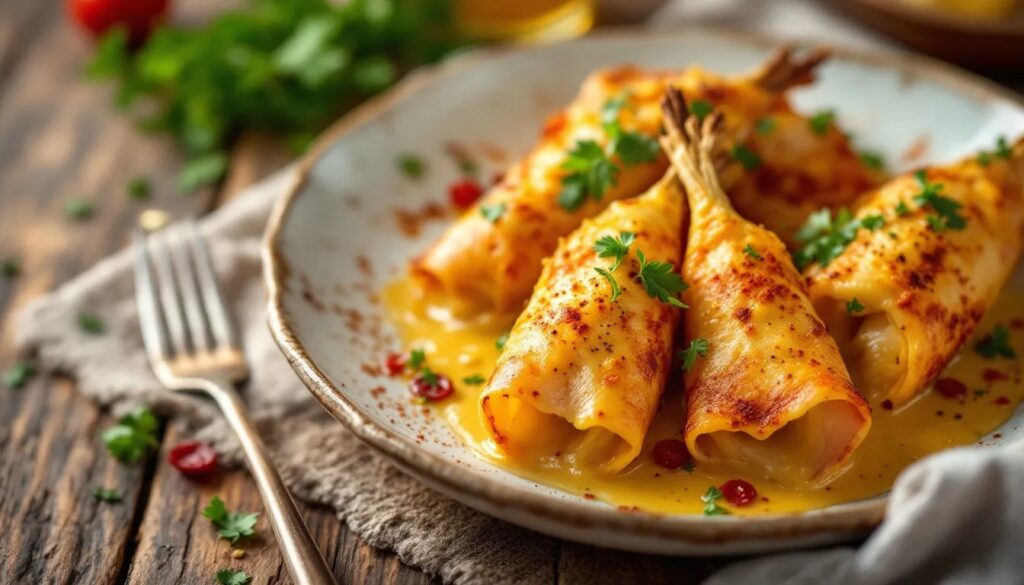
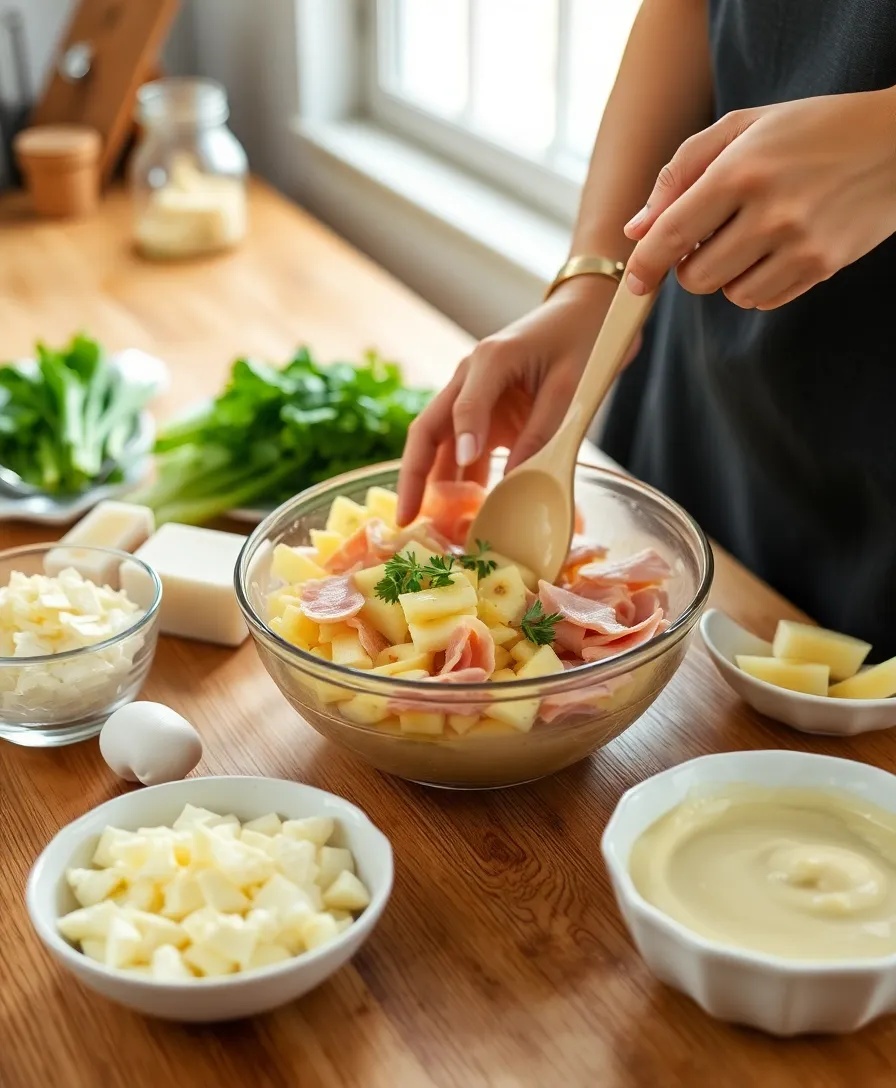
In the annals of comfort food, few dishes strike such a harmonious chord between rustic charm and culinary sophistication as Baked Endives with Ham and Béchamel Sauce. This isn’t just a recipe; it’s a testament to ingenuity, a journey through trade routes, and a warm embrace on a chilly evening. Imagine the crisp winter air descending upon the fields of Belgium, where this humble chicory, known as ‘witloof’ or ‘chicon,’ was transformed from a wild bitter root into a culinary star.
The story of the endive, specifically the pale, tightly furled Belgian variety, is one of serendipity. Legend has it that in the 1830s, a farmer named Jan Lammers in Schaerbeek, near Brussels, stored chicory roots in his cellar to keep them from freezing. Covered with a layer of soil, they sprouted delicate, blanched leaves – less bitter and more tender than their green counterparts. This accidental discovery led to the forced cultivation technique, growing the plants in darkness, giving us the exquisite endives we know today. This newfound delicacy quickly became a staple in Belgian cuisine, celebrated for its unique flavor profile that straddles bitterness and sweetness.
Pairing these elegant endives with ham and a creamy béchamel sauce was a stroke of genius. Ham, a timeless protein source, has graced European tables for centuries, its saltiness providing a perfect counterpoint to the subtle bitterness of the endive. But it’s the béchamel, one of the foundational ‘mother sauces’ of French cuisine, that elevates this dish to an art form. While often attributed to the court of Louis XIV, the concept of a thickened white sauce has earlier parallels in Italian culinary traditions, demonstrating a rich cross-pollination of ideas across European kitchens. This creamy, nutmeg-kissed sauce binds the ingredients, enveloping them in a luxurious cloak.
And then there’s the cheese. While the recipe simply calls for ‘Swiss cheese,’ in its heartland, a robust Gruyère or Comté would typically crown this gratin. These Alpine cheeses, with their nutty, savory notes, melt into a golden, bubbling crust, adding another layer of texture and flavor complexity. The touch of nutmeg, a spice hailing from the distant Banda Islands, traveled across continents via ancient trade routes to become an indispensable companion to dairy-rich sauces, its warm, earthy aroma a signature of European comfort dishes.
The final splash of lemon juice is a small but mighty detail, cutting through the richness of the béchamel and cheese, brightening the entire composition. This vibrant citrus fruit, originating in Southeast Asia, journeyed through the Middle East and Mediterranean, becoming an essential ingredient for balance and zest in kitchens worldwide. The butter used to prepare the dish, a hallmark of Northern European cooking, contributes an unmistakable richness and mouthfeel.
Preparing this dish is a meditative act. The blanching of the endives to mellow their bitterness, the careful construction of a smooth béchamel, and the gentle baking until the cheese forms a golden, bubbly crust – each step is a testament to culinary tradition. For the perfect dish, ensure your endives are well-drained after blanching to avoid a watery gratin. A fresh grating of nutmeg goes a long way, and don’t skimp on a good quality cheese. This ‘chicons au gratin,’ as it’s known in Belgium, is more than just a meal; it’s a piece of culinary history on your plate, a warm embrace from Western Europe, and a delicious reminder of how ingredients, techniques, and cultures weave together to create enduring gastronomic treasures.
Baked Endives with Ham and Béchamel Sauce
Indulge in a timeless French bistro classic, reimagined for the contemporary palate. This exquisite preparation transforms tender Belgian endives into a sublime culinary statement. Each blanched, subtly bitter endive is artfully swaddled in a delicate slice of savory, cured ham, creating perfect individual parcels. These elegant bundles are then nestled into a gratin dish, generously bathed in a rich, velvety Béchamel sauce, finished with a generous scattering of fine Swiss cheese and a fragrant hint of freshly grated nutmeg. Baked to golden perfection, the dish emerges a harmonious fusion of creamy, savory, and subtly bitter notes, making it an impeccable choice for a distinguished gathering or a refined weeknight indulgence.
Ingredients
-
8
endives -
8
thin slices
ham -
½
teaspoon
nutmeg -
Swiss cheese
grated -
salt
for boiling water -
lemon juice
for boiling water -
Béchamel Sauce
see recipe below -
butter
for dotting
Instructions
-
Prepare a voluminous pot of water, bringing it to a vigorous, rolling boil. Infuse the actively bubbling liquid with a generous pinch of sea salt and a bright squeeze of fresh lemon juice, then carefully introduce the prepared endives.
-
Allow the endives to simmer gently for approximately 10 to 12 minutes, or until they achieve a tender-crisp texture. Promptly remove them from the heat, meticulously drain any residual moisture, and, once cool enough to handle comfortably, individually envelop each endive within a single, delicate slice of cured ham.
-
Arrange these elegantly wrapped parcels with care in a single layer within a shallow gratin dish. Generously blanket them first with the grated Swiss cheese, followed by an abundant pour of the freshly prepared, velvety Béchamel sauce, ensuring each parcel is thoroughly covered.
-
Conclude the layering by delicately dusting the surface with a whisper of freshly grated nutmeg. Finish by artfully dotting the top with small, evenly spaced pieces of cold unsalted butter.
-
Transfer the prepared gratin to a preheated oven set to 425°F (220°C). Allow it to bake for a duration of 15 minutes, or until the sauce is effervescent and the cheese has achieved a delightful golden-brown crust.
Recipe Notes
To impart an even deeper complexity, consider substituting aged Gruyère or Comté for the Swiss cheese. For an aromatic flourish, a pinch of finely chopped fresh chives or flat-leaf parsley can be folded into the Béchamel sauce just before assembly. This dish lends itself well to advance preparation; it can be assembled up to 24 hours ahead and refrigerated. Simply allow it to come to room temperature for at least 30 minutes before baking, extending the baking time by a few minutes if necessary. Serve this exquisite gratin as an elegant first course, a sophisticated light entrée alongside a vibrant green salad, or as a distinguished accompaniment to roasted poultry or pan-seared scallops. A crisp, dry white wine such as an elegant Sancerre, a mineral-driven Muscadet, or an unoaked Chardonnay would harmoniously complement its rich and nuanced flavors.
Global Heritage Archive
Anthropological & Spice Migration Record
“A comforting, dairy-rich gratin dish exemplifying the resourcefulness of Belgian winter cuisine and the sophisticated elegance of French culinary technique.”
🌿 Spice & Botanical Migration
Nutmeg, a key spice for balancing the richness of the béchamel and cheese, originates from the Banda Islands (part of the Moluccas, or ‘Spice Islands’) in Indonesia. Its journey to Europe was long and arduous, initially facilitated by Arab traders along the ancient Spice Route, then monopolized by Portuguese and later Dutch colonial powers, profoundly influencing European cuisine. Lemon juice, another ingredient, traces its botanical origins to Northeast India and Southeast Asia, spreading through the Middle East and into the Mediterranean via Arab traders around the 10th century, becoming a staple for brightness and acidity.
🏺 Historical & Archaeological Record
The foundational technique of ‘gratin’—a dish topped with cheese or breadcrumbs and baked until golden—is a broad culinary concept with ancient roots in various forms of baked, layered dishes. However, the specific formalization of Béchamel Sauce, a key component, appears in written culinary records in France, most notably by François Pierre de la Varenne in ‘Le Cuisinier François’ in 1651, describing a roux-thickened white sauce that is a precursor to modern béchamel. Endive cultivation as we know it is much more recent, from the 19th century.
💡 Little Known Facts
- The specific cultivation of ‘witloof’ (white leaf) endives, involving forcing them in darkness to achieve their characteristic pale color and delicate bitterness, was an accidental discovery around 1830 by a Belgian farmer near Brussels.
- While Béchamel Sauce is famously attributed to Louis de Béchamel, Marquis de Nointel, a steward in the court of Louis XIV, many culinary historians believe it evolved from earlier Italian white sauces like ‘salsa colla’ (glue sauce) and was merely perfected and named in France during the 17th century.
📸 Made This Heritage Recipe?
We would love to see how your dish turned out! Send a photo of your culinary creation to [email protected] to be featured in our community gallery.
Leave a review and rate this recipe below!
Curated Literature & Washington DC Downtown Calendar
The Culinary Alchemist: Modern Gastronomy & Flavor Pairing
By LDN Gastronomy Series
Artisanal technique, seasonal sourcing, and kitchen mastery.
Upcoming Downtown Happenings
Live acoustic sessions, gallery receptions, literary salons, and independent trade shows across Washington DC.
