
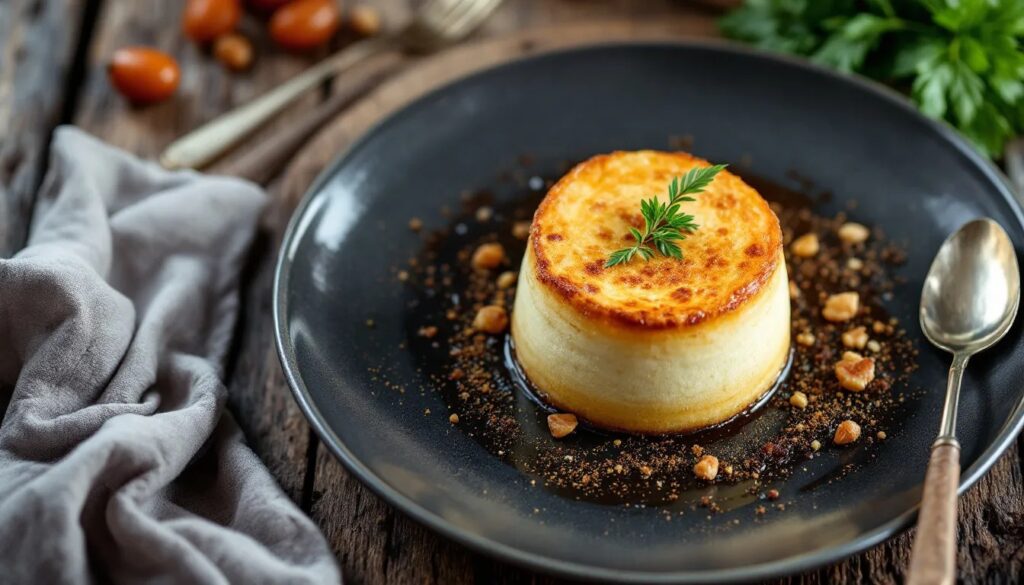
Camembert itself is a star of this show, a soft, bloomy-rind cheese born in the verdant pastures of Normandy. Legend often attributes its creation to Marie Harel in 1791, though like many culinary origins, its development was likely more of a communal evolution within a region renowned for its dairy. Its delicate, earthy, and often mushroomy notes are perfectly suited to baking, transforming its creamy interior into a luxurious, spoonable fondue. The genius of the ‘crust’ lies in its textural contrast—a crispy, nutty shell that encases the molten heart. Here, fine bread crumbs, a time-honhonored method for adding texture and substance to dishes across many cultures, meet the earthy crunch of hazelnuts.
Hazelnuts, a native of Europe and Asia Minor, have been prized since antiquity, appearing in diets and even rituals of early human societies. Their distinct, buttery flavor provides an exquisite counterpoint to the richness of the cheese, while also adding a layer of satisfying bite. The pairing of Camembert with apples is equally classic, the fruit’s crisp tartness cutting beautifully through the cheese’s opulence. Apples, having journeyed from their Central Asian origins along ancient trade routes, became a staple across Europe, their versatility making them an ideal companion to virtually any cheese board. Finally, the toasted brioche, a buttery, eggy French bread dating back to the 16th century, elevates the serving, turning a simple accompaniment into a lavish gesture.
Preparing this dish at home is a delightful culinary adventure. Choose a ripe, but not overly pungent, Camembert for the best results. Ensure your hazelnuts are freshly toasted and coarsely chopped to maximize their aroma and crunch. A single egg wash acts as the perfect binder for the breadcrumb-hazelnut mixture, creating that essential golden crust. Bake it until the cheese is gloriously bubbly and the crust is deeply golden—typically around 15-20 minutes at 375°F (190°C). Serve immediately, with warm apple slices and those elegant brioche toasts, allowing your guests to dive into its gooey center. This dish is not just food; it’s a sensory journey through history, tradition, and the enduring allure of French comfort.
BAKED CAMEMBERT WITH HAZELNUT CRUST
Imagine a captivating culinary centerpiece that effortlessly marries rustic charm with refined elegance. This recipe elevates a humble wheel of Camembert into a truly exquisite indulgence. Encased in a gloriously crisp, golden crust, richly studded with toasted hazelnuts and aromatic breadcrumbs, each bite offers a symphony of textures—the delicate crunch giving way to an irresistibly molten, lusciously creamy interior. Baked to perfection until its heart yields a warm, luxurious flow, this sophisticated starter is an impeccable choice for entertaining. Serve it straight from the oven, its warmth a delightful contrast to vibrant, crisp apple segments and delicate, toasted slices of brioche, creating an experience that whispers of sun-drenched European bistros and timeless hospitality.
Ingredients
-
1
round
Camembert cheese
about 8 ounces, top rind cut away and discarded, leaving the bottom and side rind intact -
1
large
egg
beaten lightly -
¼
cup
fine fresh bread crumbs
None -
½
cup
hazelnuts
finely chopped, toasted and skinned -
as needed
None
apple slices
for serving -
as needed
None
toasted brioche
for serving
Instructions
-
In a shallow, wide bowl, gently whisk an egg until just combined. Carefully immerse the entire Camembert wheel, ensuring all surfaces are thoroughly moistened by this egg wash.
-
In a separate, equally shallow vessel, meticulously blend the finely ground breadcrumbs with the toasted, chopped hazelnuts. Transfer the egg-coated Camembert to this mixture, pressing and turning until a uniform, generous crust firmly adheres to every side. Once fully enrobed, cover the prepared cheese and refrigerate for a minimum of one hour to allow the crust to set beautifully.
-
Position an oven rack in the middle and preheat your oven to a robust 400°F (200°C). Place the crusted Camembert on a parchment-lined baking sheet, ensuring the flatter, rind-free side faces upwards. Bake for approximately 15 minutes, or until the hazelnut crust achieves a magnificent golden-brown hue and the cheese begins to soften invitingly.
-
With utmost care, transfer the gloriously baked Camembert directly to an elegant serving platter. Present immediately while still sumptuously warm and yielding, accompanied by a vibrant fanning of crisp apple slices and delicate, toasted brioche points for dipping.
Recipe Notes
For an added layer of depth, consider lightly toasting the hazelnuts before chopping them; this intensifies their nutty aroma within the crust. While apples and brioche are classic pairings, feel free to explore other accompaniments such as thinly sliced pears, a dollop of fig jam, or artisanal crackers to personalize your presentation. This luxurious appetizer is best savored directly from the oven when the Camembert is at its most lusciously melted. Do not bypass the chilling step; it is paramount for ensuring the crust adheres perfectly and remains intact during baking.
Global Heritage Archive
Anthropological & Spice Migration Record
“A sophisticated culinary tradition that values quality local ingredients, thoughtful pairings, and elegant presentation, often featuring cheese as a celebratory or comforting dish.”
🌿 Spice & Botanical Migration
While this recipe does not feature exotic spices, its key ingredients trace fascinating paths. Camembert is a localized French innovation, a product of specific Norman terroir and evolving cheesemaking traditions. Hazelnuts, indigenous to Europe and Asia Minor, have been a dietary staple since prehistoric times, their use spreading throughout the continent through ancient foraging and early trade. Apples, originating in Central Asia, journeyed westward along the ancient Silk Road, becoming a staple fruit across Europe and a classic pairing for cheese.
🏺 Historical & Archaeological Record
The earliest archaeological evidence for cheesemaking dates back approximately 7,500 years ago in Kujawy, Poland, where researchers discovered fatty acid residues in ancient pottery sieves. While ‘Baked Camembert with Hazelnut Crust’ is a relatively modern preparation, the fundamental technique of encasing food in a bread-like crust and baking or frying it has ancient roots, with precursors found in Roman cookbooks like Apicius’s ‘De re coquinaria’ (4th century CE), which describes various coated and cooked dishes.
💡 Little Known Facts
- The popular legend attributes the invention of Camembert to Marie Harel, a farmer from Normandy, who allegedly received advice from a priest fleeing the French Revolution in 1791, though modern historians suggest its origins are more communal and evolutionary.
- The distinctive wooden box that Camembert is sold in was invented in 1890 by Eugène Ridel, an engineer, to protect the fragile cheese during railway transport, significantly contributing to its widespread national and international popularity.
📸 Made This Heritage Recipe?
We would love to see how your dish turned out! Send a photo of your culinary creation to [email protected] to be featured in our community gallery.
Leave a review and rate this recipe below!
Curated Literature & Washington DC Downtown Calendar
The Culinary Alchemist: Modern Gastronomy & Flavor Pairing
By LDN Gastronomy Series
Artisanal technique, seasonal sourcing, and kitchen mastery.
Upcoming Downtown Happenings
Live acoustic sessions, gallery receptions, literary salons, and independent trade shows across Washington DC.
