
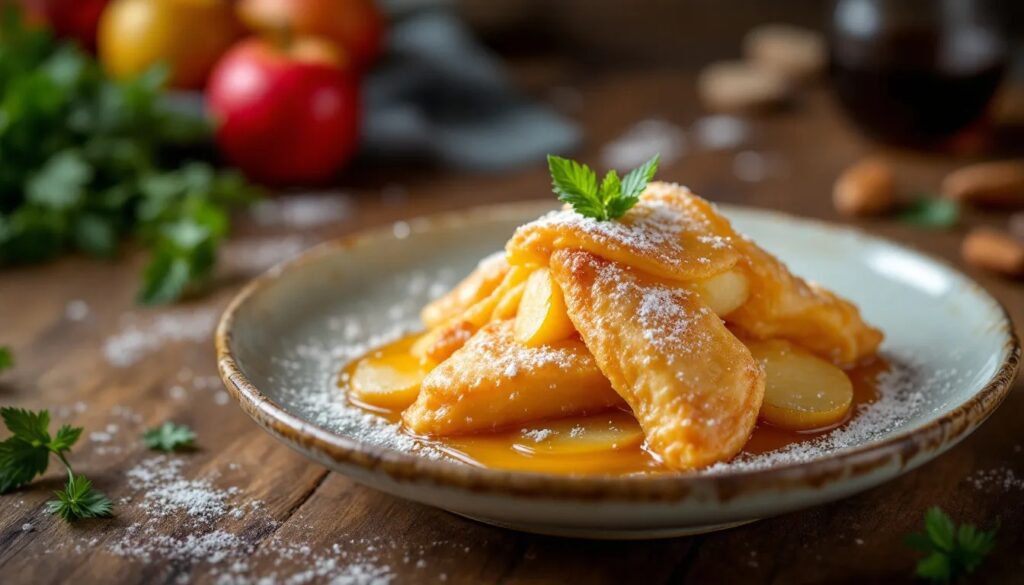
Imagine the golden hue of a perfectly baked pastry, its surface glistening with a sugar crust, promising a warm, spiced embrace within. The apple turnover is more than just a sweet treat; it’s a narrative in dough and fruit, a portable history lesson baked into every flaky bite. This seemingly simple dessert, with its familiar embrace of apples and cinnamon, tells a complex tale of migration, innovation, and culinary adaptation.
At its heart, the apple turnover is a descendant of the ancient hand pie – a practical, self-contained meal designed for those on the move. From the robust Cornish pasties of England to the sweet, spiced Apfeltaschen of Germany, the concept of encasing a savory or sweet filling in a durable pastry crust is a culinary universal. Yet, the specific combination of ingredients in this recipe, particularly the dual-flour approach and the inclusion of shortening alongside butter, firmly anchors it in the annals of American baking.
The journey of its core ingredients is equally fascinating. The apple, ubiquitous in Western baking, is not indigenous to Europe or the Americas. Its ancestral home lies in the mountains of Central Asia, where wild apple forests still thrive. Through millennia of human migration, cultivation, and selective breeding, apples traveled west along ancient trade routes, arriving in Europe with the Romans and eventually crossing the Atlantic with European settlers, flourishing in the temperate climates of the New World.
Cinnamon, that fragrant soulmate to the apple, embarked on an even more epic voyage. Originating in the lush landscapes of Sri Lanka and Southeast Asia, this prized bark was a cornerstone of the ancient spice trade. It traveled thousands of miles across land and sea via the legendary Spice Route, reaching the kitchens of Europe long before the Age of Exploration. Its presence in this turnover speaks to centuries of global exchange, transforming exotic luxury into a comforting pantry staple. The bright zest of lemon, too, a native of Asia, arrived in the Western palate through similar ancient channels, its acidity offering a crucial counterpoint to the sweetness.
The pastry itself is a testament to American ingenuity. The blend of all-purpose and cake flour, aiming for a tender yet flaky texture, reflects a refined understanding of dough mechanics. Most significantly, the use of shortening is a distinctly American innovation that revolutionized home baking in the 20th century. With the advent of commercially produced, shelf-stable vegetable shortenings like Crisco in 1911, bakers found a reliable, economical fat that produced exceptionally flaky crusts, often outperforming lard or butter alone. This ingredient choice elevates the humble hand pie into a refined, yet comforting, dessert.
To achieve the perfect apple turnover, heed the wisdom of generations: keep your fats (butter and shortening) and your water ice-cold. This ensures the fats remain in discrete pockets, creating those coveted flaky layers as the pastry bakes. Don’t overwork the dough; a light touch is key to tenderness. And finally, that golden egg wash isn’t just for show; it promotes even browning and a beautiful sheen, making each turnover a miniature masterpiece. More than just a recipe, the apple turnover is a delicious archaeological dig, revealing layers of history, global exchange, and culinary evolution in every bite.
APPLE TURNOVER
Embark on a culinary journey to a simpler era with our exquisite Apple Turnover, a timeless confection that promises pure, unadulterated comfort. This artisanal delight showcases a tender, subtly sweetened Pâte brisée, meticulously crafted to envelop a generous, warmly spiced apple filling. Far more than just a dessert, it’s a testament to enduring culinary traditions, offering a taste of cherished provenance and heart-stirring flavors that elevate any occasion.
Ingredients
-
1 1/2
cups
all-purpose flour
unbleached, preferred -
1/2
cup
cake flour
plain bleached -
1 1/2
sticks
unsalted butter
chilled -
2
Tablespoons
shortening -
1/2
teaspoon
salt -
2
Tablespoons
sugar -
1/2
cup
iced water
more or less -
4 to 5
apples
that will keep their shape in cooking, such as Golden Delicious, Rome Beauty, Newton, or Monroe -
3
Tablespoons
sugar
or more, for filling -
1/2
teaspoon
cinnamon
more or less -
1
lemon
grated rind and juice -
1
Tablespoon
melted butter
or more, for filling -
1
egg
beaten, for glaze -
1
teaspoon
water
for egg glaze
Instructions
-
To prepare the exquisite Sweet Pie Dough (Pâte brisée fine, sucrée), begin by hand or with a food processor, adhering to the precise ingredient ratios. Whisk together the flours, a pinch of salt, and the initial 2 tablespoons of sugar. Incorporate the thoroughly chilled unsalted butter and shortening, cutting them into the dry mixture until a texture reminiscent of coarse crumbs is achieved. Gradually introduce the iced water, typically around ½ cup, adjusting as needed until the dough just coalesces into a cohesive mass. The resulting dough should exhibit a supple pliability, avoiding any excessive dryness or stickiness.
-
Envelop the prepared dough securely in plastic film and allow it to rest in the refrigerator for a minimum of 30 minutes, or until it is completely chilled throughout. This dough also freezes beautifully for future culinary endeavors.
-
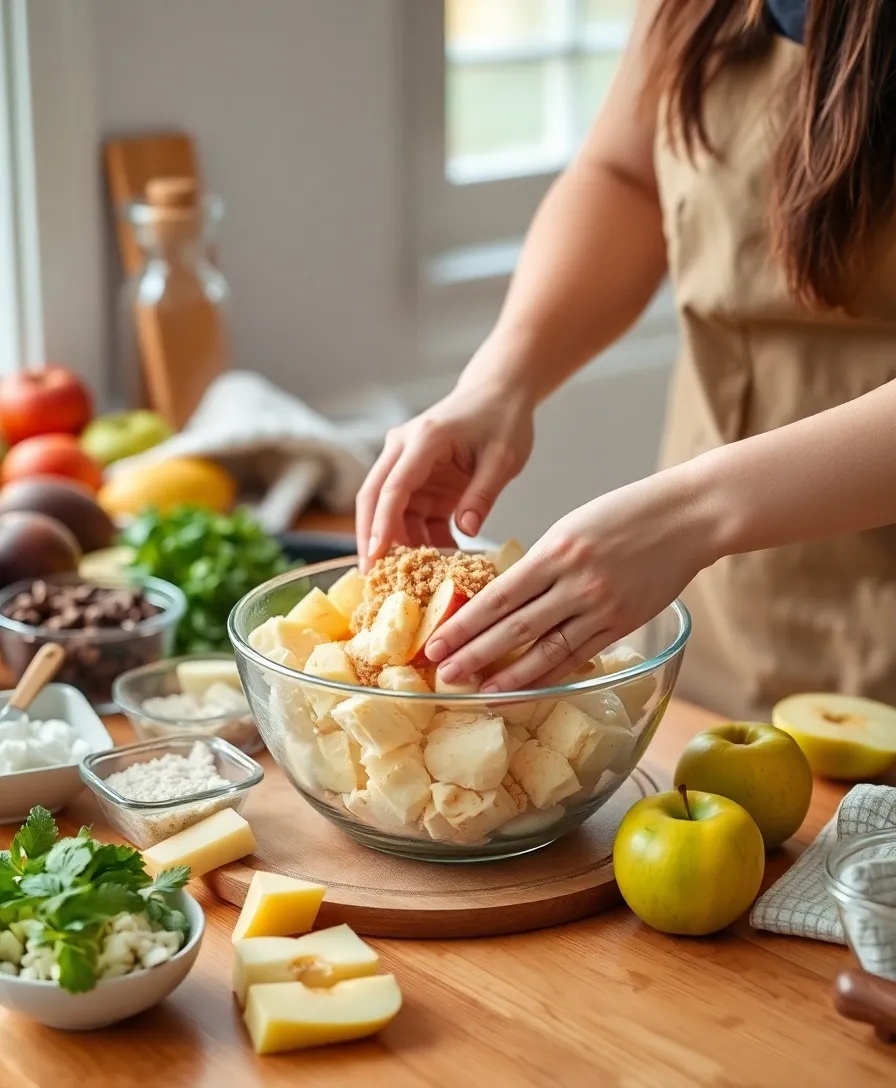
For the luscious filling, meticulously quarter, core, and peel your apples, then proceed to slice them thinly lengthwise. Transfer these delicate apple slices to a mixing bowl. Gently toss them with 3 tablespoons (or more, to taste) of sugar, ½ teaspoon (adjust to preference) of ground cinnamon, and the aromatic grated rind along with the fresh juice of one lemon. Cover the bowl with plastic wrap and allow the mixture to macerate for 20 minutes, permitting the flavors to meld.
-
Prepare the radiant Egg Glaze by whisking together 1 egg with 1 teaspoon of water in a small bowl until the mixture is thoroughly cohesive. Reserve this for later application.
-
Preheat your oven to 375°F (190°C). With practiced speed and precision, roll out the thoroughly chilled dough into an expansive rectangle, aiming for dimensions of approximately 20 inches in length and 10 inches in width. Carefully trim the periphery to achieve impeccably clean and defined edges.
-
Dust the dough surface with a light film of flour, then neatly fold it in half lengthwise, bringing one end to meet the other. Center this folded dough onto a prepared, buttered pastry sheet. Position a sheet of wax paper precisely at the crease of the fold, then gently unfold the upper half of the dough, allowing it to rest upon the wax paper.
-
Using a pastry brush, create a slender border of cold water along the three unsealed edges of the bottom dough half. Artfully arrange the macerated apple filling onto this lower dough section, ensuring a ¾-inch margin remains clear along the three open sides. Lightly dust the apples with an additional sprinkle of sugar, then gently drizzle with 1 tablespoon (or more, to taste) of melted butter.
-
With utmost care, gently invert the upper half of the dough over the apple filling, simultaneously removing the wax paper. Press the corresponding edges firmly to create a secure seal. Elevate these three sealed edges to form a defined border, then, employing the tines of a fork, imprint a charming, decorative pattern around the periphery.
-
Generously enrobe the top surface of the turnover with the prepared egg glaze. Transfer the covered turnover to the refrigerator and allow it to firm up for at least 30 minutes, or even several hours, prior to baking.
-
Bake the thoroughly chilled turnover in your preheated oven for 45 to 60 minutes, or until the crust achieves a magnificent golden-brown hue and the apple filling is visibly bubbling with intensity. Should the crust begin to darken prematurely, delicately tent it with a piece of aluminum foil. Allow the turnover to cool slightly before slicing and serving, to let the filling set perfectly.
Recipe Notes
This exquisite recipe yields one impressively sized turnover, typically measuring approximately 9×9 inches, ideal for sharing. The Pâte brisée detailed herein is celebrated for its swift preparation and remarkably forgiving nature, making it accessible even for novice bakers. For optimal texture and presentation, we highly recommend selecting apple varieties renowned for their ability to maintain shape and structure when cooked, such as the classic Golden Delicious, Rome Beauty, Newton, or Monroe. Please note that while the precise oven temperatures and baking durations have been meticulously calibrated for achieving perfect results, they have been thoughtfully integrated into these instructions for enhanced clarity, drawing upon established culinary practices for apple turnover preparation.
Global Heritage Archive
Anthropological & Spice Migration Record
“A culinary culture centered on comforting, sweet, fruit-filled pastries, deeply rooted in home baking traditions that meld European techniques with locally available ingredients and American innovations.”
🌿 Spice & Botanical Migration
Cinnamon, a cornerstone spice in this recipe, originates from Sri Lanka and Southeast Asia, traversing ancient trade routes like the Spice Route to reach the Middle East and then Europe, eventually sailing to the Americas with European colonists. The lemon, providing a crucial tart counterpoint, traces its botanical roots to regions of Northeast India, China, or Burma, migrating westward through the Middle East to the Mediterranean and subsequently introduced to the New World through the Columbian Exchange.
🏺 Historical & Archaeological Record
The concept of enclosed fruit pastries or ‘hand pies’ dates back to medieval Europe, with early forms like ‘coffyns’ (crusts designed to hold fruit or meat fillings) documented in culinary manuscripts such as ‘The Forme of Cury’ from England (c. 1390). These ancestors of the turnover highlight a long tradition of portable, self-contained baked goods.
💡 Little Known Facts
- The inclusion of shortening alongside butter is a significant indicator of American baking traditions, particularly post-1911 with the widespread commercial availability of vegetable shortenings like Crisco, which offered a flakier and often more economical alternative to lard or all-butter crusts.
- While ‘turnover’ is a distinctly American term for this folded pastry, its lineage can be traced back to European hand pies, such as the British pasty or German Apfeltasche, which were practical, portable meals or desserts for travelers and laborers.
📸 Made This Heritage Recipe?
We would love to see how your dish turned out! Send a photo of your culinary creation to [email protected] to be featured in our community gallery.
Leave a review and rate this recipe below!
Curated Literature & Washington DC Downtown Calendar
The Culinary Alchemist: Modern Gastronomy & Flavor Pairing
By LDN Gastronomy Series
Artisanal technique, seasonal sourcing, and kitchen mastery.
Upcoming Downtown Happenings
Live acoustic sessions, gallery receptions, literary salons, and independent trade shows across Washington DC.
