
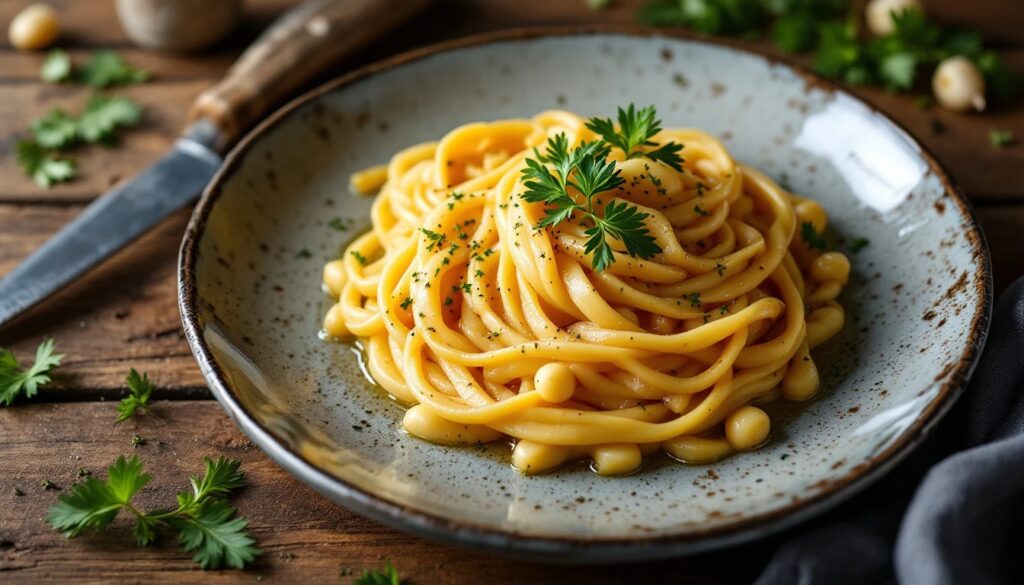

The air crackles with anticipation, a rustic symphony of comfort playing out in the heart of France’s Aubrac plateau. A wooden spoon plunges into a molten, creamy mass, lifting it high to reveal an impossibly long, glistening strand—a testament to culinary magic. This is Aligot, the iconic “ribbon of friendship,” a dish whose essence embodies warmth, sustenance, and the enduring spirit of French hospitality. In this rendition, “Aligot with Turnips,” we find a fascinating echo of its ancient roots, hinting at a history richer than its cheesy pull.
Hailing from the high, often harsh landscapes of Southern France, Aligot’s story is intrinsically linked to the resilience of its people. Originally, this hearty fare wasn’t the potato-laden marvel we know today. For centuries, weary pilgrims traversing the arduous Way of St. James found solace in the *burons*—stone shepherd huts dotting the Aubrac. Here, they were offered a humble yet fortifying gruel: a mix of stale bread, local Tomme cheese, and broth. This was the nascent Aligot, designed to restore weary bodies. The arrival of the potato from the New World, a transformative gift of the Columbian Exchange, revolutionized this tradition. By the 18th and 19th centuries, potatoes, once viewed with suspicion, firmly established themselves as a staple crop across Europe. In Aubrac, they gracefully supplanted bread and other indigenous root vegetables like turnips, transforming the dish into the thick, cheesy mashed potato concoction now celebrated. The inclusion of turnips in our recipe title today is a beautiful homage to those pre-potato days, offering a deeper, earthier counterpoint to the dish’s rich creaminess.
The alchemy of Aligot lies in its deceptively simple ingredients and meticulous technique. Starchy boiling potatoes are mashed to perfection before being introduced to generous amounts of butter, garlic, and crucially, a regional cheese like Tomme de Laguiole or Tomme d’Aubrac, though Gruyere makes an excellent substitute. The traditional preparation is a vigorous, almost meditative dance. Over low heat, the ingredients are stirred incessantly, stretched and folded until the cheese melts into the potatoes, forming that characteristic, elastic “filage.” This strenuous effort is essential for emulsifying the cheese and creating the dish’s signature stretchy texture. The garlic, an ancient Old World staple from Central Asia, adds pungent warmth, while nutmeg from the far-flung Banda Islands, brought to Europe by historic spice routes, lends subtle aromatic complexity, proof of global trade’s indelible mark on even the most rustic fare.
Mastering Aligot at home requires patience and attention. Choose starchy potatoes for a fluffy mash. Ensure your cheese is at room temperature for optimal melting. The key is to add cheese gradually and work the mixture over gentle heat, allowing it to melt fully and integrate. Don’t be shy with the butter – it’s integral to the luxurious mouthfeel. Serve Aligot immediately, piping hot, to truly appreciate its famous stretch. It’s not just a side dish; it’s a communal experience, a culinary embrace that gathers friends and family, transforming simple ingredients into an unforgettable taste of French heritage, celebrating ingenuity and shared sustenance.
ALIGOT WITH TURNIPS
Embark on a culinary journey to the heart of the French countryside with this sophisticated rendition of Aligot, where the rustic charm of turnips meets the sublime creaminess of potatoes. This exquisite preparation harmonizes the subtle, earthy sweetness of root vegetables with the luxurious, melt-in-your-mouth indulgence of Gruyère cheese. A truly comforting yet elegant side, its signature elastic texture and profound depth of flavor promise to elevate any dining occasion, transforming family gatherings into memorable feasts with a touch of provincial grandeur.
Ingredients
- 2.5 pounds turnips peeled and cut into ½-inch dice
- 1.5 sticks unsalted butter cut into chunks
- 6 large garlic cloves
- 2.5 pounds boiling potatoes not peeled
- 4 ounces Gruyere cheese shredded, 1 cup
- as needed freshly grated nutmeg
- as needed salt and white pepper
Instructions
-
In a generously sized pot, bring approximately two quarts of water to a vigorous, rolling boil. Carefully introduce the prepared turnips and allow them to blanch for precisely eight minutes.
-
Thoroughly drain the blanched turnips, ensuring all excess moisture is completely removed.
-
Transfer the drained turnips to a substantial skillet. Incorporate the softened butter and finely minced garlic. Cover the skillet and gently braise the mixture over low heat for approximately 30 minutes, or until the turnips are exquisitely fork-tender, stirring periodically to prevent any browning.
-
Concurrently, prepare the potatoes by boiling them in a generous quantity of well-salted water until they yield easily to a fork.
-
Remove the turnip mixture from its heat source and allow it to cool just enough to handle comfortably. Meanwhile, meticulously peel the cooked potatoes and cut them into manageable dice.
-
Combine the slightly cooled turnip mixture and the diced potatoes in a high-speed food processor. Process until the mixture achieves a perfectly smooth, velvety consistency.
-
Immediately prior to serving, gently fold the shredded Gruyère cheese into the warmed aligot base. Continue to incorporate the cheese until it has completely melted and the mixture develops its characteristic stretchy, highly stringy texture.
-
Finish by seasoning with freshly grated nutmeg, a precise measure of fine sea salt, and a generous milling of fresh black pepper to taste.
Recipe Notes
For elevated convenience, the aligot base can be meticulously prepared up to one day in advance, stopping just after the puréeing stage. To serve, gently reheat the purée over a bain-marie (simmering water bath) for approximately 30 minutes, or until thoroughly warmed through, before incorporating the cheese.
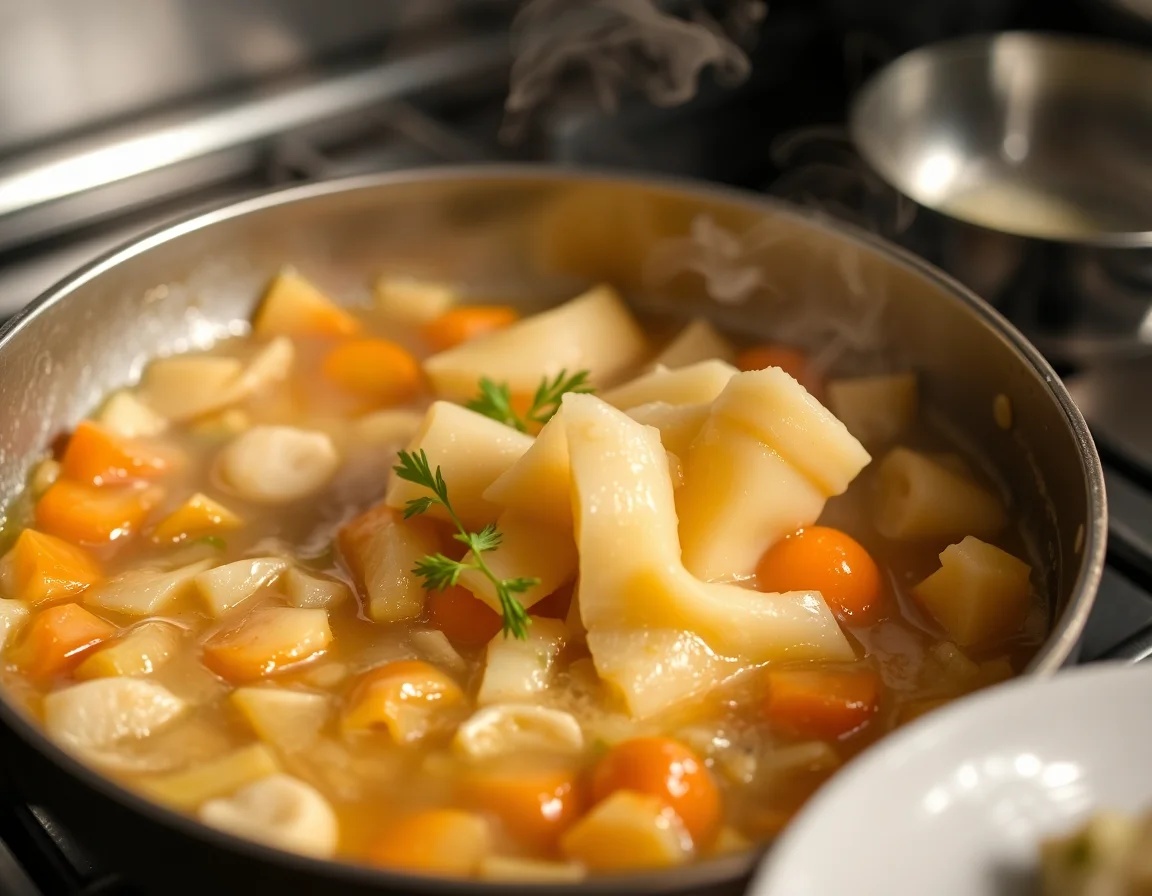
Editorial View: Active cooking process and preparation steps for ALIGOT WITH TURNIPS.
Global Heritage Archive
Anthropological & Spice Migration Record
“A hearty, communal dish from the mountainous Aubrac region of Southern France, traditionally serving as both sustenance for arduous labor and a symbol of warm hospitality.”
🌿 Spice & Botanical Migration
Nutmeg, originating from the remote Banda Islands in Indonesia, traveled to Europe via ancient Arab trade networks, later monopolized by Portuguese and Dutch colonial powers, integrating into European cooking by the early modern period. White pepper, a processed form of black pepper native to India’s Malabar Coast, followed similar maritime spice routes, becoming a prized commodity and a refined seasoning choice in European kitchens due to its milder flavor and aesthetic appeal in lighter dishes.
🏺 Historical & Archaeological Record
While the specific potato-and-cheese Aligot dates to the 18th-19th century, the broader concept of a thick, cheesy gruel for sustenance has much older roots. The earliest evidence of cheese production itself dates back to the Neolithic era, around 8,000 BCE in the Fertile Crescent. The technique of mashing root vegetables is prehistoric. The immediate predecessor to potato Aligot, using bread or other root vegetables with cheese, was likely prepared in French mountainous regions for centuries before potatoes became common. Written mentions of ‘Aligot’ as a distinct preparation appear in 19th-century French regional culinary texts.
💡 Little Known Facts
- Aligot was originally a preparation made with bread, broth, and cheese, offered to pilgrims traversing the Way of St. James in the Aubrac region. Potatoes only replaced bread in the recipe in the 18th-19th century.
- The iconic ‘filage’ (the long, elastic stretch of the cheese) is not just a visual delight but a historical measure of the dish’s quality and the cook’s skill, traditionally performed by vigorously lifting the mixture with a wooden spoon.
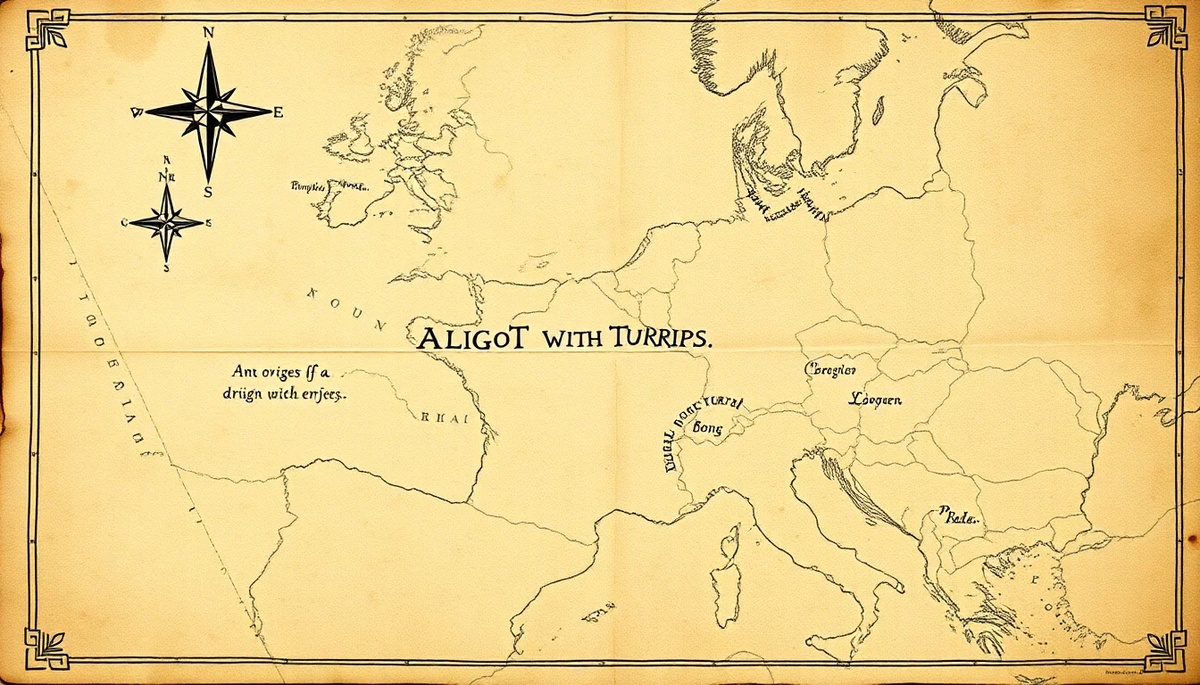
Historical Locality Cartographic Map — Mestizo Media Archive
📸 Made This Heritage Recipe?
We would love to see how your dish turned out! Send a photo of your culinary creation to [email protected] to be featured in our community gallery.
Leave a review and rate this recipe below!
Curated Literature & Washington DC Downtown Calendar
The Culinary Alchemist: Modern Gastronomy & Flavor Pairing
By LDN Gastronomy Series
Artisanal technique, seasonal sourcing, and kitchen mastery.
Upcoming Downtown Happenings
Live acoustic sessions, gallery receptions, literary salons, and independent trade shows across Washington DC.
