
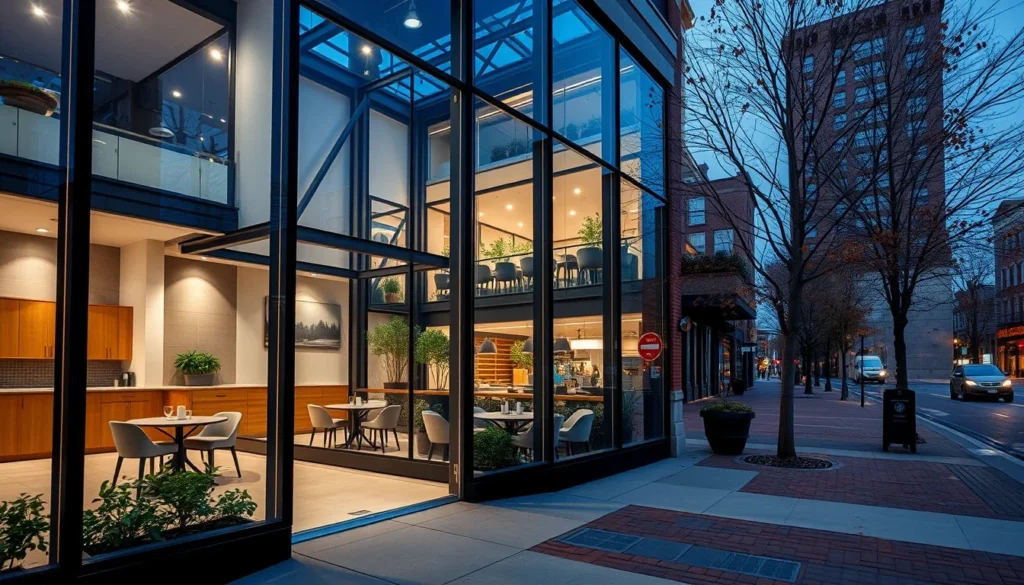
Understanding how federal workforce changes are reshaping the regional economy starts with commercial real estate and daily foot traffic. As agency consolidations, remote schedules, and staffing reductions alter commuter patterns across Washington, DC, Maryland, and Northern Virginia, local hospitality, coworking hubs, and cultural institutions are actively recalibrating their revenue models.
Crisp autumn mornings along K Street NW now look starkly different from pre-pandemic norms. With fewer badge-swipes in federal office buildings, property owners and neighborhood operators face higher commercial vacancy rates and shifting consumer spending across every major corridor.
How are downtown workspaces adapting to displaced federal talent?
Downtown DC coworking venues and public institutions are converting underutilized square footage into career-transition hubs. By offering free daytime seating, structured networking, and job-accelerator programming, these spaces retain skilled professionals in the urban core while supporting local retail.
At Eaton House on K Street NW in Downtown DC, the weekly Former Gov Coworking series operates every Tuesday from 9 a.m. to 5 p.m. Former government and military personnel use the space for structured career transitions without long-term lease commitments.
This model reflects smart capital allocation for commercial properties navigating softer weekday demand. Rather than leaving desks empty, operators build community density that drives nearby coffee, lunch, and transit activity throughout the central business district.

What role do public libraries play in stabilizing regional employment?
Public libraries across the District anchor workforce retraining by providing no-cost infrastructure for displaced professionals. Through reservable study rooms, high-speed connectivity, and targeted career workshops, these civic buildings keep mid-career talent productive within walking distance of Penn Quarter businesses.
The Martin Luther King Jr. Memorial Library at 901 G Street NW in Penn Quarter leads this civic response. Its DC Public Library initiative, Your Path Forward, delivers free coworking spaces and job-accelerator workshops tailored specifically for transitioning federal workers.
Readers tracking the District’s evolving commercial corridors see how civic foot traffic offsets corporate contraction. When professionals spend six hours researching contracts or drafting resumes downtown, neighborhood bakeries and transit corridors capture steady midday spending.
Why are neighborhood restaurants and arts venues offering federal incentives?
Hospitality operators and cultural venues use targeted pricing and ID-verified perks to protect weekday volume during furloughs and layoffs. Maintaining consistent seating occupancy preserves kitchen staffing, supports local performers, and keeps neighborhood blocks active after 5 p.m.
In Foggy Bottom at 2036 G Street NW, Tonic at Quigley’s Pharmacy adjusted its weekday strategy to counter declining office traffic. Patrons presenting a government ID receive a complimentary beer with a burger or sandwich purchase, sustaining evening energy inside the historic pharmacy building.
Along the H Street Corridor at 1333 H Street NE, the Atlas Performing Arts Center extended $20 tickets using the code FEDERAL during regional shutdown disruptions. Accessible ticket tiers keep auditorium seats filled when household discretionary budgets tighten.
Cultural institutions and Northern Virginia corridors adjust to shifting demand
Cultural programming near Judiciary Square has also stepped in to cushion household uncertainty. At 575 3rd Street NW, The Lillian and Albert Small Capital Jewish Museum opened its doors with free admission for federal employees during government shutdowns, reinforcing neighborhood vitality in Penn Quarter.
Across the Potomac River in Fairfax, Northern Virginia absorbs similar contract and agency shifts. The George Mason University Center for the Arts at 4373 Mason Pond Drive offered up to two free tickets per event to federal workers and contractors.
Northern Virginia’s economy relies heavily on private defense and technology contractors tied to federal procurement cycles. When federal agencies pause awards or reduce headcount, suburban retail centers in Fairfax and Tysons feel the ripple effects almost immediately.
Commercial real estate and long-term regional diversification
Regional lenders and institutional landlords now underwrite District and suburban properties with stricter assumptions. Single-tenant federal office buildings face higher refinancing hurdles, prompting developers to evaluate residential conversions and mixed-use retail ground floors across Capitol Hill and Navy Yard.
Homeowners and investors in Potomac, Bethesda, and Georgetown watch these commercial shifts closely. A diversified private-sector base in healthcare, higher education, and hospitality provides stronger long-term insulation than pure government payroll dependency.
As fall settles over the DMV, the region’s economic resilience depends on adaptability rather than nostalgia for five-day federal commutes. From K Street coworking rooms to Fairfax performance halls, local institutions are building a leaner, more self-reliant commercial ecosystem.
Little Known Fact: U.S. Office of Personnel Management data shows that roughly 85 percent of federal civilian employees work outside the Washington, DC metropolitan area, yet the 15 percent based in the DMV generate one of the highest concentrations of regional payroll and commercial real estate demand nationwide. (Source: U.S. Office of Personnel Management)
Curated Literature & Washington DC Downtown Calendar
The Architecture of Focus: Deep Work & Modern Mastery
By Founders Library Press
A structured framework for strategic clarity, productivity, and authentic execution.
Upcoming Downtown Happenings
Live acoustic sessions, gallery receptions, literary salons, and independent trade shows across Washington DC.
Stream on Apple Music, Download on iTunes & Explore Music Audiobooks
Listen to tracks, albums, and curated mixes inspired by Federal Workforce Shifts Reshape the DMV Economy on Apple Music and iTunes, or explore unabridged music history audiobooks on Apple Books:
DC Life Magazine Insider Dispatch
Get Curated Local Guides and Editorial Features
Tell us your city and primary editorial interest so our editors send relevant local dining, culture, style, and outdoor guides with zero clutter.
