
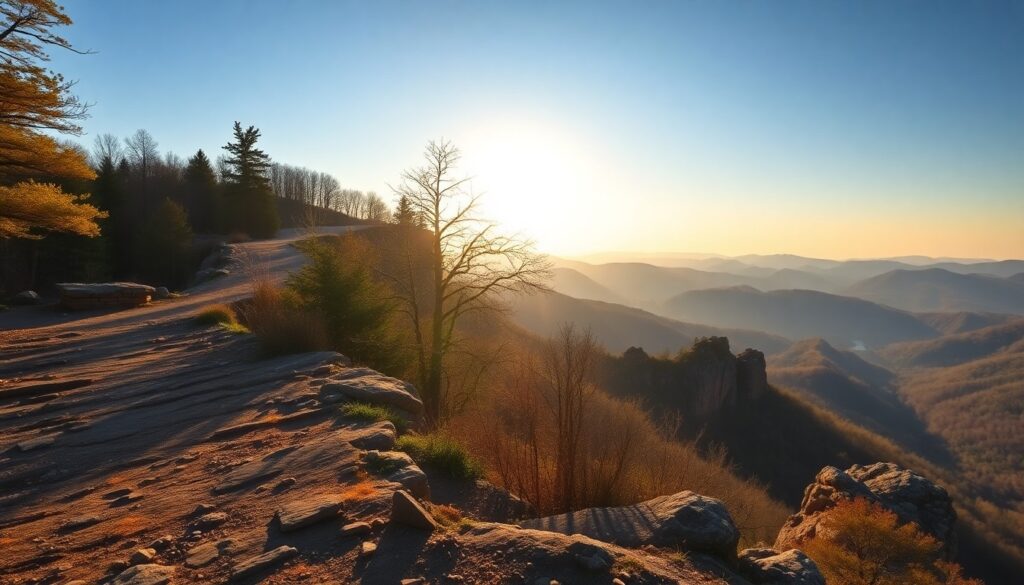
The air at Seneca Rocks carries the crisp scent of pine and damp earth, a prelude to the breathtaking vista that awaits. Above you, the colossal fins of Oriskany Sandstone, sculpted by millennia of wind and water, pierce the sky like ancient sentinels. Embarking on the Seneca Rocks Summit Trail, you’re not just hiking; you’re ascending into a geological marvel, a dramatic centerpiece of the Monongahela National Forest that promises unparalleled views and a profound connection to West Virginia’s wild heart.
Trail Specifications
- Trail Name: Seneca Rocks Summit Trail
- Location: Monongahela National Forest, Pendleton County, West Virginia
- Distance: Approximately 3.6 miles roundtrip
- Elevation Gain: Approximately 730 feet
- Difficulty: Moderate
- GPS Coordinates (Trailhead): 38.8340° N, 79.3879° W (Near Seneca Rocks Discovery Center)
- Best Season: Spring, Summer, Fall
- Dog-Friendly: Yes, on leash
Route Overview & Natural Highlights
The Seneca Rocks Summit Trail offers a quintessential Appalachian hiking experience, guiding you through a mature deciduous forest before revealing the region’s signature geological formations. As you ascend, you’ll traverse a well-maintained path, initially wide and gravelly, gradually narrowing to a packed earth and rocky surface. The terrain is a mix of steady inclines punctuated by switchbacks, providing a challenging yet rewarding climb for hikers of moderate fitness.
The ecology here is characteristic of the Allegheny Mountains, dominated by towering oak (Quercus spp.), hickory (Carya spp.), and maple (Acer spp.) trees, with pockets of Eastern Hemlock (Tsuga canadensis) clinging to cooler slopes. In spring, the forest floor comes alive with wildflowers like trillium and bloodroot, while in summer, the dense canopy provides welcome shade. Keep an eye out for diverse birdlife, including various warblers and raptors like Red-tailed Hawks soaring above the cliffs. Deer are common, and if you’re particularly lucky and observant, you might spot signs of black bear activity, though direct encounters are rare.
Geologically, Seneca Rocks is a spectacular example of an eroded anticline, a fold in the Earth’s crust where layers of rock are bent upward. The prominent fins are composed primarily of the erosion-resistant Oriskany Sandstone, a relatively young formation compared to the older Tuscarora Sandstone found in nearby North Fork Mountain. This durable quartz sandstone has withstood millennia of weathering, standing proud while softer surrounding shales and limestones eroded away. The sheer scale and unique formation make this a truly iconic landmark, a living lesson in geological forces that shaped the Allegheny Front.
Turn-by-Turn Trail Breakdown
Trailhead Start: The Forest’s Embrace
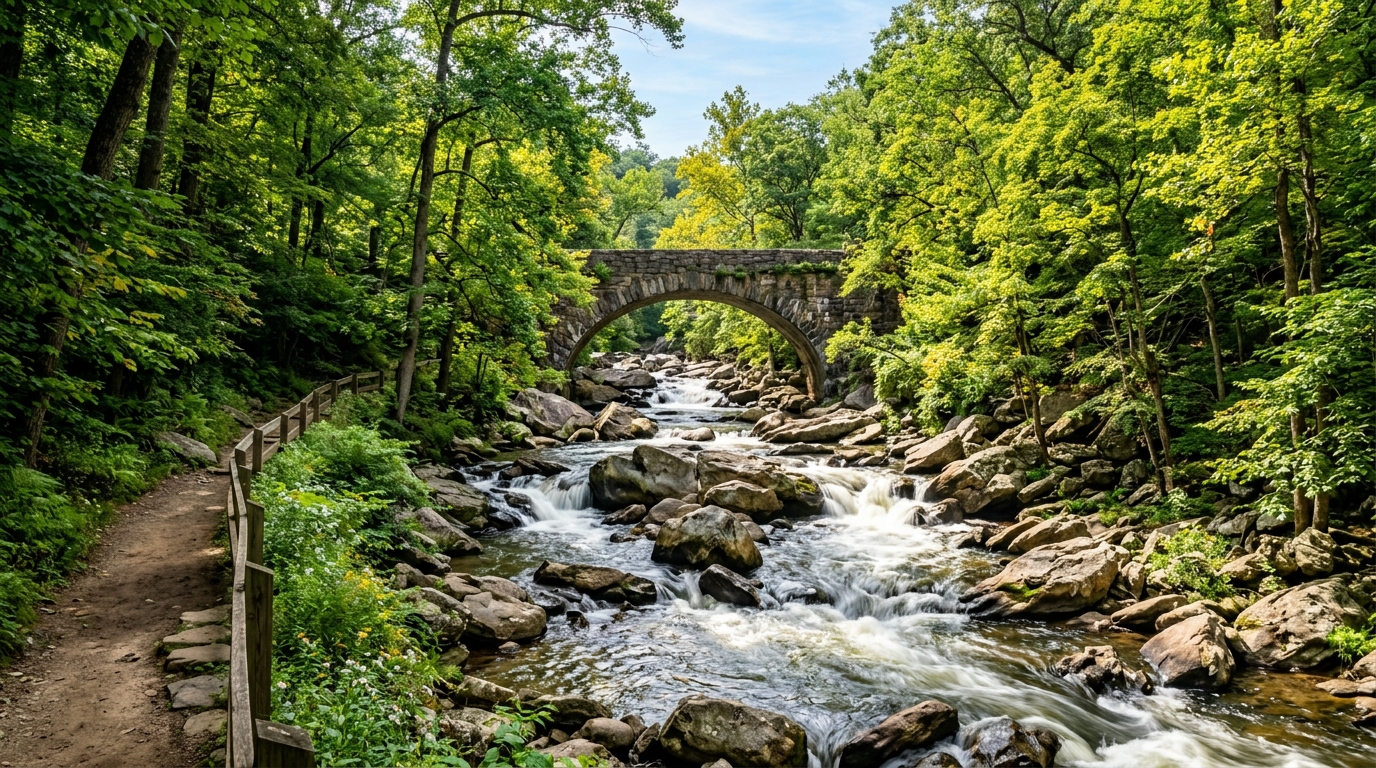
Your journey begins at the Seneca Rocks Discovery Center parking area. The initial segment of the trail is a clear, wide path, gently sloping upward and quickly immersing you in the dense forest. You’ll cross a charming wooden bridge over Seneca Creek, its waters typically clear and shallow. This early section is a pleasant warm-up, allowing your legs to find their rhythm as you breathe in the clean mountain air. The path here is mostly gravel and compacted earth, making for easy footing. Interpretive signs along this stretch often provide insights into the local flora, fauna, and the rich history of the area, including its significance to the local Seneca people and its role as a climbing destination since the 1930s.
Mid-Trail Features: Ascending the Ridge
As you progress, the trail gradually steepens, transitioning into a series of well-engineered switchbacks designed to ease the ascent. You’ll notice the path becoming rockier in places, with exposed roots and occasional stone steps. The forest canopy remains thick, filtering sunlight and creating a serene atmosphere. Along this section, you might catch glimpses of the rock formations through the trees, teasing you with what’s to come. This is where you truly gain elevation, and the consistent climb offers a good workout. Listen for the rustle of leaves and the calls of birds as you wind your way up the eastern flank of the ridge.
Summit & Return: The Panoramic Reward
The final push to the summit is marked by a more rugged path, culminating in a short, steep climb to the observation platform. This impressive structure is built directly into the rocks, offering a secure and unparalleled vantage point. From here, you are treated to a sweeping panorama of the North Fork Valley, the meandering North Fork of the South Branch of the Potomac River, and the endless ridges of the Monongahela National Forest stretching to the horizon. You’ll see the sharp, dramatic profile of Seneca Rocks up close, a truly unique geological spectacle. After soaking in the views and capturing unforgettable photos, you’ll retrace your steps back down the same trail, enjoying different perspectives of the forest as you descend.

Seasonal Guide & Best Times
- Spring (April – May): Ideal for wildflower enthusiasts. The forest floor bursts with color, and temperatures are pleasantly mild. Expect fewer crowds than in peak summer.
- Summer (June – August): The trail is lush and green, offering ample shade. Be prepared for warmer temperatures and potential humidity, especially in July and August. Weekends can be quite busy.
- Fall (September – October): Arguably the most spectacular time to visit. The Appalachian hardwood forest transforms into a breathtaking palette of reds, oranges, and yellows. Crisp air and comfortable hiking temperatures make this a prime season, but expect significant crowds.
- Winter (November – March): Offers a stark, quiet beauty. The trail can be icy and snowy, requiring appropriate gear like microspikes or snowshoes. Fewer services may be open, and the Discovery Center often has reduced hours. Check conditions before you go.
Essential Gear & Safety
- Sturdy Hiking Boots: The trail can be rocky and uneven, especially on the upper sections.
- Water and Snacks: Carry at least 2 liters of water per person, especially on warmer days.
- Map and Compass/GPS: While the trail is well-marked, it’s always wise to have navigation tools.
- First-Aid Kit: For minor scrapes and blisters.
- Layered Clothing: Mountain weather can change rapidly.
- For more detailed trail information and recent conditions, visit the Seneca Rocks Summit Trail on AllTrails.
Getting There & Parking
The Seneca Rocks Summit Trailhead is conveniently located directly behind the Seneca Rocks Discovery Center, situated on U.S. Route 33/Route 28 in Pendleton County, West Virginia. The Discovery Center serves as an excellent starting point, offering restrooms, interpretive exhibits, and sometimes a gift shop. From most points, you’ll follow signage for Monongahela National Forest and then specific directions to Seneca Rocks. There is ample free parking available at the Discovery Center lot. The center typically operates from spring through fall, though trail access is generally year-round. Always check the U.S. Forest Service website for current operating hours and any potential alerts or closures before planning your visit.
Curated Literature & Washington DC Downtown Calendar
The Architecture of Focus: Deep Work & Modern Mastery
By Founders Library Press
A structured framework for strategic clarity, productivity, and authentic execution.
Upcoming Downtown Happenings
Live acoustic sessions, gallery receptions, literary salons, and independent trade shows across Washington DC.
