
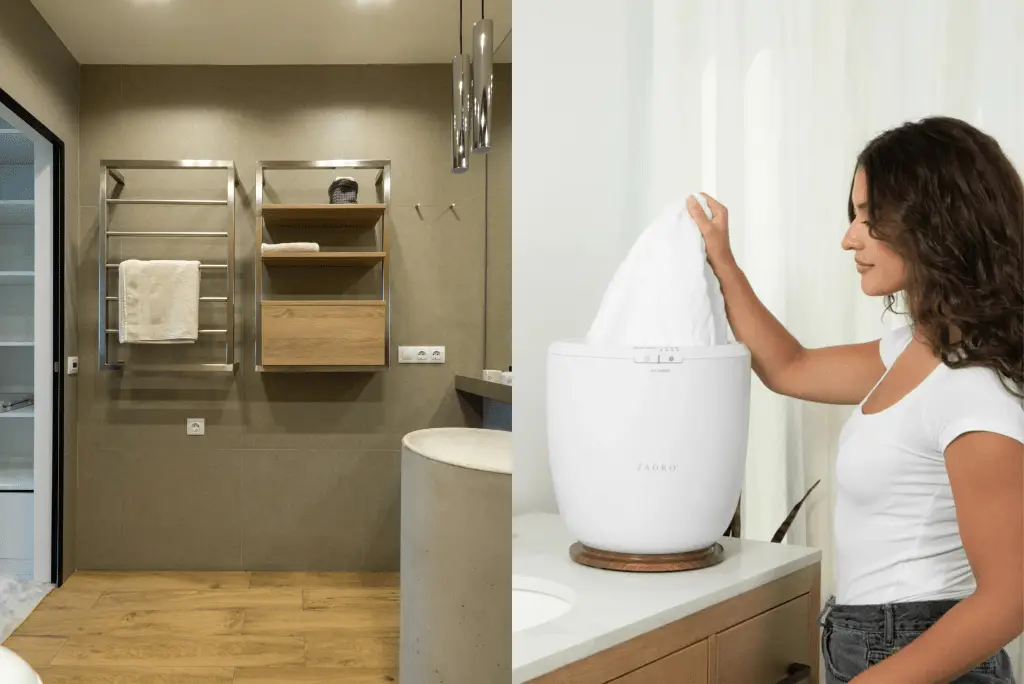
A towel warmer bucket or a traditional heated towel rack adds comfort and convenience to any bathroom, but not all models work the same way. Some use open racks that heat towels through metal bars, while others use enclosed buckets that warm towels from all sides.
Each type offers distinct advantages depending on space, lifestyle, and how often towels need drying versus warming. A bucket suits those who want quick, spa-like warmth before use. A rack fits better for those who prefer continuous drying and a tidy bathroom setup.
Understanding how these two designs differ in performance, setup, and comfort helps anyone choose the right one for their space. The next sections explain how each works, what to expect after installation, and which option delivers the best overall experience.
Direct Comparison: Towel Warmer Bucket vs. Traditional Towel Rack
A towel warmer bucket heats towels evenly inside an enclosed space, while a traditional rack warms them through direct contact with heated bars. Each design affects warmth, drying time, and energy use in different ways that matter for comfort and practicality.
Warming Performance and Comfort
A towel warmer bucket surrounds the towel with heat, which creates a uniform temperature across the entire fabric. This design keeps towels warmer for longer and prevents cold spots. It also provides a spa-like feel after a shower, especially models such as a spa towel warmer with timer that lets users preheat towels before use. A heated rack works by transferring warmth through metal bars. The sections of the towel that touch the bars heat faster, while other areas stay cooler. This method may not deliver full-body warmth but offers a steady heat source that can double as a drying station. For consistent comfort, the bucket design usually provides a more enclosed, even warmth.
Drying Capability and Hygiene
A towel warmer rack dries towels more effectively because it exposes them to circulating air. The open design allows moisture to escape, which helps prevent mildew. It also keeps towels fresh between uses, especially in humid bathrooms.
A bucket warmer, in contrast, traps heat inside a closed container. While this setup warms towels quickly, it does not remove moisture as efficiently. Towels placed inside while damp may stay warm but might not dry completely. As a result, users often pair the bucket with a rack for full drying.
For hygiene, racks maintain better airflow, while buckets focus on heat retention. Both require regular cleaning to prevent odor buildup, but racks usually need less maintenance due to their open structure.
Capacity and Towel Types Supported
Most towel warmer buckets fit one or two full-size towels at a time. Their compact shape makes them ideal for small bathrooms or single users. The enclosed space also suits robes or baby blankets that benefit from gentle, even heat.
Traditional racks vary in size, from small wall-mounted units to large freestanding versions. They can hold several towels at once, making them practical for families. However, thick towels may take longer to heat fully since only the parts touching the bars receive direct warmth.
For households that value quick, personal comfort, the bucket design offers convenience. For shared spaces, the rack provides more capacity and better organization.
Energy Efficiency and Cost Considerations
Electric towel racks typically use low wattage, similar to a small light bulb. They draw power steadily and can stay on for hours with minimal cost. Hardwired versions integrate with bathroom circuits, while plug-in models suit renters.
Towel warmer buckets consume power only during active heating cycles. Many include timers or temperature controls that reduce energy waste. Because they heat a smaller area for a shorter time, their total energy use is often lower.
Installation costs also differ. Racks may require wall mounting or professional wiring, while buckets need only an outlet. Over time, both options remain affordable to operate, but the bucket’s shorter heating period can make it slightly more efficient for single-use comfort.
Features, Installation, and User Experience
A towel warmer’s design affects how easily it fits into daily routines, how safe it feels to use, and how well it complements the bathroom layout. The main differences appear in setup needs, safety controls, and how each style blends into the space.
Setup, Portability, and Space Requirements
A bucket-style towel warmer often requires no installation. It plugs into a standard outlet and can sit on a counter or floor. This makes it convenient for renters or small bathrooms. Many models, such as freestanding or aromatherapy towel warmers, include handles for easy movement.
A wall-mounted towel warmer, sometimes called a heated rack, needs more planning. It must attach securely to a wall and connect to power, either through a plug or a hardwired setup. This type saves floor space and keeps towels off surfaces.
In tight spaces, a freestanding towel warmer provides flexibility but takes up more room. A wall-mounted version fits better in compact bathrooms. Choosing between the two depends on how much space is available and whether permanent installation suits the home.
Controls, Safety, and Extra Features
Modern electric towel warmers include simple controls such as power switches, timers, or adjustable temperature dials. Some models heat within 15 to 30 minutes, while others allow users to set specific cycles.
Safety features matter for daily use. Buckets often include automatic shut-off functions to prevent overheating. Wall-mounted racks stay cooler to the touch but should still be kept away from wet areas.
Extra conveniences appear in higher-end models. For example, an aromatherapy towel warmer may include a fragrance tray to add a light scent. Others may feature LED indicators or digital displays for easier operation. These small details improve comfort and make the product easier to manage.
Aesthetics and Bathroom Integration

A towel warmer also serves as a design element. Wall-mounted towel warmers often feature stainless steel or matte finishes that match modern fixtures. Their slim shape gives a clean, built-in appearance.
Bucket-style warmers look more like small appliances. They suit bathrooms with extra counter or floor space and can double as decorative accents if chosen in neutral or metallic tones.
Color, size, and shape influence how well each model fits the room. A sleek wall-mounted rack suits minimalist spaces, while a rounded bucket warmer adds a softer look. Both types can create a neat, comfortable environment if chosen with the bathroom layout in mind.
Conclusion
A towel warmer bucket offers fast, full heat for towels without installation, which suits renters or small spaces. It keeps towels evenly warm inside a closed container but cannot dry damp ones fully.
A traditional towel rack provides a simple, low-cost way to hang and air-dry towels. However, it lacks the comfort of heat or the ability to keep towels warm after use.
Both options serve different needs. Those who value convenience and warmth may prefer a bucket model, while others seeking practicality and drying space may lean toward a standard rack.
Curated Literature & Washington DC Downtown Calendar
The Architecture of Focus: Deep Work & Modern Mastery
By Founders Library Press
A structured framework for strategic clarity, productivity, and authentic execution.
Upcoming Downtown Happenings
Live acoustic sessions, gallery receptions, literary salons, and independent trade shows across Washington DC.
