
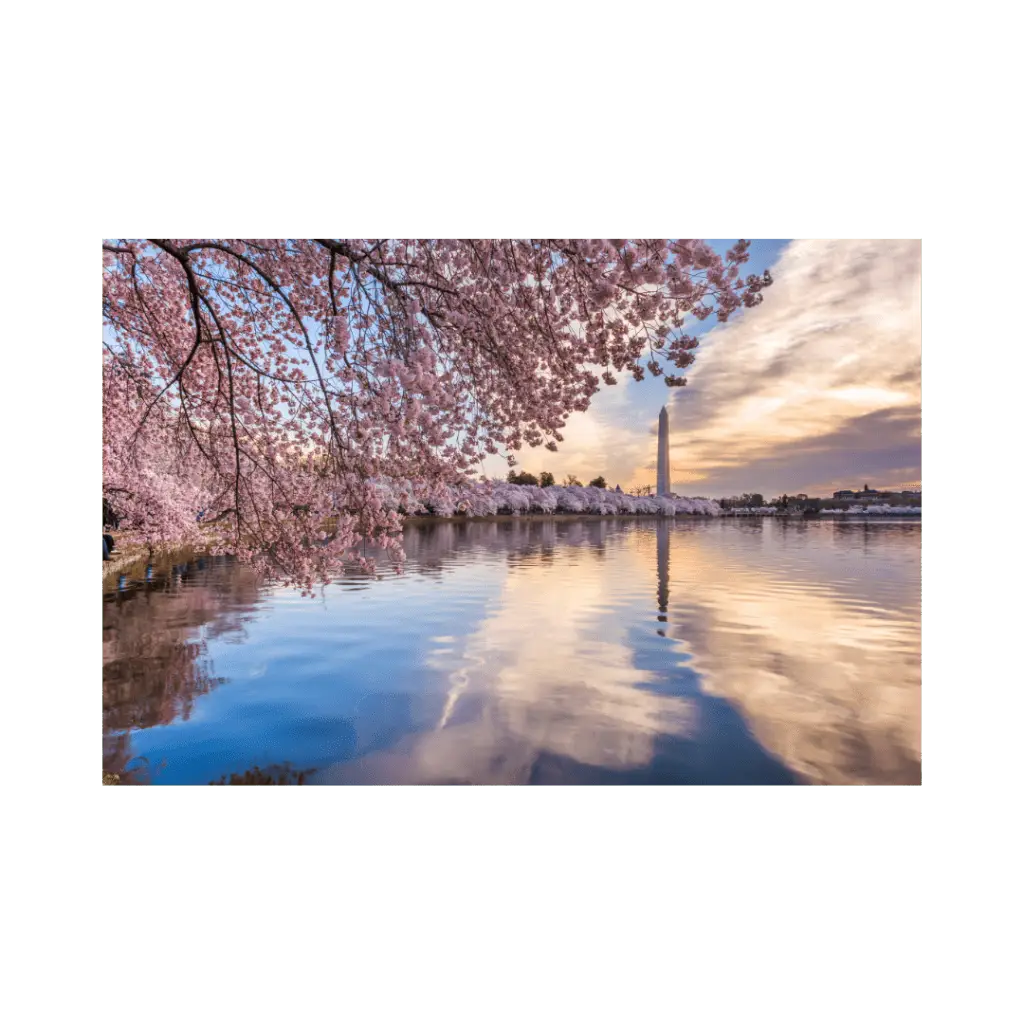
Spring transforms Washington, DC into a pink paradise, and choosing the right Cherry Trees DC for your yard can extend this beauty. While the famous Tidal Basin draws millions of visitors each year, you can create your own stunning display right at home.
The key lies in choosing the right variety for DC’s unique climate and growing conditions. Our region experiences hot, humid summers and cold winters, which means selecting cherry trees that thrive in USDA hardiness zones 6b to 7a. Whether you want early spring blooms, delicious fruit, or compact trees for smaller spaces, the right cherry variety can transform your outdoor space into a personal oasis.
This guide explores the best cherry tree options for DC-area yards. We cover everything from ornamental showstoppers to fruit-bearing varieties that deliver both beauty and harvest.
Selecting the Best Ornamental Cherry Trees DC Offers
Yoshino Cherry
The Yoshino cherry reigns as Washington, DC’s most famous tree variety. These trees produce the iconic pale pink and white blossoms that blanket the National Mall each spring. The trees can grow 25-40 feet tall with a graceful, spreading canopy that provides excellent summer shade.
These trees bloom early, typically in late March to early April, making them perfect for those eager to welcome spring. Their flowers appear before the leaves, creating a dramatic cloud-like effect. Best part? Yoshino cherries adapt well to various soil conditions and tolerate urban pollution, making them ideal for city gardens.
Kanzan Cherry
Kanzan cherries deliver the most dramatic spring display with their full, double pink blooms. These flowers resemble tiny roses and last longer than single-flowered varieties. The trees grow 25-30 feet tall and wide, creating a substantial presence in medium to large yards.
What sets Kanzan cherries apart is their extended bloom period and stunning fall color. The leaves turn brilliant orange-red in autumn, providing two seasons of spectacular beauty. They bloom slightly later than Yoshino cherries, typically in mid to late April, extending your cherry blossom season.
Weeping Cherry
 Weeping cherries create an elegant focal point with their cascading branches that sweep toward the ground. These trees work perfectly in smaller DC yards, typically reaching 15-25 feet in height. Their graceful form makes them excellent specimen trees for front yards or as centerpieces in garden designs.
The pink buds open to pale pink or white flowers that cover the drooping branches in early spring. Weeping cherries bloom reliably each year and require minimal maintenance once established. They adapt well to various soil types and handle DC’s climate fluctuations with ease. If you’re not an excellent gardener, this is the tree for you.
Fruit-Bearing Cherry Trees for Edible Gardens
Sweet Cherry Varieties
Sweet cherries reward you with delicious fruit while providing ornamental value. However, most sweet cherry varieties need cross-pollination, so you’ll need to plant at least two different cultivars for fruit production.
Bing Cherries
Bing cherries produce large, dark red fruit perfect for fresh eating. These trees grow 15-25 feet tall and bloom with white flowers in early spring. Bing cherries need a pollinator variety, such as Black Tartarian or Lambert, to produce fruit.
Black Tartarian Cherries
Black Tartarian cherries offer early-season fruit with deep red, almost black skin. These trees serve double duty as both ornamental and productive, with showy spring blooms followed by sweet summer cherries. They’re excellent pollinators for other sweet cherry varieties.
Sour Cherry Options
Sour cherries offer several advantages for DC gardeners. Most varieties self-pollinate, meaning you only need one tree for fruit production. They also tend to be more cold-hardy and disease-resistant than sweet cherries.
Montmorency Cherries
Montmorency cherries dominate sour cherry production with their bright red, tart fruit perfect for pies and preserves. These trees stay relatively compact at 15-20 feet, making them suitable for smaller yards. They bloom later than sweet cherries, often avoiding late frost damage.
North Star Cherries
North Star cherries provide a dwarf option that reaches only 8-10 feet tall. These naturally compact trees work well in small spaces or container gardens. They produce dark red, semi-sweet fruit and require minimal pruning to maintain their shape. Another great option for those slowly developingtheir green thumb.
Compact Cherry Trees for Small Spaces
Higan Cherry
Higan cherries excel in small DC yards with their moderate size and reliable blooms. These trees typically reach 15-25 feet tall and wide, providing manageable scale for urban gardens. They produce delicate pink flowers in early spring and sometimes offer a second, lighter bloom in fall.
The trees adapt well to various growing conditions and tolerate urban stress better than many other cherry varieties. Their relatively long lifespan and disease resistance make them smart long-term investments for your landscape.
Okame Cherry
Okame cherries deliver early spring color with their bright pink flowers that appear in late February to early March. They bloom before most other cherry varieties, extending your overall blossom season.
What makes Okame cherries special is their exceptional fall color. The leaves turn brilliant orange-red, rivaling any maple for autumn beauty. They also show good heat tolerance, important for DC’s sometimes brutal summers.
Planting and Care Tips for DC Cherry Trees
Cherry trees thrive in well-draining soil with full sun exposure. Choose a location that receives at least six hours of direct sunlight daily. Avoid low-lying areas where water collects, as cherry trees dislike wet feet (don’t we all?).
Young cherry trees need regular watering their first two years while establishing their root systems. Once established, they tolerate drought reasonably well but perform better with consistent moisture during dry spells.
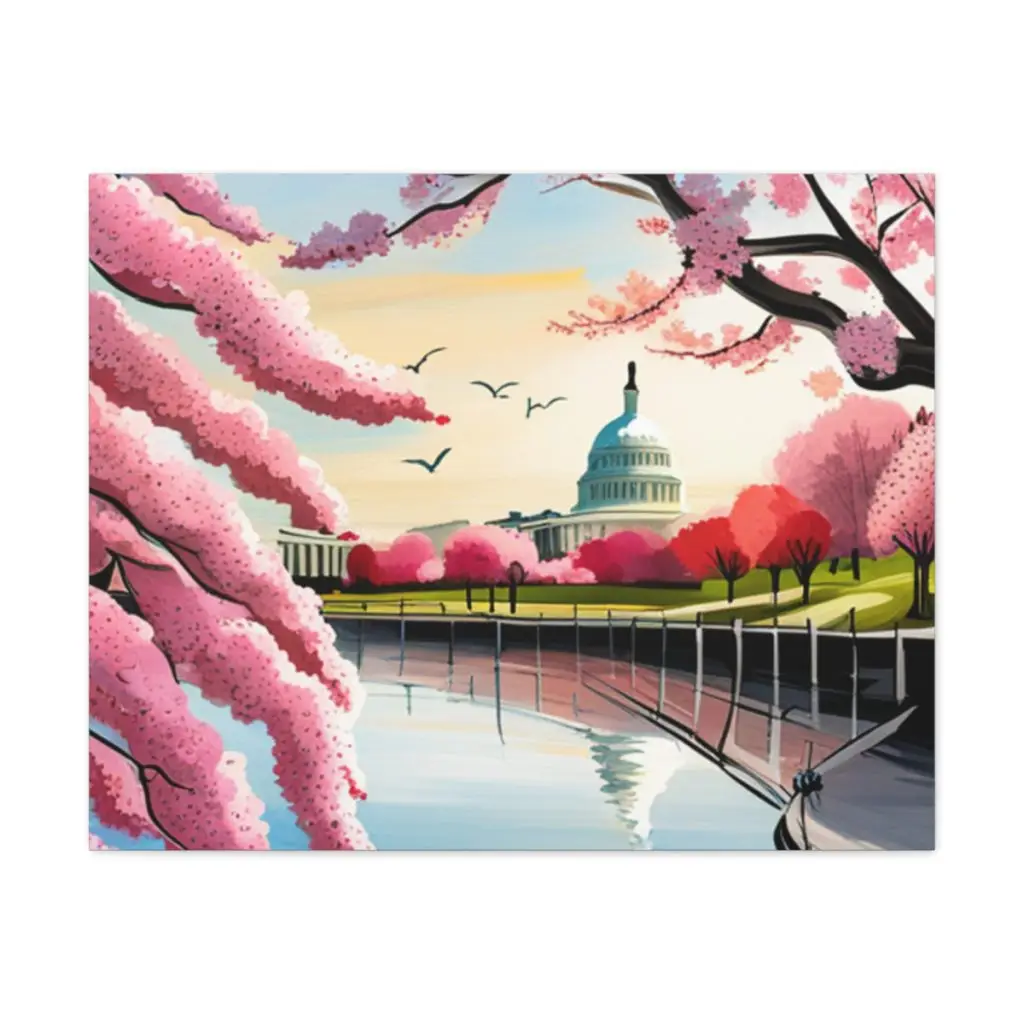
Cherry Blossoms Capitol
Uplift any room’s decor with art that’s printed on top-quality canvas gallery wraps. Each wrap is made with finely textured, artist-grade cotton substrate which helps reproduce your image in outstanding clarity and detail. Available in multiple sizes, these closed back canvases are built with a patented, solid support face and are excellent for indoor use.
.: Made with 100% cotton…
Creating Your Cherry Blossom Paradise
Cherry trees transform ordinary yards into extraordinary spaces that celebrate the changing seasons. Whether you choose the classic beauty of Yoshino cherries, the dramatic blooms of Kanzan varieties, or the dual purpose of fruit-bearing trees, you’ll create lasting beauty that increases your property value and personal enjoyment.
Plant your cherry trees now and take good care of them over summer to get gorgeous blossoms in spring. Your neighbors will thank you for bringing a piece of DC’s famous cherry blossom magic to your street.
For those in the capital region, understanding which Cherry Trees DC soil and climate best suit is crucial for a thriving garden.
Whether you’re looking for vibrant spring blooms or delicious fruit, exploring the diverse options for Cherry Trees DC provides exciting possibilities.
Curated Literature & Washington DC Downtown Calendar
The Architecture of Focus: Deep Work & Modern Mastery
By Founders Library Press
A structured framework for strategic clarity, productivity, and authentic execution.
Upcoming Downtown Happenings
Live acoustic sessions, gallery receptions, literary salons, and independent trade shows across Washington DC.
