
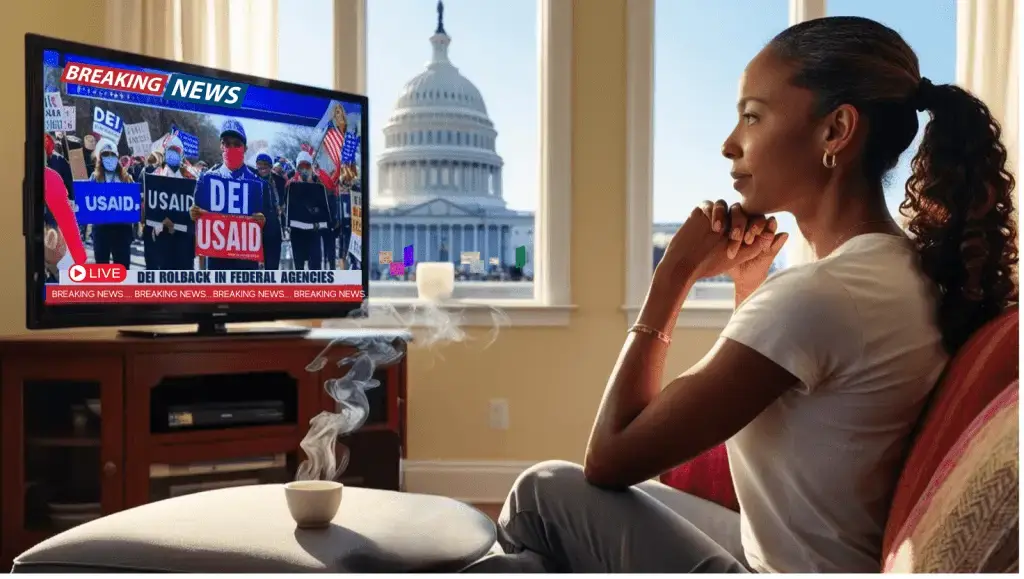
A few weeks into the new administration, and the air is thick with a familiar tension—one that many Black and Brown Americans recognize all too well. The rollback of Diversity, Equity, and Inclusion (DEI) initiatives, coupled with a slew of executive orders that read like a greatest-hits album of regression. This start has already left marginalized communities bracing for impact.
TARGETED POLITICAL STRESSORS
This isn’t just political theater; it’s a direct assault on the psychological well-being of millions. History has taught us that uncertainty breeds stress, and for those who have lived through America’s cyclical hostility toward racial progress, the déjà vu is exhausting. The mental health crisis that already disproportionately affects Black Americans is now compounded by the weight of watching hard-fought gains erased in real-time. The stress response—heightened cortisol, increased anxiety, sleepless nights—becomes a collective condition, a shared ailment born of systemic disregard.
And yet, the conversation around health and well-being in this climate cannot ignore the inescapable link between policy and mental stability. The rollback of DEI efforts isn’t just about workplace diversity; it signals to Black professionals, students, and everyday citizens that their presence, their voices, and their contributions are expendable.
GOVERNMENT GASLIGHTING
With the stroke of a pen, the government is gaslighting an entire demographic—erasing history in classrooms, dismantling protections in offices, and forcing marginalized communities to justify their right to exist in spaces they’ve already earned. This, in itself, is an act of harm. Stress isn’t just about microaggressions at work or racially charged encounters on the street; it’s about knowing that the highest office in the land is actively working against your interests. It’s about waking up every morning and wondering if your child’s history book has been rewritten overnight or if your job will still have an equity policy tomorrow.
DEEP UNEASE
This unease runs deeper than current events—it is embedded in the DNA and neural pathways of Black and Brown people, an inheritance of historical trauma stretching from slavery through Jim Crow and into systemic oppression. This isn’t just about how we feel today; it’s about how centuries of coercion and how living in survival mode has been biologically reinforced and manifest in our bodies. The weight of oppression isn’t just psychological; it is physiological, woven into the synapses that shape our fears, anxieties, and even how we navigate the world.
PROTECTING OUR PEACE
What we are witnessing is a full-scale assault on the mental, emotional, and physical health of historically marginalized communities—masked as bureaucratic policy shifts but felt in every fiber of Black and Brown existence. The expectation, of course, is resilience. After all, resistance is in our DNA. But even the strongest among us need rest, need space to process, need the radical act of self-care in a system that was not built with our wellness in mind.
If the past few weeks have set the tone for what’s ahead, then prioritizing mental health, collective support, and strategic resistance will be paramount. Because while this administration may thrive on chaos, we cannot allow it to rob us of our peace. Resisting, surviving, and yes, thriving—despite it all—becomes not just an act of defiance but a necessary investment in our own well-being.
Protecting our peace doesn’t have to mean disengagement – it can be advocating in a way that safeguards our well-being. Political activism, approached mindfully, can be empowering rather than depleting. Choose activism that aligns with your capacity—whether that means protesting, educating, donating, or lobbying for policy change. Small acts of resistance, like amplifying marginalized voices or holding institutions accountable can create ripples of change. This fight is not just for justice, its for joy.

BE YOUR COMMUNITY’S “CHANGE AGENT”
How do you protect your peace in a world determined to disturb it? Start with intentionality. Socially, lean into your community—call your people, laugh, gather, and remind yourself that joy is a form of protest. Environmentally, curate your space—light a candle, declutter, and turn off the news when it starts feeling like an attack on your nervous system. Mentally, engage in practices that ground you—journaling, therapy, or simply unplugging from the doom scroll. Physically, honor your body—take walks, stretch, get a massage, or dance it out in your living room to the songs that make you feel alive. Spiritually, tap into whatever brings you peace—prayer, meditation, or a quiet moment of gratitude before the chaos of the day begins. At the end of the day, self-preservation isn’t selfish—it’s survival.
Curated Literature & Washington DC Downtown Calendar
The Architecture of Focus: Deep Work & Modern Mastery
By Founders Library Press
A structured framework for strategic clarity, productivity, and authentic execution.
Upcoming Downtown Happenings
Live acoustic sessions, gallery receptions, literary salons, and independent trade shows across Washington DC.

