
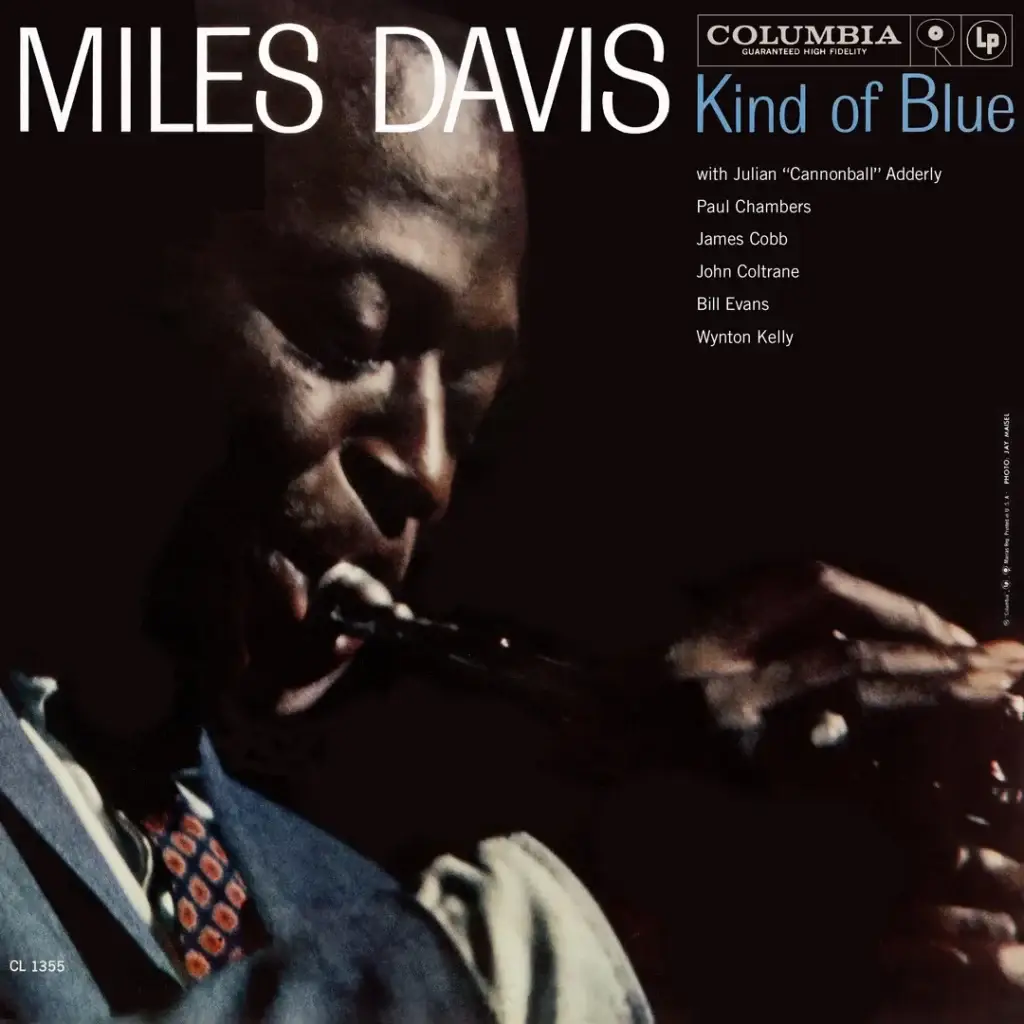
Miles Davis: Kind of Blue and the Cool Jazz Revolution
Miles Davis’s 1959 masterpiece, ‘Kind of Blue,’ stands as a keystone in the cultural firmament, an album that not only defined an era but transcended time itself. Its revolutionary sound profoundly shaped the course of jazz history.
The Genesis of a Revolution: From Bebop’s Complexity to Modal Simplicity
The mid-1950s found jazz in a period of dazzling, yet increasingly complex, virtuosity. Bebop, with its lightning-fast tempos, intricate chord changes, and demanding harmonic structures, had pushed the boundaries of improvisation to thrilling extremes. While brilliant, Miles Davis, ever the iconoclast, began to feel a creative constriction within these dense frameworks. He sought a different path, one that prioritized space, mood, and melodic invention over a relentless navigation of rapidly shifting harmonies. His quest was for an approach that offered improvisers more freedom, allowing them to explore scales (modes) for extended periods rather than being tethered to a chord-by-chord progression.
This nascent idea, subtly hinted at in earlier works like ‘Milestones’, found its full expression in modal jazz. Drawing inspiration from classical music, African rhythms, and perhaps even the theoretical work of George Russell, Davis envisioned a music where the soloist could delve deeply into the nuances of a single scale, fostering introspection and emotional depth. It was a conscious stripping away of harmonic clutter, a move towards a more minimalist, yet profoundly expressive, canvas. This philosophical pivot would become the bedrock upon which ‘Kind of Blue’ was built, offering a refreshing counterpoint to the prevailing jazz idiom and inviting both musicians and audiences to listen with new ears.
The Hallowed Ground of Columbia’s 30th Street Studio: Two Legendary Days
The magic of ‘Kind of Blue’ was distilled over two extraordinary recording sessions: March 2 and April 22, 1959. The setting was Columbia Records’ 30th Street Studio in New York City, a former Armenian church known for its cavernous dimensions and legendary acoustics – affectionately dubbed “The Church” by those who recorded there. This hallowed space, with its natural reverb and unparalleled clarity, provided the perfect crucible for the album’s creation.
Miles Davis, true to his innovative spirit, arrived at these sessions with little more than sketches for his musicians. There were no extensive rehearsals, no pre-written scores handed out weeks in advance. Instead, he presented the ensemble with rudimentary modal scales and melodic fragments, sometimes just a few chords, on the very day of recording. The musicians, seasoned virtuosos though they were, were essentially sight-reading and creating on the spot. This daring approach fostered an atmosphere of spontaneous invention, pushing each artist to react instinctively, to listen intently, and to contribute to a collective whole that felt both fresh and timeless. The result was an astonishing testament to their individual brilliance and their collective chemistry, capturing raw, unadulterated creativity, often in just a single take.
An Assembly of Titans: The Quintessential ‘Kind of Blue’ Sextet
Central to the album’s enduring power was the unparalleled gathering of talent Miles Davis assembled. This wasn’t merely a group of sidemen; it was a summit of jazz giants, each at the precipice of their own monumental careers, their individual voices converging into a breathtaking collective statement.
- Miles Davis (trumpet): The enigmatic leader, whose sparse, lyrical trumpet lines speak volumes through their understatement and impeccable phrasing. His sound is the album’s emotional core.
- John Coltrane (tenor saxophone): Already a force of nature, his intense, exploratory solos, pushing the modal boundaries, offer a dynamic contrast to Davis’s cool restraint.
- Julian “Cannonball” Adderley (alto saxophone): A vibrant counterpoint to Coltrane, Adderley’s soulful, blues-inflected playing brought warmth, exuberance, and an infectious melodicism to the proceedings.
- Bill Evans (piano): The album’s true harmonic architect, Evans’s delicate touch, sophisticated voicings, and profound lyricism are integral to its melancholic beauty and introspective mood. His influence is unmistakable throughout.
- Wynton Kelly (piano): Providing a bluesier, more swinging alternative to Evans on one track, Kelly’s presence adds another layer of versatility to the ensemble.
- Paul Chambers (bass): The steadfast anchor, Chambers’s robust, melodic bass lines provide an unwavering foundation, guiding the rhythmic and harmonic flow with precision and swing.
- Jimmy Cobb (drums): The master of subtlety and elegance, Cobb’s understated drumming provides the perfect support, propelling the music forward with gentle sophistication rather than overt display.
This ensemble, each a distinct voice, engaged in a profound musical conversation, demonstrating a shared understanding and a collective ability to breathe life into Miles’s minimalist blueprints.
A Meditative Journey: Appreciating the Masterpieces
The brilliance of ‘Kind of Blue’ lies not only in its revolutionary approach but also in the sheer beauty and emotional resonance of its individual tracks. Each piece is a meticulously crafted jewel, offering a different facet of the modal jazz aesthetic.
‘So What’: The Definitive Statement. The album opens with its most iconic track, a masterpiece of understated cool. Instantly recognizable by Paul Chambers’s unforgettable bass line, ‘So What’ is a masterclass in modal improvisation. Its simple AABA structure, alternating between D minor Dorian and E-flat minor Dorian, provides vast harmonic space for Miles, Coltrane, and Adderley to weave their lyrical and exploratory solos. It’s an invitation to deep listening, a journey into the expressive possibilities of a single mode.
‘Freddie Freeloader’: Blues with a Knowing Wink. Breaking the modal mold slightly, ‘Freddie Freeloader’ is a more conventional, yet exquisitely rendered, blues in B-flat. Featuring Wynton Kelly on piano, whose buoyant, swinging style offers a delightful contrast to Bill Evans’s introspection, this track showcases the band’s ability to imbue traditional forms with a fresh, relaxed sensibility. It’s accessible, joyful, and undeniably infectious.
‘Blue in Green’: A Lyrical Reverie. Often credited to Bill Evans (though Davis also claimed co-authorship), ‘Blue in Green’ is a hauntingly beautiful ballad, a delicate waltz that evokes a profound sense of melancholic peace. Its unique, cyclical harmonic progression, built on suspended chords, creates a feeling of gentle suspension, making it a favorite for its sheer lyrical beauty and introspective charm. Miles’s muted trumpet, Coltrane’s tender tenor, and Evans’s shimmering piano solos are miniature poems in sound.
Further exploring the album, ‘All Blues’ offers a warm, gospel-inflected 6/8 groove, while ‘Flamenco Sketches’ is the purest expression of the modal concept, allowing each soloist to improvise over five different modes for as long as they choose, unrestricted by a fixed tempo or structure. Each track contributes to a cohesive yet diverse artistic statement.
The Enduring Echo: Why ‘Kind of Blue’ Remains the Ultimate Gateway
Over six decades since its release, ‘Kind of Blue’ continues to reign as the best-selling jazz album of all time, a testament to its universal appeal and enduring power. Its influence is immeasurable, having not only reshaped the trajectory of jazz but also leaving its indelible mark on rock, classical, and countless other genres. Musicians still study its elegant simplicity, its profound emotional depth, and the unparalleled interplay of its legendary ensemble.
For newcomers to jazz, ‘Kind of Blue’ is more than just an album; it is the ultimate gateway. Its appeal lies in its remarkable accessibility. Unlike the frenetic complexity of bebop, or the sometimes challenging avant-garde that followed, ‘Kind of Blue’ offers a spacious, meditative, and immediately engaging soundworld. Its melodies are memorable, its rhythms are subtle yet swinging, and its overall mood is one of profound calm and intellectual elegance. It requires no deep theoretical understanding to appreciate; its beauty is felt directly, emotionally. It invites listeners in, gently guiding them into the rich, expansive universe of jazz, often sparking a lifelong passion.
‘Kind of Blue’ is more than just a recording; it is a cultural artifact, a sonic monument to a moment of unparalleled creative convergence. It reminds us that sometimes, true genius lies in the art of subtraction, in finding profound expression in simplicity, and in trusting the instincts of an extraordinary collective. Its cool, sophisticated allure shows no signs of dimming, forever beckoning new ears to discover its timeless grace.
🎺 The Miles Davis Collection
Curated Selections by DC Life Magazine & Books Gallery
Explore the legendary work and curated masterpieces of Miles Davis. In partnership with Apple Services & WBG Books, we have compiled the ultimate media selections to embellish your personal library and audio catalog:


Want to browse the full curated catalogue? Explore our digital gallery bookshop:
No books found. Please add one.
Curated Literature & Washington DC Downtown Calendar
The Architecture of Focus: Deep Work & Modern Mastery
By Founders Library Press
A structured framework for strategic clarity, productivity, and authentic execution.
Upcoming Downtown Happenings
Live acoustic sessions, gallery receptions, literary salons, and independent trade shows across Washington DC.

