
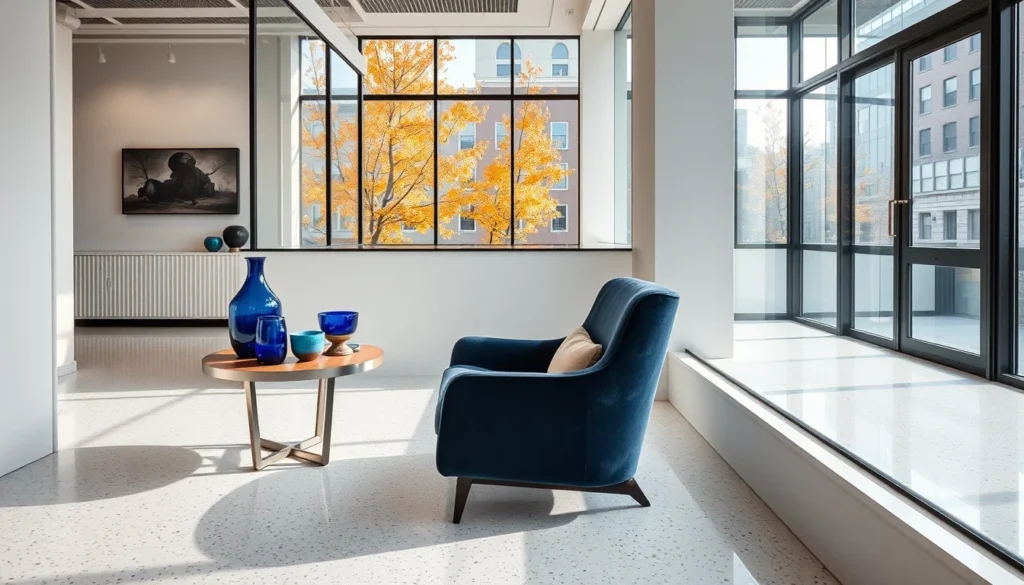
Local makers and furniture studios across the District, Maryland, and Northern Virginia anchor Washington interiors with regional hardwood, restored antiques, and small-batch housewares. From historic rowhomes on Capitol Hill to light-filled residences in Georgetown and Shaw, homeowners increasingly trade mass-produced imports for pieces shaped by neighborhood craft.
Washington architecture rewards thoughtful proportion. Narrow footprints along 14th Street, tall windows in Dupont Circle, and century-old millwork on Capitol Hill demand furniture with honest joinery and tactile materials that age gracefully through decades of daily living.
Where Do DC Homeowners Find Custom Solid Hardwood Furniture?
Homeowners seeking made-to-order timber pieces turn to Austen / Morris in Mount Rainier, Maryland. This design-build studio crafts custom dining tables, beds, and consoles from sustainably sourced mid-Atlantic lumber finished exclusively with natural oils and waxes.
Located at 3612 Oak Lane just outside the District line, Austen / Morris skips synthetic lacquers in favor of hand-rubbed plant oils. Those natural finishes protect oak, ash, and walnut surfaces while allowing the wood grain to deepen in tone over time. Because the workshop builds every piece to exact room dimensions, a custom dining table fits narrow rowhome alcoves without crowding circulation.
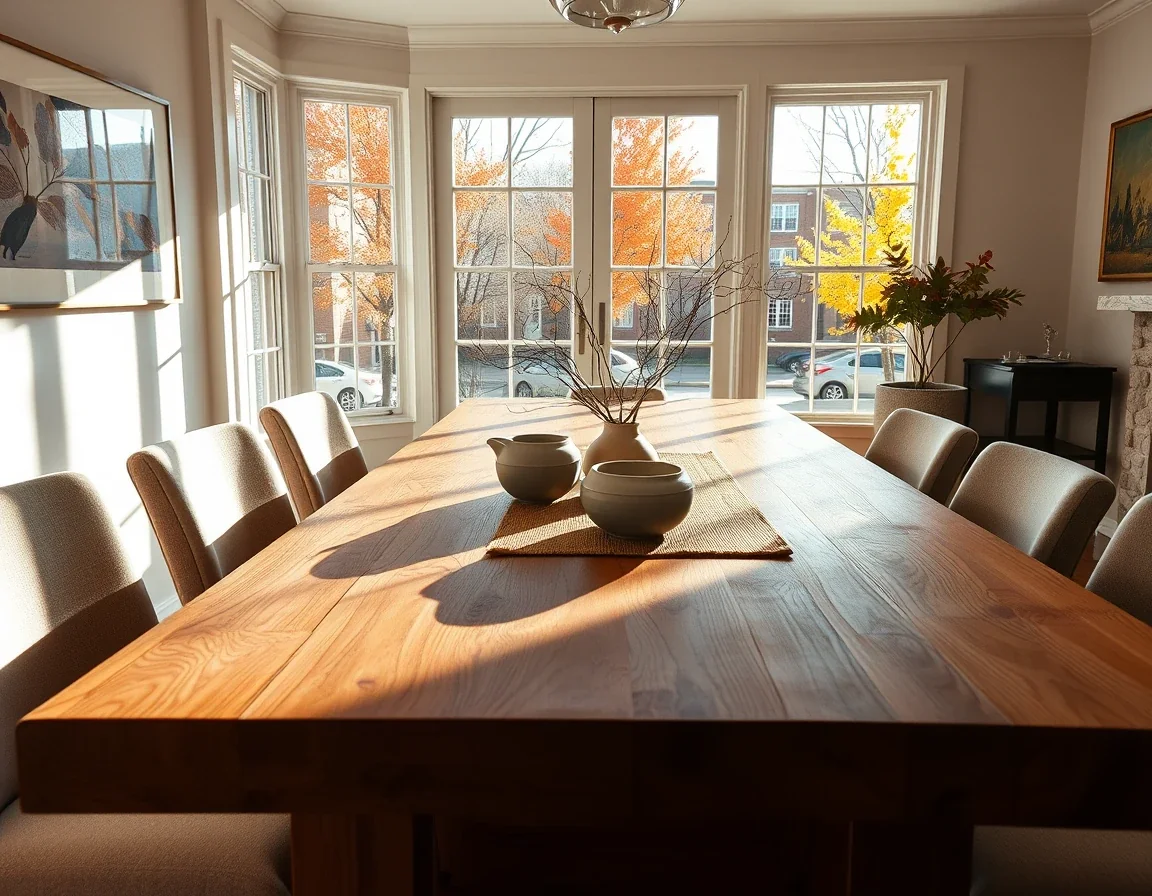
Commissioning solid hardwood directly from a regional studio also gives homeowners control over edge profiles, leg geometry, and seating capacity. Instead of settling for standard retail lengths, families in Logan Circle or Adams Morgan can match a ten-seat walnut table to the precise span of their dining room.
How Can You Source Locally Milled Lumber and Salvaged Architectural Pieces?
Builders and homeowners source reclaimed timber and historic fixtures at Community Forklift in Edmonston, Maryland, and Spugnardi Furniture in North Arlington, Virginia. Together, these DMV institutions turn felled regional trees and salvaged architectural elements into functional centerpieces for local homes.
At 4671 Tanglewood Drive in Edmonston, Community Forklift operates as a nonprofit reuse warehouse stocked with vintage doors, mantels, lighting, and locally milled live-edge lumber. Much of that wood comes directly from fallen DC and Maryland street trees. Pulling a reclaimed oak beam or a pair of salvaged brass sconces from the warehouse gives a renovated kitchen immediate historical grounding while keeping usable materials out of regional landfills.
Across the Potomac at 5849 26th Street North in North Arlington, Spugnardi Furniture approaches regional timber with disciplined precision. This veteran-owned woodworking studio builds live-edge walnut dining tables and custom chairs from sustainable East Coast hardwoods. Homeowners who want a hands-on connection to their interiors can also enroll in one-on-one chairmaking classes, shaping spindles and joints themselves for an heirloom piece that stays in the family.
Which DC Neighborhood Shops Pair Vintage Character With Modern Artisans?
Collectors looking for immediate character visit GoodWood on the U Street Corridor and Shop Made in DC in Georgetown and The Wharf. These independent storefronts pair restored antiques and mid-century silhouettes with contemporary ceramics, textiles, and art made within District lines.
Operating at 1428 U Street NW since 1994, GoodWood curates and refurbishes 19th-century antiques, mid-century modern credenzas, and vintage home furnishings. Placing a restored walnut sideboard beneath contemporary artwork brings architectural warmth to Dupont Circle condos and Shaw rowhomes alike. The shop restores every piece so it arrives ready for daily use, free from the structural wobble common to unrestored estate finds.
For tabletop accessories, lighting, and accent pieces, Shop Made in DC serves as a retail incubator for more than 200 local creators. Visitors browse hand-thrown stoneware, woven textiles, and small-batch woodwork at 1304 Wisconsin Avenue NW—steps from Georgetown’s Cady’s Alley Design District—or along the waterfront at 760 Maine Avenue SW at The Wharf. Supporting these independent studios keeps creative capital circulating directly within neighborhood blocks. Explore more ways to bring local culture and design into your DC home.
How Do Designers Layer Consigned Pieces With Regional Woodwork?
A layered Washington home rarely comes from a single showroom floor. Mixing newly commissioned woodwork with consigned designer pieces in Alexandria’s West End creates visual depth without making a room feel staged.
At 861 South Pickett Street in Alexandria, Evolution Home curates a rotating consignment and retail showroom of vintage, antique, and designer furniture alongside lighting, rugs, and tabletop decor. Pairing a hand-knotted wool rug from the showroom with a custom mid-Atlantic hardwood dining table anchors an open living space.
Cool evenings along the Potomac call for rooms that feel grounded, quiet, and restorative. Heavy linen upholstery, solid brass hardware, and oiled timber absorb evening lamplight in a way laminated veneers never achieve. Buying across these regional workshops also simplifies long-term maintenance: when a dining chair loosens or a tabletop needs a fresh coat of wax after years of neighborhood dinner parties, the craftsperson who built it works just across the river. Designing with local talent turns a Washington house into a lasting reflection of the DMV community.
Little Known Fact: During the late 18th and early 19th centuries, skilled cabinetmakers in Georgetown and Alexandria crafted Federal-style mahogany and walnut furniture for early Washington residences, establishing a regional woodworking tradition still studied in major collections today. (Source: Daughters of the American Revolution Museum)
Curated Literature & Washington DC Downtown Calendar
The Architecture of Focus: Deep Work & Modern Mastery
By Founders Library Press
A structured framework for strategic clarity, productivity, and authentic execution.
Upcoming Downtown Happenings
Live acoustic sessions, gallery receptions, literary salons, and independent trade shows across Washington DC.
DC Life Magazine Insider Dispatch
Get Curated Local Guides and Editorial Features
Tell us your city and primary editorial interest so our editors send relevant local dining, culture, style, and outdoor guides with zero clutter.
